Thursday, 7 April 2016

Miles Franklin Award Longlist 2016

Since 1957, the Miles Franklin Award is a leading literary prize in Australia established by the estate of Stella Miles Franklin. Recent past winners include:
  • Sofia Laguna for The Eye of the Sheep (2015)
  • Evie Wyld for All the Birds, Singing (2014)
  • Michelle de Krester for Questions of Travel (2013)
  • Anna Funder for All That I Am (2012)

On 5 April 2016, the longlist for the 2016 Award was announced with 9 nominees, including several that are also in the running for the Stella Prize for women. The longlisted titles are:


Ghost River by Tony Birch
A coming of age story centring on the friendship between two boys, Sonny and Ren. Set in Melbourne in the late 1960s, the two boys spend their days on the banks of the Yarra, befriending some homeless 'river men'. Tony Birch wrote Shadowboxing (2006) and Blood (2011), the latter was shortlisted for this award.


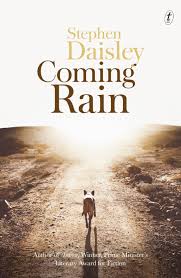
Coming Rain by Stephen Daisley
Set in wheatbelt of Western Australia in 1955, two shearers have been travelling and working together since they were boys. This is a story of mateship, loss, and the environment. Daisley originally hails from New Zealand. His first novel Traitor (2011) won the Prime Minister's Literary Award.


Hope Farm by Peggy Frew
In this coming of age story set in the 1980s, thirteen year old Silver is taken to a hippie commune by her mother.  Silver longs for stability, while her mother is infatuated by the new man in her life. Mother-daughter relationships, growing up, belonging and first loves are explored. This is the second novel from Frew, after her award winning debut House of Sticks (2010). Frew's book is shortlisted for the Stella Prize.

Leap by Myfanwy Jones                         Twenty-two year old Joe is existing, not living. He works dead end jobs, lives day to day, and has abandoned all ambitions. He is struggling with grief, loss, and guilt. Elsie too is struggling through a  bad marriage, spending her days watching tigers at the Melbourne Zoo, trying to cope with her grief. Author of The Rainy Season (2009), Jones is a Melbourne based writer.


The World Without Us by Mireille Juchau
Juchau is a well regarded Australian author who has previously been shortlisted for various literary awards. This, her third novel, is about the Muller family who reside on a farm on the north coast of New South Wales. Grieving the loss of a child, Evangeline is no longer able to paint and struggles to care for her remaining daughters. Her apiarist husband also mourns and seeks solace in drink.
The Hands - An Australian Pastoral by Stephen Orr
Set on a cattle station in western South Australia, this novel explores the relationships between three generations of one farming family. Orr is the author of Time's Long Ruin (2010) - about the disappearance of the Beaumont children - and crime novel One Boy Missing (2014).

Black Rock White City by A C Patric                A Serbian couple have migrated to Melbourne after the Bosnian war. Jovan is a cleaner at a hospital while Suzanah is a carer. Both have unseen scars from the trauma of war, as they rebuild themselves in a new land. AC Patric is an award winning author of short stories, including Las Vegas for Vegans, and this is his first novel. 

Salt Creek by Lucy Treloar                                     It's 1855 and fifteen year old Hester Finch lives in Adelaide with her family. Her father decides to move the family to Salt Creek, a remote property in South Australia. Here they learn about the Ngarrindjeri people and adapt to a new life. Treloar is best known for her short stories. Salt Creek is her debut novel.

The Natural Way of Things
 by Charlotte Wood  (read review)
Wood's novel has been compared to Margaret Atwood's A Handmaid's Tale and as such is definitely on my reading list. Two women are drugged and taken to an isolated property where they find they are imprisoned with eight other girls. Each has a common past for which they are being punished in this powerful feminist novel.

The Shortlist will be announced in May 2016 with the prize announced in June 2016. My money is on Charlotte Wood.

One other note: the Miles Franklin Award has its own website, but this year all info appears to have been directed to a section of its trustee Perpetual's website. Why?  This is rather disappointing and  points to a degree of commercialism that distracts from the rich history of the award. Just sayin'.

Tuesday, 5 April 2016

Newcastle Writer's Festival

Last weekend I travelled to Newcastle to attend a couple of sessions at its annual writer's festival on a whim. I had only heard about the festival a few days earlier, but quickly booked into two sessions on the last day of the event and organised my travel. It was an early start, leaving home shortly after 5am to catch the train north in order to get to Newcastle before 10am. The Festival was held in the beautiful Civic Theatre.

The Independent: Tony Windsor in conversation with David Marr
Our first session was with former MP Tony Windsor. Apparently the original session was to be Sarah Ferguson talking about her book The Killing Season Uncut - based on her series about the Rudd/Gillard years. The book is not yet published so she didn't appear, but Ferguson is scheduled for the Sydney Writer's Festival in May and will come back to Newcastle for a standalone event.

Tony Windsor was an excellent choice for her replacement. He is warm, personable, intelligent, honest and passionate. Plus, he has just announced his intention to run for office again against Deputy PM Barnaby Joyce. David Marr is always delightful as he probes and ponders and keeps the momentum going in the conversation.

They spoke about Windsor's book, Windsor's Way, based on his time in the hung Australian parliament. Marr half-jokingly referred to the book as Windsor's re-election manifesto.

Windsor shared tales of the negotiations for the balance of power and the difference between Gillard and Abbott's approach. Integrity, honour and commitment are clearly important to Windsor. Abbott wanted to be Prime Minister and would do anything for it. Windsor felt that any commitments Abbott gave were untrue. Gillard, on the other hand, spoke about what she wanted to do for Australia. She was interested in policy not position. Ultimately, Tony Windsor and Rob Oakshot felt Gillard was more trustworthy, with clear policies, and so handed her the hung parliament.

On Gillard, Windsor said he had immense personal regard for her. She has a strong intellect and can get across issues quickly. He recounted how she would face all sorts of pressure from the media and the opposition and was working in a really toxic environment, but then would sit down with him and have a cup of tea. He never felt like she was disinterested or didn't have time.

The reason for returning to politics is because he cannot sit by and watch what is happening in Canberra. He wants to stand up for Gonski reforms, the original NBN, water rights, climate change and regional issues. As a farmer, he is passionate about environmental and connectivity issues.

The hour with Windsor and Marr went too quickly. I would have liked to have heard more from both of them. But I will watch the upcoming election with interest and wish Windsor well in his attempts to regain his seat.

Tony Windsor and David Marr

Reality Bites: Fiction writers inspired by real life
The next session was a panel discussion about how real life inspires and informs fiction writing. Angela Savage, crime writer, chaired the panel and asked insightful questions of the guests.

Rod Jones spoke about how his family inspired his latest book The Mothers.  The story focuses on three generations of women in working class Melbourne. Alma falls pregnant during WWI and her daughter is born in secret and given up for adoption. In 1952 Anna goes to a Salvation Army home for unmarried mothers when she has her baby. In 1975 Cathy and David are unmarried and expecting a child.

Each generation of the story was inspired by Jones' life and the history of adoptions, hardships and the institutionalisation of young women that shadows Australia. Jones said that he used 'autobiographical writing to explore the dark corners of myself'. He spoke of the difficulty in exploring these dark corners and the challenge of pulling the novel together. He said he had no qualms about drawing on real life in his family, and that while there are facts within this novel it remains fiction.

Fleur Ferris is a former police officer and paramedic. She has written a young adult novel Risk which focus on two fifteen year olds that meet a man online with disastrous consequences. A mother to three daughters, Ferris was inspired to write this because of her background and real events she had heard about. For example, she knew of a teenager that was a good kid, not looking for trouble, but trouble found her when she began sharing photos to a man she met online. Ferris wrote this book to speak about internet dangers and now spends time speaking to school groups about internet dangers.

Charlotte Wood spoke about her book The Natural Way of Things which was inspired by the Hay Institution, where young women were incarcerated and subjected to sadistic brutality. She said she started writing a historical book, but when she heard of the woman in the Army who was punished for speaking out about rape - the so called Skype Slut - she realised that this was a contemporary tale.  Wood said she writes fiction to process how she feels about things. She also said she did not feel that she could write a historical fiction set in the Hay Institute because many of the women there have gone on to write their own accounts and she did not want to take away their story when they already had so much taken from them.

Jaye Ford is a crime writer and her latest psychological thriller is Darkest Place. She was inspired to write this because she had a 'creepy thought' about what it would be like to feel like there is a stranger in your house but be unable to prove it. She then came across a newspaper article about a man who had broken into a number of homes to watch women while they slept. Her creepy thought expanded and became the novel. In the book Carly Townsend has moved into a new apartment in Newcastle and wakes to find a man standing over her. The police search the home and find nothing. When it happens again, the police begin to doubt her and think she is seeking attention.


The panel spoke about the importance of character, the ethics of writing from real life and the challenges of fictionalising real events. It was an interesting session and I am glad I attended, although it was sad that there were so few people in the audience. Of the panelists, I had only known of Charlotte Wood, so it was wonderful to be introduced to new Australian authors.

Angela Savage, Rod Jones, Fleur Ferris, Charlotte Wood and Jaye Ford

After the session I purchased a copy of Fleur Ferris' Risk and a copy of Charlotte Wood's earlier novel Animal People, and got these signed by the authors. I started reading Risk on the train ride home and will blog about that shortly.

It was a lovely day and, after a pub lunch in a micro-brewery, we had a quiet afternoon strolling Newcastle's sunny streets and beaches.

Nobby's beach, Newcastle
The Newcastle Writers Festival is a much smaller event than the Sydney Festival and has a different vibe. I was saddened to see such low attendance at a the event and the Twitter backchannel was not very active. While I only saw a small snapshot of the Festival, I would definitely come back to Newcastle for future festivals and would encourage greater attendance at this literary event.

Sunday, 20 March 2016

Girls Like You

The beautiful cover of Charlotte Wood's incredible novel The Natural Way of Things (2015) makes a number of promises, by way of quotes from leading Australian authors. Malcolm Knox calls it 'brave and brilliant', Clementine Ford claims it is 'utterly unforgettable', Joan London and Tegan Bennett Daylight point out its uniqueness. But Christos Tsiolkas describes it best when he writes "You can't shake off this novel; it gets under your skin, fills your lungs, breaks your heart."

That was certainly my reaction to the novel. As I read I felt the need to talk to friends about it and share this experience, a feeling I have not had with such intensity since reading We Need To Talk About Kevin many years ago. This is a book that needs to be reflected on, spoken about and shared.

The story begins when two women wake from a drug induced sleep to find that they have been imprisoned in a ramshackle property in the Australian outback, surrounded by an electrified fence. They find they are not alone, but rather among ten women who have their heads shaved, are dressed in scratchy tunics and oversized bonnets, and are forced to perform hard labour while chained together in the merciless sun. As the days progress the women realise what they have a common - each one has been involved in a sexual scandal.

The scandals that brought the women here are all too recognisable: Verla had an affair with a high-profile politician; Hetty with a Cardinal; Lydia partied too hard on a cruise-ship; Rhiannon was a gamer girl, a 'Codebabe'; Leandra was in the army; footballer's girlfriend Yolanda was gang-raped. Whether it was the school principal's head girl, the reality show contestant, or the flight attendant, all of these women have been unchaste, have sinned, and are now being punished for their sexuality.

The property is run by Hardings International, under the ironic banner "Dignity and Respect in a Safe and Secure Environment", with three vicious, baton-wielding employees to keep the girls in line. The threat of sexual and physical violence is pervasive, as the jailers aim to humiliate and strip these women of their humanity. While this sounds desperately bleak, The Natural Way of Things is actually a gripping, provocative, page-turner which, as Tsoiolkas claims, 'gets under your skin, fills your lungs and breaks your heart'.

Wood is a gifted writer, not just in her ability to tell a good yarn, but in the beauty of her prose. She creates the bleak, dry landscape and gives rhythm to the day's events by her crisp writing. Some of the many lines which captivated me are:
"A flock of white cockatoos arrived, landing noisily down on the flat, the white line of them billowing and settling like a thrown bedsheet." (page 199)
"The tin walls are heating up already, blowflies dotting against them, their arrhythmic drones making it feel even hotter than it is." (page 54) 
The Natural Way of Things has been compared to Margaret Atwood's The Handmaid's Tale, with good reason. Both are speculative fiction which are all too possible. Slut-shaming and misogyny are such common occurrences that it is not a hard to imagine such an outback prison for wayward women. Indeed Wood was inspired by the Hay Institution for Girls, a maximum security home for girls which operated in the 1960s and early 1970, where 14-18 year olds were isolated and subjected to daily humiliations, hard labour and abuse. We have a shameful history (and present) here of locking people up - whether in outback institutions or off-shore detention centres - so this facility is no stretch of the imagination.
"What would people in their old lives be saying about these girls?.... Would it be said they were abandoned or taken, the way people said a girl was attacked, a woman was raped, this femaleness always at the centre, as if womanhood itself were the cause of these things? As if the girls somehow, through the natural way of things, did it to themselves." (page 176)
Of course Wood was also influenced by the almost daily news of women who were 'asking for it', 'playing the gender card', 'dressed like that', 'should have known better', 'could have left him' - a pervasive narrative. Her anger at gender inequality and contemporary misogyny is well founded and well articulated, but this is not a ragey/ranty book. Rather it is timely and necessary. This is a novel which needs to be read, discussed, debated.

I had the pleasure of meeting Charlotte Wood and hearing her speak at the All About Women festival in Sydney a few weeks ago. This novel has been shortlisted for the 2016 Stella Prize.

Saturday, 12 March 2016

Pledge for Parity

The 2016 International Women's Day theme is "Pledge for Parity" - closing the gender gap at home, at work and in communities. The World Economic Forum reported in 2015 on the gender gap across health, education, economic participation and political empowerment.

Australia was ranked 36 out of 145 countries with a score of .733 for equality. While education and life expectancy were ranked highly,  Australia did poorly on political empowerment and in some areas of economic participation, reflective of the wage inequality for similar work. Perhaps more disturbing, is that over the past ten years Australia has been sliding down the global rankings on the Gender Gap Index, indicative of the progress made in other nations and the lack of progress in our own.

Each year I attend events affiliated with International Women's Day. This year I attended the All About Women festival at the Sydney Opera House. The big names at the festival this year were Miranda July (filmmaker, writer and artist), Piper Kerman (of Orange is the New Black fame), and Anne-Marie Slaughter (former US Director of Policy Planning). Due to the overlapping sessions on the program, I could not see everything I wanted, so I elected to attend a series of speakers on a range of topics of interest to me.

Masculinities
Professor Emerita Raewyn Connell has spent a lifetime researching gender. I first came across her work many years ago when I was undertaking a Masters of Arts in Gender Studies and I read her seminal work, Masculinities. Connell argues that there is no crisis in masculinity, as frequently proclaimed in the media. Rather, there are a variety of forms of masculinity and ways of being men. For example, the shift from blue collar labour to the IT sector, has seen a different masculinity come to the forefront.  Gender is relational, thus masculinity is described in reference to femininity.

Connell spoke about the wage gap and argued that there are cumulative effects of wage inequity. For example, women retire with significantly less superannuation than men (from lower pay and time out of the labour force) which has a huge impact as women have longer life expectancy.

The new world of work is changing the way people divide household labour. So much of Australian male identity is still wrapped up in notions of male as bread-winner, but this is changing as more men seek active involvement in childrearing activities. Here we need to be cautious of sexism creeping in, emasculating househusbands as "Mr Mom".  She also spoke about poverty and the disengagement of young men in poorer neighbourhoods where there is high unemployment, lower education, and more social problems related to alcohol, drugs and violence. Where there is insecure employment, there is stress.

Eva Cox asked a question regarding systemic change. Connell spoke of the need for all people, men and women, to be involved in creating the future.

I really enjoyed this session. Connell is extremely knowledgable and conveys her message clearly and succinctly. I have tremendous admiration for her and it was wonderful to hear her speak in person again after so many years.

Susan Goodwin (left) and Raewyn Connell (right)

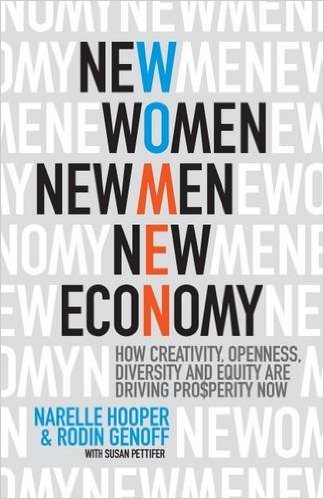
New Women, New Men, New Economy
This was a session I really wanted to see and was most disappointed in. The topic is of great interest to me - how diversity and economic participation create greater prosperity. Unfortunately I felt it was let down by the manner in which it was presented. Where most other presenters were really natural, Narelle Hooper and Rodin Genoff came across as too showy - laughing at their own jokes, encouraging the audience to give themselves a round of applause (ugh!) and introducing their family members.

Their argument seemed to consist of a few main points. There are new men out there - as evidenced through photos of Justin Trudeau and Benedict Cumberbatch - and new women. Hooper and Genoff have cracked the CODE of the new economy which consists of Creativity Openness Diversity and Equity. They spoke of research they had conducted and provided some statistics as evidence.

I had expected a greater degree of intellectual rigour from this session. Given the Pledge for Parity theme, I was hoping for a more analytical, political economy approach to issues of prosperity, equity and economic participation. Rather, it felt like a shameless book plug. In fact, I was so underwhelmed that I decided not to purchase their book despite my intentions to.

I think this session would have benefited from a third party moderator who interviewed Hooper and Genoff about the findings of their research. In fact this was the only session in the Festival that did not have a Chair, which I believe let the audience down and made it less professional than other sessions.

Narelle Hooper and Rodin Genoff

The Women We Love To Hate
I really enjoyed the next session. This was a panel chaired by Ruby Hamad, featuring historian Michelle Arrow, author Charlotte Wood and researcher Dr Emma Jane. With the recent 40th anniversary republishing of Anne Summers' feminist classic, Damned Whores and God's Police (1975), the panel began by reflecting on the dichotomy that women fall into one of two camps: damned whore or virtuous saint. The panel concluded that it is almost impossible to be in the latter group, so most women are in the damned whores camp.

The panel discussed how women cannot win in terms of sexuality and how women who are shame, silenced and rendered invisible. They cited examples  like the public servant who was slut shamed by a federal minister,  women in the military filmed during sex without consent, Diane Brimble, Monica Lewinsky, and so many more. Emma Jane argued that "slut shaming is a misnomer. It is shaming for being a woman and having any kind of sexuality."

They spoke about how it is possible for women to be the objects of desire and contempt simultaneously. For example, in prostitution women are desired but also reviled. Charlotte Wood spoke of the women in her book, The Natural Way of Things (read review), in which ten 'fallen' women are held in captivity and humiliated for their involvement in some sort of sex scandal. Wood's women are 'bewildered by the simultaneous toxic desire and disgust' by their captors.

Emma Jane made an interesting point about women shrinking - how women sit and pose to make themselves as small as possible, whereas men spread out in a power posture.  Her research on cyberbullying has revealed a shocking degree of misogyny, particularly for women in the gamer community.

The panel discussed various women that have been the subject of loathing. Former Prime Minister Julia Gillard was targeted by people within and outside of politics and eventually stood up to the misogyny in her famous speech. Michelle Arrow spoke about Lindy Chamberlain and how she was judged for failing to behave in line with societal expectations.  The panelists agreed that small acts of courage - standing up for yourself and others - will make a significant difference.

This was a terrific hour of discussion - thought-provoking, humourous, and positive. After the session I met Charlotte Wood and she signed a copy of her book for me.

(l-r) Ruby Hamad, Michelle Arrow, Charlotte Wood, Emma Jane

True Crime vs Real Crime
My final session of the day was an interesting panel of crime writers. The amazing Van Badham chaired the panel which featured South African novelist Margie Orford, Mexican writer and President of Pen International Jennifer Clement, and Australian professor Kerry Carrington.

Van Badham pointed out that the volume of crime novels published and sold have continued to grow, the popularity of crime shows on television and the movies continue, two of the biggest successes in recent months are Serial and Making a Murderer - and yet, in most places, crime is actually decreasing. The panel spoke about the mistaken glamourising of gangsters and the criminal underbelly.

Kerry Carrington pointed out that 'upcharging' is on the rise - wherein criminalisation and punishment for minor offences is increasing, putting more women into the corrections system. Around 18% of women in jail are for drug related offences. Most women in jail have been impacted by domestic violence, alcoholism and mental health issues that, if prevented or treated, would have changed these women's lives dramatically.

Margie Orford spoke of crime fiction as a catharsis. She said that in a crime novel you (the reader) sit on the shoulder of the investigator, so you have agency and justice on your side. Orford's South Africa has high rates of rape and other violence against women, so for her writing crime fiction was a way to take these crimes and make it real. She pointed out that, in Australia domestic violence is front page news, but in South Africa it is not spoken of despite its prevalence.

Orford also pointed out that Scandinavian societies are more egalitarian, with women and men more on par than other parts of the world. The crime fiction coming from Scandinavia, however, is extremely violent particularly towards women. Steig Larsson's Girl With the Dragon Tattoo (Millennium series) and Henning Mankell's Kurt Wallander novels, are but two examples.

Jennifer Clement spoke about violence against women in Mexico. She pointed to the daily disappearance and brutal murders of young women in Juarez, for which the word femicide has been created.  She wrote her book, Prayers for the Stolen, about young girls in Mexico against the backdrop of drug cartels, disappearances, and poverty. Mexico has a high rate of child sex trafficking, with little action by police. A theft of a car would generate more attention than the theft of a child.

Kerry Carrington has written a number of non-fiction books on gender and justice. She spoke passionately about how female victims of violence are forgotten or rendered invisible. Carrington wrote a book about the violent gang rape and murder of Leigh Leigh, a 14 year old girl, and the police investigation and court case that followed. She spoke about how she and her family were targeted by the Police Integrity Commission following publication of her book.

The panel were asked a number of interesting questions, including one about media portrayals of women who commit crimes (like Aileen Wuornos, Karla Homolka). Female killers are often depicted as either victims themselves or crazy, but rarely as acting with agency.

This was an interesting, intellectual hour of thought-provoking discussion. I really didn't know much about the speakers before I attended, but was thoroughly impressed by their knowledge, passion and integrity. An excellent session.

(l-r) Van Badham, Margie Orford, Jennifer Clement, Kerry Carrington
The Book Haul
Of course, no trip to a festival like this would be complete without the purchase of a few books. I picked up copies of:
  • Jennifer Clement's Prayers for the Stolen, which she kindly signed for me.
  • Anne Marie Slaughter's Unfinished Business
  • Tara Moss's The Fictional Woman
There were plenty of other books that I wanted to get but I had to be selective (especially with the Sydney Writers Festival coming up soon). But I must say that I miss having Gleebooks at the All About Women and Festival of Dangerous Ideas. Current bookseller Kinokinuya is a wonderful bookstore, but I find that Gleebooks is more thoughtful in the selection of titles it brings to festivals. I would have certainly purchased more had Gleebooks been there.

Final thoughts
Overall, I enjoyed my day out at the All About Women Festival. I love the diversity of topics and the talented women presenting. The chairs of sessions are uniformly excellent (Julia Baird, Ruby Hamad, Van Badham, Jane Caro, Catherine Fox, Jennie Brokie etc) and bring to the event tremendous curiousity, wit and wisdom.

There are a few things that would have made my day more enjoyable. First, the timetable this year pitted all the high profile speakers against each other. Why have Piper Kerman, Anne-Marie Slaughter and Carrie Brownstein on in the same timeslot? Plus the overlapping of timeslots meant having to choose between sessions or missing out altogether. Often people had to leave sessions early to rush to their next session which was disruptive to speakers and attendees. A few more panel sessions would have been beneficial.

Another annoyance was sessions not starting on time. My first session of the day started at 11am. There was a massive queue at the doors, but they did not open until 10.55am, so people were not seated and the session did not start until well after 11am. This is disrespectful to the speakers and shortchanges the attendees who do not get their full hour - cutting short the amount of question time.

Finally, there were almost no men present. This is understandable due to the nature of the event, but disappointing in terms of furthering gender equality. Men need to hear and understand these issues. Maybe some kind of "bring a bloke" campaign is needed to encourage men to engage with feminism. Having said that, I must say how enjoyable it was to spend a day with hundreds of feminists talking about the issues that matter to us all. See you next year!

My post about the 2015 All About Women festival is available on this blog.

Friday, 11 March 2016

The Stella Shortlist 2016

The Stella Prize shortlist was announced on 10 March 2016.  The shortlisted titles are:

  • Six Bedrooms by Tegan Bennett Daylight (read review)
  • Hope Farm by Peggy Frew
  • A Few Days in the Country: And Other Stories by Elizabeth Harrower 
  • The World Without Us by Mireille Juchau
  • The Natural Way of Things by Charlotte Wood (read review)
  • Small Acts of Disappearance: Essays on Hunger by Fiona Wright
Brief synopses of these titles can be found on my post about the longlist.


Of these books I am most excited for Charlotte Wood's The Natural Way of Things. After hearing Wood speak at the All About Women festival this week, I am really keen for her novel to be better known. It is a powerful, important story.

It is wonderful to have this prize as so often women writers are under represented and their stories go unnoticed. The winner will be announced on 19 April 2016.

Sunday, 6 March 2016

Unexpected Love Stories

Prolific writer Alexander McCall Smith is in Sydney to promote his latest book, Chance Developments (2015). As I never miss an opportunity to hear him speak, I attended an event at the Seymour Centre as part of the Sydney Writers Festival. Over the course of an hour, McCall Smith spoke on a range of topics, delighting the audience with wonderfully humourous stories.


The author began by talking about hipsters with their tailored trousers, bicycles and beards. He pondered the difference between hipsters of today and the beat generation in the times of Kerouac. Somehow we segued into talking about photography, a passion of McCall Smith, and his Chance Developments.

McCall Smith wrote Chance Developments as a series of unexpected love stories. He came across several old black and white photographs and, not knowing the real story of the couples in the pictures, he wrote a fictionalised account of each couple's romance. The tales are set in far flung places: a circus in Canada, a goldmining town in Australia, a country village in Ireland, the Scottish highlands, and McCall Smith's beloved hometown of Edinburgh.

He talked at length about different kinds of love - reminding me of the scene in The English Patient where Katherine Clifton tells Almasy that "romantic love, platonic love, filial love - quite different things surely."

For McCall Smith love is central and takes many forms. He believes that one of the most heartbreaking kinds of love is that which is unspoken. His novel The Forever Girl is about unrequited love, in which a young girl falls in love with a boy and then spends much of her life following him around in the hopes that he will notice her. At the event McCall Smith spoke of the anguish of not being able to reveal your love for someone else.


The conversation then shifted to friendship. McCall Smith came to prominence with his bestselling series The No 1 Ladies Detective Agency which centres on the friendship of Mme Precious Ramotswe and Mme Grace Makutsi. The author has always been interested in the nature of friendship - how some people form a bond that cannot be broken, how others cull their friends on a regular basis, and how some friendships can withstand great distances.

McCall Smith greatly admires the writings of Patrick O'Brian and the relationship between Aubrey and Maturin which he believes is one of the best explorations of male friendship. McCall Smith writes many children's books and his School Ship Tobermory series is a tribute to O'Brian's series. He spoke about the differences between male and female friendships, and how he envies women for their ability to talk openly about things. He finds it relatively easy to write from a female perspective.
Of course he is always writing something and generally had three or four books on the go. He spoke about how he is currently working on the next instalment of the Scotland Street series and regaled the audience with some tidbits of where the story is heading. He is also working on the next Mme Ramotswe book and another Bertie novel. He tends to get up at 3 or 4am and write for a couple of hours before going back to bed and rising to write again. He cannot write all day but has found a workable routine. He has a full time assistant who aides him with his correspondence and appointments.

I really must get back into reading his books. I began with the Detective series many years ago and read the first three or four back-to-back. But then I took a break and now I am not even sure how far behind I am! The Scotland Street series is great too although I am not caught up with that either. I have never read any of the Sunday Philosopher Club (Isabel Dalhousie) novels. Hearing McCall Smith speak reminded me of what an excellent story teller he is, and has encouraged me to get back into his books again.


Saturday, 20 February 2016

Modern workplace learning

Nigel Paine is an internationally renowned thought-leader in learning and organisational development. With decades of experience in corporate learning, including several years as Head of Training and Development for the BBC, Paine understands the evolution that is currently taking place in workplace learning and the opportunities this presents for learning practitioners.

In his book The Learning Challenge - Dealing with technology, innovation and change in learning and development (2014), Paine explores the change work landscape and makes the case for learning to be at the centre of a transforming workplace.
Using interviews with learning professionals from diverse companies, case studies and expert knowledge, Paine gives advice to learning and organisational development practitioners on how to transition to a redefined role of contemporary learning professional.

Work is no longer 9-5 and office-based, but takes place anywhere at anytime. Rapid advances in technology is changing how we work, communicate and learn. There is a shift underway from instructor-led to learner-focused, from courses to curation, from synchronous to just-in-time learning, from formal to informal learning.

After detailing these changes, Paine then explores 'new ideas for learning'. Here he makes a passionate case for the 70-20-10 model of learning, popularised by Charles Jennings, and the need to measure impact. He cites Brinkerhoff's approach to evaluation and the business success case model, as a means for measuring learning transfer. He also looks at performance support and the evolving role of instructional design.  He concludes with 'the game changers' - learning analytics, neuroscience and technology - and how they will impact workplace learning.

I had the good fortune to hear Mr Paine speak at an Australian learning and development conference in 2014 and I was impressed by his ability to reinforce his ideas with relevant case studies and practical tips to apply in my own work. He does the same thing in this book, as each chapter ends with ideas to immediately start applying the concepts he describes.

This book is clearly written for learning and organisational development professionals and will benefit both those new to the profession as well as established practitioners. However, it should also be read by a broader audience including business leaders seeking to build an engaged, innovative workforce. There are lessons here for all of us as we rise to the learning challenge.

Saturday, 13 February 2016

Stella Longlist 2016

The Stella Prize is an annual literary award celebrating women writers of both fiction and non-fiction. Named after Australian author Stella Miles Franklin, the Prize was created in 2013 in response to the lack of diversity in nominees for literary awards. It is hoped that through the promotion of excellent books by women, more people will be drawn to their works and inspiration will be given to emerging female writers.

Past winners include:
  • Carrie Tiffany for Mateship with Birds (2013)
  • Claire Wright for The Forgotten Rebels of Eureka (2014)
  • Emily Bitto for The Strays (2015)
On 9 February 2016, the longlist for the 2016 Stella Prize was announced with 12 nominees from over 170 entries. There is a great mix of genres (essays, short stories and novels) and a blend of new writers and established authors.

I must admit, I have not yet read any of the longlist. But there are a few on my 'To be Read' list. So, let's take a closer look at the longlist.

The Women’s Pages by Debra Adelaide 
Adelaide is an established author of both fiction and non-fiction. The Women's Pages is a novel about the decisions women make, their compromises and experiences of loss. The main character Dove reads Wuthering Heights to her dying mother and is profoundly influenced. She decides to write her own novel about an independent woman named Ellis.  As Dove writes her book, The Women's Pages becomes a novel within a novel.


The Other Side of the World by Stephanie Bishop 
Set in the 1960s, Charlotte is struggling with her life as a wife, parent and artist. Her husband Henry suggests travelling to Australia in the hopes of regaining their life before children. As they emigrate to Perth the novel explores themes of home, nostalgia, family and love. Bishop is an established writer and was previously shortlisted for the Vogel Literary Award as well as named one of the Sydney Morning Herald's Best Young Australian novelists. 


Panthers and the Museum of Fire by Jen Craig
This is a novella by Sydney based writer and micro-fiction blogger Jen Craig. The protagonist walks from her Glebe home to a cafe in Surry Hills with a manuscript written by a friend who has passed away. Another book within a book, Craig has been praised for her stream-of-consciousness style writing. I am particularly intrigued by this book as I know the Glebe to Surry Hills path well, and the title is taken from a sign on the highway in Western Sydney that I pass en route to the Blue Mountains.

Six Bedrooms by Tegan Bennett Daylight  (read review)
At the 2015 Sydney Writers Festival, Daylight moderated a number of the sessions I attended and I was impressed by her critical engagement with fiction and writers. She mentioned this new collection of short stories about that awkward period between adolescence and adulthood through which we all pass. Many critics have compared her work to Alice Munro. This book is definitely on my list for reading soon.


Hope Farm by Peggy Frew
In this coming of age story set in the 1980s, thirteen year old Silver is taken to a hippie commune by her mother.  Silver longs for stability, while her mother is infatuated by the new man in her life. Mother-daughter relationships, growing up, belonging and first loves are explored. This is the second novel from Frew, after her award winning debut House of Sticks (2010).


A Few Days in the Country: And Other Stories by Elizabeth Harrower 
Harrower is an internationally known author of five novels including The Watch Tower. This book is a collection of twelve short stories she has written over five decades. It includes the story "Alice" which was published in the New Yorker in 2015. I love short stories and I am interested in reading this collection.


A Guide to Berlin by Gail Jones 
The title of this book is drawn from a Nabakov short story in 1925, written when he lived in Berlin. Jones has set her sixth novel in a wintery Berlin and uses Nabakov as a catalyst. A group of international travellers gather in empty apartments to share memories and talk about the Russian author. Blending literature, history and storytelling this novel sounds intriguing.


The World Without Us by Mireille Juchau
Juchau is a well regarded Australian author who has previously been shortlisted for various literary awards. This, her third novel, is about the Muller family who reside on a farm on the north coast of New South Wales. Grieving the loss of a child, Evangeline is no longer able to paint and struggles to care for her remaining daughters. Her apiarist husband also mourns and seeks solace in drink. 


A Short History of Richard Kline by Amanda Lohrey 
Tasmanian author Amanda Lohrey's allegorical novel follows Richard from childhood to middle age, and is described by the publisher as a 'pilgrim's progress for the here and now'. As a middle class, middle aged man, he is is still trying to determine what he wants. While I have heard good things about this book, the subject matter - one man's first world problems - doesn't interest me.

Anchor Point by Alice Robinson
This is a debut novel of a Melbourne based writer. A woman disappears from a farm without a trace, leaving her family behind. Her ten year old daughter Laura takes on as much of the household duties as she can. Spanning the next 35 years of Laura's life, the novel explores families, nature, secrets and loss. 


The Natural Way of Things
 by Charlotte Wood  (read review)
Wood's novel has been compared to Margaret Atwood's A Handmaid's Tale and as such is definitely on my reading list. Two women are drugged and taken to an isolated property where they find they are imprisoned with eight other girls. Each has a common past for which they are being punished in this powerful feminist novel.

Small Acts of Disappearance: Essays on Hunger by Fiona Wright
The only non-fiction on the longlist, Australian poet Fiona Wright draws together ten intimate essays about anorexia and body image. In high school Wright developed an eating disordered that almost killed her after ten years with the disease. 


The Shortlist will be announced on 10 March 2016 with the prize announced on 19 April 2016.

Sunday, 24 January 2016

G is for Grieving

In 2015 a lot of people were talking about Helen Macdonald's award winning book, H is for Hawk (2014). Indeed it appeared on many 'best of' lists for the year and has been hailed by many for its remarkable combination of memoir, natural history, biography and self-help. It was awarded the Samuel Johnson Prize for non-fiction and the Costa Book of the Year award.

Helen was a research fellow at Cambridge University when her photographer father died suddenly. Consumed with grief, Helen went online, ordered a goshawk she named Mabel, and spent the next year immersed in training this bird of prey.

While the purchase may seem like a whim, Helen was well acquainted with falconry. As a child she was obsessed with birds of prey and read all sorts of books about hawks and falcons. She has trained birds before, but a goshawk is notoriously difficult to train.

As Helen learns about Mabel, the reader does too. Mabel and Helen discover together, through trial and error, how to fly, feed and hunt. Mabel helps Helen to resolve her grief and find happiness.

Macdonald's journey with Mabel is paralleled by TH White's experience with his hawk, Gos. English author White, best known for his King Arthur novel The Sword in the Stone (1938), was a deeply unhappy, lonely man, who described his attempts to train his hawk in The Goshawk (1951).  While White is cruel with his hawk - overfeeding, neglecting, smothering - Macdonald understands the nature of hawks and how they need to be treated.

I have mixed feelings about this book. Macdonald's writing is extraordinary - she is so descriptive that the reader is immersed in the feathers. You feel her pain as she describes her grief, loneliness and disappointment as well as her joy as she celebrates small successes while training Mabel. I am not a 'bird person' but I found myself enjoying the new terminology - bating, creance, jesses, tiring, yarak - and was keen to hear more about these remarkable creatures.

For me, the story was uneven, at times engrossing and then suddenly boring. I felt it lagged in the middle, spending too much time on the unlikable White, and not enough time on Helen and Mabel. The good far outweighed the bad and ultimately I would recommend H is for Hawk, especially for lovers of natural history and birds.

Sunday, 10 January 2016

Remembrance of Things Past

In the most recent Quarterly Essay (QE60), Laura Tingle explores Political Amnesia - How we Forgot How to Govern. With a relatively new Prime Minister and an election on its way, this is a timely exploration of how politics in Australia has changed in the last twenty years. Tingle's main focus is on the value of institutional memory in the public service, Parliament and the media.

On the Australian Public Service (APS), Tingle reminds readers of the value of the bureaucracy which has provided successive governments with valuable, contestable advice. In the past twenty years or so the APS has been devalued. The push to privatise, with more emphasis being placed on consultants, has seen expertise leave the APS. The terminations of heads of department when governments change, has brought about a more cautious and cowardly APS. The managerialism from the private sector has also given way to an APS that believes in changing portfolios every two years so that no one gains deep subject expertise. The once revered APS has become a shadow of its former self.

On the media, Tingle talks about feeding the beast of the 24/7 news cycle. She argues that journalists have by and large become generalists, rather than subject matter experts. This means that policies can be reported on by people who don't have the deep understanding of the subject area and are unable to provide an effective critique. She also questions the value of the talking points given to all Ministers where they repeat predetermined lines about the issue of the day. With immediate deadlines and yesterday's news forgotten, journalists no longer have the time (and perhaps skill) to engage in thinking through policy, relating issues historically, and understanding the broader context. This results in taking at face-value what we are told without really engaging in issues.

But politics is Tingle's main target. She looks back over the years - Whitlam, Fraser, Hawke, Keating, Howard, Rudd, Gillard, Abbott and now Turnbull - and how they valued or dismissed institutional memory. As governments become younger and less experienced, Ministers race to make their mark through 'reform' - often introducing new policies that were tried and failed years earlier or trying to recreate something they have a vague memory of working previously without understanding the context of the time. The centralisation of control in the Prime Minister's office has also meant that debate and deliberation of an issue had been dismissed as undesirable.

Spanish philosopher George Santayana famously wrote that 'Those who cannot remember the past are condemned to repeat it'. For the last twenty years so much of what has come out of Canberra has been ensconced in a sense of deja vu. Let's hope that every member of government reads Tingle's essay and makes a conscious decision to build institutional memory and rebuild the APS.

I really enjoyed this Quarterly Essay. It is a compelling, intelligent, piece of journalism which makes a powerful case for improved policy making. 

Included in this essay  is correspondence related to the previous Quarterly Essay - Faction Man (QE59) by David Marr.