
Monday, 30 June 2014
Family Dinner
Anne Tyler’s Dinner at the Homesick Restaurant (1982) has been lurking on my to be read pile for more years than I can remember. After seeing it reviewed on ABC’s Book Club program in May I thought it was time to dust it off and finally read it. Now I am sorry I waited so long. This is a beautiful novel of family, sibling rivalry and home.
Tyler tells the story of the Tull family in Baltimore, Maryland. Matriarch Pearl Tull is dying and reflecting on her life. After her travelling salesman husband leaves her with three small children, Pearl puts on a front, telling everyone he is away on business… for years. She takes a job at the local shop and rears her children alone, without the support of friends or other family.
Her children recall their childhood very differently from Pearl, and from one another, with their father’s absence and their domineering mother looming large over them. Eldest son Cody is ruled by jealousy and a competitive nature. He is deeply envious of his younger brother Ezra, and cruelly undermines him at every opportunity. Later, he turns his cruelty to his wife and son.
Only daughter Jenny is academically wise and becomes a doctor where she is nurturing and caring to her patients. Her personal life is a mess of failed relationships and poor parenting, as she tries to distance herself from her family.
Pearl’s obvious favourite is younger son Ezra. He continually seeks to see the good in people and has been a dutiful son, caring for his mother in her later years. Ezra is the owner of the Homesick restaurant and all he wants is for the family to sit through one full meal together.
Each member of the family is damaged in some way, broken and exceptionally real. Tyler has magnificently created memorable, complex, flawed individuals, who despite their family ties are virtually strangers to one another. Despite the heart-wrenching story, this is not a depressing novel. There are moments of pure joy, love and outright laughter. And underlying it all is a message of forgiveness and acceptance. No family is perfect, but Tyler has created a beautifully imperfect family in the Tulls.
Saturday, 31 May 2014
On Maya
On Wednesday 28 May 2014 Dr Maya Angelou passed away at the age of 86. Having just read and written a blog post about her Letters to My Daughter only a few days prior, she was already on my mind when I heard the news of her passing.


While I had the great pleasure of seeing her live and stood a mere metres from her towering frame, she never knew me. But her words spoke to me as if she did. Many times I have found myself recalling a line from her poems to make sense of my feelings or to brighten my day.
Through her autobiographies and poems, I had a chance to know her. She was a wise, courageous and humorous woman with a generous spirit. Her words are inspirational and here are just a few of the many, oft-quoted, phrases that I love:
"People will forget what you did, but people will never forget how you made them feel."
"I've learned that no matter what happens, or how bad it seems today, life does go on, and it will be better tomorrow."
"If I am not good to myself, how can I expect anyone else to be good to me?”
“Never make someone a priority when all you are to them is an option.”
“Courage is the most important of all the virtues because without courage, you can't practice any other virtue consistently.”
"Be a rainbow in somebody else's cloud."
"If you don't like something, change it. If you can't change it, change your attitude."
"I've learned that you can tell a lot about a person by the way he/she handles these three things: a rainy day, lost luggage, and tangled Christmas tree lights."
"You may not control all the events that happen to you, but you can decide not to be reduced by them."
"...making a living is not the same thing as making a life."
"If you're always trying to be normal, you will never know how amazing you can be."
Farewell Maya. And thank you for all your many gifts. You will not be forgotten...
Saturday, 17 May 2014
Phenomenal Woman
In the mid-1990s I had the pleasure of
attending an evening with Dr Maya Angelou at Roy Thomson Hall in Toronto. In
her sing-songy way, Maya read her beautiful poetry and I left feeling
enlightened, inspired and empowered.

Over the years I have read many of her
poems and her autobiographical books including I Know Why the Caged Bird Sings
(1969) Singin’ and Swingin’ and Getting’ Merry Like Christmas (1976) The Heart
of a Woman (1981) and Wouldn’t Take Nothing for my Journey Now (1993).
Even now, as I read her words, I hear her voice from that long ago evening in Toronto.
Even now, as I read her words, I hear her voice from that long ago evening in Toronto.
She has had a truly remarkable life and her autobiographies have a feel of sitting down to tea with a dear old friend.
It had been many years since I last read
Maya Angelou so I approached Letter to My Daughter (2009) with a sense of
nostalgia. This book is a collection of
essays in which she imparts eight decades of wisdom to “the daughter she never
had.”
Over 28 mini essays Angelou shares life
lessons on philanthropy, honesty, childbirth, vulgarity, family and more. These
tales often end with a lesson like “I learned that a friend may be waiting
behind a stranger’s face” or “You may
not control all the events that happen to you, but you can decide not to be
reduced by them.”
Angelou had an extraordinary life and she has
many pearls of wisdom to pass on. There were parts of this book where I felt
delight by her writing, but others where I felt the gap between our life
experiences and beliefs.
While this is a short, easy to read book, there could have been more coherence in what was included so it was more like a true letter to her universal daughter and less like a disjointed collection of
random scraps of writing. I would encourage those new to Angelou to start with
some of her other writings as Letter to My Daughter is not her best.
Sunday, 11 May 2014
To the Lighthouse
In M.L. Stedman’s The Light Between Oceans
(2012), protagonist Tom Sherbourne has returned to Australia after serving at
the front during the first World War. He
seeks solitude and quiet where he can try to forget those dark days on the
battlefield. The job of lighthouse keeper is a perfect fit for Tom, as he likes
the order and responsibility of keeping the lights burning through the night.
 After training and a series of posts, Tom moves to the lighthouse at Janus Rock, a remote island off the coast of Western Australia, with his young wife Isabel. Over the
next few years Tom and Isabel try to create a family for themselves on this
isolated outpost, but have been unable to carry a child to term. A few weeks
after Isabel’s third miscarriage, a dinghy comes ashore on Janus Rock,
containing only an unidentified dead man and a small, crying baby. Isabel and Tom
decide to name her Lucy and pass her off as their own. This decision will haunt them for the rest of
their lives.
After training and a series of posts, Tom moves to the lighthouse at Janus Rock, a remote island off the coast of Western Australia, with his young wife Isabel. Over the
next few years Tom and Isabel try to create a family for themselves on this
isolated outpost, but have been unable to carry a child to term. A few weeks
after Isabel’s third miscarriage, a dinghy comes ashore on Janus Rock,
containing only an unidentified dead man and a small, crying baby. Isabel and Tom
decide to name her Lucy and pass her off as their own. This decision will haunt them for the rest of
their lives.
I really liked the character of Tom, with
his strong moral compass, precision and the way in which he gradually fell in
love with Lucy. His wife Isabel was frustrating for her selfishness and
obsession and towards the last third of the book she became increasingly
one-dimensional and hard to like. I never truly understood what these two saw
in each other.
Janus Rock and the Australian coastal towns
of the early twentieth century were vividly created and the description of the
lighthouse keeper’s responsibilities added realism to the tale.
The moral dilemma at the heart of the novel carries the story along. The reader can’t help but question what they would have done in the circumstances and wonder how to make things right. The story veers into soap-opera territory and has a strong emotional pull. While I could quibble about the necessity of some of Stedman’s expository writing and dodgy dialogue, the story itself was intriguing and I found myself reading quickly to find out how it would end. No great literary feat, but a very enjoyable read.
The moral dilemma at the heart of the novel carries the story along. The reader can’t help but question what they would have done in the circumstances and wonder how to make things right. The story veers into soap-opera territory and has a strong emotional pull. While I could quibble about the necessity of some of Stedman’s expository writing and dodgy dialogue, the story itself was intriguing and I found myself reading quickly to find out how it would end. No great literary feat, but a very enjoyable read.
Monday, 14 April 2014
All at Sea
That Sinking Feeling: Asylum Seekers and the Search for the Indonesian Solution is the latest Quarterly Essay (QE53). Award winning journalist Paul Toohey takes on the timely matter of asylum seekers and the complex policy arena the Australian government is working in.
 As a refugee advocate, the harshness of the Howard/Gillard/Rudd (v2.0)/Abbott ‘solution’ has always bothered me as lacking empathy, fortressing our nation, and pandering to the fears of a specific segment of xenophobic voters. But at the same time the deaths at sea, the inability of UNHCR to process refugees in a timely matter, and the lack of reasonable media coverage has been a source of great frustration.
Paul Toohey has presented one of the best, most even-handed, pieces I have ever read on the subject. He travels to Indonesia, meets with people smugglers, and tracks down those waiting to take the perilous journey to Australia. In doing so he introduces the reader to the people putting their lives at risk and gives us a real insight into their aspirations, fears and motives. These heartbreaking personal tales are essential and have been missing from the media coverage of this issue.
Brutally frank and impartial, Toohey presents the case for a regional solution focused on Indonesia, and the reasons why successive diplomatic errors on the part of Australia have caused distrust from one of our most important allies.
Our Prime Minister has promised to “Stop the Boats” and has been crafting a regional solution. His predecessors created various ‘solutions’ with Malaysia, Papua New Guinea and others. The Australian Government policy is harsh and unwavering, but it appears to have stopped the boats and consequently the deaths at sea. But at what price?
That Sinking Feeling is an excellent, thought-provoking essay.
As alway, the Quarterly Essay includes correspondence related to the previous edition. I greatly enjoyed the letters about Lost In Translation (QE52).
As a refugee advocate, the harshness of the Howard/Gillard/Rudd (v2.0)/Abbott ‘solution’ has always bothered me as lacking empathy, fortressing our nation, and pandering to the fears of a specific segment of xenophobic voters. But at the same time the deaths at sea, the inability of UNHCR to process refugees in a timely matter, and the lack of reasonable media coverage has been a source of great frustration.Paul Toohey has presented one of the best, most even-handed, pieces I have ever read on the subject. He travels to Indonesia, meets with people smugglers, and tracks down those waiting to take the perilous journey to Australia. In doing so he introduces the reader to the people putting their lives at risk and gives us a real insight into their aspirations, fears and motives. These heartbreaking personal tales are essential and have been missing from the media coverage of this issue.
Brutally frank and impartial, Toohey presents the case for a regional solution focused on Indonesia, and the reasons why successive diplomatic errors on the part of Australia have caused distrust from one of our most important allies.
Our Prime Minister has promised to “Stop the Boats” and has been crafting a regional solution. His predecessors created various ‘solutions’ with Malaysia, Papua New Guinea and others. The Australian Government policy is harsh and unwavering, but it appears to have stopped the boats and consequently the deaths at sea. But at what price?
That Sinking Feeling is an excellent, thought-provoking essay.
As alway, the Quarterly Essay includes correspondence related to the previous edition. I greatly enjoyed the letters about Lost In Translation (QE52).
Sunday, 2 March 2014
Family Reunion
 I have just completed Chris Ware's graphic novel Jimmy Corrigan: The Smartest Kid on Earth (2000). Winner of the American Book Award and the Guardian First Book Award, this is a visually stunning, beautiful book. The story follows four generations of Corrigan boys coping with dysfunctional or absent fathers.

 The part I really enjoyed was when we learn of Jimmy's grandfather's childhood set against the backdrop of the Chicago World Columbian Exposition of 1893 and his strained relationship with his father. The artwork in this section is incredibly rich.
I first heard about this book on the ABC's Book Club and figured if Marieke Hardy liked it I probably would too.

It is a masterpiece and I think it will improve on re-reading.
Sunday, 16 February 2014
Brahmins, Beer and Bingo!
Takedown Twenty (2013) is the latest instalment of the Stephanie Plum series by Janet Evanovich.

After twenty novels the formula has been well established and Evanovich can write them in her sleep. Clumsy bounty hunter Plum and her lycra-clad sidekick Lula go in search of bail skips. Along the way they destroy a number of vehicles, narrowly escape disaster, eat way too much junk food, and encounter all sorts of colourful characters.
After twenty novels the formula has been well established and Evanovich can write them in her sleep. Clumsy bounty hunter Plum and her lycra-clad sidekick Lula go in search of bail skips. Along the way they destroy a number of vehicles, narrowly escape disaster, eat way too much junk food, and encounter all sorts of colourful characters.
In this story Steph is after Uncle Sunny, a mobster who is related to her on-again, off-again boyfriend Joe Morelli. Sunny is accused of murder but the whole neighbourhood protects him as he is loved and feared in equal measure and sings like Sinatra. She is also helping Ranger to investigate a string of granny-grab dumpster-dump murders so spends a lot of time at bingo.
After being kidnapped, knocked out, bruised and battered, Steph seriously considers a career change and becoming more domesticated. Her parents are keen on her taking a job as a butcher, largely because of the access to discount meats. She also comes close to deciding on her romantic partner.
Grandma Mazur provides some comic relief as does Lula with her fake designer bags and obsession with a stray giraffe (actually, I hated the inclusion of the giraffe as it was a meaningless distraction).
I have long given up on the idea that Evanovich would return to the form of her early days when the novels were darker. In fact there was a time when I had almost given up on the series. Now I read them out of some sense of loyalty and an ever-the-optimist hope that the next one will be better. How much longer this series can continue is debatable. Like I said after Notorious Nineteen, I would love for Evanovich to take a risk and force Steph to make some real decisions, and bring back the crime element that made the first few so good.
Monday, 3 February 2014
Dulce et decorum est
Mortality (2012) was published shortly after author Christopher Hitchens’ death from cancer in December 2011. In this slender volume, Hitchens serves as correspondent from “Tumourtown” describing the ups and downs of his battle with cancer as he rages against the dying of the light.
 He begins with the diagnosis of cancer of the esophagus, a disease that claimed his father, and progresses through various treatments – chemotherapy, radiation – describing in detail the physical toll taken by this disease. While he is being treated he continues to live life as much as he can; keeping to engagements and documenting his illness in a series of articles for Vanity Fair.
One of the most powerful chapters is related to his voice and how he lost it during treatment. For an orator and storyteller, this was an unexpected blow. He describes the human ability to “deploy vocal communication for sheer pleasure and recreation, combining it with our two other boasts of reason and humour to produce higher syntheses”.
Hitchens has long been my favourite writer and I greatly mourned his passing. When asked what I liked about his writings, I would recount the interesting topics, controversial views (of which I did not always agree) and his keen, subversive wit. In reading Mortality, Hitchens described precisely my thoughts when he wrote, “the most satisfying compliment a reader can pay is to tell me that he or she feels personally addressed.” I have always felt that reading Hitchens is like engaging in an engrossing conversation with an old friend. He was larger than life, and as I read, his voice comes through the page.
Having recently read Barbara Ehrenreich’s Smile or Die (2009), as I read Mortality I thought of the interesting conversations the two authors would have had together as they compared notes on cancer and the wellness industry. I imagine it would be a robust and raucous discussion.
Hitchens’ wife Carol Blue wrote a fitting afterword in which she described the loss of her husband. She states that Christopher always had the last word. Mortality is his last word, and one I will savour.

One of the most powerful chapters is related to his voice and how he lost it during treatment. For an orator and storyteller, this was an unexpected blow. He describes the human ability to “deploy vocal communication for sheer pleasure and recreation, combining it with our two other boasts of reason and humour to produce higher syntheses”.
Hitchens has long been my favourite writer and I greatly mourned his passing. When asked what I liked about his writings, I would recount the interesting topics, controversial views (of which I did not always agree) and his keen, subversive wit. In reading Mortality, Hitchens described precisely my thoughts when he wrote, “the most satisfying compliment a reader can pay is to tell me that he or she feels personally addressed.” I have always felt that reading Hitchens is like engaging in an engrossing conversation with an old friend. He was larger than life, and as I read, his voice comes through the page.
Having recently read Barbara Ehrenreich’s Smile or Die (2009), as I read Mortality I thought of the interesting conversations the two authors would have had together as they compared notes on cancer and the wellness industry. I imagine it would be a robust and raucous discussion.
Hitchens’ wife Carol Blue wrote a fitting afterword in which she described the loss of her husband. She states that Christopher always had the last word. Mortality is his last word, and one I will savour.
Monday, 27 January 2014
Madd World
In August 2103 Canadian author Margaret Atwood published MaddAddam, the conclusion to her dystopian trilogy. The realisation that it was 10 years since the first part, Oryx and Crake (2003) was published, made me shiver at the thoughts of how the years had passed too quickly. I had purchased Oryx and Crake when it was published, commenced reading it, and then became distracted - likely by my studies - so never finished it. It lay on my shelf, somewhat dusty, with an old bookmark jammed about a quarter of the way in, signalling my previous failed attempt.

So, I decided it was time to delve in once more and started to read it again. Atwood's story is one of speculative fiction; an alternative possible future, bleak and dark. The world has been forever changed by some sort of disaster and the themes that run through the book - genetic engineering, environmental degradation, disease, child abuse, pornorgraphy, globalisation - are all too real, making this a cautionary tale.
We begin by meeting Snowman, who sleeps in a tree, clad only in a tattered bed sheet. He could be the last man on earth, foraging for food in the wasteland. Snowman appears to be the custodian of a group of humans known as the Children of Crake. He is haunted by memories of Oryx and Crake and begins a journey back to the RejoovenEsense compound where Crake's Paradice Project took place. As he travels, Jimmy thinks back on his past.
Snowman recalls his childhood when he was known as Jimmy and lived among the privileged families in a secure compound set up by the HelthWyzer corporation. Beyond the fence line are the pleeblands, shanty towns of lawlessness where the unchosen masses reside. Jimmy's genographer father works for OrganInc Farms which serialises in hybrid animals like pigoons, created to grow human organs for transplant. Jimmy's mother leaves the family and becomes an activist in the pleeblands, wanted by the CorpSeCorps police.
Jimmy meets Crake at school and the two boys are seemingly each other's only friend. They play violent video games, watch pornography and smoke weed. Among their favourite activities is a game called Extinctathon. After high school Crake and Jimmy drift apart and as the novel progresses you learn of the different paths they took leading up to the disaster.
Atwood's fertile imagination coupled with her knowledge of pop culture and the natural world, brings us incredible spliced animals (snags, bob-kittens, woolvogs), horrific websites (live murders), bizarre processed foods (ChickieNobs, SoyOBoy, Joltbars, Happicuppa coffee), strange clothing (sweat-eating gym suits) and pharmaceuticals (BlyssPluss aphrodisiacs).
Where I think the novel could have been richer is in the creation of these characters. Jimmy is a likeable buffoon who bumbles through life and as the focal point of the story he has a limited depth for the protagonist. But the title characters are not drawn in as much detail, and are ultimately two-dimensional. It was hard to care about what happened to them as they seemed so unreal and distant.
 Perhaps it is because of these characters that I was not drawn into the story and it took me longer to finish the book than I had anticipated. However I did enjoy the book immensely and am pleased that I have now read it.
 The story continues in The Year of the Flood (2009) and MaddAddam (2013), which I will add to my to-be-read list so I can explore this world a bit further.
Oryx and Crake was shortlisted for the Booker Prize. My reviews review of Atwood's Alias Grace (1996) and The Handmaid's Tale (1985) are also available on this blog.
So, I decided it was time to delve in once more and started to read it again. Atwood's story is one of speculative fiction; an alternative possible future, bleak and dark. The world has been forever changed by some sort of disaster and the themes that run through the book - genetic engineering, environmental degradation, disease, child abuse, pornorgraphy, globalisation - are all too real, making this a cautionary tale.
We begin by meeting Snowman, who sleeps in a tree, clad only in a tattered bed sheet. He could be the last man on earth, foraging for food in the wasteland. Snowman appears to be the custodian of a group of humans known as the Children of Crake. He is haunted by memories of Oryx and Crake and begins a journey back to the RejoovenEsense compound where Crake's Paradice Project took place. As he travels, Jimmy thinks back on his past.
Snowman recalls his childhood when he was known as Jimmy and lived among the privileged families in a secure compound set up by the HelthWyzer corporation. Beyond the fence line are the pleeblands, shanty towns of lawlessness where the unchosen masses reside. Jimmy's genographer father works for OrganInc Farms which serialises in hybrid animals like pigoons, created to grow human organs for transplant. Jimmy's mother leaves the family and becomes an activist in the pleeblands, wanted by the CorpSeCorps police.
Jimmy meets Crake at school and the two boys are seemingly each other's only friend. They play violent video games, watch pornography and smoke weed. Among their favourite activities is a game called Extinctathon. After high school Crake and Jimmy drift apart and as the novel progresses you learn of the different paths they took leading up to the disaster.
Atwood's fertile imagination coupled with her knowledge of pop culture and the natural world, brings us incredible spliced animals (snags, bob-kittens, woolvogs), horrific websites (live murders), bizarre processed foods (ChickieNobs, SoyOBoy, Joltbars, Happicuppa coffee), strange clothing (sweat-eating gym suits) and pharmaceuticals (BlyssPluss aphrodisiacs).
Where I think the novel could have been richer is in the creation of these characters. Jimmy is a likeable buffoon who bumbles through life and as the focal point of the story he has a limited depth for the protagonist. But the title characters are not drawn in as much detail, and are ultimately two-dimensional. It was hard to care about what happened to them as they seemed so unreal and distant.
Perhaps it is because of these characters that I was not drawn into the story and it took me longer to finish the book than I had anticipated. However I did enjoy the book immensely and am pleased that I have now read it. The story continues in The Year of the Flood (2009) and MaddAddam (2013), which I will add to my to-be-read list so I can explore this world a bit further. Oryx and Crake was shortlisted for the Booker Prize. My reviews review of Atwood's Alias Grace (1996) and The Handmaid's Tale (1985) are also available on this blog.
Sunday, 19 January 2014
The Architecture of Perception
The latest Quarterly Essay (QE52) is Found in Translation: In Praise of a Plural World (2013) by Linda Jaivin. Moving away from politics, I initially feared this QE would be rather dull (in fact I almost didn't buy it). But that would have been my loss, as this was a fascinating and enjoyable essay about the art of translation.
 Author Linda Jaivin is extraordinarily qualified to write on this subject. She has been a translator for over 30 years, working predominately in Chinese/English translation. Her specialty is translating film subtitles but has also worked on poetry, song lyrics, fiction and interpreted at meetings. She is also an author, with a keen understanding of the power of language.
Jaivin reveals the depth of the role of the translator - not merely to convey the words, but also the meaning. She writes "it is absurd to speak of issues of literary style, rhythm – or any aspect of a translated work aside from its structure, characters and plot – without acknowledging that the language of the text is at once a creation of the translator and an interpretation of the author…". Translators generally work behind the scenes, although some authors acknowledge how the translator has improved their original work.
The complexity of translating comes with understanding the historic and cultural context. Jaivin describes how words change meaning over time: "Political, economic, social and cultural shifts push some phrases over the cliff into obscurity, rescue others from it, and dress up still others in new clothing."
So many words have multiple meanings which adds complexity to the role of the translator. Jaivin writes that "words have the power to change the way people think; they are part of the architecture of perception." Throughout the essay she highlights misunderstandings that have occurred when words were incorrectly translated.
Jaivin doesn't just talk about translating from one language to another. She also discusses translating from one medium to the next - a poem to a song, a play to a film - and the process of transformation that is undertaken. She also reveals how insular we are, that very few of us read books in translation (as few publishers commission translated works).
One of the most compelling arguments Jaivin makes it that of learning a second language. She argues, "learning a second language challenges you to see the world from a different and sometimes uncomfortable perspective - it broadens the mind more surely than travel, and promotes cross-cultural empathy and understanding". I wholeheartedly agree.
Overall, I found Jaivin's essay extremely interesting and thought provoking. I am so glad I took the time to read it.
Also included in the QE is correspondence about the previous issue. Geraldine Doogue, Michael Cooney, Robbie Swan, Barney Zwartz, Paul Collins, Frank Bongiorno and Amanda Lohrey all wrote in response to David Marr's The Prince (QE51). Each raised interesting points, although some I disagreed strongly with.
Jaivin reveals the depth of the role of the translator - not merely to convey the words, but also the meaning. She writes "it is absurd to speak of issues of literary style, rhythm – or any aspect of a translated work aside from its structure, characters and plot – without acknowledging that the language of the text is at once a creation of the translator and an interpretation of the author…". Translators generally work behind the scenes, although some authors acknowledge how the translator has improved their original work.
The complexity of translating comes with understanding the historic and cultural context. Jaivin describes how words change meaning over time: "Political, economic, social and cultural shifts push some phrases over the cliff into obscurity, rescue others from it, and dress up still others in new clothing."
So many words have multiple meanings which adds complexity to the role of the translator. Jaivin writes that "words have the power to change the way people think; they are part of the architecture of perception." Throughout the essay she highlights misunderstandings that have occurred when words were incorrectly translated.
Jaivin doesn't just talk about translating from one language to another. She also discusses translating from one medium to the next - a poem to a song, a play to a film - and the process of transformation that is undertaken. She also reveals how insular we are, that very few of us read books in translation (as few publishers commission translated works).
One of the most compelling arguments Jaivin makes it that of learning a second language. She argues, "learning a second language challenges you to see the world from a different and sometimes uncomfortable perspective - it broadens the mind more surely than travel, and promotes cross-cultural empathy and understanding". I wholeheartedly agree.
Overall, I found Jaivin's essay extremely interesting and thought provoking. I am so glad I took the time to read it.
Also included in the QE is correspondence about the previous issue. Geraldine Doogue, Michael Cooney, Robbie Swan, Barney Zwartz, Paul Collins, Frank Bongiorno and Amanda Lohrey all wrote in response to David Marr's The Prince (QE51). Each raised interesting points, although some I disagreed strongly with.
Sunday, 5 January 2014
Looking Forward: reading for the new year
As I finish my holidays and get ready to return to work for another year, I take time to plan my reading for the year. My "to-be-read" pile is massive and growing as I acquire more books, discover new authors and add to my e-reader and bulging shelves.
My first priority for 2014 is to finish the books that I have started but not yet finished, including:
In terms of new books, I have a bunch of recent acquisitions that I plan to read in 2014.
 Richard Flanagan is a Tasmanian writer that I quite enjoy. I have previously read his novels The Sound of One Hand Clapping (1997) and The Unknown Terrorist (2006) which were both interesting tales. I have just acquired his latest novel, The Narrow Road to the Deep North (2013), a story about an Australian surgeon at the Japanese POW camp on the Thai-Burma death railway in August 1943. (Update - Read Nov 2014)
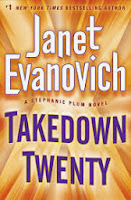 Janet Evanovich's Stephanie Plum series is an old favourite. It is a perfect distraction when work is too busy or my other reading has been too heavy. Takedown Twenty (2013) is the latest, and I will save it for the moment when life gets to hectic. The series is always hit and miss, and Evanovich went through a phase where they became very formulaic. But the last few have been more of a return to form and I have hopes that this will be a good one.
 The Quarterly Essay was a great find in 2013, so good that I have now subscribed. I have recently commenced Quarterly Essay 52, Found in Translation (2013) by Linda Jaivin and, while not something I had expected to enjoy, I am finding it really interesting. I particularly love the correspondence about previous issues, in this issue it is about The Prince by David Marr (QE50).
 Evgeny Morozov's The Net Delusion: The Dark Side of Internet Freedom (2011) was something I ordered after hearing him speak at the Festival of Dangerous Ideas. This book is about how the internet can be used as a tool for liberation, but also as a means of suppressing democracy.
 Another post-Festival purchase was David Simon's Homicide: A year on the killing streets (1991) which I have read the first few chapters of and look forward to enjoying.
 One of the books I am most excited about is Chris Ware's graphic novel Jimmy Corrigan The Smartest Kid on Earth (2000) about a lonely middle aged man with a vivid imagination. I have not read graphic novels before but purchased this one as my first foray into the genre. I have started it and think it is the most beautiful book.
In addition to these, there are the books I gave to others in the hopes of borrowing them back to read at some point. These include Nobel Prize winner Alice Munro's Dear Life (2013), Eleanor Caton's The Luminaries (2013) winner of the Booker prize, Michelle de Krester's Miles Frankin Award winning Questions of Travel (2013).
Throughout the year I also hope to add blog posts of books I have read film tie-ins, and plays. And with that in mind, I am off to see the second instalment of The Hobbit….
My first priority for 2014 is to finish the books that I have started but not yet finished, including:
- Oryx and Crake (2003) by Margaret Atwood (Update - Read Jan 2014)
- Mortality (2012) by Christopher Hitchens (Update - Read Feb 2014)
- The Cuckoo's Calling (2013) by Robert Galbraith (JK Rowling) (Update - Read Sept 2014)
- A Sport and a Pastime (1967) by James Salter
- World of Wonders (1975) by Robertson Davies
- A Feast for Crows (2005) by George RR Martin
- Wolf Hall (2009) by Hilary Mantel (Update - Read September 2025)
- And the Mountains Echoed (2013) by Khaled Hosseini
- The Getting of Wisdom (1910) by Henry Handel Richardson
- The Slap (2008) by Christos Tsiolkas
In terms of new books, I have a bunch of recent acquisitions that I plan to read in 2014.


 Another post-Festival purchase was David Simon's Homicide: A year on the killing streets (1991) which I have read the first few chapters of and look forward to enjoying.
In addition to these, there are the books I gave to others in the hopes of borrowing them back to read at some point. These include Nobel Prize winner Alice Munro's Dear Life (2013), Eleanor Caton's The Luminaries (2013) winner of the Booker prize, Michelle de Krester's Miles Frankin Award winning Questions of Travel (2013).
Throughout the year I also hope to add blog posts of books I have read film tie-ins, and plays. And with that in mind, I am off to see the second instalment of The Hobbit….
Looking Back: last year's reading
The past year has been a tough one for reading. I started a new job at the start of 2013 and found that my free time was limited and my reading was often work-related rather than for pleasure. As a consequence, my blogging was sporadic and there are many half-read books throughout my home that I need to finish.
 I started 2013 deeply engrossed in the Game of Thrones series, and spent many hours in that world. This meant that the quantum of books I normally would have read was seriously lessened. My obsession with this series was all-encompassing and despite starting A Feast for Crows (2005), I had to stop and put it away, to give time to other books on my shelf (but I suspect I will pick this up again shortly when the television series airs and I am thrown back into this world).
When I did get to read, I managed to balance my fiction and non-fiction reads as well as balancing tried and tested authors (Evanovich, Roach) with authors that I have recently been introduced to (Kent, Egan, Hospital, Ehrenreich and Flynn). Another great find was the Quarterly Essay, a thought provoking essay on contemporary subjects by leading Australian writers.
 Certainly there were many highlights in 2013, but my favourite book was definitely Hannah Kent's debut novel Burial Rites (2013). This young Australian author is a promising talent and I look forward to seeing what she comes up with next.
This was followed closely by Jennifer Egan's Pulitzer Prize winning A Visit from the Goon Squad (2010) and Gillian Flynn's bestselling Gone Girl (2013), both of which I enjoyed immensely.
I started the year with a list of all the books I was going to read, and ultimately ended up finishing very few of them as I was time-pressed and found so many new authors to explore. But I am hopeful that 2014 will be a better year for me with more time to read and blog, so from now I will be looking forward...

When I did get to read, I managed to balance my fiction and non-fiction reads as well as balancing tried and tested authors (Evanovich, Roach) with authors that I have recently been introduced to (Kent, Egan, Hospital, Ehrenreich and Flynn). Another great find was the Quarterly Essay, a thought provoking essay on contemporary subjects by leading Australian writers.
 Certainly there were many highlights in 2013, but my favourite book was definitely Hannah Kent's debut novel Burial Rites (2013). This young Australian author is a promising talent and I look forward to seeing what she comes up with next.
This was followed closely by Jennifer Egan's Pulitzer Prize winning A Visit from the Goon Squad (2010) and Gillian Flynn's bestselling Gone Girl (2013), both of which I enjoyed immensely.
I started the year with a list of all the books I was going to read, and ultimately ended up finishing very few of them as I was time-pressed and found so many new authors to explore. But I am hopeful that 2014 will be a better year for me with more time to read and blog, so from now I will be looking forward...
Thursday, 21 November 2013
The Gender Card
After finishing David Marr’s Quarterly
Essay on George Pell (QE 51
- September 2013), I went searching for the previous edition. Titled Unfinished Business – Sex, Freedom and
Misogyny, writer Anna Goldsworthy explores the modern world for women in Quarterly Essay (QE50, June 2013).

Starting with Prime Minister
Gillard’s famous speech from October 2012, when she passionately exclaimed that
“I will not be lectured about sexism and misogyny by this man” in reference to
then opposition leader Tony Abbott. The speech reverberated around the globe as
she spelled out how she was offended by Abbott’s continual sexist attacks.
With over 2 million views on YouTube, Gillard’s speech was spoken about in
office corridors and homes, as she vocalised what many girls and women had felt
but never voiced.
Goldsworthy uses Gillard’s speech
as a springboard to talk about what it means to be a woman in modern Australia.
At the time of publication, Gillard was Prime Minister, a female Governor
General, a female Speaker in parliament, and a large number of talented women
on the front bench. So it would seem that Australian women are in a remarkable
position. However, now a mere five months later, Abbott is in government with only one woman
in his cabinet. It is small concession that he has appointed a woman as
Speaker. Women have been back-benched and sidelined.
Over the course of the essay
Goldsworthy issues four cautionary tales: the politician (Gillard), the miner
(Gina Rinehart), the scholar (Mary Beard) and the novelist (Hilary Mantel). She
then turns to popular culture (Mad Men,
59 Shades of Grey, Twilight, Girls, Lady Gaga) and what this tells us about
women. She talks about shame and subjectivity, the narcissism of the Facebook
age, and about the increasing violence in gonzo porn. Goldsworthy questions what world our daughters will grow up in, where they are subjectively judged and held up to unrealistic and unattainable standards of what it means to be a woman.
As a feminist keenly attuned to the
issues in this essay, I found Goldsworthy’s article an interesting and
important read. I had wanted and expected it to be more about politics,
however, and the arguments she made would have benefited from contributions from
some of the other women in Parliament – such as the so-called ‘handbag hit
squad’ of women on Gillard’s front bench about allegations of 'playing the gender card'. This was a missed opportunity. While
I didn’t agree with everything Goldsworthy had to say, I enjoyed her
perspective and her contribution to this necessary discussion.
Sunday, 3 November 2013
A Year of Dangerous Reading
Each year one of the events I most look forward to is the Festival of Dangerous Ideas, put together by the Sydney Opera House and the St James Ethics Society. This year's Festival, held 2-4 November 2013, featured brave thinkers from around the world. I enjoy hearing them debate provocative ideas and pose alternative futures. While I may not always agree with them, they always get me thinking and keen to learn more. After each Festival, I tend to add to my ever growing To Be Read pile as I am keen to read their works.


Former Victorian Police Commissioner Christine Nixon presented a really reasoned approach to policing. She made particular mention of the need to look differently at juvenile justice and aboriginal incarceration rates, as these are two areas we are failing in. Her autobiography Fair Cop (2011) highlights her interesting career. She has always been an interesting figure and I have a lot of admiration for her - particularly her support of the LGBT community, advocacy for victims of domestic violence.
 Former Baltimore police officer, now professor of sociology, Peter Moskos was In Defense of Flogging (2011) discussing his controversial idea to reduce incarceration rates by giving the convicted a choice between corporal punishment and a jail sentence, the subject of his book. While his thesis is intriguing, I don't have a real interest in reading this title. He is also the author of Cop in the Hood: My year policing Baltimore’s Eastern District (2008).The final panelist was David Simon, journalist and TV producer, who is the creator of my all-time favourite show The Wire. Simon spoke passionately about the failings of the war on drugs, the ridiculousness of mandatory sentencing, three-strikes-your-out policies, and the outsourcing of prisons to the private sector. I am keen to read Simon's book Homicide: A year on the killing streets (1991) and The Corner: A year in the life of an inner-city neighborhood (1997). Simon spoke about the many costs of incarceration and the futility of 'life' sentences.
 Another speaker I enjoyed at the Festival was Evgeny Morozov, a Belarusian writer and researcher about the implications of technology. I am keen to read some of his books, in particular: The Net Delusion: The Dark Side of Internet Freedom (2011) and To Save Everything, click here: The folly of technological solutionism (2013). He has some interesting views on society's over-reliance on mobile phones and other devices. He made it very clear that we cannot rely on apps for everything.
I also attended a panel with the subject The World is Not Ready for Women in Power. Hosted by journalist Julia Baird, the panel featured four dynamic women with different views on this subject.
 Hanna Rosin, author of The End of Men: and the rise of women (2010) stated that it doesn't matter if anyone is ready. She said that ten years ago America wasn't ready for an African-American President but then along came Obama. She reckons Hillary Clinton has a pretty good shot. I have read some of Rosin's magazine articles but have not yet read her book, but it sounds really interesting.
 Environmental activist and anti-globalisation author Vandana Shiva was a delight. The author of Ecofeminism (1993), Stolen Harvest (2000), Making Peace with the Earth (2013) and many more titles, she had a lot to say about the rise of corporations. Shiva said one of the best things women can do to make the world ready for women in power is to raise their sons well.
  Australian feminist Anne Summers spoke about Julia Gillard and noted that many countries have had a woman leader, but very few countries have done it more than once - viewing the female leader as an experiment that didn't work. She spoke about misogyny and the difficulty women have in Australian politics. Summers is the author of feminist classic Damned Whores and God's Police (1975), The End of Equality (2003) and most recently The Misogyny Factor (2013). I have never read Damned Whores and will seek it out.
  The final member of the panel was American sociologist Arlie Hochschild. She has written a number of books that I am keen to read. In particular The Outsourced Self: What happens when we pay others to live our lives for us (2012), The Managed Heart: Commercialization of human feeling (1983) and The Second Shift: Working families and the revolution at home (1989). Hochschild spoke about the second wave of feminism and the need for a new grassroots campaign. I am looking forward to The Outsourced Self.
  Another festival speaker with a book I want to read is Australian John Safran. His latest publication is Murder in Mississippi (2013), about the killing of a white supremacist in the Deep South by an African-American. Safran spent time unravelling this case and documenting it in this true crime book. Sounds a bit like one of my favourite books, Truman Capote's In Cold Blood.
  Those who know me well know that I am a huge fan of the late Christopher Hitchens. His brother, journalist Peter Hitchens, was at the Festival discussing his book, The War We Never Fought: The British Establishment’s Surrender to Drugs (2013). He discusses how drugs have become increasingly socially acceptable and governments have done little to stop it. Peter Hitchens is a far too conservative for my liking, so despite the interesting topic, I am unlikely to read this book. After seeing Hitchens on Q&A, it has become very clear his views on the world don't interest me.
So that was my Festival for 2013 and I have plenty of good reading to do which will keep me busy until next year!
Saturday, 2 November 2013
Between the lines
Bernhard Schlink’s The Reader (1995) is a bestselling novel
made even more popular by the award winning film adaptation in 2008. The story
is now largely familiar, but I will recap below with a warning of spoilers.
 Narrated by Michael
Berg, a lawyer recollecting on his past, the story is told in three parts. The
first features a 15-year-old Michael as he began a relationship with Hanna
Schmidt in post-WWII Germany. Hanna is a much older woman who reveals very
little of herself to Michael. There is tenderness in their relationship, and
the two spend much of their time together with Michael reading classic novels
aloud to her. Then, Hanna suddenly leaves and Michael is left wondering what
happened to her. All his subsequent relationships are tarnished by the memory
of Hanna.
Narrated by Michael
Berg, a lawyer recollecting on his past, the story is told in three parts. The
first features a 15-year-old Michael as he began a relationship with Hanna
Schmidt in post-WWII Germany. Hanna is a much older woman who reveals very
little of herself to Michael. There is tenderness in their relationship, and
the two spend much of their time together with Michael reading classic novels
aloud to her. Then, Hanna suddenly leaves and Michael is left wondering what
happened to her. All his subsequent relationships are tarnished by the memory
of Hanna.
 The film
version of this novel was directed by Stephen Daldry and starred Ralph Fiennes
as the adult Michael and Kate Winslet as Hanna. Winslet was excellent in the
role, winning the Academy Award for Best Actress. I thought the film was very good but lacked
the punch of the novel, in some ways glossing over the complexities I found in
the book. It is still very much worth watching, but I would encourage reading
the book first.
The film
version of this novel was directed by Stephen Daldry and starred Ralph Fiennes
as the adult Michael and Kate Winslet as Hanna. Winslet was excellent in the
role, winning the Academy Award for Best Actress. I thought the film was very good but lacked
the punch of the novel, in some ways glossing over the complexities I found in
the book. It is still very much worth watching, but I would encourage reading
the book first.
 Narrated by Michael
Berg, a lawyer recollecting on his past, the story is told in three parts. The
first features a 15-year-old Michael as he began a relationship with Hanna
Schmidt in post-WWII Germany. Hanna is a much older woman who reveals very
little of herself to Michael. There is tenderness in their relationship, and
the two spend much of their time together with Michael reading classic novels
aloud to her. Then, Hanna suddenly leaves and Michael is left wondering what
happened to her. All his subsequent relationships are tarnished by the memory
of Hanna.
Narrated by Michael
Berg, a lawyer recollecting on his past, the story is told in three parts. The
first features a 15-year-old Michael as he began a relationship with Hanna
Schmidt in post-WWII Germany. Hanna is a much older woman who reveals very
little of herself to Michael. There is tenderness in their relationship, and
the two spend much of their time together with Michael reading classic novels
aloud to her. Then, Hanna suddenly leaves and Michael is left wondering what
happened to her. All his subsequent relationships are tarnished by the memory
of Hanna.
Years go by and the
second part shows Michael at university studying law. The Nazi war crimes
trials are being held and Michael discovers that Hanna is on trial for her role
as a concentration camp guard. Michael
realises that he never really knew Hanna.
Is she guilty or was she too a victim? Did she really understand what
she was part of it? Can she atone for crimes? Michael grapples with these
questions and struggles with his feelings.
The third part is
much later with Michael corresponding to an imprisoned, older Hanna. He is
trying to reconcile the love he had for her in his youth and his hatred of the
evils she committed.
Schlink has an easy
style, gently unfolding the tale in layers.
The story is complex, raising deeply moral questions, and yet is a
quick, accessible read. It is effectively a study in guilt and atonement, using
the Holocaust as the catalyst to reflect on generational responsibility and the
legacy of what came before. Innocence is lost, secrets are revealed and judgments
are made.
The character of
Hanna is difficult to reconcile. She used a young man, committed horrible
atrocities so the reader can see her as a war criminal and a paedophile. And
yet the reader can feel empathy for her tragic life. Faced with the dilemma of
self-preservation or resistance, Hanna made a fateful choice. As she asks the
judge in her trial “What would you have done?” This question leaves readers
wondering what they would have done in her shoes.
 The film
version of this novel was directed by Stephen Daldry and starred Ralph Fiennes
as the adult Michael and Kate Winslet as Hanna. Winslet was excellent in the
role, winning the Academy Award for Best Actress. I thought the film was very good but lacked
the punch of the novel, in some ways glossing over the complexities I found in
the book. It is still very much worth watching, but I would encourage reading
the book first.
The film
version of this novel was directed by Stephen Daldry and starred Ralph Fiennes
as the adult Michael and Kate Winslet as Hanna. Winslet was excellent in the
role, winning the Academy Award for Best Actress. I thought the film was very good but lacked
the punch of the novel, in some ways glossing over the complexities I found in
the book. It is still very much worth watching, but I would encourage reading
the book first.Friday, 11 October 2013
Blind Faith
David Marr is an exceptional journalist, a compelling writer and a man of conviction. His previous submissions to the Quarterly Essay have focussed on Kevin Rudd (QE 38) and Tony Abbott (QE 47). Now, with the latest Quarterly Essay (QE 51 - September 2013), Marr turns his sights on Cardinal George Pell and the role he has played in the Australian Catholic Church's response to child sexual abuse in The Prince - Faith, Abuse and George Pell.
 Marr traces the life of George Pell from his early days in Ballarat as the son of a publican raised to be devout by his Catholic mother and his early religious instruction. It shows Pell's climb through the church ranks from parish priest to bishop to archbishop to cardinal, achieved largely through his connection to Rome and his deep conviction in Catholic doctrine. Also evident is how Pell did not have universal support from Australian Catholics in the church hierarchy - many of whom thought this uncharismatic man was unable to manage contemporary issues.
At all points in his career the scandal of sexual abuse was never far away, but Pell was seemingly blind to it. It beggars belief that Pell could have lived and worked alongside predatory clergy, often grooming their victims in packs, and he somehow knew nothing of what was going on. Worse than this though was his response once abuse was identified - as the Church moved to protect the perpetrator and silence the victims. The Church's Towards Healing protocol would ultimately cause more victimisation but save the Church a fortune in legal costs and payouts to victims.
There were several points during reading this essay where my blood boiled with anger: the way in which paedophile priests were moved from parish to parish, the way victims were bullied into silence and the way some police and politicians maintained a stance that the Catholic Church should handle these matters with prayer rather than prosecution. What is clear is the devastating impact the acts and omissions by Pell and his Church have had on victims: drug abuse, alcoholism, criminal activity, self harm, broken relationships, mental illness, suicide. This tragedy affects individuals, families, communities and generations.
Across Australia there are currently several investigations into child sexual abuse. In 2012 the NSW government announced a Special Commission of Inquiry into police handling of abuse by the Catholic Church in the Hunter region. At the same time the federal government created the Royal Commission into Institutional Responses into Child Sexual Abuse which has been hearing evidence from victims and alleged perpetrators, institutions and experts with the goal of providing an initial report in June 2014. Each evening on the nightly news we get snippets from revelations of the devastation caused by the church and other institutions. There is no way to repair this damage.
Ultimately, this essay reveals Pell as an ambitious man of blind faith who put the Catholic Church ahead of the children and families in their care. Despite his apologies and claims of cooperation, Pell has done serious damage. If only he had been a better man - one who saw that the best interests of the Church would have been served by rooting out evil, punishing perpetrators, protecting victims and thereby restoring the faith.
 Marr traces the life of George Pell from his early days in Ballarat as the son of a publican raised to be devout by his Catholic mother and his early religious instruction. It shows Pell's climb through the church ranks from parish priest to bishop to archbishop to cardinal, achieved largely through his connection to Rome and his deep conviction in Catholic doctrine. Also evident is how Pell did not have universal support from Australian Catholics in the church hierarchy - many of whom thought this uncharismatic man was unable to manage contemporary issues.
Sunday, 6 October 2013
Stormy Weather
Forecast: Turbulence (2012) is a collection of nine short stories by Janette Turner Hospital. Set in Australia, Canada and the US, these stories are strongly linked together by themes of disquiet and unrest.
The weather is ever present in these tales, looming overhead, threatening. From torrential rain and hurricanes on the Carolina coast to the red dust storms of drought plagued outback, the rough weather blows ominously through each tale.
 The stories are meant to be uncomfortable focussing on themes of domestic violence, self-harm, child abuse, kidnapping and the like. Each unsettling tale reveals characters with lives as turbulent as the weather around them. In "Blind Date" a young boy awaits the arrival of his long-absent father. In outback Queensland a teenage girl escapes from her secessionist father and his "Republic of Outer Barcoo". While in "Weather Maps" two girls, forced to visit their abusive stepfathers in prison, compare their wounds.
Janette Turner Hospital uses language masterfully. For example, in a story about a whale-watching boat skipper, "Salvage", she refers to rumours that "multiply like krill". Hospital also knows how to craft short stories as contained vignettes, leaving the reader with food for thought which will linger long after the storm passes.
Forecast: Turbulence was shortlisted for the 2012 Prime Minister's Literary Awards.
The weather is ever present in these tales, looming overhead, threatening. From torrential rain and hurricanes on the Carolina coast to the red dust storms of drought plagued outback, the rough weather blows ominously through each tale.

Janette Turner Hospital uses language masterfully. For example, in a story about a whale-watching boat skipper, "Salvage", she refers to rumours that "multiply like krill". Hospital also knows how to craft short stories as contained vignettes, leaving the reader with food for thought which will linger long after the storm passes.
Forecast: Turbulence was shortlisted for the 2012 Prime Minister's Literary Awards.
Sunday, 29 September 2013
Have a Nice Day!
American writer Barbara Ehrenreich wrote Smile of Die: How Positive Thinking Fooled America and the World (2009) in response to the multi-billion dollar industry promoting the notion that positive thinking can cure what ails you.
 When she was diagnosed with breast cancer, Ehrenreich became frustrated by continually being told during her treatment and recovery that attitude was the key to her survival. From the pink products and positive affirmations, to putting on a brave face for loved ones and survivor stories, there was an expectation that patients must see illness as an opportunity and have the right attitude to get well.
Sceptical of the guff surrounding thinking your way to wellness, Ehrenreich set out to explore the origins of this new thinking from the 19th century response to Calvinism though to motivational speakers, self-help gurus, spiritual advisers, and get-rich-quick schemes. She discovered that Americans have whole-heartedly bought in to the belief that you can visualise health, wealth and happiness. All it takes to attain your desires is thinking yourself in a new situation.
While on the surface this seems like a great idea - an easy way to imagine success without putting in much effort - what happens when things go wrong? Clearly, you must have attracted the bad things that happened to you and therefore deserved them. The cult of positive thinking would have you believing that it is your fault because you didn't pray enough or failed to be sufficiently optimistic.
 Smile or Die is a well-researched, though-provoking and powerful critique. Ehrenreich's humour balances her skepticism. Ultimately I found it a refreshing alternative to the fortune cookie wisdom and empty platitudes spruiked by so many business books and self-improvement tomes.
In America Ehrenreich's book was published as Bright-Sided: How Positive thinking is Undermining America (2009). Sounds like a more positive title for the American market!
Sceptical of the guff surrounding thinking your way to wellness, Ehrenreich set out to explore the origins of this new thinking from the 19th century response to Calvinism though to motivational speakers, self-help gurus, spiritual advisers, and get-rich-quick schemes. She discovered that Americans have whole-heartedly bought in to the belief that you can visualise health, wealth and happiness. All it takes to attain your desires is thinking yourself in a new situation.
While on the surface this seems like a great idea - an easy way to imagine success without putting in much effort - what happens when things go wrong? Clearly, you must have attracted the bad things that happened to you and therefore deserved them. The cult of positive thinking would have you believing that it is your fault because you didn't pray enough or failed to be sufficiently optimistic.
Smile or Die is a well-researched, though-provoking and powerful critique. Ehrenreich's humour balances her skepticism. Ultimately I found it a refreshing alternative to the fortune cookie wisdom and empty platitudes spruiked by so many business books and self-improvement tomes.In America Ehrenreich's book was published as Bright-Sided: How Positive thinking is Undermining America (2009). Sounds like a more positive title for the American market!
Wednesday, 25 September 2013
In Cold Blood
I have spent the last few days in
Iceland. Australian author Hannah Kent
transported me there with her deliciously descriptive debut novel, Burial Rites (2013). So engrossing was this book that I could hear
the wind rattle the windows in my claustrophobic turf croft and feel the chill
in my bones as the snow piled high outside my door.
 Kent tells the story of Agnes Magnusdottir,
a woman in her thirties who was sentenced to death for her role in the violent
murder of two men on a remote farm in Northern Iceland. As there was no prison
to hold her, Agnes was sent to a farm in Kornsa to live with a Christian family
while special equipment was being created for her execution. Assistant Reverend
Toti is appointed to administer to her spiritual needs and prepare her for her
death.
Kent tells the story of Agnes Magnusdottir,
a woman in her thirties who was sentenced to death for her role in the violent
murder of two men on a remote farm in Northern Iceland. As there was no prison
to hold her, Agnes was sent to a farm in Kornsa to live with a Christian family
while special equipment was being created for her execution. Assistant Reverend
Toti is appointed to administer to her spiritual needs and prepare her for her
death.
Told from alternating perspectives as the
seasons pass, Agnes’ childhood and the events leading up to the murders
gradually unfold. The whole community is impacted by the arrival of Agnes,
especially the family with whom she is billeted. The relationship between
Margret and Agnes is particularly interesting, commencing with fear and disdain
and evolving into empathy and even admiration.
Reminiscent of Margaret Atwood’s brilliant Alias Grace (1996), this historical
fiction is based on real events and Kent has done tremendous research to embed
this fictional account with such rich detail. Readers are left to contemplate
broad issues of justice, guilt/innocence, capital punishment, poverty, family, faith, freedom and love.
I did not anticipate how much of
page-turner this novel would be, and once I started I could not stop. I highly
recommend this novel and cannot wait to see what Kent writes next.
Saturday, 6 July 2013
Gone Baby Gone
Gillian Flynn's Girl Gone (2012) is a thrilling
story of a marriage between two people who are not what they appear. Nick and
Amy are a glittering, gorgeous couple living an envied life in New York. Nick
is a pop culture journalist known for his quick wit and film trivia. A generation
of young people have grown up knowing Amy as the perfect heroine of the
“Amazing Amy” books, authored by Amy’s parents.
 Their perfect life
changes when they lose their jobs and their financial reserves begin to dry
up. Nick decides they should leave life
in Manhattan to return to his hometown of Carthage, a small town on the
Mississippi River, to care for his ailing mother. Amy reluctantly travels with
him and tries to adjust to her new life. On the morning of
their fifth wedding anniversary, Nick comes home to find his front door open
and the scenes of a struggle. With his wife missing, Nick quickly finds himself
the prime suspect in her disappearance and presumed death. What happens next is
an intriguing tale of love and lies.
Their perfect life
changes when they lose their jobs and their financial reserves begin to dry
up. Nick decides they should leave life
in Manhattan to return to his hometown of Carthage, a small town on the
Mississippi River, to care for his ailing mother. Amy reluctantly travels with
him and tries to adjust to her new life. On the morning of
their fifth wedding anniversary, Nick comes home to find his front door open
and the scenes of a struggle. With his wife missing, Nick quickly finds himself
the prime suspect in her disappearance and presumed death. What happens next is
an intriguing tale of love and lies.
 Their perfect life
changes when they lose their jobs and their financial reserves begin to dry
up. Nick decides they should leave life
in Manhattan to return to his hometown of Carthage, a small town on the
Mississippi River, to care for his ailing mother. Amy reluctantly travels with
him and tries to adjust to her new life. On the morning of
their fifth wedding anniversary, Nick comes home to find his front door open
and the scenes of a struggle. With his wife missing, Nick quickly finds himself
the prime suspect in her disappearance and presumed death. What happens next is
an intriguing tale of love and lies.
Their perfect life
changes when they lose their jobs and their financial reserves begin to dry
up. Nick decides they should leave life
in Manhattan to return to his hometown of Carthage, a small town on the
Mississippi River, to care for his ailing mother. Amy reluctantly travels with
him and tries to adjust to her new life. On the morning of
their fifth wedding anniversary, Nick comes home to find his front door open
and the scenes of a struggle. With his wife missing, Nick quickly finds himself
the prime suspect in her disappearance and presumed death. What happens next is
an intriguing tale of love and lies.
Told in alternating
narratives from Nick in the present day and Amy’s voice echoing from her diary
entries, author Gillian Flynn builds the story in such a way as to make you
think you know what is going to happen. Suddenly there is a twist and another
and another until it is clear that you have no idea how the story will end. The
change in points of view with each chapter has the reader changing sides as
well – yes, he must have done it/no, he couldn’t have – perhaps their “perfect”
marriage wasn’t so perfect after all.
I really relished
this novel. It held my interest from the beginning, and I couldn’t wait to read
what happened next. Part of the reason I enjoyed it was that Flynn has created love-to-hate,
seriously damaged characters that manipulate the reader with their version of
events. Flynn’s depiction of the media circus following this case critiques our lust for true crime; where guilt is assumed before the
facts are known. The ending left me a bit flat, however, as I felt the tension and build up would have a more dramatic conclusion.
Gone Girl is an
enjoyable page-turner that is a perfect holiday read. But… it deserves a much better
title!
Subscribe to:
Posts (Atom)