Saturday, 21 May 2016

Sydney Writers' Festival 2016 - Day 1

Even before the Sydney Writers' Festival (SWF) program was released, I was planning my week. On International Women's Day on 8 March 2016, SWF announced that Gloria Steinem would be headlining the event. I immediately bought tickets, which was a good thing as her session sold out, as did many of the others I am attending.

My festival companion is away, so I am largely flying solo this year. I have been left to my own devices and consequently may have booked in a few too many sessions! However, I will be spending much of Friday with a good friend and I have plenty of people I expect I will see at the festival.

So, let's begin with Day 1 - Thursday 19 May and what I got up to.

Coffee and Papers

Each morning of the festival the Sydney Morning Herald hosts an informal session at the Theatre Bar at the End of the Wharf with various authors stopping in to discuss current affairs. I decided to swing by and hear Aleksander Hemon and Madeline Gleeson. It was packed with early morning festival goers keen to hear discussions about the latest news. I didn't stay for too long (as I needed to join the queue for my next session) but during the time I was there discussion focussed on Minister Peter Dutton's xenophobic comments about illiterate refugees taking Australian jobs. Minister Dutton's remarks would come up time and again throughout the day as authors were horrified by his stance.

Secret Weapons of Investigative Journalists

I had planned on going to a different session, one where historians Alan Atkinson, Carolyn Holbrook, Babette Smith and Caroline Butler-Bowden discuss how they choose their subjects.  However, at the last minute I joined a different queue and was delighted with my choice. Award winning journalist Quentin Dempster chaired the panel which featured investigative journalists Suzanne Smith, Caro-Meldrum-Hanna and Steve Pennells.

Suzanne Smith spoke about her long investigation into child sexual abuse in the Catholic Church, particularly in the Newcastle Maitland area. Whistleblower Peter Fox, the police officer who bravely spoke out about what was happening, was instrumental to Smith's story and was in the audience. Smith's investigation shone a spotlight on the issue, which lead to Prime Minister Gillard calling the Royal Commission into Child Sexual Abuse.

Suzanne Smith, Quentin Dempster, Caro Meldrum-Hanna, Steve Pennells  
Caro Meldrum-Hanna has uncovered many stories, but most recently she conducted a lengthy investigation into the greyhound live-baiting scandal. She spoke about the lengths her team went to to uncover the horrific practices of live-baiting and abuse in the greyhound racing industry. During the talk Meldrum-Hanna also spoke about her work on the Health Services Union case where she investigated alleged corruption by Michael Lawlor and Cathy Jackson.

Steve Pennells is best known for his long-standing battle with mining magnate Gina Rinehart. Writing for the West Australian, Pennells questioned Rinehart's funding of (now deputy Prime Minister) Barnaby Joyce's campaign. Rinehart sued and Pennells battled in court for two and a half years to protect his sources.

This was a really interesting session as journalists uncovered their secret weapons: trusting sources; tenacity; curiosity; commitment and smarts. They talked about whistleblowers, defamation, major stories like the Panama Papers and more. A great hour of discussion to start my festival.

Writers in Danger

In this sold out session, Julian Burnside QC spoke with writers who have been threatened or persecuted for their work. It was a thrill to see Burnside, as I have tremendous admiration for his brilliant mind and consistent advocacy for refugees. He is a living legal legend.

Chinese intellectual Xu Zhiyuan has written 11 books and is a columnist for the Financial Times. He is the author of Paper Tiger: Inside the Real China (2016) about the transformation taking place inside China. Zuiyuan spoke about the complexities of modern China, his heroes (like Australian writer Simon Leys and writer Albert Camus), and the fear most Chinese people live in. The fear he described is internalised and has become 'the driving force of economic growth.'

Samanth Subramanian is a New Delhi-based journalist. He has written for the Guardian, New York Times, Wall Street Journal, Newsweek and other publications. His latest book, This Divided Island: Life Death and the Sri Lankan War (2015), explores the legacy of thirty years of war in Sri Lanka.

Subramanian spoke about his ten months in Sri Lanka and the so called 'white van abductions' where people were disappeared. He knows of journalists who had been white vanned and been returned to families with their legs broken. They were there lucky ones. He called on the State to be better protectors of journalists and to prosecute the abusers and harassers.

Indian author Deepti Kapoor has published her first novel, A Bad Character (2015) about a young woman in contemporary New Delhi torn between tradition and desire.  She spoke about the dangers many journalists in India face - the motorcycle drive by killings - and said that in some areas of India the danger is more profound. Kapoor said that journalists writing on certain topics  (illegal sand mining, collusion, caste system, Hindu religion) will make you a target. 
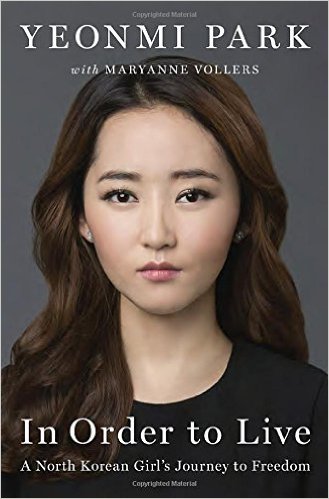
Yeonmi Park is a human rights activist and a defector from North Korea. Her memoir In Order to Live (2015) recounts her escape from the brutal regime. She had an interesting story to tell about her life in North Korea, her escape, following the north star as she walked across the desert in Mongolia, and how her freedom has put her family in North Korea in danger.

After the panel discussion I was able to meet Anna Funder and she signed a copy of All That I Am  (2011) for me (read my review). I then ran into Peter Garett, who I am seeing tomorrow. We chatted for a but, took a selfie and he signed a copy of his memoir Big Blue Sky (2015). Such a lovely man.


Burnside, Park, Kapoor, Subramanian and Xiyuan


Australia's Second Chance

This session with Walkley Award winning journalist George Megalogenis was sold out, and with good reason.

He spoke with Jamila Rivzi about his book, Australia's Second Chance (2015), which explores Australia's history of boom and bust and how the isolationist path we are on at the moment will not serve us well. While I have not read this book, I have recently read Megalogenis' Quarterly Essay which covers much of the same ground.

Megalogenis argues that there is 'a more interesting story to tell about the present by looking at the past'. He spoke about Australia's cycles of boom and bust and the links between immigration and prosperity. 

He spoke about his own parents who came here after WW2 and referenced Duttons remarks. He talked about our culture of mateship and a fair go. 

One thing that particularly resonated was when he spoke about the current political desire to capitalise on people's fears of new arrivals.  He said there is a paradox when people are concerned 'that new arrivals won't embrace Australian values when we cannot even articulate these values ourselves'.

I really enjoyed this session and must write up my blog entry on his Quarterly Essay

The Danger of Ideas

I was really looking forward to this session as I wanted to see many people on this panel, chaired by Rebecca Huntley. The discussion focussed on censorship and freedom of speech. 
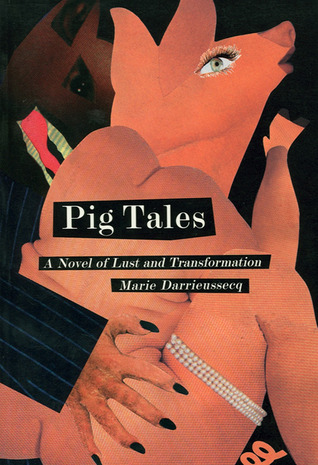
Marie Darrieussecq is a French novelist and writer for Charlie Hebdo. I met her before the session and she signed a copy of Pig Tales (1997) for me. Marie spoke passionately about the chilling effect of the terror attacks in Paris. She explained her decision to work at Charlie Hebdo following the murder of so many staffers and the intense security regime. She spoke of fear and how it makes her look differently at people on the street, always bracing for the next wave of violence. I really feel for her and her family and I admire her courage. 

Fellow Canadian/Australian Tara Moss is the author of numerous crime novels and some interesting non-fiction about women and feminism, including The Fictional Woman (2014). Moss is an eloquent speaker who talked about attempts to silence women through threats of violence. She cited the example of Anita Sarkesian who has been subject to abuse and threats for speaking out about sexism in the gaming world. 

Tim Soutphommasane is the Australian Race Discrimination Commissioner. His latest book is I'm not racist but... 40 years of the Racial Discrimination Act (2015). I had not heard him speak before but he was thoroughly impressive. He spoke passionately about human rights and the need to challenge racism.When an audience member made some comments about Islam, he was quick to respond and clear about the need to embrace diversity.  

The final member of the panel was Susie Orbach. I was most keen to hear Susie speak ever since I read her classic book,  Fat is a Feminist Issue (1978) some twenty years ago. She spoke about the origins of political correctness among other things. Orbach was delightful and after the session I met her at the book signing where she took a photo with me and signed my book. 

Many subjects were discussed including trigger warnings ('this story may contain content distressing to some people'), the rise of far right parties in France and Austria, Trump, Germaine Greer and more. This was a brilliant session which left me feeling hopeful about the future as despite all the fear, violence and hatred in the world, there are strong voices speaking out and putting a contrary view.
Darriussecq, Moss, Soutphommasane, Orbach and Rebecca Huntley

Jeanette Winterson: The Gap of Time

After finishing my previous session I rushed from the wharves to the City Recital Hall to meet a friend for Jeanette Winterson. 

I have long been a fan of Winterson's novels since I read Oranges are Not the Only Fruit (1985) in the early 1990s. I read many of her novels in those days, including Sexing the Cherry (1989) and Written on the Body (1992), then I took a break before reading Lighthousekeeping (2004) when it came out. I have been meaning to read her memoir Why be happy when you could be normal? (2011) as I reckon it would be a cracker as she has had an interesting life.

Winterson was speaking about her latest book, The Gap of Time, which is a retelling of Shakespeare's A Winter's Tale. She claims that this is not a retelling of A Winter's Tale, but more of a 'cover version'. Commissioned by publisher Hogarth, many of Shakespeare's plays are being retold by modern authors as part of the bard's 400th birthday commemorations. 

This session was phenomenal, almost theatrical. Winterson stood alone on stage and took us back in time to Shakespeare's era. She spoke of the Globe theatre and how the bard crafted his plays to appeal to the masses. Winterson spoke to why this play appealed to her and said 'in the writer's mind, autobiography and imagination collide'.  

She then read from her book for about twenty minutes but this was no ordinary, dry reading.  Winterson acted out the work, complete with sound effects, bringing it to life.

After the session I met Winterson and she signed her memoir for me. 


Well, that is day one done. I left the festival full of inspiration, excitement and a desire to read even more. It is hard to decide what the highlight is from day one as I truly enjoyed all the sessions. But if I had to decide, I would say Jeanette Winterson - she was truly wonderful.

Home late with just enough time to unpack all my signed books including:

  • Tara Moss - The Fictional Woman (2014)
  • Marie Darrieussecq - Pig Tales (1997)
  • Jeanette Winterson - Why Be Happy When You Can Be Normal (2011)
  • Susie Orbach - Fat is a Feminist Issue (1978)
  • Peter Garrett - Big Blue Sky (2015)

I have an early start tomorrow as Friday is my biggest day at the Festival.

Saturday, 14 May 2016

The Captain's Call

Conservative columnist Niki Savva has produced a wonderfully juicy, fly-on-the-wall account of the rise and fall of Prime Minister Tony Abbott. In The Road to Ruin (2016), Savva chronicles "how Tony Abbott and Peta Credlin destroyed their own government" much to the delight of political affairs junkies like me.

I should start by saying I am entirely biased - I did not like Tony Abbott or his politics. But I do care about government and parliamentary process, and I am deeply concerned about the impact of the revolving leadership in Australia on our economy, society and standing in the world. Abbott's two years as PM have left our nation worse off as he tried to turn us into a fearful, distrusting, unkind and xenophobic country.

So, with that said, this book about the government's implosion made me squeal with delight as Savva digs deep into Abbott's many failings.

By most accounts Abbott is a political fighter and was an effective Opposition leader. He plays dirty, divisive politics and was obsessed with taking out the top job. Once he got there however he could not transition into the role and become a true leader. Abbott is a wrecker, not a consensus builder. He is the king of three word slogans, not a man of ideas.

Perhaps his biggest failing was to appoint and then stand by his Chief of Staff, Peta Credlin. The co-dependent relationship between Abbott and Credlin is bizarre, to say the least.

Credlin comes across as a volatile bully - publicly ripping staff to shreds, leaking stories to the conservative press, and bursting into tears if she does not get her way. A gatekeeper and control freak, Credlin travelled everywhere with Abbott, sidelined Abbott's wife Margie, denied requests for access from Ministers and backbenchers, and even berated the PM that he would be nothing without her.

Abbott comes across as a weak and ineffective liar. He was repeatedly told by his closest allies that Credlin needed to go, that Joe Hockey should be removed as Treasurer, that more women (more than one!) should be appointed to Cabinet, that he needed to stop making captain's picks, and that he should use more temperate language. But Abbott only listened to Credlin and as such made far too many fatal mistakes.

And so, the onion-eating, shirt-fronting, winking, knights-and-damesing, boat-stopping PM bumbled along, surviving one leadership challenge in early 2015 until he was ousted in September 2015.

Savva has done her homework and has tapped into many strategically-placed named sources. She takes the reader inside the Cabinet meetings, staff rooms, and private sessions where the leadership spill was devised. Like a tightly-woven political thriller, we witness the disastrous handling of the Bronwyn Bishop 'Choppergate',  solve the mystery of the broken marble table, and the overthrow of the PM.

There has been much criticism of the fact that Savva did not seek commentary from Abbott or Credlin in response to the allegations raised in the book. While I honestly don't care what their side is, I do think they should have been given the right of reply.

I would have preferred that there was less Savva in the book. Undoubtedly Savva is a well connected Liberal, having worked for years for Peter Costello and John Howard, but her interjections into the book were an unnecessary distraction.

The Road to Ruin is well worth a read to anyone with an interest in politics and current affairs. I look forward to hearing Savva speak about her book and the post-Abbott era at the Sydney Writer's Festival next week.

Sunday, 17 April 2016

Lives of Girls and Women

Tegan Bennett Daylight's collection of short stories explore the messiness of growing up, the awkward age between teen and adult, and the angst of figuring yourself out. Six Bedrooms (2015) is a delightful read and a worthy contender for the Stella Prize.

The ten stories that make up the collection have a central coming-of-age theme. Characters recur across the stories, tying the stories together. When we first meet Tasha in "Like a Virgin" she is fifteen years old, drinking with her friend Judy. She appears again in "Firebugs", "the Bridge" and finally as an adult with a child herself in "Together Alone". While we witness Tasha growing up and maturing, the characters in the other stories tie in well.

Many of the stories are set in Sydney in the 1980s and 1990s. The protagonists are misfits, stumbling along, trying to fit in despite their lack of confidence. There are recurring themes -  loss from absent friends and family, self-doubt and inexperience, sexual desire and betrayal.

My favourite stories in the collection were "Six Bedrooms" about living in a Sydney share house, a situation that was instantly relatable, "J'aime Rose" about unrequited love, and "Trouble" about sisters living in London. The glimpses into the lives of flawed characters resonated long after the story ended.

What I really liked about Daylight's writing is how crisp she is with her prose. She treats the reader intelligently and does not over-explain. Leaving space for the reader to reflect and draw our own conclusions, she presents these vignettes like memories from old postcards or photographs - incomplete yet vivid. The best short story writers, like Alice Munro, do this exceedingly well.

I have not read Daylight's previous novels Bombora (1996), What Falls Away (2001) or Safety (2006) but I have heard her speak at the Sydney Writers' Festival and elsewhere. She is incredibly gifted and I look forward to exploring her other work.

Monday, 11 April 2016

Cyber security

Growing up in Toronto in the 1980s there were a number of kids my age abducted and killed. Leslie Mahaffy, Alison Parrott, Kristin French, Sharin' Morningstar Keenan are just a few of the girls whose tragic ends were embedded in my mind as a cautionary tale against stranger danger. In those days, we kids would play outside in laneways and parks until the streetlights came on, yet we were all too aware of the looming threat of creepy strangers.

Today there are still a lot of creeps, but they lurk in different shadows, behind proxy servers, pseudonyms and online identities. They troll the internet and engage in predatory grooming of unsuspecting young people who are just looking for friendship, love or adventure.

Fleur Ferris' debut young adult novel Risk (2015) centres on two fifteen year old girls who have been best friends since birth. Sierra is gregarious, full of life and always up for excitement. Taylor is more reserved, living with her mum after her dad's passing a few years earlier. Both are navagating the awkward teenage years of high school, first loves, parents and friendships.

Sierra has been grounded and is not allowed to use the Internet. So one day at Taylor's, Sierra strikes up an online chat with a man named Jacob Jones. He says he is only a year or two older, goes to a local school and has a lot in common with her. Jacob sends Sierra a photo; she swoons and makes plans to meet him on Friday after school. When Sierra doesn't return from her date, Taylor gets plunged into the world of online predators. 

Risk is an interesting novel. Admittedly I am not the target audience for this book, but I really enjoyed it. The novel could have been preachy and dull, instead it gave a solid message to young people about online safety. The characters felt real and believable. The story keeps momentum and comes to a satisfying conclusion. 

Ferris herself has an interesting backstory. Before turning to writing she was a police officer and a paramedic. She is acutely aware of the dangers young people can face and the need to talk openly with children about cyber safety.  I would recommend this book, especially to parents and young people.

Saturday, 9 April 2016

Ready for SWF2016

The program for the Sydney Writers' Festival was officially released on 31 March 2016. With hundreds of events over a week of literary festival goodness, it is really hard to choose what to see. Plus, with so many good sessions pitted against one another, and popular talks starting to sell out, I had to decide, coordinate with festival friends and get my tickets booked.

Fortunately I am able to take some time off work so I can attend four full days of the festival and maximise my literary overload. I will be tweeting and blogging from the event, but thought I would give a quick preview of who I will be seeing at the festival.


  • Emma Alberici, Australian journalist and Lateline host
  • Julian Barnes, Booker prize winning author
  • Rosie Batty, Australian of the Year 2015
  • Tegan Bennett Daylight, Australian fiction writer 
  • Stephanie Bishop, Australian author
  • Bob Brown, environmentalist and former Greens leader
  • William Boyd, author and screenwriter
  • Julian Burnside QC, barrister and human rights lawyer
  • Annabel Crabb, Australian journalist
  • Matthew Condon, author and journalist
  • Marie Darrieussecq, French novelist and Charlie Hebdo writer
  • Jonathan Franzen, bestselling American author
  • Anna Funder, award winning Australian author
  • Peter Garrett, Midnight Oil frontman, former MP
  • Ann Goldstein, translator for Elena Ferrante
  • Elizabeth Harrower, legendary Australian author
  • Paula Hawkins, journalist and author
  • Marlon James, Booker prize winning author
  • Deepti Kapoor, Indian novelist
  • Paul Kelly, editor at large The Australian
  • Herman Koch, screenwriter and columnist
  • Benjamin Law, screenwriter and journalist
  • George Megalogenis, award winning Australian Journalist
  • Drusilla Modjeska, Australian author
  • Frank Moorhouse, Australian author and screenwriter
  • Tara Moss, Canadian/Australian novelist
  • Susie Orbach, Feminist icon and psychotherapist
  • Yeonmi Park, human rights activist and North Korean defector
  • John Purcell, Australian author
  • Leigh Sales, Australian journalist
  • Margot Saville, political commentator
  • Niki Savva, Australian journalist
  • Babette Smith, historian
  • Tim Soutphommasane, Australian Race Discrimination Commissioner
  • Gloria Steinem, Feminist icon
  • Samanth Subramanian, Indian journalist
  • Mark Tedeschi, barrister and true crime author
  • Lucy Treloar, Australian author
  • Peter van Onselen, Australian journalist
  • Jeanette Winterson, award winning British author
  • Fiona Wright, Australian poet
  • Xu Zhiyuan, Chinese intellectual

So now I have six weeks left to finish reading the many books I bought at last year's festival to free me from any guilt about buying more. Who am I kidding? I never feel guilty about buying and reading books!

Also: my blog posts from the 2015 Sydney Writers' Festival are available.

Thursday, 7 April 2016

Miles Franklin Award Longlist 2016

Since 1957, the Miles Franklin Award is a leading literary prize in Australia established by the estate of Stella Miles Franklin. Recent past winners include:
  • Sofia Laguna for The Eye of the Sheep (2015)
  • Evie Wyld for All the Birds, Singing (2014)
  • Michelle de Krester for Questions of Travel (2013)
  • Anna Funder for All That I Am (2012)

On 5 April 2016, the longlist for the 2016 Award was announced with 9 nominees, including several that are also in the running for the Stella Prize for women. The longlisted titles are:


Ghost River by Tony Birch
A coming of age story centring on the friendship between two boys, Sonny and Ren. Set in Melbourne in the late 1960s, the two boys spend their days on the banks of the Yarra, befriending some homeless 'river men'. Tony Birch wrote Shadowboxing (2006) and Blood (2011), the latter was shortlisted for this award.


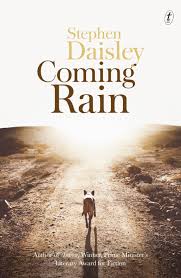
Coming Rain by Stephen Daisley
Set in wheatbelt of Western Australia in 1955, two shearers have been travelling and working together since they were boys. This is a story of mateship, loss, and the environment. Daisley originally hails from New Zealand. His first novel Traitor (2011) won the Prime Minister's Literary Award.


Hope Farm by Peggy Frew
In this coming of age story set in the 1980s, thirteen year old Silver is taken to a hippie commune by her mother.  Silver longs for stability, while her mother is infatuated by the new man in her life. Mother-daughter relationships, growing up, belonging and first loves are explored. This is the second novel from Frew, after her award winning debut House of Sticks (2010). Frew's book is shortlisted for the Stella Prize.

Leap by Myfanwy Jones                         Twenty-two year old Joe is existing, not living. He works dead end jobs, lives day to day, and has abandoned all ambitions. He is struggling with grief, loss, and guilt. Elsie too is struggling through a  bad marriage, spending her days watching tigers at the Melbourne Zoo, trying to cope with her grief. Author of The Rainy Season (2009), Jones is a Melbourne based writer.


The World Without Us by Mireille Juchau
Juchau is a well regarded Australian author who has previously been shortlisted for various literary awards. This, her third novel, is about the Muller family who reside on a farm on the north coast of New South Wales. Grieving the loss of a child, Evangeline is no longer able to paint and struggles to care for her remaining daughters. Her apiarist husband also mourns and seeks solace in drink.
The Hands - An Australian Pastoral by Stephen Orr
Set on a cattle station in western South Australia, this novel explores the relationships between three generations of one farming family. Orr is the author of Time's Long Ruin (2010) - about the disappearance of the Beaumont children - and crime novel One Boy Missing (2014).

Black Rock White City by A C Patric                A Serbian couple have migrated to Melbourne after the Bosnian war. Jovan is a cleaner at a hospital while Suzanah is a carer. Both have unseen scars from the trauma of war, as they rebuild themselves in a new land. AC Patric is an award winning author of short stories, including Las Vegas for Vegans, and this is his first novel. 

Salt Creek by Lucy Treloar                                     It's 1855 and fifteen year old Hester Finch lives in Adelaide with her family. Her father decides to move the family to Salt Creek, a remote property in South Australia. Here they learn about the Ngarrindjeri people and adapt to a new life. Treloar is best known for her short stories. Salt Creek is her debut novel.

The Natural Way of Things
 by Charlotte Wood  (read review)
Wood's novel has been compared to Margaret Atwood's A Handmaid's Tale and as such is definitely on my reading list. Two women are drugged and taken to an isolated property where they find they are imprisoned with eight other girls. Each has a common past for which they are being punished in this powerful feminist novel.

The Shortlist will be announced in May 2016 with the prize announced in June 2016. My money is on Charlotte Wood.

One other note: the Miles Franklin Award has its own website, but this year all info appears to have been directed to a section of its trustee Perpetual's website. Why?  This is rather disappointing and  points to a degree of commercialism that distracts from the rich history of the award. Just sayin'.

Tuesday, 5 April 2016

Newcastle Writer's Festival

Last weekend I travelled to Newcastle to attend a couple of sessions at its annual writer's festival on a whim. I had only heard about the festival a few days earlier, but quickly booked into two sessions on the last day of the event and organised my travel. It was an early start, leaving home shortly after 5am to catch the train north in order to get to Newcastle before 10am. The Festival was held in the beautiful Civic Theatre.

The Independent: Tony Windsor in conversation with David Marr
Our first session was with former MP Tony Windsor. Apparently the original session was to be Sarah Ferguson talking about her book The Killing Season Uncut - based on her series about the Rudd/Gillard years. The book is not yet published so she didn't appear, but Ferguson is scheduled for the Sydney Writer's Festival in May and will come back to Newcastle for a standalone event.

Tony Windsor was an excellent choice for her replacement. He is warm, personable, intelligent, honest and passionate. Plus, he has just announced his intention to run for office again against Deputy PM Barnaby Joyce. David Marr is always delightful as he probes and ponders and keeps the momentum going in the conversation.

They spoke about Windsor's book, Windsor's Way, based on his time in the hung Australian parliament. Marr half-jokingly referred to the book as Windsor's re-election manifesto.

Windsor shared tales of the negotiations for the balance of power and the difference between Gillard and Abbott's approach. Integrity, honour and commitment are clearly important to Windsor. Abbott wanted to be Prime Minister and would do anything for it. Windsor felt that any commitments Abbott gave were untrue. Gillard, on the other hand, spoke about what she wanted to do for Australia. She was interested in policy not position. Ultimately, Tony Windsor and Rob Oakshot felt Gillard was more trustworthy, with clear policies, and so handed her the hung parliament.

On Gillard, Windsor said he had immense personal regard for her. She has a strong intellect and can get across issues quickly. He recounted how she would face all sorts of pressure from the media and the opposition and was working in a really toxic environment, but then would sit down with him and have a cup of tea. He never felt like she was disinterested or didn't have time.

The reason for returning to politics is because he cannot sit by and watch what is happening in Canberra. He wants to stand up for Gonski reforms, the original NBN, water rights, climate change and regional issues. As a farmer, he is passionate about environmental and connectivity issues.

The hour with Windsor and Marr went too quickly. I would have liked to have heard more from both of them. But I will watch the upcoming election with interest and wish Windsor well in his attempts to regain his seat.

Tony Windsor and David Marr

Reality Bites: Fiction writers inspired by real life
The next session was a panel discussion about how real life inspires and informs fiction writing. Angela Savage, crime writer, chaired the panel and asked insightful questions of the guests.

Rod Jones spoke about how his family inspired his latest book The Mothers.  The story focuses on three generations of women in working class Melbourne. Alma falls pregnant during WWI and her daughter is born in secret and given up for adoption. In 1952 Anna goes to a Salvation Army home for unmarried mothers when she has her baby. In 1975 Cathy and David are unmarried and expecting a child.

Each generation of the story was inspired by Jones' life and the history of adoptions, hardships and the institutionalisation of young women that shadows Australia. Jones said that he used 'autobiographical writing to explore the dark corners of myself'. He spoke of the difficulty in exploring these dark corners and the challenge of pulling the novel together. He said he had no qualms about drawing on real life in his family, and that while there are facts within this novel it remains fiction.

Fleur Ferris is a former police officer and paramedic. She has written a young adult novel Risk which focus on two fifteen year olds that meet a man online with disastrous consequences. A mother to three daughters, Ferris was inspired to write this because of her background and real events she had heard about. For example, she knew of a teenager that was a good kid, not looking for trouble, but trouble found her when she began sharing photos to a man she met online. Ferris wrote this book to speak about internet dangers and now spends time speaking to school groups about internet dangers.

Charlotte Wood spoke about her book The Natural Way of Things which was inspired by the Hay Institution, where young women were incarcerated and subjected to sadistic brutality. She said she started writing a historical book, but when she heard of the woman in the Army who was punished for speaking out about rape - the so called Skype Slut - she realised that this was a contemporary tale.  Wood said she writes fiction to process how she feels about things. She also said she did not feel that she could write a historical fiction set in the Hay Institute because many of the women there have gone on to write their own accounts and she did not want to take away their story when they already had so much taken from them.

Jaye Ford is a crime writer and her latest psychological thriller is Darkest Place. She was inspired to write this because she had a 'creepy thought' about what it would be like to feel like there is a stranger in your house but be unable to prove it. She then came across a newspaper article about a man who had broken into a number of homes to watch women while they slept. Her creepy thought expanded and became the novel. In the book Carly Townsend has moved into a new apartment in Newcastle and wakes to find a man standing over her. The police search the home and find nothing. When it happens again, the police begin to doubt her and think she is seeking attention.


The panel spoke about the importance of character, the ethics of writing from real life and the challenges of fictionalising real events. It was an interesting session and I am glad I attended, although it was sad that there were so few people in the audience. Of the panelists, I had only known of Charlotte Wood, so it was wonderful to be introduced to new Australian authors.

Angela Savage, Rod Jones, Fleur Ferris, Charlotte Wood and Jaye Ford

After the session I purchased a copy of Fleur Ferris' Risk and a copy of Charlotte Wood's earlier novel Animal People, and got these signed by the authors. I started reading Risk on the train ride home and will blog about that shortly.

It was a lovely day and, after a pub lunch in a micro-brewery, we had a quiet afternoon strolling Newcastle's sunny streets and beaches.

Nobby's beach, Newcastle
The Newcastle Writers Festival is a much smaller event than the Sydney Festival and has a different vibe. I was saddened to see such low attendance at a the event and the Twitter backchannel was not very active. While I only saw a small snapshot of the Festival, I would definitely come back to Newcastle for future festivals and would encourage greater attendance at this literary event.

Sunday, 20 March 2016

Girls Like You

The beautiful cover of Charlotte Wood's incredible novel The Natural Way of Things (2015) makes a number of promises, by way of quotes from leading Australian authors. Malcolm Knox calls it 'brave and brilliant', Clementine Ford claims it is 'utterly unforgettable', Joan London and Tegan Bennett Daylight point out its uniqueness. But Christos Tsiolkas describes it best when he writes "You can't shake off this novel; it gets under your skin, fills your lungs, breaks your heart."

That was certainly my reaction to the novel. As I read I felt the need to talk to friends about it and share this experience, a feeling I have not had with such intensity since reading We Need To Talk About Kevin many years ago. This is a book that needs to be reflected on, spoken about and shared.

The story begins when two women wake from a drug induced sleep to find that they have been imprisoned in a ramshackle property in the Australian outback, surrounded by an electrified fence. They find they are not alone, but rather among ten women who have their heads shaved, are dressed in scratchy tunics and oversized bonnets, and are forced to perform hard labour while chained together in the merciless sun. As the days progress the women realise what they have a common - each one has been involved in a sexual scandal.

The scandals that brought the women here are all too recognisable: Verla had an affair with a high-profile politician; Hetty with a Cardinal; Lydia partied too hard on a cruise-ship; Rhiannon was a gamer girl, a 'Codebabe'; Leandra was in the army; footballer's girlfriend Yolanda was gang-raped. Whether it was the school principal's head girl, the reality show contestant, or the flight attendant, all of these women have been unchaste, have sinned, and are now being punished for their sexuality.

The property is run by Hardings International, under the ironic banner "Dignity and Respect in a Safe and Secure Environment", with three vicious, baton-wielding employees to keep the girls in line. The threat of sexual and physical violence is pervasive, as the jailers aim to humiliate and strip these women of their humanity. While this sounds desperately bleak, The Natural Way of Things is actually a gripping, provocative, page-turner which, as Tsoiolkas claims, 'gets under your skin, fills your lungs and breaks your heart'.

Wood is a gifted writer, not just in her ability to tell a good yarn, but in the beauty of her prose. She creates the bleak, dry landscape and gives rhythm to the day's events by her crisp writing. Some of the many lines which captivated me are:
"A flock of white cockatoos arrived, landing noisily down on the flat, the white line of them billowing and settling like a thrown bedsheet." (page 199)
"The tin walls are heating up already, blowflies dotting against them, their arrhythmic drones making it feel even hotter than it is." (page 54) 
The Natural Way of Things has been compared to Margaret Atwood's The Handmaid's Tale, with good reason. Both are speculative fiction which are all too possible. Slut-shaming and misogyny are such common occurrences that it is not a hard to imagine such an outback prison for wayward women. Indeed Wood was inspired by the Hay Institution for Girls, a maximum security home for girls which operated in the 1960s and early 1970, where 14-18 year olds were isolated and subjected to daily humiliations, hard labour and abuse. We have a shameful history (and present) here of locking people up - whether in outback institutions or off-shore detention centres - so this facility is no stretch of the imagination.
"What would people in their old lives be saying about these girls?.... Would it be said they were abandoned or taken, the way people said a girl was attacked, a woman was raped, this femaleness always at the centre, as if womanhood itself were the cause of these things? As if the girls somehow, through the natural way of things, did it to themselves." (page 176)
Of course Wood was also influenced by the almost daily news of women who were 'asking for it', 'playing the gender card', 'dressed like that', 'should have known better', 'could have left him' - a pervasive narrative. Her anger at gender inequality and contemporary misogyny is well founded and well articulated, but this is not a ragey/ranty book. Rather it is timely and necessary. This is a novel which needs to be read, discussed, debated.

I had the pleasure of meeting Charlotte Wood and hearing her speak at the All About Women festival in Sydney a few weeks ago. This novel has been shortlisted for the 2016 Stella Prize.

Saturday, 12 March 2016

Pledge for Parity

The 2016 International Women's Day theme is "Pledge for Parity" - closing the gender gap at home, at work and in communities. The World Economic Forum reported in 2015 on the gender gap across health, education, economic participation and political empowerment.

Australia was ranked 36 out of 145 countries with a score of .733 for equality. While education and life expectancy were ranked highly,  Australia did poorly on political empowerment and in some areas of economic participation, reflective of the wage inequality for similar work. Perhaps more disturbing, is that over the past ten years Australia has been sliding down the global rankings on the Gender Gap Index, indicative of the progress made in other nations and the lack of progress in our own.

Each year I attend events affiliated with International Women's Day. This year I attended the All About Women festival at the Sydney Opera House. The big names at the festival this year were Miranda July (filmmaker, writer and artist), Piper Kerman (of Orange is the New Black fame), and Anne-Marie Slaughter (former US Director of Policy Planning). Due to the overlapping sessions on the program, I could not see everything I wanted, so I elected to attend a series of speakers on a range of topics of interest to me.

Masculinities
Professor Emerita Raewyn Connell has spent a lifetime researching gender. I first came across her work many years ago when I was undertaking a Masters of Arts in Gender Studies and I read her seminal work, Masculinities. Connell argues that there is no crisis in masculinity, as frequently proclaimed in the media. Rather, there are a variety of forms of masculinity and ways of being men. For example, the shift from blue collar labour to the IT sector, has seen a different masculinity come to the forefront.  Gender is relational, thus masculinity is described in reference to femininity.

Connell spoke about the wage gap and argued that there are cumulative effects of wage inequity. For example, women retire with significantly less superannuation than men (from lower pay and time out of the labour force) which has a huge impact as women have longer life expectancy.

The new world of work is changing the way people divide household labour. So much of Australian male identity is still wrapped up in notions of male as bread-winner, but this is changing as more men seek active involvement in childrearing activities. Here we need to be cautious of sexism creeping in, emasculating househusbands as "Mr Mom".  She also spoke about poverty and the disengagement of young men in poorer neighbourhoods where there is high unemployment, lower education, and more social problems related to alcohol, drugs and violence. Where there is insecure employment, there is stress.

Eva Cox asked a question regarding systemic change. Connell spoke of the need for all people, men and women, to be involved in creating the future.

I really enjoyed this session. Connell is extremely knowledgable and conveys her message clearly and succinctly. I have tremendous admiration for her and it was wonderful to hear her speak in person again after so many years.

Susan Goodwin (left) and Raewyn Connell (right)

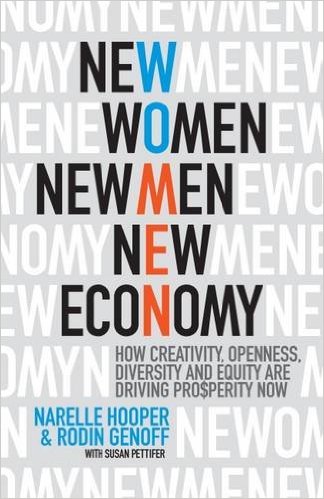
New Women, New Men, New Economy
This was a session I really wanted to see and was most disappointed in. The topic is of great interest to me - how diversity and economic participation create greater prosperity. Unfortunately I felt it was let down by the manner in which it was presented. Where most other presenters were really natural, Narelle Hooper and Rodin Genoff came across as too showy - laughing at their own jokes, encouraging the audience to give themselves a round of applause (ugh!) and introducing their family members.

Their argument seemed to consist of a few main points. There are new men out there - as evidenced through photos of Justin Trudeau and Benedict Cumberbatch - and new women. Hooper and Genoff have cracked the CODE of the new economy which consists of Creativity Openness Diversity and Equity. They spoke of research they had conducted and provided some statistics as evidence.

I had expected a greater degree of intellectual rigour from this session. Given the Pledge for Parity theme, I was hoping for a more analytical, political economy approach to issues of prosperity, equity and economic participation. Rather, it felt like a shameless book plug. In fact, I was so underwhelmed that I decided not to purchase their book despite my intentions to.

I think this session would have benefited from a third party moderator who interviewed Hooper and Genoff about the findings of their research. In fact this was the only session in the Festival that did not have a Chair, which I believe let the audience down and made it less professional than other sessions.

Narelle Hooper and Rodin Genoff

The Women We Love To Hate
I really enjoyed the next session. This was a panel chaired by Ruby Hamad, featuring historian Michelle Arrow, author Charlotte Wood and researcher Dr Emma Jane. With the recent 40th anniversary republishing of Anne Summers' feminist classic, Damned Whores and God's Police (1975), the panel began by reflecting on the dichotomy that women fall into one of two camps: damned whore or virtuous saint. The panel concluded that it is almost impossible to be in the latter group, so most women are in the damned whores camp.

The panel discussed how women cannot win in terms of sexuality and how women who are shame, silenced and rendered invisible. They cited examples  like the public servant who was slut shamed by a federal minister,  women in the military filmed during sex without consent, Diane Brimble, Monica Lewinsky, and so many more. Emma Jane argued that "slut shaming is a misnomer. It is shaming for being a woman and having any kind of sexuality."

They spoke about how it is possible for women to be the objects of desire and contempt simultaneously. For example, in prostitution women are desired but also reviled. Charlotte Wood spoke of the women in her book, The Natural Way of Things (read review), in which ten 'fallen' women are held in captivity and humiliated for their involvement in some sort of sex scandal. Wood's women are 'bewildered by the simultaneous toxic desire and disgust' by their captors.

Emma Jane made an interesting point about women shrinking - how women sit and pose to make themselves as small as possible, whereas men spread out in a power posture.  Her research on cyberbullying has revealed a shocking degree of misogyny, particularly for women in the gamer community.

The panel discussed various women that have been the subject of loathing. Former Prime Minister Julia Gillard was targeted by people within and outside of politics and eventually stood up to the misogyny in her famous speech. Michelle Arrow spoke about Lindy Chamberlain and how she was judged for failing to behave in line with societal expectations.  The panelists agreed that small acts of courage - standing up for yourself and others - will make a significant difference.

This was a terrific hour of discussion - thought-provoking, humourous, and positive. After the session I met Charlotte Wood and she signed a copy of her book for me.

(l-r) Ruby Hamad, Michelle Arrow, Charlotte Wood, Emma Jane

True Crime vs Real Crime
My final session of the day was an interesting panel of crime writers. The amazing Van Badham chaired the panel which featured South African novelist Margie Orford, Mexican writer and President of Pen International Jennifer Clement, and Australian professor Kerry Carrington.

Van Badham pointed out that the volume of crime novels published and sold have continued to grow, the popularity of crime shows on television and the movies continue, two of the biggest successes in recent months are Serial and Making a Murderer - and yet, in most places, crime is actually decreasing. The panel spoke about the mistaken glamourising of gangsters and the criminal underbelly.

Kerry Carrington pointed out that 'upcharging' is on the rise - wherein criminalisation and punishment for minor offences is increasing, putting more women into the corrections system. Around 18% of women in jail are for drug related offences. Most women in jail have been impacted by domestic violence, alcoholism and mental health issues that, if prevented or treated, would have changed these women's lives dramatically.

Margie Orford spoke of crime fiction as a catharsis. She said that in a crime novel you (the reader) sit on the shoulder of the investigator, so you have agency and justice on your side. Orford's South Africa has high rates of rape and other violence against women, so for her writing crime fiction was a way to take these crimes and make it real. She pointed out that, in Australia domestic violence is front page news, but in South Africa it is not spoken of despite its prevalence.

Orford also pointed out that Scandinavian societies are more egalitarian, with women and men more on par than other parts of the world. The crime fiction coming from Scandinavia, however, is extremely violent particularly towards women. Steig Larsson's Girl With the Dragon Tattoo (Millennium series) and Henning Mankell's Kurt Wallander novels, are but two examples.

Jennifer Clement spoke about violence against women in Mexico. She pointed to the daily disappearance and brutal murders of young women in Juarez, for which the word femicide has been created.  She wrote her book, Prayers for the Stolen, about young girls in Mexico against the backdrop of drug cartels, disappearances, and poverty. Mexico has a high rate of child sex trafficking, with little action by police. A theft of a car would generate more attention than the theft of a child.

Kerry Carrington has written a number of non-fiction books on gender and justice. She spoke passionately about how female victims of violence are forgotten or rendered invisible. Carrington wrote a book about the violent gang rape and murder of Leigh Leigh, a 14 year old girl, and the police investigation and court case that followed. She spoke about how she and her family were targeted by the Police Integrity Commission following publication of her book.

The panel were asked a number of interesting questions, including one about media portrayals of women who commit crimes (like Aileen Wuornos, Karla Homolka). Female killers are often depicted as either victims themselves or crazy, but rarely as acting with agency.

This was an interesting, intellectual hour of thought-provoking discussion. I really didn't know much about the speakers before I attended, but was thoroughly impressed by their knowledge, passion and integrity. An excellent session.

(l-r) Van Badham, Margie Orford, Jennifer Clement, Kerry Carrington
The Book Haul
Of course, no trip to a festival like this would be complete without the purchase of a few books. I picked up copies of:
  • Jennifer Clement's Prayers for the Stolen, which she kindly signed for me.
  • Anne Marie Slaughter's Unfinished Business
  • Tara Moss's The Fictional Woman
There were plenty of other books that I wanted to get but I had to be selective (especially with the Sydney Writers Festival coming up soon). But I must say that I miss having Gleebooks at the All About Women and Festival of Dangerous Ideas. Current bookseller Kinokinuya is a wonderful bookstore, but I find that Gleebooks is more thoughtful in the selection of titles it brings to festivals. I would have certainly purchased more had Gleebooks been there.

Final thoughts
Overall, I enjoyed my day out at the All About Women Festival. I love the diversity of topics and the talented women presenting. The chairs of sessions are uniformly excellent (Julia Baird, Ruby Hamad, Van Badham, Jane Caro, Catherine Fox, Jennie Brokie etc) and bring to the event tremendous curiousity, wit and wisdom.

There are a few things that would have made my day more enjoyable. First, the timetable this year pitted all the high profile speakers against each other. Why have Piper Kerman, Anne-Marie Slaughter and Carrie Brownstein on in the same timeslot? Plus the overlapping of timeslots meant having to choose between sessions or missing out altogether. Often people had to leave sessions early to rush to their next session which was disruptive to speakers and attendees. A few more panel sessions would have been beneficial.

Another annoyance was sessions not starting on time. My first session of the day started at 11am. There was a massive queue at the doors, but they did not open until 10.55am, so people were not seated and the session did not start until well after 11am. This is disrespectful to the speakers and shortchanges the attendees who do not get their full hour - cutting short the amount of question time.

Finally, there were almost no men present. This is understandable due to the nature of the event, but disappointing in terms of furthering gender equality. Men need to hear and understand these issues. Maybe some kind of "bring a bloke" campaign is needed to encourage men to engage with feminism. Having said that, I must say how enjoyable it was to spend a day with hundreds of feminists talking about the issues that matter to us all. See you next year!

My post about the 2015 All About Women festival is available on this blog.

Friday, 11 March 2016

The Stella Shortlist 2016

The Stella Prize shortlist was announced on 10 March 2016.  The shortlisted titles are:

  • Six Bedrooms by Tegan Bennett Daylight (read review)
  • Hope Farm by Peggy Frew
  • A Few Days in the Country: And Other Stories by Elizabeth Harrower 
  • The World Without Us by Mireille Juchau
  • The Natural Way of Things by Charlotte Wood (read review)
  • Small Acts of Disappearance: Essays on Hunger by Fiona Wright
Brief synopses of these titles can be found on my post about the longlist.


Of these books I am most excited for Charlotte Wood's The Natural Way of Things. After hearing Wood speak at the All About Women festival this week, I am really keen for her novel to be better known. It is a powerful, important story.

It is wonderful to have this prize as so often women writers are under represented and their stories go unnoticed. The winner will be announced on 19 April 2016.