Saturday, 1 August 2020

Booker Prize Longlist 2020

This week the Longlist was announced for the 2020 Booker prize. The thirteen titles nominated include authors from America, Britain, Ethiopia, Ireland, Scotland and Zimbabwe.

The Booker Prize is always a strange collection of titles, but what I love about the Longlist is that it introduces me to many authors and books I do not know. From last year's Longlist I discovered I read and enjoyed winner Margaret Atwood's The Testaments, Oyinkan Braithwaite's My Sister, the Serial Killer, and John Lanchester's The Wall.

I haven't read any of the books on this year's Longlist yet, so let's take a quick look at the nominees:

Diane Cook - The New Wilderness (USA)
Five year old Agnes lives in a heavily polluted city. Her mother, Bea, wants to save her daughter from the ravages of climate change so relocates to the Wilderness State. Here they live as nomadic hunter-gatherers, in a vast untouched expanse of nature. Agnes grows wilder while Bea cannot fully seperate from her urban upbringing and they grow further apart. This sounds like an intriguing dystopian novel - my favourite kind!

Tsitsi Dangarembga - This Mournable Body (Zimbabwe)
Tambu has left her dead-end job and is now living in an Harare youth hostel. She moves into a boarding house, run by a widow, and takes up work as a biology teacher. Each choice she has to make leads her further away form the future she imagined for herself. This is the third novel which features Tambu, having been the protagonist in Dangarembga's earlier novels Nervous Conditions (1988) and The Book of Not (2006).

Avni Doshi - Burnt Sugar (USA)
'I would be lying if I said my mother's misery has never given me pleasure' - with that opening line, Doshi sets the scene for a novel about a fraught mother-daughter relationship. Tara was a bit of a wild child, running away from her affluent family to pursue a life in a free-love ashram. She dragged her young daughter with her, ambivalent about her role as a parent. Now the daughter is grown and the two women have to reconcile their relationship. This is Avni Doshi's debut novel, and it was published in India as Girl in White Cotton.


Gabriel Krauze - Who They Was  (UK)
Set in the public housing tower blocks of North West London, this autobiographical novel is about how to survive the violence of street gangs and drug dealers. It is about how you can escape the past but never truly leave it behind. Krauze was part of this world as a gang member in his early life, and has drawn on his personal experiences for his debut novel.

Hilary Mantel - The Mirror and The Light (UK)
Mantel completes her Thomas Cromwell trilogy with The Mirror and the Light, finishing what she began with Wolf Hall (2009) and continued with Bringing Up the Bodies (2012). The fact that the previous two volumes won the Booker Prize makes her the hottest contender for this year's award.  Opening with the death of Anne Boleyn, we follow Cromwell in his final years, during a volatile period in England in the reign of Henry VIII.


Colum McCann - Apeirogon (Ireland/USA)
This novel explores an unlikely friendship between two men on the Israel-Palestine border who are brought together by their shared grief at the loss of their daughters.  Israeli  Rami's 13 year old daughter is killed by a suicide bomber. Palestinian Bassam's 10 year old daughter is shot by the border police. The novel is written in 1001 fragments of varying lengths which bring the story together like a mosaic.


Maaza Mengiste - The Shadow King (Ethiopia/USA)
Set in Ethiopia in 1935, this novel focuses on women soldiers at the start of World War 2.  Young Hirut is adapting to her life as a maid in the household of an army officer. As Mussolini invades the country and Hirut finds herself caring for the wounded, frustrated that she cannot do more. She takes action and inspires women to take up arms against the Italians, and is forced to endure life as a prisoner of war.


Kiley Reid - Such a Fun Age (USA)
African-American babysitter Emira is asked to take a white toddler out so his mother Alix can work. At the local supermarket a security guard accuses the babysitter of kidnapping the child. Humiliated, Emira is furious at her treatment. When Alix steps in to make things right, messy complications arise. The novel explores class, racism, transactional relationships and the challenges of being young adults in the modern world.


Douglas Stuart - Shuggie Bain (Scotland/USA)
Glasgow, 1981. Agnes Bain wants more from life, but when her husband leaves her and their three children she is trapped and descends into alcoholic despair. Her children try to help her, but they must leave to save themselves. Her son Shuggie stays. Stuart's debut novel is a gritty portrayal of a dysfunctional family living rough in the bleak Thatcher era.


Brandon Taylor - Real Life (USA) 
Set in an American midwest university town, a young man is studying for a degree in biochemistry. Black, queer, introverted, Wallace has left behind life and all he knows in Alabama. Self-preservation is key to his survival and he builds a wall behind which even his closest friends cannot penetrate. But at the end of summer, Wallace must confront the trauma of his past in order to determine his future. This is Brandon Taylor's debut novel.
Anne Tyler - Redhead by the Side of the Road (USA)
Baltimore, Maryland is the setting for many of Anne Tyler's novels (including the delightful Dinner at the Homesick Restaurant). Self-employed, mid-40 year old Micah is a creature of habit, leading a very structured life. His routine is disrupted when the woman he has been seeing faces eviction and a teenager shows up claiming to be his son. Tyler has a rare talent of capturing ordinary life with wit and empathy. She was previously shortlisted for the Booker Prize in 2015 for her novel A Spool of Blue Thread.

Sophie Ward - Love and Other Thought Experiments (UK)
In this experimental novel, Ward was inspired by philosophical thought experiments. Eliza and Rachel are wanting to have a child and have planned out their future as a family. One night Rachel is convinced that an ant is stuck in her eye, but scientist Eliza dismisses this as impossible. Over ten interconnected chapters, each told from a different person's perspective and based on a different known thought experiment, the two women explore love and life.


C Pam Zhang - How Much of These Hills is Gold (USA)
In the dying days of the American gold rush, two siblings, aged 12 and 11,  find themselves orphaned and alone. As Chinese-American immigrants, Lucy and Sam find themselves unwanted in a western mining town. They place their father's body on their backs and set off across the harsh landscape to find a spot to bury him and a place to call home. This is a debut novel by Chinese-American author Zhang.


Despite the over-abundance of American authors, I am really pleased with the diversity of this year's nominees in that more than half of the authors are writers of colour and nine are women. Of all these titles, the ones I am most interested in are the books by Mantel, Cook, Stuart and Ward. I must admit that I am extremely disappointed that Maggie O'Farrell was not nominated for her brilliant Hamnet. I also wish that there were a Canadian or Australian novel to make the cut. I wonder whether the judges will play it safe by choosing Mantel for the win, making it a trifecta for her Cromwell trilogy, or whether they will aim for something unexpected. We shall see.

Here's what the judges had to say about the longlist.

The Shortlist will be announced on 15 September 2020, with the Winner of the £50,000 revealed in November. Better get reading!

Sunday, 26 July 2020

What if....?

Curtis Sittenfeld's novel Rodham (2020) explores what might have happened if Hillary Rodham did not marry Bill Clinton. Would there be a Clinton Presidency? Would Hillary Rodham have a glittering professional career? Would America get its first female President?

In this fictional version of the life of Hillary Rodham, she pursues a different life and career path. While they still meet and are romantically involved while at Yale, Hillary rejects Bill's proposals of marriage because she realises he will never be faithful to her. They part ways and Bill continues on to become Governor of Arkansas, marrying another woman and having a family, while Hillary returns to Illinois to teach law at Northwestern University before running for office herself.

Hillary was always a trailblazer, from her commencement speech at Wellesley to her lifelong advocacy for education and health care. In Rodham, she is complex - intelligent and worldly, empathetic and human, loyal and lonely. Ambitious and determined, along the way Hillary makes some poor decisions which alienate friends and cause a media furore which she must navigate.

Clinton is portrayed as an ego-centric womaniser who has endearing, charming qualities - an electric personality that people gravitate towards. Whereas Hillary is plain and cerebral, and has to fight hard to be heard. Even Donald Trump makes an appearance in his trademark bombastic style.

Even though Rodham is fiction, I found it difficult to fully remove what I already know of the people involved and this was an obstacle when reading as I could never fully immerse myself in the narrative. The early scenes of Hillary and Bill were a delightful romp, but the detailed descriptions of their amorous sex life made for awkward reading.

Sittenfeld makes some interesting choices, including writing it in first person, which allows the author to explore how Hillary might struggle between her private and public personas. She also covers issues of race, gender and ageing in a fascinating way. I particularly enjoyed the way in which female friendships are portrayed, with Hillary's relationships with lifelong friends (and their children) showcasing the importance of these deep, unwavering bonds.

Rodham is a strangely compelling novel and, in truth, while I am glad that I have read it I am not entirely sure how I feel about it. But it has left me wondering... what if?

Sunday, 19 July 2020

Greek Tragedy

Since my overseas holiday was cancelled due to the pandemic, I have been escaping through reading novels set in destinations I long to visit. Patricia Highsmith's The Two Faces of January (1964) is set in Greece - in Athens and the island of Crete - and Paris. 

American conman Chester MacFarland and his young wife Colette are on holiday in Europe. While in Athens, the MacFarlands realise that their past is catching up with them and they need to quickly move on. A new acquaintance, American ex-pat Rydal Keener offers to help the MacFarlands with new identities and a route out of Athens. The threesome travel to Crete and, over an intense few days, secrets are exposed and tensions rise between Rydal and Chester, with Colette caught in the middle. A showdown at the Palace of Knossos changes the relationship between the two men irrevocably; now determined to blame each other for a terrible crime. A cat-and-mouse pursuit ensues as they head back to Athens and on to France, trying to outrun the police and each other. 
I have been on a bit of a Highsmith run lately, having recently read The Tremor of Forgery (1969), This Sweet Sickness (1960), and Deep Water (1957). She has an ability to create a page-turning thriller, with multi-layered characters and fascinating plot devices. In The Two Faces of January I found it intriguing how she explored the dark backstories of Chester and Rydal and their interpretations of their own morality.

A film was released in 2014 directed by Hossein Amini with Viggo Mortensen (Chester), Kirsten Dunst (Colette) and Oscar Isaac (Rydal). Upon finishing the novel I watched the movie, which I greatly enjoyed. The cinematography was beautiful, transporting viewers to 1960s Greece. The film differs from the novel and the climactic end scenes have moved from Les Halles in Paris to the Grand Bazaar in Istanbul. The three actors were brilliant in their portrayals of the Americans abroad. 

Saturday, 18 July 2020

Miles Franklin Award Winner 2020

The winner of the 2020 Miles Franklin Award, Australia's most prestigious literary award, was announced via a live online presentation on 16 July 2020. This year the award and its $60,000 prize went to Tara June Winch for The Yield.

The novel explores the legacy of colonial violence, dispossession, intergenerational trauma and destruction of the natural world. The Chair of the judging panel, Richard Neville said ' In English "yield' signifies what one takes from the land. In Wiradjuri it is "the thing you give to the movement, the space between things: baayanha'. 

Tara June Winch also won Book of the Year at the 2020 NSW Premier's Literary Award for The Yield.

I am normally terrible at predicting who will win these types of prizes, but this year I nailed it having guessed that Winch would win. 

The announcement of the winner is available on YouTube.

Awakening

Against the backdrop of the #MeToo movement more novels are expected to explore sexual violence in an attempt to make sense of what is happening to and for women. Kate Elizabeth Russell's debut novel, My Dark Vanessa (2020), was hotly anticipated in the publishing world and tackles this difficult subject matter in an interesting way. 

The novel is written in the first person, narrated by Vanessa Wye, alternating between two timelines. In 2000 Vanessa is 15 years old at a prestigious boarding school, while in 2017 she is 32 and grappling with her past.

Vanessa grew up as an only child in a fairly traditional New England family. Her parents sent her to boarding school for its educational opportunities. At school, Vanessa meets Jacob Strane, a forty-something English teacher. Strane shows interest in Vanessa and encourages her creative writing. He introduces her to authors like Nabakov, Plath and Edna St Vincent Millay. Vanessa is delighted with Strane's interest, not understanding that she is being groomed by him. She begins a secret relationship with her teacher, cutting ties with her peers, and becoming more and more isolated. When rumours of the relationship reach school authorities, Strane breaks it off and Vanessa retreats home, shattered.   

In 2017, the 32 year old Vanessa is still in touch with Strane. Her life veered off course, having never reached the potential she showed as a teen. She has been unable to settle into a decent job or any regular relationship. When Strane is accused by another young woman, Taylor, of grooming her when she was at school following the same techniques and patterns he used with Vanessa, Vanessa's world closes in on her and she is forced to confront her past.

Russell has crafted an uncomfortable book on an uncomfortable subject. Vanessa is a complex and challenging character who has difficulty in perceiving what was done to her as abuse as she does not want to be victim. Strane is pathetic, rather than creepy. I found it an interesting novel and well worth reading.

Earlier this year I read Lisa Taddeo's Three Women, and My Dark Vanessa very much reminded me of one of the three women, Maggie, and how her relationship with a high school teacher damaged her.  

Friday, 19 June 2020

Miles Franklin Award Shortlist 2020

The 2020 Miles Franklin Award shortlist was announced this week, confirming that I am terrible at predicting which titles would make the cut.

The shortlist is:

  • Tony Birch - The White Girl  
  • Peggy Frew - Islands 
  • John Hughes - No One 
  • Philip Salom - The Returns 
  • Carrie Tiffany - Exploded View 
  • Tara June Winch - The Yield 


I had expected Birch and Winch to make the list, but did not anticipate the others. Despite my poor track record, I reckon Wiradjuri author Tara June Winch will take the prize. She has already received the NSW Premier's Literary Award - Book of the Year, Christina Stead Prize for Fiction for The Yield

The Winner will be revealed on 16 July 2020.

Sunday, 14 June 2020

Awe and Wonder

Julia Baird's luminous book Phosphorescence (2020) was just the tonic for life during the pandemic.  When the world is in peril and life feels out of control, our resilience is tested. Focussing on our internal happiness - the light within - we can navigate dark days and come out the other side.

It is difficult to describe this book as it is so many things. The first quarter is on nature - the awe and wonder that is all around us if we stop and take time to observe. Part two is about telling the stories of our own lives and accepting our imperfections. The third section is on friendship and how vital relationships are. The last quarter is on paying attention, savouring joy, finding our inner strength.

Baird's book is intensely personal as she reveals her experiences with cancer and the difficulty she had as a mother of young children while undergoing surgery and recovery. She found solace in the sea through her early morning ocean swims with a group of women who meet at Manly. She shares stories of her life in New York, her university days, and the friends she has made along the way.

I have previously read Baird's stunning biography Victoria the Queen (2017) which showcased her talents as a researcher, writer and historian.  In Phosphorescence she uses these same skills but adds an element of memoir which draws the reader in.

I was talking with colleagues the other day about the good things about life during the pandemic. We spoke about slowing down, making time to connect and reignite relationships, revisiting hobbies, and finding joy in life's simple pleasures. These are things I want to carry into my post-pandemic life, along with the lessons of finding awe and wonder I was reminded of when reading Phosphorescence.

Monday, 8 June 2020

Safe House

Jess Hill won the 2020 Stella Prize for her remarkable book See What You Made Me Do, an investigation into the causes and impacts of domestic abuse. 

The premise of Hill's investigation is to move away from the 'why don't you leave?' question so often asked of women, to focus on why men perpetrate acts of violence and control on their families. Hill asks: 
Why does he stay? Why do these men, who seem to have so much hatred for their partners, not only stay, but do everything they can to stop their partner from leaving?
Prior to reading this book, I thought I had a good understanding of domestic abuse, through my gender and legal studies and my work. But I see now that I had a limited comprehension of how pervasive the issue is and how destructive its impact. See What You Made Me Do was enlightening on so many levels.

Hill's deep investigation lead her to interview survivors, police, lawyers, judges, social workers and more. In doing so she paints a picture of domestic abuse as a national tragedy for which there is a lack of political will to address.  The family court system hinders women facing domestic abuse. The safety net - shelters, hotlines, services for women and children - has been depleted by funding cuts and cannot keep up with demand.

A large part of the problem of course is that domestic abuse is hidden behind the walls of a family home. Far more pervasive than physical violence is coercive control. Hill writes:
Domestic abuse is not just violence. It's worse. It is a unique phenomenon, in which the perpetrator takes advantage of their partner's love and trust and uses that person's most intimate details - their deepest desires, shames and secrets - as a blueprint for their abuse.
The chapter on the impact of domestic abuse on children was heartbreaking, but the chapter on Aboriginal women and children (Dadirri) was devastating as Hill argues that colonisation brought domestic violence to Aboriginal communities -  'It was a type of violence introduced to Australia like an invasive species.'

I was reluctant to read See What You Made Me Do given the heavy subject matter. However it is such an important, powerful book it should be mandatory reading for every elected official and all who work in the police and judicial system. 

Monday, 18 May 2020

Shakespeare's Sorrow

Eleven-year-old Hamnet Shakespeare is running through the village of Stratford-Upon-Avon. Unable to locate his mother, he seeks out the local doctor to visit his twin sister Judith who is in bed with a mysterious illness. When their mother comes home it will take all of her knowledge of herbs and potions to save her daughter from the plague. While one child is healed, Hamnet succumbs to the illness, leaving the entire family bereft.

Maggie O'Farrell has taken what little is known about Shakespeare's family life and turned it into an extraordinary historical novel. While the book is named for the son, it is his mother Agnes (Anne Hathaway) who takes centre stage. She is known among the townsfolk as a mystic healer, gathering berries and plants from the forest to brew medicinal concoctions which cure all ailments.

When she was 26 she married her brothers' latin teacher, an eighteen-year-old William Shakespeare, and they had their first child a few months later. Unable to be independent of Shakespeare's family, they resided in an apartment attached to the family home. Eventually Shakespeare goes off to London, leaving his wife and three young children behind, and Hamnet tells the story of how his wife endured his absence.

O'Farrell has a beautiful way with words and the way she describes the grief felt by different family members is heartfelt. Shakespeare himself channels this despair into his play Hamlet a few years later. As a reader, I immersed myself in this tale and was transported to sixteenth century England, engrossed in the daily life of this family.

Shortlisted for the Women's Prize, I am thrilled that O'Farrell will get a wide readership with this remarkable novel. A friend introduced me to Maggie O'Farrell in the early years of this century, sending me her debut novel After You'd Gone (2000) and My Lover's Lover (2002). I also really enjoyed The Distance Between Us (2004) and The Vanishing Act of Esme Lennox (2007). Hamnet showcases the evolution of her writing.

Wednesday, 13 May 2020

Miles Franklin Award Longlist 2020

The Miles Franklin Award is the most prestigious literary award in Australia, with a cash prize of $60,000 and the opportunity to join the ranks of past winners including Melissa Lucashenko, Frank Morehouse, Tim Winton, David Malouf, Peter Carey, Sofie Laguna and Anna Funder.

The 2020 Longlist was announced today with some incredible authors and titles nominated.

The Longlist is:

Tony Birch - The White Girl - In the 1960s Deane is a dying country town. Aboriginal Odette Brown cares for her granddaughter Sissy, conceived in rape by a white pastoralist. The girl's mother Lila has fled after her trauma. When a new policeman arrives in Deane he is determined to enforce the law, which would see the fair-skinned girl removed from her family. In this novel, Birch explores the horrendous Australian government policy, the Aborigines Protection Act and the impact on Stolen Generations.


Melanie Cheng - Room for a Stranger - Seventy-year-old Meg has been on her own since her sister died. But an intruder causes her to rethink her solo life. She advertises for a room mate and 21 year old student Andy moves in. The two have little in common and have to bridge divides of culture, age and gender to find connection. Cheng is a Melbourne-based writer who won the 2016 Victorian Premier's Literary Award for Unpublished Manuscript for her short story collection Australia Day (2017).


Peggy Frew - Islands - Two sisters, Junie and Anna, observe their family disintegrate. Their parents' marriage falls apart and Helen leaves John in the hopes of finding the life she is after. John is unable to cope and care for his girls. Anna becomes rebellious and at age 15 she disappears from home forcing the family to  deal with their trauma. Frew was shortlisted for the Stella Prize for her previous novel, Hope Farm (2015).


John Hughes - No One - In the wee hours of the morning, a driver feels a thud against his car outside Redfern Station. He eventually stops and inspects the vehicle to find a dent and some blood. Did he hit someone? As the driver searches for his victim, he begins a relationship with a local Aboriginal woman. This novella is written by the award winning author of The Idea of Home: Autobiographical Essays (2004).


Anna Krien  - Act of Grace - In her debut novel, Krien has pulled together diverse characters whose lives become intertwined. Traversing around the globe and across generations, Krien tackles deep themes of reconciliation, climate change and war. Best known for her narrative non-fiction works (Into the Woods, Night Games, Quarterly Essays) she is ambitious in her subject matter. This novel has also been shortlisted for the 2020 Victorian Premier's Literary Award.


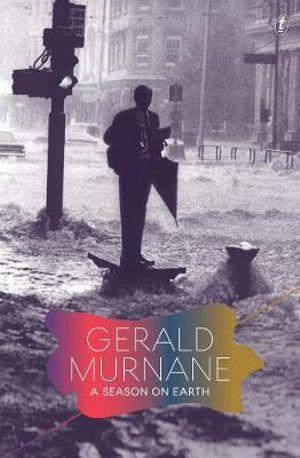
Gerald Murnane - A Season on Earth - Published in full over forty years after writing, this is Murnane's unabridged second novel. He had published the first half of it in 1976 as A Lifetime on Clouds, but the second half was never published. Adrian Sherd is a high school student at a Catholic school in Melbourne who fantasises about a girl he sees at mass. Later, he decides to become a priest, but still lives largely in a fantasy world.


Philip Salom - The Returns - Elizabeth is a freelance book editor who rents a room in her inner city Melbourne house to Trevor, a bookshop owner. These two eccentric, middle age house mates are both haunted by their pasts - an absent child, a broken marriage, ailing or missing parents. Author Salom is a poet and novelist who has previous success with his critically acclaimed novel Waiting (2016)


Carrie Tiffany - Exploded View - Set in the 1970s, a young girl lives with her mother, brother and her stepfather in the suburbs. He is a mechanic, fixing cars at the back of their yard. This is a story of childhood trauma and family abuse from the perspective of the girl as the family leaves on a road trip together. Tiffany is a well regarded author and her previous novel Mateship with Birds (2012) won the inaugural Stella Prize.


Tara June Winch - The YieldWiradjuri author Tara June Winch tells the tale of the Gondiwindi family. The ageing Albert wants to pass on language and storytelling to the next generation. His granddaughter August returns home to find the family land repossessed. Through this work, Winch tells a story about the importance of Indigenous identity, language and culture. Winch recently received the NSW Premier's Literary Award - Book of the Year, Christina Stead Prize for Fiction making her a hot contender for this award. 
Charlotte Wood - The Weekend - Wood won the Stella prize in 2016 for her novel The Natural Way of Things - the book I most recommended and gave to others that year.  The Weekend is the story of four older women who have been friends for a lifetime. When one dies, their friendship changes. This is a brilliant novel that I highly recommend (read review).


At this stage I have only read Charlotte Wood's brilliant The Weekend. If I had to guess though, I reckon that Birch, Cheng, Murnane, Winch and Wood will make the shortlist. The Shortlist will be announced 17 June 2020 and the winner will be revealed on 16 July 2020.

Sunday, 10 May 2020

On the Beach

Howard Ingham, having achieved mild success as a novelist, arrives in Tunisia in mid-1967 to work on a film script he has been commissioned to write by director John Castlewood. He sets himself up at a beachfront hotel in Hammamet and awaits news of Castlewood's arrival or a letter from his girlfriend Ina who remains in New York.

While he waits, Ingham starts a new novel about a bank forger, and observes news of the Six-Day War taking place in the Middle East. He befriends an American expat named Adams who resides in a neighbouring beach hut and revels in conspiracy theories. He also comes close to Jensen, a gay Danish painter. Ingham finally receives a letter from home in which he learns that Castlewood is dead. Ingham is at a loss, trying to decide whether to return to Ina in New York or stay on in Tunisia to complete his novel.

Over the days and weeks he spends in Tunisia, Ingham's morality changes. He has much time to himself to observe those around him and reflect on his own thoughts and actions. One night he is wakened by an intruder entering his bungalow. Ingham throws his typewriter at the intruder, knocking him back, and then locks the door. Ingham sits quietly inside as he hears hotel staff removing the intruder, not knowing if the man was injured or dead. This event will haunt Ingham as he does not know the impact of his actions and what will happen to him if discovered.

The Tremor of Forgery (1969) is slow, deep and thoughtful. The reader experiences the same apprehension that Ingham feels, waiting for something to happen just as he waits for letters from home. Highsmith's use of Ingham's novel to explore his own moral ambiguity is a clever device. Along the way we observe the local culture, customs and traditions through the eyes of the protagonist, a stranger in a strange land. Ingham's road trip with Jensen made me long to explore Tunisia.

Patricia Highsmith has crafted a compelling and unique tale of morality, love and self-preservation. The apparent simplicity of the story, despite the deep and complex themes, showcases Highsmith's talents. Highly recommended.

Dark Obsession

David Kelsey has everything going for him. He has a great job as an engineer and is admired by his colleagues. He has purchased and fitted out a lovely home and is planning his marriage to his beloved Annabelle. He just has one problem, which he refers to as 'the Situation'. 

The Situation David has to fix is that Annabelle is not yet his. Despite his letters and calls, in which David confesses his love for her, Annabelle is married to another and does not share his affection. This does not stop David from imagining their life together. Indeed, on weekends when he returns to their home, he pours two martinis and imagines her there with him. 

In This Sweet Sickness (1960) Patricia Highsmith's psychological thriller, she has created a fascinating character in David. Readers begin by empathising with him, feeling as though he has a crush that he will get over. But as the novel progresses you realise how deeply disturbed he is and how he has crafted the identity of his alter-ego, William Neumeister, to be all the things he is not as his mind unravels. 

Of course it wouldn't be a Highsmith novel without a crime and David seems to get away with his, taking increasing risks and telling more lies until he cannot seperate fact from fiction. One has to feel for the women in David's life: Annabelle tries to let him down gently and encourage him to direct his affections to Effie, a local girl who is interested in him. David's obsession becomes more irrational and creepy as the novel progresses.

I really enjoyed this book. If I had one quibble it would be that it peaked too soon with the crime which exposes David/William's double life and loses a bit of momentum before the rapid-pace of the final chapters. But ultimately this is a fascinating character study which gets under the reader's skin.

Saturday, 2 May 2020

The Book of Harlem

Just before the libraries were closed, I borrowed Zora Neale Hurston's collection of stories Hitting a Straight Lick with a Crooked Stick (2020). I was keen to get my hands on this new release as it has been many years since I last read Hurston.

I usually don't read introductions to books until after I have read the main text. Too often I find introductions serve as pretentious spoilers. I prefer to read, reflect and then read the introduction to see if there was something I missed. But for Straight Lick I began with the forward by Tayari Jones and Genevieve West's brilliant introduction which explained the context in which these stories were written and the ways in which Hurston explored race, gender and class through her narratives.

Hurston published her first short story in 1921, finding her place in the Harlem Renaissance alongside Langston Hughes, Claude McKay and other writers and poets. This collection brings together Hurston's early work and, by presenting her stories in chronological order, readers can see how she honed her craft as her writing evolved.

Her first story, 'John Reddington Goes to Sea' was magnificent. John wants to explore the world, while his father wants him to stay home and marry a local girl. The conflict between the two men is heartfelt, earnest and loving. Hurston's writing took a little time to get used to as she writes dialogue so you can hear the voice of the speaker ('Ah keep telling yur, woman, 'taint so') so reading aloud helps to get the cadence right. Her later stories like 'The Book of Harlem', written in the style of biblical verse, show the maturity and playfulness of her writing talents.

Many of the stories depict the complexities of romantic relationships, domestic abuse, traditional gender roles and infidelity. In ''The Conversion of Sam', 'Under the Bridge', 'Spunk', 'Sweat' and others Hurston is sharp in her portrayal of characters and I have a particular fondness for the strong women she creates.

I really wanted to like this book. While I enjoyed some of the stories, on the whole I was disappointed. There were some tales I struggled to get through and at one stage I considered giving up, but ultimately I am glad I persevered.

Thursday, 23 April 2020

Women's Prize Shortlist

The 2020 Women's Prize shortlist has been announced!

On 3 March 2020, when the longlist for this year's Women's Prize was announced with 16 nominees,  I boldly predicted that the shortlist would feature Enright, Mantel, O'Brien, O'Farrell and Patchett. Well, I was only half right! Anne Enright, Ann Patchett and Edna O'Brien fell off the list along the way.

The 2020 shortlist is as follows:

  • Dominicana by Angie Cruz
  • Girl, Woman, Other by Bernardine Evaristo
  • A Thousand Ships by Natalie Haynes
  • The Mirror and the Light by Hilary Mantel
  • Hamnet by Maggie O’Farrell
  • Weather by Jenny Offill


The two big hitters are the Booker Prize winning authors Evarasto and Mantel and I would be delighted if either won. However, I have a secret hope that Maggie O'Farrell sneaks through. She is a gifted writer and her Hamnet deserves to be widely read and praised.

The winner will be revealed on 9 September 2020. Happy reading!

Thursday, 16 April 2020

Stella Prize 2020

The winner of the Stella Prize was announced this week with Jess Hill awarded the prize for her investigative non-fiction See What You Made Me Do.

Journalist Jess Hill turns the spotlight on the perpetrators of domestic violence seeking to understand why men are abusive and what systems enable them.

The judges described the book as follows:
'See What You Made Me Do' looks at the issue from multiple perspectives, including those largely male perpatrators and asks the government to rethinnk and reframe the measures which have so far failed Australian women. It is a sensitive read, which - whilst confronting - is compelling and hopeful. 

Jess Hill received the award and its $50,000 prize money at a virtual award ceremony which was live streamed due to the COVID-19 pandemic. Given the present quarantine requirements and social isolation is putting more pressure on families and there is heightened risk of domestic abuse, this award will hopefully increase attention on this important issue.

Monday, 13 April 2020

Moments That Matter

I first heard of Mandy Ord's book When One Person Dies the Whole World is Over when it was longlisted for the 2020 Stella Prize. I was intrigued by the idea of a year-long diary in the form of a four-panel comic book so picked it up at my local library.

Each day Ord captures snapshots of life - walking her dog Lou, dining out with her partner Jodhi, working at one of her various jobs, watching RuPaul or The Walking Dead while lying on the sofa. In doing so she reveals the little moments so often taken for granted - sunsets, afternoon naps, a favourite song on the radio. She also shares the frustration of traffic jams, the challenge of grumpy customers and the daily grind of many workplaces.

Relationships are essential and Ord lovingly depicts her visits with Grandma, her talks with her sister in Scotland, the trips to see her dad in Sydney, and nights out catching up with friends at various Melbourne cafes and restaurants.

Despite the seeming simplicity of the format, Ord has a lot of important things to say about the casualisation of labour, the necessity of those working in caring professions (one of her many jobs is as a disability support worker), and ageing. Her diary shows how she tries to balance her many jobs and her work as an illustrator and teacher of comic artistry.

I loved Ord's monochrome illustrations - with the thought bubbles and side notes. In reading this book I felt I came to know the author personally and really care about what happened to her.

Reading this book during COVID-19, when the world seems so very small, is a timely reminder to seek out the beauty and joy in the everyday.

Saturday, 4 April 2020

Ms Manners

Before the global pandemic I finished a number of books, but in the past month I have lost my reading-and-blogging mojo. Living constantly in the present, I almost forget what I was doing BC (Before COVID-19). In an effort to get my groove back, I thought I would try and get back to writing about the books I enjoyed before this mess, and find my way back to reading again.

I borrowed comedian Kitty Flanagan's 488 Rules for Life from the library as an escape from some of the more serious literature I was reading. Written as a response to Jordan Peterson's 12 Rules for Life - Flanagan could not imagine there were so few rules to guide one's life by so set out to compile her own. In this delightfully witty book, Flanagan has listed an extensive array of rules for work, home, shopping, relationships, travel, caring for loved ones, eating and so on. In doing so she points out some simple truths like 'don't lie about your age' (R45), 'don't offer up cliches as advice' (R28) and 'cushions are not spiritual advisers' (R26).

Kitty Flanagan writes with a wry humour - poking fun at some sacred cows (sports, weddings and gender-reveal parties) - and making rules related to many of my own pet peeves.  Many of the ideas are ones that would make the world a nicer place if everyone followed them and acted politely. 

Flanagan left plenty of space at the back for the reader to add their own rules. Given the poor behaviour of many Australians during the onset of the pandemic, I would now add rules about only buying what you need (no hoarding toilet paper!), social distancing (get off Bondi Beach!) and washing hands (seriously, did people not do this BC?). 

Sunday, 8 March 2020

The Women's Prize Longlist

The 2020 Women's Prize longlist has been announced! The annual literary award celebrating women writers has previously recognised the talents of so many gifted writers, including these past winners:


  • Tayari Jones - An American Marriage (2019)
  • Lionel Shriver - We Need to Talk About Kevin (2005)
  • Andrea Levy - Small Island (2004)

  • On 3 March 2020, the longlist for this year's Women's Prize was announced with 16 nominees. I have a stack of these books at hand, and a couple of others on reserve from my local library. I look forward to exploring these titles.

    The 2020 longlist is as follows:

    Djinn Patrol on the Purple Line by Deepa Anappara
    Deepa Anappara's debut novel is based on the high number of children who go missing in the slums of India. At the end of the purple metro line, nine year old Jai lives with his family. He becomes an amateur sleuth when his classmate goes missing, joining forces with two friends to investigate. As more children disappear, the three detectives may find these crimes lead too close to home. Written from the perspective of Jai, this sounds like a really interesting novel.


    Fleishman is in Trouble by Taffy Brodesser-Akner
    Fleishman has been on my list to read for months and this nomination serves as another reminder to hurry up and read! Toby Fleishman is recently separated after a thirteen year marriage and is now keen to play the field. But when his ex-wife disappears he needs to reflect on his role in the marriage.


    Queenie by Candice Carty-Williams
    Queenie Jenkins is a 25 year old Jamaican-British woman living in London, straddling two cultures. She is at a low point, hating her job, at the end of a relationship, and struggling to reconcile her past. One bad choice after another leads Queenie on a quest for love, as she searches for meaning in the modern world.


    Dominicana by Angie Cruz
    On New Year's Day 1965, 15 year old Ana Canción marries and becomes Ana Ruiz, and leaves her home in the Dominican Republic to move to a cold New York City. She knows no one other than her husband, Juan, and knows there is no love in this marriage, but Juan is the pathway for her whole family to seek a new life in America. When political unrest back home forces Juan to return leaving Ana behind, she has a glimpse of other possibilities. But every choice involves a betrayal - of her mother or her husband.

    Actress by Anne Enright
    Norah is the daughter of actress Katherine O'Dell, the esteemed star of the Irish stage. Katherine's journey to stardom follows a familiar path - tough times on the local circuit, a big break in London's West End, followed by Broadway and then Hollywood. Norah stands in the wings, keenly observing it all. Later, as an adult, Norah seeks to understand her mother's hidden life. Enright previously won the Booker Prize for The Gathering (2007).


    Girl, Woman, Other by Bernardine Evaristo
    Winner of the Booker Prize 2019 for this novel, Evaristo's Girl, Woman, Other is the one to beat for this award. Following the lives of twelve different characters, this novel provides a history of the black British experience. In weaving this characters together, Evaristo explores themes of race, class, gender, sexuality and more. I am currently reading this book and marvel at Evaristo's writing.


    Nightingale Point by Luan Goldie
    In October 1992, a cargo plane crashed into two blocks of flats in Amsterdam, killing 40 people. Luan Goldie's novel was inspired by this incident. Set in 1996, the residents of Nightingale Point awake to an impending disaster. Told in third person from the points of view of various inhabitants, the story shifts in timeframe from before, during, and after the event. With the Grenfell Tower disaster still so raw, this novel is sure to bring to mind the parallels with this tragedy.


    A Thousand Ships by Natalie Haynes
    Continuing the trend of retelling of ancient tales from the perspectives of women, Haynes casts a feminist lens over the Trojan War. The main narrator is Calliope, muse of epic poetry. Women impacted by war - widows, mothers, girls, goddesses - who were mere passing references in the Iliad, take centre stage and share their untold stories. Having just read and loved Madeline Miller's Circe, this book is of great interest to me.


    How We Disappeared by Jing-Jing Lee
    Set in Singapore during the Japanese occupation, this novel tells the story of survival. It is 1942 and seventeen year old Wang Di is taken from her village to a Japanese military brothel, forced into sexual slavery for the invading troops. She is silent about all she endured for sixty years until she makes a deathbed confession to her grandson Kevin.


    The Most Fun We Ever Had by Claire Lombardo
    Marilyn and David have been blissfully in love for over forty years. Their four daughters, however, have not found that enduring love and each is unhappy in different ways. This dysfunctional family has its share of secrets, sibling rivalry, hidden resentments and unfulfilled desires. This is Lombardo's debut novel.


    The Mirror and the Light by Hilary Mantel
    Possibly the most anticipated book in publishing, Mantel concludes her historical trilogy of Wolf Hall and Bringing Up the Bodies with The Mirror and The Light. Beginning in May 1536 after the execution of Anne Boleyn, this volume explores Thomas Cromwell's final years. The culmination of 15 years' work, I am sure Mantel's novel will live up to the hype.


    Girl by Edna O’Brien
    Militants storm a girls' dormitory one night and abduct the young women. They are taken from their world, forced into rape, marriage and motherhood and terrorised. Using the 2014 Boko Haram kidnappings of 276 schoolgirls as her inspiration, O'Brien uses her incredibly versatile writing skills to tackle a difficult subject.


    Hamnet by Maggie O’Farrell
    Set in 1580s Stratford, Agnes and her her husband have three children. When their son Hamnet dies at eleven years of age, Agnes' husband writes a play called Hamlet. I love Maggie O'Farrell's writing and have had this book on my radar for months. This is quite a departure from her previous novels so I look forward to reading this novel.


    Weather by Jenny Offill
    Lizzie is a librarian at a university, married with one child, a drug-addicted brother, and a mother to care for. She is juggling so many things, plus overwhelmed by everything happening in the world.  Offill received high praise for her previous novel, Dept of Speculation (2014).


    The Dutch House by Ann Patchett
    Taking place over five decades, the Dutch House in the suburbs of Philadelphia was purchased by Cyril Conroy after WWII. Cyril's children Danny and Maeve grow up in this mansion until they are turfed out by their stepmother, forced got fend for themselves for the first time in their lives. Patchett is the award winning author of Commonwealth (2016) and Bel Canto (2001).


    Red at the Bone by Jacqueline Woodson
    In 2001, Melody is having her coming-of-age party as a sixteen year old in Brooklyn. She wears a dress made for her mother Iris, who was a pregnant sixteen year old at her own party.  Woodson's novel covers themes of race, class, family, mother-child relationships and more.


    I have not read any of these titles yet, but have started Girl, Woman, Other, and have Queenie, Dutch House and Fleishman on deck read to go.

    If I had to pick a shortlist, I would bet on Evaristo, Enright, Mantel, O'Brien, O'Farrell and Patchett. The shortlist will be announced on 22 April 2020 and the winner will be revealed on 3 June 2020. Happy reading!

    Saturday, 7 March 2020

    The Stella Prize Shortlist 2020

    The 2020 Stella Prize shortlist was announced on 6 March 2020, reducing the longlist of 12 titles, down to six:


    I have read the books by Rowe and Wood. Both brilliant, I would be delighted if either won. I reckon the other contender would be Jess Hill for her look at domestic and family violence, ever topical.

    For more information, see my post on the longlist.

    The winner will be revealed on 8 April 2020. Happy reading!

    Sunday, 1 March 2020

    Postcards from the Edge

    Here Until August (2019), Josephine Rowe's stunning collection of short stories, has been Longlisted for the Stella Prize. Over ten diverse tales, Rowe transports the reader around the globe to the Nullarbor, Montreal, the Snowy Mountains, the Catskills, and beyond. In these far flung locales, we meet characters at crossroads, trying to navigate the circumstances they find themselves in.

    Relationships are central in all of these stories. 'Glisk' centres on two brothers who communicate in quotes from The Castle as they come to terms with their changing relationship. In 'Chavez' a French woman cares for a neighbour's dog as she hides from the world. A married couple have differing views on an ancient homemade sex tape in 'Post-Structuralism for Beginners'.  'Real Life', about a mis-matched couple in Montreal, reminded me of my university days, visiting friends studying at McGill and Concordia, with Rowe perfectly capturing student life and winter in Montreal.  

    Journeys feature in a number of stories. Two women set off on a honeymoon road trip across America in 'Anything Remarkable', not saying what needs to be said.  In 'Horse Latitudes' two friends travel  across the Nullarbor with an old Cardinal 'canned ham' trailer. While in 'A Small Cleared Space' a woman grieving the late-term loss of her unborn child travels to a remote outpost to spend a winter in isolation. 

    If I had to choose a favourite, it would likely be 'Sinkers', which takes place in a town flooded by a lake to make way for a hydroelectric dam. Christian returns to the lake to remember his late mother with a biscuit tin containing her ashes. 

    Rowe has an incredible eye for detail, capturing the nuances of time and place. Her language is precise and purposeful. She is an extraordinary talent and I am keen to seek out her novel A Loving, Faithful Animal which was longlisted for the 2017 Miles Franklin Award.