A man returns to sub-Saharan Africa after twenty six years of exile in America. His homecoming is a journey to find his ill brother, and he meets many strangers along the way who tell him their stories. Taxi drivers, bureaucrats, relatives and others all share tales that fill in the gaps of his absence and the strangeness of being a foreigner in his homeland. The judges write 'Banyam reinvents the novel of return and does so with a mordant wit and a sense of playfulness that keeps you hooked until the very end.'
Effie Black - In Defence of the Act
Jessica Miller is a suicide researcher who secretly thinks it might be a good thing. She questions whether someone has the right to stop another from taking their own life, while her colleagues are focussed on suicide prevention. But as Jessica comes to terms with her own relationships, a single event throws her beliefs into doubt. The judges describe this as a 'hilarious, poignant and uplifting' debut novel. Intriguing perhaps, but not for me.
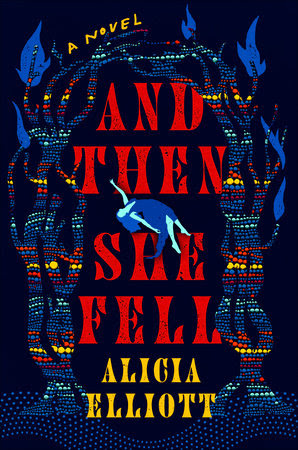
Alicia Elliott - And Then She Fell
From the outside, Alice has a perfect life. She has a beautiful newborn daughter Dawn, a charming husband Steve, and has just moved into a new home in an affluent part of Toronto. But inside, Alice is struggling. Her mother has just died, she isn't bonding with Dawn, and she is not confiding in Steve. Plus, it doesn't help that she is the only First Nations person in her neighbourhood. The judges call this 'a deep dive into the shattered mind of a postpartum woman.' Elliot is a Mohawk writer based in Brantford Ontario.
Anne Enright - The Wren, The Wren
Nell McDaragh is the grand-daughter of a famous Irish poet, Phil McDaragh, whom she never knew. At age 22 she leaves home to become a writer and starts a relationship with the controlling Felim. Her relationship with her mother, Carmel, is complex and layered with intergenerational trauma. Carmel is unable to connect with people, having been abandoned by her father Phil, who left his terminally ill wife and young family. She also struggles to reconcile a man who write such beautiful verse with his personal behaviour. The judges write 'a psychologically astute examination of family dynamics and the nature of memory. Enright's prose is gorgeous and evocative and scalpel sharp.' Irish author Enright is the author of seven novels including the Booker Prize winning The Gathering (2007) and The Green Road (2016) which was previously shortlisted for the Women's Prize.
Kate Foster - The Maiden
In Edinburgh 1670, Lady Christian is arrested for the murder of her lover, Lord Forrester. The trial is sensational, painting this once respectable woman as an adulteress and killer. Told in alternating narratives of Christian and Violet, a prostitute who also kept company with Lord Forrester. Based on a real case, the judges said 'a confident historical thriller with deep-dive, hot-blooded characters who you are cheerleading on. Cinematic. Gripping. Tense; A total page-turner.' This is Scottish author Foster's first novel. Sounds fascinating.
VV Ganeshananthan - Brotherless Night
In Jafna, 1981, teenage Sashi wants to become a doctor but the Sri Lankan civil war steers her dream on another path as her brothers and friend get caught up in the political crisis. She takes up a role working as a medic at a field hospital for the Tamil Tigers, but as the fighting continues Sashi questions where she stands. The judges said 'visceral, historical, emotional. It is 300 pages of must-read prose.' Author Ganeshananthan is best known for Love Marriage which was longlisted for the Women's Prize in 2009.
Kate Grenville - Restless Dolly Maunder
Born at the end of the 19th Century, Dolly grows up in a poor farming family in rural New South Wales. She searches for independence, at a time when women are overcoming obstacles and forging new paths for themselves. Grenville uses family memories to piece together a life of her grandmother. The judges write that the novel 'follows the life of Dolly, who really is restless. It begins in 1880s in rural Australia, and it follows Dolly's ambitions to live a bigger life than the one she's been given.' I am a big fan of Kate Grenville's work and admire the way she takes snippets of a real life to craft a compelling story, as she did in A Room Made of Leaves (2020). I am keen to read this novel as her book about her mother, One Life (2015), shows that she hails from a line of formidable women. Grenville previously won this prize in 2001 for her novel The Idea of Perfection.
Isabella Hammad - Enter Ghost
Actress Sonia Nasir travels to Haifa to visit her sister Haneen. Sonia has made a life for herself in London, while her sister remained in their homeland commuting to Tel Aviv where she teaches at University. Sonia joins a production of Hamlet in the West Bank, but the production is threatened to be disrupted by war. Can Sonia find a new life for herself in her homeland? The judges write 'How can a production of Hamlet in the West Bank resonate with the residents' existential issues. Enter Ghost is a beautiful, profound meditation on the role of art in our society and our lives.' British-Palestinian author Hammad is known for her previous novel The Parisian (2019),
Claire Kilroy - Soldier Sailor
A woman struggles with the change of her identity that motherhood brings. She is consumed by the cycle of day-to-day parenting and no longer has time for herself. Her marriage is strained, the couple arguing. She has an all-consuming love for her child but doubts her abilities. The judges describe this as 'a beautiful and harrowing novel about what it can feel like to be a first time mother.' Irish author Kilroy is known for her previous novels including Tenderwire and The Devil I Know.
Mirinae Lee - 8 Lives of a Century-Old Trickster
Ms Mook, a resident at the Golden Sunset retirement home, shares her memories and reveals stories spanning decades and nations. She claims to have been a slave, spy, murderer, lover, mother. Could they all be true? Can these roles all belong to the same person? The judges write that this is 'an expansive novel that spans a century, obscuring and illuminating the trickster at its heart.' This is South Korean author Mirinae Lee's debut novel.
Karen Lord - The Blue, Beautiful World
Climate change has transformed the Earth. Watching from afar are other civilisations ready to make contact with humanity. A group of change makers are preparing for first contact, including an inventor, a celebrity and a popstar. The judges said 'quite literally takes a knife to climate change and opens up what humanity if going to look like in the future.' Barbadian author Karen Lord has written other works of science fiction including The Best of All Possible Worlds and The Galaxy Game.
Chetna Maroo - Western Lane
Gopi is a keen squash player who has become obsessed with the sport since her mother died, distracting her from her grief. Trained by her father, she grows distant from her sisters. Maroo's debut novel, Western Lane was shortlisted for the 2023 Booker Prize. The judges said 'One of those exquisite books in which not one word is wasted. It is beautifully written.'
Peace Adzo Medie - Nightbloom
Cousins Selasi and Akorfa share a birthdate and pretty much everything else. But when they become teenagers, one withdraws and changes. Later, as adults, they cross paths again and secrets from long ago surface. This novel explores family, class and discrimination, and the central importance of female friendship. The judges write ' moves like a love story between childhood, female friendship and buried truth; painful, intimate and beautifully written with characters you care for. A jewel of a book'. Medie's previous novel His Only Wife (2020) was well regarded. She holds a PhD in International Affairs and has written non-fiction on the subject.
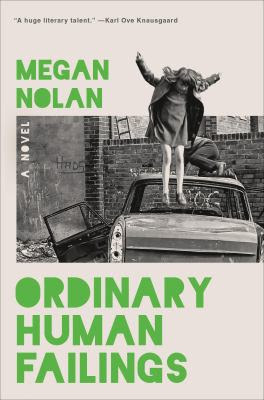
Megan Nolan - Ordinary Human Failings
London 1990. Tom Hargreaves is working as a reporter when he stumbles on a scoop involving a dead child. Carmel is grieving and lacks a support system. Her family of Irish immigrants face prejudice and are an easy target for the police investigation. The judges describe this as 'the insightful story of a family and the journalist who is trying to force a grisly murder tale out of them.' Megan Nolan is also known for her previous novel Acts of Desperation (2021).
Aube Rey Lescure - River East, River West
Fourteen year old Alva is living in Shanghai in 2007. Her mother is a Caucasian American, but she never knew her Chinese father. Alva struggles when her mother marries Lu Fang, a rich landlord. Lescure is a French-Chinese writer. She has written for many publications, but River East, River West is her debut novel. The judges said 'It's original, it's funny, and it's sometimes heartbreaking as well.'
Pam Williams - A Trace of Sun
Cilla leaves Grenada for the UK, leaving behind her son Raef. Seven years later they are reunited, but still estranged by the years and distance between them. Exploring the long-term emotional impact of family separation, A Trace of Sun is Williams' debut novel, drawing on her own experiences as part of the Windrush generation. The judges called this 'a beautiful and heartbreaking story told over the passage of time, exploring what it means to be a woman and mother'.
My thoughts on the Longlist
This was an exciting list given there was so many surprises. I had expected to see Ann Patchett (Tom Lake), Zadie Smith (The Fraud), Sandra Newman (Julia) on the list, and had really hoped that Charlotte Wood's Stone Yard Devotional would be longlisted. Many of these authors I have not heard of, so I am delighted to be exposed to new writers. I also love that this is a global list with writers from the Caribbean, Palestine, Australia, Ireland, Canada, South Korea and beyond.
Last year's longlist gave me many hours of reading pleasure, so I am hopeful that this year's list will do the same. I have not finished any of these books, but I have just started The Wren, The Wren and I am seeing author Anne Enright at the All About Women festival on 10 March, so will start my exploration there. I am also keen to track down the works by Foster, Grenville, Hammad, Kilroy and Maroo.
If I had to pick a shortlist, I would choose Grenville, Hammad, Enright, Kilroy and Maroo to be among those listed.
The shortlist will be announced on 24 April 2024 and the winner will be revealed on 13 June 2024. Happy reading!
Want more Longlist fun? Here are the judges announcing the longlist.
In September 2023, Rupert Murdoch, the 92 year old patriarch of the influential media family, announced he was retiring from Fox and News Corporation and handing the reigns to his eldest son Lachlan. While the news of his departure was not unexpected, it remains to be seen what influence he will continue to hold as 'chairman emeritus' or whether he will truly let go of the reins.
The Murdoch family are synonymous with a form of tabloid journalism that I find odious. In Australia, NewsCorp has a tremendous influence, with a near-monopoly on newspapers. In recent years the Murdoch family have become the news, with their involvement in the phone hacking scandal, the Roger Ailes sexual harassment scandal, the Dominion Voting Machine defamation, and their promotion of misinformation which underpinned Trumpian politics. The HBO TV show Succession, which featured a media patriarch and his adult children competing to be in charge, also fueled interest into the Murdoch family.
At the 2023 Sydney Writers' Festival I attended a session where journalist Paddy Manning spoke about the challenges of writing an unauthorised biography and his latest book The Successor - the High Stakes Life of Lachlan Murdoch (2023). I didn't know much about Lachlan and wanted to see whether he would bring about a kinder, gentler NewsCorp, or continue his father's legacy of hate-filled misinformation.
The Successor is the first biography of Lachlan Murdoch. The younger Murdoch was sent to Australia as an 18 year old to get his hands dirty in the family business. After a three month stint at the Daily Mirror, he quickly took on executive roles and became publisher of The Australian national newspaper. We learn about his early days in business in the 1990s, which was fraught with questionable decisions. The 'Superleague war' in which NewsCorp backed a professional rugby league competition, against Kerry Parker's Australian Rugby League, ending in a truce a year later. He then joined James Packer in investing in One.Tel - a start-up telecommunications company which was a costly exercise for investors, ending in administration. He also lost $150M when he ran Channel 10. Despite this, Lachlan managed to get in early on the move to online media. He recognised the potential of digital advertising and invested $10M in REA Group, the online real estate company, which is worth billions today.
Outside of his Newscorp interests, Lachlan founded a private investment company Illyria, which backed all sorts of eclectic programs from an Indian cricket team to Nova radio stations. The amount of money he spent on companies, yachts, homes and holidays is staggering.
When Lachlan returns to the US in 2019, and takes up the CEO position at Fox, The Successor gets particularly interesting. Here we learn how Lachlan would give interviews and speeches promoting journalistic freedom and balanced reporting, but behind the scenes he was pushing the conservative commentary by Laura Ingram, Lou Dobbs, Tucker Carlson and Sean Hannity. As Lachlan and his father promoted the rise of Trump, divisions within the family grew. His younger brother James fell out of step with the family, angered with Fox's disinformation campaigns regarding climate change.
We learn little about Lachlan as a person in The Successor. We know that he loves adventure and sports, that he has been married for over two decades to Sarah O'Hare with whom he shares three children, and that he has expensive tastes in property and luxury yachts. He is close friends with former Australian Prime Minster Tony Abbott, whom he has appointed to the board of Fox Corporation.
But through the choices Lachlan has made at Fox, we are left with an understanding that he is far more conservative than his father. He seems intent to put profits over people and a willingness to promote racism, anti-semitism and sexism if it improves ratings. Murdoch allowed the promotion of racist commentary (such as Tucker Carlson's espousing of the white nationalist great replacement theory), the defamatory comments about Dominion voting machines, and failed to denounce Trump's January 6th riots. Fox 'News' has been instrumental in sowing the seeds of disinformation which has furthered the deep divisions in America. With Lachlan now at the helm, I reckon these divisions will get a lot worse.
Manning's biography of Lachlan Murdoch is a fascinating peek inside this influential family. The glimmer of hope left behind is that Murdoch's three eldest siblings have enough shares to roll him as Executive Chair and CEO, and bring about a more centrist news organisation. While this is unlikely to occur during their father's lifetime, it will be interesting to see what happens once he passes.
The inaugural Women's Prize for Non-Fiction longlist has been revealed! This is a new annual prize to celebrate non-fiction written by women. The Winner will receive £30,000.
As this is the first year of the prize, there has been much speculation about who would appear on the Longlist. (I had my fingers crossed for Anna Funder's Wifedomand am so pleased it made the list!). Sixteen works of non-fiction were longlisted.
The 2024 longlist is as follows:
Alice Albinia - The Britannias: An Island Quest
Albinia explores Britain's islands - from Shetland to Thanet to St Kilda to Iona. Along the way she discovers matriarchies and mythology and how these islands impacted the mainland. Albinia is an award winning author best known for Empires of the Indus: The Story of a River and Cwen which was shortlisted for the Orwell Prize for Political Fiction.
Grace Blakeley - Vulture Capitalism: Corporate Crimes, Backdoor Bailouts and the Death of Freedom
Exposing the falsehoods of the free market, journalist Blakeley explores the rise of vulture capitalism - in which economies have benefited corporations and the wealthy, creating a widening gap between rich and poor. Well researched, Blakely provides examples from Boeing, Exxon, Amazon and other corporations to show how capitalism has gone wrong.
Cat Bohannon - Eve: How the Female Body Drove 200 Million Years of Human Evolution
Society is geared towards the male body. Women have long struggled for adequate health treatment as the medical establishment uses men as the template. In Eve, Bohannon explores how women's bodies differ from men and why women are in no way the weaker sex. Hailed as a 'sweeping revision of human history', Eve will force you to rethink evolution. Sounds intriguing!
Marianne Brookner - Intervals
Covering the period from her mother's diagnoses with multiple sclerosis until her death a decade later, Brookner explores illness, death, bereavement and patient independence. Intervals has been called a 'harrowing book that is moving and thought-provoking on the issue of assisted dying', It won the 2022 Fitzcarraldo Essay Prize.
Leah Redmond Chang - Young Queens: The Intertwined Loves of Catherine de' Medici, Elisabeth de Valois and Mary, Queen of Scots.
In sixteenth-century Europe, three young women come of age. The Reformation brings about societal changes and the women end up ruling, their lives intertwined. Historian Leah Redmond Chang has used primary sources, such as letters written by the woman, to craft this account.
Joya Chatterji - Shadows at Noon: The South Asian Twentieth Century
This book explores the subcontinent's history from the time of the British Raj, through independence and partition. Learn the histories of India, Pakistan and Bangladesh through food, culture, social structures and politics - how they are alike and how the differ. Author Chatterji is a Fellow of Trinity College, Cambridge, specialising in South Asian History.
Laura Cumming - Thunderclap: A Memoir of Art and Life and Sudden Death
Dutch artist Carel Fabritius is best known for his famous painting The Goldfinch (1654). The same year the painting was released, the Delft Thunderclap occurred in which 40 tonnes of gunpowder was detonated in the city of Delft, killing Fabritius. Cumming is passionate about art and shares this love with her father, Scottish artist James Cumming. In this memoir, she writes about Fabritius, her father and Dutch painting. I am intrigued by this book
Patricia Evangelista - Some People Need Killing: A Memoir or Murder in the Philippines
Journalist Evangelista grew up in the Philippines and spent six years reporting on Duarte's war on drugs. She covered the killings by police and vigilantes, and the terror felt by civilians caught in the cross fire. Evangelista bears witness to these crimes and sounds the alarm against complacency.
This book was my top non-fiction read of 2023. I am a self-proclaimed Funderaholic, so admit my bias when it comes to her work. That said, I am so pleased Wifedom is getting the recognition it deserves, and that Eileen O'Shaughnessy Blair is also being seen after so long in the shadows as George Orwell's wife. Funder is a gifted writer and a captivating storyteller. My review of Wifedomis available on this blog.
Lucy Jones - Matrescence: on the Metamorphosis of Pregnancy, Childbirth and Motherhood
Science writer Jones explores motherhood and the transformation that takes place in mind and body when a child is born. Drawing on neuroscience, evolutionary biology, psychoanalysis, socialogy, ecology and economics, Jones shows how patriarchal and capitalist systems neglect the maternal experience.
Naomi Klein - Doppelganger: A Trip into the Mirror World
I am a big fan of my compatriot Naomi Klein, having followed her work since our days at the University of Toronto. I have read many of her previous books and had the pleasure of hearing her speak at several events in Sydney. Her latest work, Doppelgänger, is about how she was continually getting mistaken for Naomi Wolf, which lead her down a rabbit hole of conspiracy theories and online hate.
Noreen Masud - A Flat Place
Scottish-Pakistani author Masud loves flat landscapes and travels across the UK in search of them. She seeks solace in these serene places, after a childhood trauma of being abandoned by her father as a young teen, and relocating to Scotland from Lahore.
Tiya Miles -All that She Carried: The Journey of Ashley's Sack, a Black Family Keepsake
Rose, an enslaved woman in South Carolina, was separated from her nine-year-old daughter Ashley who was sold to another slave holder. Ashley took with her a small cotton bag with a few belongings. Decades later, Ashley's granddaughter embroidered the sack with the family history. Historian Tina Miles explores women's history through treasures like these to document their experience of slavery.
Madhumita Murgia - Code Dependent: Living in the Shadow of AI
London-based award-winning journalist and editor Madhumita Murgia is an expert in technology, science and health. She is AI editor for the Financial Times and Code Dependent is her first book. Murgia explores what it means to be human in a world impacted by artificial intelligence. Do we have agency? How does AI influence our behaviour. I have been exploring AI recently and am itrigued by the sound of this book.
Sarah Ogilvie - The Dictionary People: The Unsung Heroes who Created the Oxford English Dictionary
This book tells the story of the crowdsourcing that built the Oxford English Dictionary. Contributions from the public were used to compile the OED, and lexicographer Ogilvie digs into the archives to explore who they were. (This reminds me that I must finish Pip Williams' The Dictionary of Lost Words!)
Safiya Sinclair - How to Say Babylon
Born in Jamaica, author Sinclair, was raised by a Rastafarian reggae singer who forbade her to do anything that might corrupt her. Her mother tried to engage her with books and poetry but Sinclair knew she needed to leave home in order to truly live.
While I have only read one book on this list (Funder's brilliant Wifedom), I am keen to track down the works by Bohannon, Cumming, Murgia and Blakeley.
It is wonderful to see such a diverse range of authors and subject matters on this list. As it is the first year of this prize, it will be interesting to see how the judges approach their task. But I will continue rooting for Anna Funder and look forward to seeing how this unfolds.
The shortlist will be announced on 27 March 2024 and the winner will be revealed on 13 June 2024. Happy reading!
Want more? Here is the video of the Longlist announcement.
In the mood for a good crime thriller, I turned to one of my favourite writers in this genre, Garry Disher. I have previously read three of the Australian author's novels in the Hirschhausen series - Bitter Wash Road(2013), Peace (2019) and Consolation (2021), and absolutely loved them for their character development, intriguing story lines, and depiction of small town Australia. I was going to read the last in the series, Day's End (2022), but decided to try one of Disher's standalone novels, The Way it is Now (2021), instead.
Set in the Mornington Peninsula, a picturesque coastal area of beaches, wineries, and markets about an hour's drive from Melbourne, Charlie Deravin has been suspended from his job as a police officer for a disciplinary matter. He has retreated to his childhood home on Menlo Beach where, after a morning surf, he spends his days investigating a disappearance that occurred twenty years earlier.
He remembers the day Billy went missing from a school camp. Charlie was a rookie detective then, part of the search team. But that isn't the disappearance on Charlie's mind. That same day, Charlie's mother went missing, her car found abandoned on a roadside. For the past twenty years many people in the community, including Charlie's brother Liam, have presumed that Charlie's father was to blame.
Charlie wants to find out what happened to his mother and, if possible, to clear his father from suspicion. But twenty years is a long time for a cold case.
Disher weaves the past into the present, and there are plenty of subplots - a failed jury trial, podcasters, and (as the novel is set in early 2020) news of the COVID pandemic is hitting home. Like any good crime novel, there are a handful of possible suspects lurking around. While the ending felt a bit forced, I really loved the way Disher crafted this story and the realistic way he creates his main character.
While I definitely preferred the Hirschhausen series, I really enjoyed this novel and would recommend it to anyone seeking a page turning crime novel. I look forward to reading more by this talented writer. Fortunately, fans of Disher don't need to wait too long. His next book, Sanctuary, is being published by Text on 2 April 2024.
In 2021 I discovered the Simon Serrailler crime novel series by Dame Susan Hill. I quickly read the first three novels - The Various Haunts of Men (2004), The Pure in Heart (2005), and The Risk of Darkness (2006) in rapid succession. I then thought I would take a short break before reading more, but did not expect that my break would take two years!
Looking for a juicy crime thriller, I picked up the fourth novel in the Serrailler series - The Vows of Silence (2008) and quickly inhaled this story.
The fictional English town of Lafferton is rocked by a crime wave with a series of shootings that would seem unrelated and random. The only commonality of the victims is that they are all engaged or newlywed women. Detective Chief Superintendent Simon Serrailler is leading the Serious Incident Flying Taskforce to track down this killer before he strikes again. With the locals on high alert and the media pressing for answers, Serrailler is also under pressure to keep the community safe at an upcoming society wedding and a community fair.
Serrailler is facing added stress outside of work. His beloved brother-in-law has taken ill, his father is dating again, and an old flame is back in town. His sister Cat is trying to hold the family together, while at the same time grieving the loss of a friend. I have grown fond of the Serrailler family over the course of these novels and enjoy the sibling bonds depicted in this family.
Aside from the main tale, Susan Hill infuses the novel with realistic side stories about people in the local community. Middle-aged widow Helen is a single parent to two teenagers, one of whom has been swept up in evangelism and is now behaving erratically. She has just met Phil through an online dating service and is trying to balance the exciting prospect of a new life with someone and the needs of her children.
Hill has a fascinating way of blending a police procedural with observances of domestic life. Through the vignettes of the Serrailler family and other members of the community, we see people grappling with illness, death, love, isolation and aging. Indeed I probably engage more with these tales than the crime activity as I noticed my rapid page turning was less about finding the killer and more about finding out what was happening with these characters.
Overall I enjoyed this novel and will undoubtedly continue to work my way through this collection. I hope that in future novels we see different types of crimes and potentially another location, lest Lafferton develop a Midsomeresque body count.
My reviews of other novels in the Simon Serrailler series are available on this blog:
My first book read in 2024 is the delicious novel Forbidden Notebook (2023) by Alba de Cespedes. The Forbidden Notebook was originally published in serial form in 1951 and as a book, Quaderno probito, in 1952. Recently rediscovered, it has been newly translated by Ann Goldstein and published by Pushkin Press with an introduction by Jhumpa Lahiri.
Valeria Cossati buys a black notebook on a whim. Upon bringing it home she searches for a place to hide it: the linen closet; under a pile of mending; where she stores her cleaning supplies; a disused suitcase. She moves it every few days as she does not want it to be found by her husband of 20+ years, Michele, or by her young adult children Riccardo and Mirella. At night, after the family is asleep, Valeria snatches moments to write - recording her observations and thoughts, anxious that this rebellious act of writing will be discovered and she will be ashamed for having her own thoughts.
Through her diary entries we learn that Valeria married Michele at age 21, moved into a small apartment in Rome and had two children. Now at forty-three years old, she questions the life she has been living, obeying conservative gender norms, and worries that she is getting old before her time. She reflects on the early days with Michele, their courtship, their correspondence while he was off at war, and contrasts this with the present day where they coexist but have lost that spark of early love. Since the children were born, Michele has called her 'Mamma', but she longs to be called by her name and be seen as a woman not just a mother.
The diary is written from December 1950 to May 1951 when Italy is recovering from World War II and the oppression of the Mussolini years. It is a period of change, and through her daughter Mirella she tries to reconcile her conservative upbringing and the new social mores that her daughter subscribes to - going out at night with an older man, taking up a job in his law firm. She also sees the scorn of their poverty, when her daughter longs for beautiful things her parents cannot afford. She records in the diary her feelings toward her son - once the apple of her eye, now determined to run off to Buenos Aires with a girl Valeria feels is not worthy of him. Through her children's actions, she questions the choices she has made.
Valeria links the disquiet in her mind to when she began writing in the notebook. She writes:
'I am increasingly convinced that this anxiety took possession of me starting the day I bought the notebook: an evil spirit, the devil seems hidden in it. So I try to neglect it, leave it in the suitcase of the closet, but that is not enough. And in fact the more tightly bound I am to my duties, the more limited my time, the more urgent the desire to write becomes.' (p 124)
But the notebook is a necessary vehicle for Valeria to process her thoughts. Even in her own house, she has no place of her own. While the children can each escape to their rooms, and Michele can withdraw to the chair where he reads the papers and listens to the radio, Valeria has nothing of her own. Gradually she begins to understand that she needs the notebook as she has no other confidante. She writes:
'It's strange: our inner life is what counts most for each of us and yet we have to pretend to live as if we paid no attention to it, with inhuman security.' (p 199)
Through her notebook, readers are transported to a different time and place, where women's place in domestic life is narrowly defined. The transgressive act of writing this diary, doing something for herself, opens Valeria's world to new possibilities and different choices, the potential to free herself from the role she has been given.
I am so pleased to have read this book, finding it in the City of Sydney Library. I became interested in this book in December 2023 when I read an article in the New York Times about it and was intrigued by this photo of the author, Cuban-Italian writer Alba de Cespedes. She worked as a journalist and was jailed in 1935 for anti-fascist activities. Two of her novels were banned and moved to Paris after World War II. I hope that more of her writing is translated and reaches a wider audience, as de Cespedes deserves to be read.
I always promise I won't buy any more books until I have read the ones I already have... but that promise never lasts long! I am hoping to make a dent in this pile though, as I am looking forward to each one, and I want to get a start on my reading before award longlists are announced from March.
I am looking forward to a number of new books due to be published in 2024, including:
Michael Cunningham - Day (January)
Percival Everett - James (March)
Tana French - The Hunter (March)
Michael Ondaatje - A Year of Last Things (Poems) (March)
Judith Butler - Who's Afraid of Gender? (March)
Ru Paul Charles - The House of Hidden Meanings: A Memoir (March)
Salman Rushdie - Knife: Meditations after an attempted murder (April)
Colm Tobin - Long Island (a sequel to Brooklyn!) (May)
Evie Wyld - The Echoes (August)
Tara Moss - Next Billie Walker book
Clare Wright - third instalment of her democracy trilogy
Helen Garner - new non-fiction
While I won't get to all of them this year, I have preordered many from my library.
For the past few years I have consistently been able to read at least 30 books a year. While I could push myself by setting a higher goal, I like my 30 book plan. However I will continue to explore new authors, genres and subject matters. To diversify my reading and to challenge myself to read more broadly, I have updated my annual checklist to add some fun to my reading.
Last year I focussed mainly on fiction. This year I want to add more non-fiction to my list, but also get back to the classics and tick off some of the books on my Fifty/Five list. I created that list to read some long desired classics over the next five years. Will 2024 be the year I tackle Proust?
I managed to get my reading mojo back in 2023 and have enjoyed a wonderful year of books. I also spent a week at the Sydney Writers' Festival which introduced me to many new books and authors.
My reading goal for 2023 was 30 books, which I achieved, reading 33 titles this year. When planning for 2023 at the start of the year, I had a stack of books on my to-be-read pile, and managed to read most of them. I also updated my reading bingo card to help me diversify my reading. While I didn't read all categories, I succeeded in most of them (highlighted below).
So here's what I read in 2023:
Fiction
I wanted to read some classics this year. In January I discovered the #BigBronteReadalong on Instagram and so joined that group online. I have read all the Bronte novels before, but many decades ago (indeed, last century!). I managed to read four Bronte novels - Jane Eyre, Shirley, The Professor and Agnes Grey. I tried to read Wuthering Heights again, but still did not like it, and lost my Bronte momentum, after slogging my way through Shirley and The Professor. So I never did re-read The Tenant of Wildfell Hall or Villette. While my readalong was a bit of a fail, I quite enjoyed the idea of it and may see if I can join one next year for a #DollopofTrollope or similar. Regardless I will continue my reading of classics as I work my way through my Fifty/Five list.
My interest in feminist retellings of ancient myths continues. This year I read two novels based on myths - although not the ones I had on my to be read pile! I picked up two new novels published in 2023 - Jennifer Saint's Atalanta and Costanza Casati's Clytemnestra. Both were really enjoyable and I look forward to reading more myths in 2024.
I read quite a few Aussie Noir crime novels this year. Hayley Scrivenor's Dirt Town was brilliant and I have been recommending it to everyone I know who loves a good page turner. In 2022 I heard Scrivener speak at the Sydney Writers Festival on a panel with Garry Disher. This started my love of Disher's Hirschhausen series and after reading Bitter Wash Road last year, I gobbled up Peace and Consolation this year. Likewise, I enjoy Chris Hammer's novels and read two in the Lucic/Buchanan series - The TiltandThe Seven. Both were excellent.
I also read some crime/thriller novels by non-Australian authors. I pre-ordered the latest Robert Galbraith (JK Rowling) novel in the Cormoran Strike series, The Running Grave. It was such an enjoyable read and my favourite in the series so far. Dervla McTiernan is another gifted crime writer and I was delighted to learn about her Cormac Reilly series through readingThe Ruin. I pre-ordered Eleanor Catton's novel Birnam Wood and was delighted to get to meet her at the Sydney Writers' Festival. This novel had me gripped from the outset and lingered long after the last page was read. Likewise Percival Everett's magnificentThe Treeshas not left my mind. I heard about this novel when it was shortlisted for the 2022 Booker Prize, but had difficulty finding a copy. I am so glad to have read this and look forward to exploring more books by Percival Everett.
The Sydney Writers' Festival was also a chance to meet Colson Whitehead. I absolutely loved his novel The Nickel Boysand at the time I declared it would be a contender for one of my favourite books of the year. I am looking forward to reading more of Whitehead's books in 2024.
Award longlists provide me with much reading inspiration but this year I didn't read as many longlisted novels as I normally do, in part because the ones I was most interested in were hard to find.
Sophie Mackintosh's Cursed Breadwas longlisted for the 2023 Women's Prize and sounded really intriguing, but unfortunately left me disappointed. Likewise, Jessica Au's Cold Enough for Snow has won countless awards and was on my wishlist for ages. I read it as my #NovellaInNovember and was underwhelmed. I had avoided Sally Rooney's Normal People for years due to the hype around it but finally read it this year and can now understand why it was so popular. Another much hyped novel is Ann Patchett's Tom Lakewhich I read and enjoyed with the audiobook performed by Meryl Streep - the first novel I have read which features the COVID-19 pandemic. I also read Miriam Toews' Women Talking, as I wanted to see the film but read the book first. Both the novel and the film were great!
Of all the novels I read this year it is really hard to pick a favourite. My top five would be:
This year I didn't read as much non-fiction as I had planned to. It was a difficult year for me on many fronts, so perhaps I needed the escape that novels provide!
In January I read Julia Gillard's excellent essay collectionNot Now, Not Ever - which looks back at the infamous misogyny speech she gave while Prime Minister and the aftermath ten years later. I loved this book and the diversity of voices she gathered to reflect on politics, sexism and the unfinished business of equality. Another revelatory book on Australian politics was Margot Saville's The Teal Revolution. I attended a session with Saville at the Sydney Writers' Festival and heard her speak about the wave of women entering politics as independents. I found her book a fascinating insight into the current shake up of Parliament.
I also read some interesting memoir this year. Grace Tame's memoir The Ninth Life of a Diamond Miner was an interesting exploration of the life of this remarkable woman. While the book was challenging and in need of an edit, I have nothing but admiration for Tame. Similarly Britney Spears' The Woman in Me was not particularly well written but was such as interesting read. It is a fascinating look at the music industry and the perils of early fame, and I really loved this book and the audiobook performed by Michelle Williams.
Another memoir of sorts was Anna Funder's Wifedom - a look at the life of Eileen O'Shaunessy Blair, wife of George Orwell. I love Anna Funder and would read anything she writes. I pre-ordered this book as soon as it was announced. Wifedom does not fit neatly into any category as Funder fuses styles, melding her life with Eileen's. I found it an engrossing read, and made me look at Orwell and his work in a new light. Definitely my favourite non-fiction this year.
Other Genres
I also explored a mishmash of other genres in 2023.
I re-read a play I had studied in high school, Our Town by Thornton Wilder, to assist me in my reading of Ann Patchett's Tom Lake, and found I still didn't love it after all these years. Shirley Jackson's Dark Tales- a collection of her eerie short stories, was wonderful and made me want to read more of her work. I also read an amazing poetry collection - Sarah Holland Batt's award winning The Jaguar. I picked this up after hearing her read from the collection at the Sydney Writers' Festival and have savoured her verse.
Best of 2023 I read so many great books this year. I loved and highly recommend:
If I had to choose my absolute favourites, I would pick Anna Funder's revealing exploration Wifedom and Eleanor Catton's page-turning eco-thriller Birnam Wood.
Well, that's my year of reading! A new year starts tomorrow and I cannot wait to discover new books and rediscover old favourites. Happy New Reading Year!
The third novel in Chris Hammer's series featuring Detective Ivan Lucic and his plucky partner Nell Buchanan has recently been published. The Seven (2023) sees the partners investigating a homicide in Yuwonderie, a fictional town in the Riverina area of New South Wales.
A body is found in the canal that runs through the heart of Yuwonderie. Lucic and Buchanan drive down from their base in Dubbo to investigate. The victim is a local accountant, Athol Hasluck, who has died in mysterious circumstances. They quickly learn that Hasluck is from one of 'The Seven' - the seven families that built and established the town one hundred years earlier. These families created the irrigation scheme - a system of canals that bring water from the Murrumbidgee River into the town - central to the prosperity of the community. But the detectives soon discover that there are dark secrets beneath the facade presented by this planned community, and the more they uncover the more dangerous their investigation becomes.
The novel unfolds on three timeframes. The present, where Lucic and Buchanan are investigating Hasluck's death. Thirty years earlier, in 1993, when Davis Heartwood, one of the Seven families, begins researching the origins of the irrigation scheme for his thesis. And 1913, when a young Aboriginal woman named Bessie arrives in the area to work for one of the families and writes to her mother who lives on a mission. Over the course of the novel, the three timeframes are interwoven and reveal information essential to this story.
In the previous instalment of the series, Buchanan was the focus. In this novel, we learn more about Ivan Lucic and his past. We also have characters from previous Hammer novels - like Martin Scarsden from Scrublands - make appearances in this book. While it helps to have read the previous Lucic novels, The Seven can be read as a standalone book.
Once again, Hammer has called upon Aleksander J Potocnick to create a map of the fictional town. This is a handy reference when reading to help understand the topography of the landscape and the proximity of various locations.
I really enjoyed this novel. It is a gripping murder mystery, with interesting characters and a clear sense of place. I hope that Hammer continues to write this series, as I want more Ivan and Nell!
My reviews of other Chris Hammer novels are available on this blog: Scrublands (2018); Silver (2019); Trust (2020); Treasure and Dirt(2021) and The Tilt (2022). For readers outside Australia, the Lucic/Buchanan novels are published under different titles - look for Opal Country (Treasure and Dirt), Dead Man's Creek (The Tilt) and Cover the Bones (The Seven) instead.
For my 'Novella in November', I chose Jessica Au's Cold Enough for Snow (2022), a book I have been longing to read. It won the 2020 Novel Prize, the 2023 Victorian Premier's Prize for Fiction, the Victorian Prize for Literature and the Prime Minister's Literary Award for Fiction. With all the accolades, I had high expectations for this book, but unfortunately it left me cold.
The story involves a woman who arranges to meet her mother in Tokyo and travel around Japan together. Narrated by the daughter, she describes their visits to art galleries, restaurants, temples and stores. The two are estranged and while they are travelling together, they share little - even at an art gallery they view the works separately. For the daughter, this trip is a chance to escape her daily life and contemplate her future. Through flashbacks we learn about the narrator's sister, an uncle in Hong Kong, her partner Laurie - but we learn little of the mother and daughter. In an effort to please each other, neither says what is on their mind. Can they bridge the distance between them?
Jessica Au writes in a beautifully observant sensory style. She describes places and things meticulously. The way our narrator describes what she sees is evocative, contemplative and delightful. For example,
'When my mother finally appeared, she might as well have been an apparition. She came with her puffer jacket zipped up to her chin, and in the cold night air her breath came out in a little cloud, like a small departing spirit' (p. 90).
I loved Au's descriptive prose, admiring each sentence. The author forces you to slow down, savour every word. However the overall stream-of-consciousness style without chapter breaks did not work for me. I wanted more from this book, to gain a better understanding of the characters, to feel more substance. Not unlike the narrator, I longed for connection.
Ann Patchett's latest novel Tom Lake (2023) is set on a Michigan cherry farm in 2020 during the COVID pandemic. Lara and Joe's three adult daughters have returned home to support the family farm and live out lockdown in their childhood home. The eldest Emily will inherit the farm and likely marry her sweetheart on the neighbouring farm. Middle child Maisie is a local veterinarian and youngest Nell is studying to be an actor. While they pick cherries in the orchard, the girls ask their mother to tell them about how she once had relationship with Hollywood heartthrob Peter Duke. Lara tells the tale of how she did a summer stock production of Our Town at Tom Lake, a festival town, where she met Duke and had a summer romance.
Told in flashbacks, Lara recounts the story from her early twenties when she was cast to star as Emily in Thornton Wilder's classic play Our Town (1938) and Mae in Sam Shepard's Fool For Love. The summer she spent at Tom Lake was filled with rehearsals, performances and lazy days of swimming and hanging out with her friends - Duke, his brother Sebastian, and Pallace (Lara's understudy). After this summer of passion, Duke went on to become a star and then converted his celebrity into an Oscar winning performance in a serious dramatic role. Lara had a brief moment of fame, starring in one film before retiring in her mid-twenties and retreating to the farm. Her daughters are keen to know how Duke and Lara's paths converged and then separated, and ultimately how Lara ended up on the farm instead of a mansion in Hollywood.
It helps to have knowledge of Wilder's Our Town when reading Tom Lake. A few chapters in, I decided to refresh my memory and found my browning 1985 edition of the play. In my high school drama class I did a scene from Our Town, playing Emily Webb opposite a classmate's George. I have no doubt that my Emily was not unlike the many dud Emilys, Lara observed during auditions! Our Town is essentially a play about life in a small town and the preciousness of the little things in life. I didn't really appreciate the play when I read it as a teenager, but can understand it more now. The folksy tale of life in Grover's Corner is an excellent parallel for Tom Lake.
I read Patchett's Tom Lake while listening to the audiobook performed by Meryl Streep. She read this book with warmth and embodied Lara perfectly. Interspersed between Lara's memories of one golden summer, is the present on her family's orchard. The novel explores the joys of family, and the slowness that the pandemic brought as people formed protective bubbles. Lara explains the choices she made without regret. Along the way we learn more about her daughters and her husband and life on the farm. Lara revels in the preciousness of each day and the joys of having her children close by. Tom Lake brings about a coziness, like comfort-food - a cherry pie enjoyed while wrapped in a patchwork quilt by a roaring fire.
My review of Ann Patchett's State of Wonder (2011) is also on this blog.
Clytemnestra is best known as the sister of Helen of Troy and the wife of Agamemnon, the brutal King of Mycenae. She is often depicted as a villain who murdered her husband. Clytemnestra appears in Aeschylus' Oresteia (5th century BCE), Homer's Odyssey (8th century BCE) and elsewhere, where she appears as a peripheral character, cast in a vengeful light. In Clytemnestra (2023), author Costanza Casati seeks to understand this complex woman and tell her story, in this impressive debut novel.
Born in Sparta, Clytemnestra is raised alongside her sister Helen and her brothers Castor and Polydeuces (Pollux) and younger siblings. Her father Tyndareus is King of Sparta. Her mother Leda was raped by Zeus in the form of a swan, resulting in her drowning her trauma in alcohol and raising her daughters to fight, routinely testing each other's strength in the wrestling ring. The girls know it is their lot in life to be married off to form strategic alliances. Helen choses Menelaus. Clytemnestra marries for love, choosing Tantalus the King of Pisa, with whom she has a young son. In a grotesque act of betrayal, her husband and son are murdered and Clytemnestra is forced to marry the man who caused her grief - Agamemnon, the King of Mycenae - with whom she has Iphigenia, Electra and Orestes.
When Helen runs off with Paris, the Trojan War begins. Menelaus asks his brother Agamemnon for assistance. The Greek troops meet at Aulis, and soon Agamemnon sends for his wife and daughter who is to be wed to Achilles. When the women arrive at Aulis, Agamemnon sacrifices his daughter in exchange for favourable winds. This second act of betrayal hardens Clytemnestra's heart and she vows her revenge.
While Agamemnon is away for the ten years of the Trojan War, Clytemnestra serves as Queen of Mycenae. She manages trade negotiations, resolves disputes, dispenses justice. She is a driven, capable leader. Casati presents her as a woman in full - a daughter, a sister, a lover, a wife, a mother, a queen, a survivor. I particularly enjoyed the way Casati portrayed her as a sister - supporting her brothers, defending Timandra, worrying for Helen.
I have read many retellings of ancient myths, and the characters routinely overlap. I had worried that I might not enjoy another story covering the same ground, but Casati has found a new way of telling a familiar story to make it feel fresh. Casati has given Clytemnestra a voice, and created a sympathetic portrait of a woman who experienced multiple traumas and endured. In doing so, she has recast the villain as a survivor. Highly recommend this for fans of ancient myths.