Sunday, 26 March 2023

Manifesto

In the eastern lowlands of Bolivia lie dozens of Mennonite colonies, including the Manitoba Colony, named after the Canadian province. Here the community members live plainly, speaking Plautdietsch (an endangered German dialect), farming and abiding by ultraconservative values. From 2005 to 2009, the women of this colony lived in fear as a group of men (their husbands, brothers and fathers), would sedate the household with an animal anaesthetic and then rape the women and girls. In total there were at least 151 victims, ranging from age three to sixty-five. The men were caught and were imprisoned. 

This shocking true story is the basis for Miriam Toews' bestselling novel Women Talking (2018) and the recent film adaptation. 

In the novel, the story begins when the men have been caught and taken away to the city to stand trial. Other men from the community are heading to the city to bail out the attackers. The bishop of the colony, Peters, has encouraged the women to forgive the men, to guarantee everyone goes to heaven. Peters advises the women that they will be excommunicated if they cannot forgive. Knowing that the accusers will be in danger when the men return, a group of eight women gather to decide what to do next. They meet secretly in a hay loft and determine they have three options: stay and forgive; stay and fight back; or leave. 

Over two days, the women gather to hold a referendum. They talk through the various options, the pros and cons of each. They all agree they want to keep themselves and their children safe, but do not know the best way of doing this. They also realise the risks of each decision. To stay and forgive means succumbing to future abuse, to fight back will result in violence and not everyone will survive, to leave means abandoning the elderly and they will not be able to take their teenage sons. These women also have no resources, are illiterate, and do not know whether they will be welcomed in other Mennonite colonies. Their faith is a driving force in their lives, and has been put to the test through this difficult decision.

Toews' novel is fascinating, and the female characters are all clearly drawn. What troubled me about the novel while reading it is that the narrator is August Epp, the colony's school teacher. August is invited to join the women and record the minutes of the discussion, as the women cannot read nor write. I initially found this device jarring as these poor women are denied agency once again to have their story transcribed by a man who chooses what does and does not get recorded. Plus, he is not a disinterested narrator, and includes his own musings in the minutes. But as I came to the end of the novel, I realised that is the whole point. Depriving women even a basic education means that they are powerless to do anything without the assistance of men. 

I am really interested to see the film version of this novel and I suspect it will actually be better than the book. Written and directed by Sarah Polley - who won an Oscar (and many other awards) for her screenplay adaptation - the film stars Rooney Mara, Claire Foy, Jessie Buckley, Sheila McCarthy, Judith Ivey, Frances McDormand and Ben Whishaw. Will provide an update once I have seen it.

Monday, 20 March 2023

Mallee Scrub

It's nearly Christmas in Tiverton, South Australia. Constable Paul Hirschhausen spends his days conducting welfare checks, finding lost dogs, and forging relationships in the community. After being demoted from Detective and sent out to this one-cop town a year ago, Hirsch has made peace with his situation. 

But this sleepy town has its share of crime. Someone has been stealing copper, disadvantaged teens have taken a ute for a joyride, vandals are defacing properties, a young child is locked in a hot car, and a drunk driver has crashed their vehicle into the Tiverton pub. Hirsch handles each of these matters relying on his intuition and experience. Just when he thinks he may enjoy a quiet Christmas with his girlfriend Wendy, the crime rate rises. When the violence starts - a slaughter of animals, a murder, and then some missing children - Hirsch is joined by Detectives from Adelaide and Sydney and a manhunt is underway. There will be no peace for Hirsch this Christmas.
Peace (2019) is the second novel in Garry Disher's Hirschhausen series. I really enjoyed the first, Bitter Wash Road (2013), and was keen to see the evolution of Hirsch as he settles into this town.  While focussed on the main character, Disher paints a vivid portrait of this dry and dusty community. The townsfolk are realistically portrayed and through them Disher provides insight to the social and economic complexities that  are the reality of living in rural towns.

I have read a lot of Australian rural noir - including Jane Harper's Exiles, Hayley Scrivener's Dirt Town, and Chris Hammer's Treasure and Dirt - and Disher should be as well known as these authors. A master of tension and pace, Disher is a gifted writer, who has crafted an engaging page-turner. So glad to know there are two more Hirsch books - Consolation (2021) and Day's End (2022) - as well as a dozen other Disher novels to explore. 

Saturday, 18 March 2023

Revisiting Agnes Grey

While her sister Charlotte was writing Jane Eyre (1847), Anne Bronte was working on her own novel about a young governess, Agnes Grey (1847). While the two debut novels explore similar themes, the latter is less well known and sadly forgotten. This is a shame, as Agnes Grey is a delightful novel and should be held in higher esteem. It is a novel that deserves a much wider readership.

Agnes Grey lives a modest family life with her minister father, mother and older sister Mary. Her father has made some bad financial decisions and the family find themselves in debt. Agnes is determined to support the family by working as a governess. 

Her first position is for the odious Bloomfield family. Wealthy beyond measure, the children are spoiled and feral. The eldest, Tom, is a bully who talks back and cruelly tortures animals. Mrs Bloomfield adores her son, and does not support Agnes in her efforts to educate the children, undermining her at every turn. Agnes finds a new position with the Murrays - an even wealthier family. Here, her job is to shape the two girls, Rosalie and Matilda, into refined marriage prospects. Rosalie is flirtatious and determined to wed. Matilda is a tomboy who prefers her horses to boys. While not as terrible as the Bloomfields, here Agnes is ignored and lonely. She misses her family dreadfully.
As a minister's daughter, Agnes is deeply Christian and conducts wellbeing visits on an elderly woman Nancy Brown. Nancy has poor eye sight, so Agnes reads The Bible and helps Nancy with her mending. Here she meets Mr Weston, the new curate, and over time develops a fondness for him. A family tragedy requires Agnes to return home. While she is happy to be able to be with her family again, she is saddened to lose her growing connection with Mr Weston. Will they find each other again?
 
It has been at least 25 years since I last read Agnes Grey and I had forgotten most of it. At the time I recall viewing it as a pale imitation of Jane Eyre, but now, having reread them both consecutively, I really appreciate Agnes Grey in its own right.

Anne Bronte is such a gifted writer and I loved how she infused her protagonist with empathy, ethics, self-deprecating humour, and a love of animals. Some of the lines in the novel were so brilliant, like: 
'One glance he gave, one little smile at parting—it was but for a moment; but therein I read, or thought I read, a meaning that kindled in my heart a brighter flame of hope than had ever yet arisen.'

'I always lacked common sense when taken by surprise.' 

'But our wishes are like tinder: the flint and steel of circumstances are continually striking out sparks, which vanish immediately, unless they chance to fall upon the tinder of our wishes; then, they instantly ignite, and the flame of hope is kindled in a moment.'
'Then, having broken my long fast on a cup of tea and a little thin bread and butter I sat down beside the small, smouldering fire and amused myself with a hearty fit of crying.'
The 'amused myself' in that last sentence absolutely slays me!

Agnes Grey is described as an autobiographical novel. Anne Bronte worked as a governess in York, and had a disastrous first attempt. She too was the daughter of a curate, and the family struggled to make ends meet. The boredom, isolation and frustration she experienced as a governess is brought to life through Agnes.  

While Anne Bronte didn't get the praise she deserved for this novel, unfavourably compared with Charlotte's Jane Eyre and Emily's Wuthering Heights, all published around the same time, in many respects I think Agnes Grey is superior. It is a certainly more relatable and realistic, and is a sophisticated critique of class and gender. I am so glad I revisited Agnes Grey.

Sunday, 12 March 2023

Stella Prize Longlist 2023

The 2023 Stella Prize longlist has been released! The annual literary award celebrating women and non-binary writers of both fiction and non-fiction is named after Australian author Stella Miles Franklin. 

Past winners include some of my favourite books on recent years:

  • Evelyn Araleun for Drop Bear (2022)
  • Evie Wyld for The Bass Rock (2021)
  • Jess Hill for See What You Made Me Do (2020)
  • Vicki Laveau-Harvie for The Erratics (2019)
  • Alexis Wright for Tracker (2018)
  • Heather Rose for The Museum of Modern Love (2017)
  • Charlotte Wood for The Natural Way of Things (2016)
  • Emily Bitto for The Strays (2015)
  • Claire Wright for The Forgotten Rebels of Eureka (2014)
  • Carrie Tiffany for Mateship with Birds (2013)

  • On 2 March 2023, the longlist was revealed with 12 nominees. I have not read any of the titles, and many of the authors are unknown to me, so I look forward to exploring these books further.

    The 2023 longlist is as follows:

    Mandy Beaumont  - The Furies
    Teenage Cynthia's family is falling apart. Her mother has been taken away by police, and her father has walked out. Alone, she walks around the landscape of her outback home, looking for traces of her sister Mallory. The judges describe this novel as 'A powerful meditation on gendered, inherited and historical trauma.' This is Beaumont's debut novel.

    Grace Chan  - Every Version of You
    Chan is a psychiatrist and author of speculative fiction. In this debut novel Chan has created Gaia, a hyper-consumerist virtual reality. Tao-Yi and her partner Navin spend most of their time in Gaia, working, socialising and practically living in this online space, while their physical bodies lie suspended in pods in their apartment. I love speculative fiction, so will try to check this out.


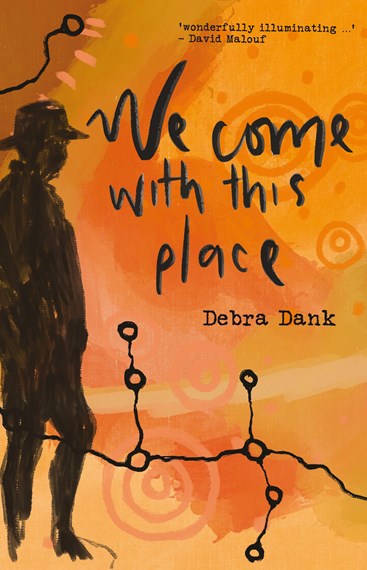
    Debra Dank  - We Come with this Place
    Author Dank is a Gudanji/Wakaja woman. In this memoir, she writes about country and family. The judges report that 'Dank shares with us a life that is at once extraordinary and familiar. Dank's words are lucid and beautiful. Her skill not only as a keen observer of her own life, but as a narrative builder and scholar of it, is obvious.' 


    Eloise Grills  - Big Beautiful Female Theory
    From award-winning essayist Grills, comes a graphic memoir or illustrated memoir-in essays. Described as 'part feminist manifesto, part comic book', Grills explores identity. The judges describe this book as 'at times theoretical, heavy, but not dense, her work attends to an under-examined body of Australian literature.' 


    Sarah Holland-Batt  - The Jaguar
    I adore the cover of this poetry collection! Holland-Batt's poetry is about the grief and loss of her father from Parkinson's disease. These poems reflect on mortality. Holland-Batt has previously been recognised with the 2016 Prime Minister's Literary Award for poetry. The judges write 'Accessible, lyrical and wise, this is a book from a poet at the height of her powers.' 


    Adriane Howell  - Hydra
    This is Melbourne-based writer Adriane Howell's debut novel. Anja is an antiquarian, classifying furniture in deceased estates. When she finds herself needing a change, she leases a beachside cottage, but a ghostly presence haunts its grounds. The judges describe Hydra as a 'startling original novel' and 'a truly weird and awe-some book in the best sense of those words, with an eccentricity that is never posturing or forced.'


    Ngaire Jarro and Jackie Huggins  - Jack of Hearts: QX115894
    This biography is written by two sisters about their father. Jack Huggins grew up in Ayr, North Queensland. During World War II he was captured by the Japanese in Singapore and spent much of the war on the notorious Burma-Thailand Railway.  His daughters seek to learn more about his journey. I have great admiration for Jackie Huggins and have always enjoyed the way she tells stories. I am intrigued by this book as so little has been published about Aboriginal and Torres Strait Islander soldiers and the Thai-Burma railway has fascinated me since reading Richard Flanagan's brilliant The Narrow Road to the Deep North (2013).

    Tracey Lien  - All That's Left Unsaid 
    Denny Tran is brutally murdered on a night out to celebrate his high school graduation. His sister Ky is devastated and enraged when bystanders claim to have seen nothing, so she attempts to track down witnesses herself. Set in Cabramatta in the 1990s, Lien writes about a richly diverse migrant community. This is her debit novel.


    Louisa Lim  - Indelible City: Dispossession and Defiance in Hong Kong
    Journalist Louisa Lim has spent over a decade in China as a correspondent for BBC and NPR. In her book on Hong Kong, she not only explains what is happening in the city, but questions the role of journalism in shaping an understanding of the world by bearing witness. The judges say that this book 'is a vibrant international literary achievement, speaking to the shifting geopolitical moment we find ourselves in while also examining the ongoing legacy of imperialism and colonialism.' 


    Fiona Kelly McGregor  - Iris
    This is probably the book I am most interested in of all the longlisters. Set in Depression-era Sydney, Iris Webber arrived looking for work. She busks with her accordion, and scams to make ends meet. She meets Maisie, a young sex worker, but queer desire is hardly punished. Written in the vernacular of the time, Iris depicts sly-groggers, gangsters and good-time gals in Sydney's underbelly.

    Thuy On  - Decadence
    Following on from Turbulence (2020), Decadence is Thuy On's second collection of poetry. The judges describe this 'as a book of poems about poems... when the collection looks outside to apply or play out its theories, On provokes us as readers to reconsider the role of poetry in our lives.'


    Edwina Preston  - Bad Art Mother
    Veda Gray is a frustrated poet, needing some peace and quiet to write. A wealthy, childless couple, the Parishes, offer to take her son Owen so she can create. The judges describe this as 'an account of fictional poet Veda Gray struggling with the bounds of convention in a post-war Australia deeply inhospitable to women writers'. Author Preston is a Melbourne based writer and musician.


    For more information and the complete judges comments, see the Stella Prize website

    Over the past few years, I have been having mixed feelings about the Stella Prize as the selection criteria has broadened to include more diverse genres. It seems odd to me that they have cast such a wide net, but at the same time ruled out plays or children's books. As a reader, I am not really excited by this longlist and there are only a handful of titles that I am keen to read - McGregor's Iris and Chan's Every Version of You. The short time period between announcements of long and shortlists also limits the ability to seek out these titles before the nominees are whittled down. 

    The Shortlist will be announced on 30 March 2023 with the winner announced on 27 April 2023. 

    Friday, 10 March 2023

    Women's Prize Longlist 2023

    On 7 March 2023, the 2023 Women's Prize longlist was revealed! The annual literary award celebrating women writers has previously recognised the talents of so many gifted writers, including these past winners:

  • Ruth Ozeki - The Book of Form and Emptiness (2022)
  • Susanna Clarke - Piranesi (2021)
  • Maggie O'Farrell - Hamnet (2020)
  • Tayari Jones - An American Marriage (2019)
  • Lionel Shriver - We Need to Talk About Kevin (2005)
  • Andrea Levy - Small Island (2004)
  •  
    The 2023 longlist is as follows:

    NoViolet Bulawayo - Glory
    Glory is a postcolonial fable, set in a fictional African country Jidada where an elderly tyrannical horse is disposed. A chorus of animals narrate this tale as Bulawayo tells the story of the military overthrow of Robert Mugabe, Zimbabwe's President (1987-2017). The judges called this novel: 'An ingenious and brilliant political fable that bears witness to the surreal turns of history'. Bulawayo was shortlisted for the Booker Prize in 2022 for Glory

    Jennifer Croft - Homesick
    In Oklahoma, Sisters Zoe and Amy are homeschooled. Amy is sharp, excelling at languages. Zoe suffers from illness and so Amy cares for her sibling.  This coming of age story is described as an illustrated memoir. American author Croft won the 2020 William Saroyan International Prize for Writing for this book, and the 2018 Man Booker International Prize for her translation of Olga Tokarczuk's Flights.

    Jacqueline Crooks - Fire Rush
    Bernardine Evaristo said she 'felt charged and changed' by Crooks' debut novel. Born and raised in London, Yamaye loves clubbing at the weekend, dancing to dub reggae at The Crypt. She meets Moose, a carpenter who likewise has Jamaican heritage. Fleeing violence, Yamaye travels to Jamaica to learn more of her past. Crooks is a Jamaican-born British writer, best known for her short stories. This is her debut novel.

    Camilla Grudova - Children of Paradise
    Holly starts work at the dilapidated Paradise cinema where she cleans toilets and sweeps up popcorn. She is pretty lonely, ignored by her colleagues, but over time she is accepted by the group and becomes an insider. With the ushers she learns the history of the Paradise. When the owner dies and the Paradise is taken over by a cinema chain, this history may be lost. Grudova is a Canadian author, best known for her previous work The Doll's Alphabet.

    Natalie Haynes - Stone Blind
    Haynes is known for her retelling of classics, such as The Children of Jocasta and A Thousand Ships. Her latest, Stone Blind, brings new life to the myth of Medusa. The only mortal in a family of gods, Medusa experiences aging and weakness not understood by her family. Assaulted by Poseidon and then punished for his transgressions, she is transformed into a monster that will turn living beings to stone. I picked up this book a few months ago and I am really looking forward it.

    Louise Kennedy - Trespasses
    Set in Northern Island during the Troubles, this novel is about a young woman living in Belfast. Cushla teaches at a parochial school and at night works in her family's pub. She meets Michael, a barrister who defends IRA members. Despite him being Protestant, older and married, Cushla commences an affair with him. As the Troubles escalate, she finds herself conflicted and her choices impact her family and community. Trespasses is Kennedy's debut novel. 


    Barbara Kingsolver - Demon Copperhead
    Arguably the most commercial book on the longlist, Kingsolver's novel is a retelling of David Copperfield set in the Appalachian Mountains of Virginia. A boy born to a teenage single mother grows up in poverty, surviving foster care, poor schools, addiction, and worse. Kingsolver is best known for her novel The Poisonwood Bible and won the Women's Prize in 2010 for The Lacuna. I have this novel and reckon it has a good chance of advancing and possibly even winning. Better get reading! (Update: Read my review of Demon Copperhead)


    Sophie Mackintosh - Cursed Bread
    Mackintosh is best known for her novel The Water Cure, longlisted for the 2018 Booker Prize. In Cursed Bread, Mackintosh bases her tale on a real unsolved mystery of a 1951 mass poisoning in a French village.  Eloudie, the wife of a baker, becomes intrigued by a new couple that move to the small town. Meanwhile, strange things are happening in the town - horses found dead, ghosts appearing, people experiencing hallucinations. Slowly, the town becomes gripped by madness. (Update: Read my review of Cursed Bread)


    Elizabeth McKenzie - The Dog of the North
    Newly divorced, Penny Rush has a lot to manage. Her parents are missing in the Australian outback. Her grandfather is moving into a retirement home and her grandmother keeps experiments in her fridge. Penny needs a fresh start, so she jumps in an old van and embarks on a road trip. McKenzie is the author of The Portable Veblen.


    Priscilla Morris - Black Butterflies
    In Sarajevo, 1992, nationalists erect barricades to divide the city by ethnicity. Residents push the barricades inside during the day.  Teacher Zora sends her husband and elderly mother to England when violence erupts. Zora stays behind, believing the conflict will be resolved quickly. But when it escalates instead, the residents of her building come together to fins a way to cope. This is Morris' debut novel.

    Maggie O'Farrell - The Marriage Portrait
    This wonderful novel is a fictional imaging of the brief life of the Duchess of Ferrara.     When she was thirteen years old, Lucrezia de' Medici was married to Alfonso d'Este, the future Duke of Ferrara. Her time in Ferrara was short-lived as she died at the age of 16 from a mysterious illness, amid rumours she had been poisoned by her husband for failing to produce an heir. O'Farrell takes small threads of what is known of this woman and weaves a portrait of her life. I read this novel last year and absolutely loved it (read my review here). O'Farrell won the Women's Prize in 2020 for Hamnet

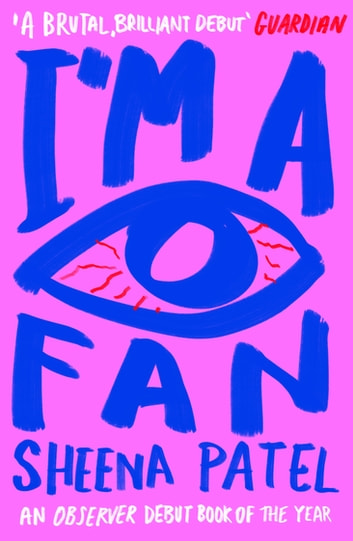
    Sheena Patel - I'm a Fan
    'I stalk a woman on the internet who is sleeping with the same man as I am.' Thus begins this first person account, told in short vignettes, of a 30-something, 'second generation immigrant' woman in South London. She shares her experience of an unequal, unfaithful relationship, with a unique character voice. This is Patel's debut novel. I have read a few sample chapters online and I am definitely intrigued. Will need to track down a copy.


    Cecile Pin - Wandering Souls
    Another debut novel, this book is about three Vietnamese siblings who flee war by boat to Hong Kong. Their parents and other family members are lost on the journey. The siblings eventually seek refuge in the UK and try to establish a life for themselves despite the sense that they are not welcome in Thatcher's Britain.

    Laline Paull - Pod
    Ea is a dolphin. Unlike the other members of the pod, Ea is deaf and cannot perform the spins required to fit in. Ea leaves the pod and ventures off into the ocean, finding predators at every turn. Paull was shortlisted for the Women's Prize in 2015 for her novel The Bees. This novel does not excite me at all. While I enjoy experimental fiction, I read a brief sample and was not engaged and found it hard to get in to.

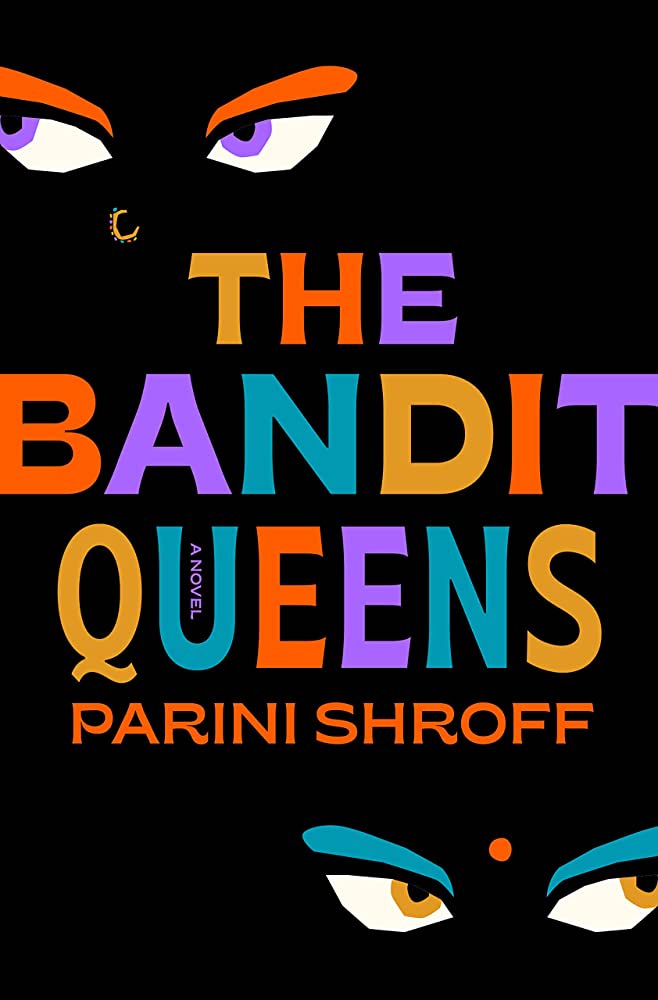
    Parini Shroff - The Bandit Queens
    Geeta is enjoying her life as a widow. While she didn't kill her husband, everyone thinks she did. Consequently, she develops a bit of a reputation, and other women in the village seek her advice on how to get rid of their husbands. This is American author Parini Shroff's debut novel. I quite like the sound of this novel, and think it will be a hoot. Sounds a bit reminiscent of Oyinkan Braithwaite's My Sister, The Serial Killer. Will have to track it down.


    Tara M Stringfellow - Memphis
    Miriam flees her husband, and returns to her childhood home in Memphis with her two children Joan and Mya. Covering 70 years and three generations of women, the story is told in differing narrative voices, in a non-linear fashion. Stringfellow is a poet and former attorney. This is her debut novel.


    Last year's longlist gave me many hours of reading pleasure, so I am hopeful that this year's list will do the same. 

    While I have only read one novel on this list (Maggie O'Farrell's The Marriage Portrait), I have copies of Demon Copperhead and Stone Blind so will start my exploration there. I am keen to track down the works by Bulawayo, Shroff, Kennedy, Macintosh and Patel. 

    I was surprised that Kate Atkinson (Shrines of Gaiety), Kamila Shamsie (Best of Friends), and Elizabeth Strout (Lucy by the Sea) did not make the cut. But it was nice to see nine debut authors gain exposure for their work by these nominations.

    If I had to pick a shortlist, I would choose on Bulawayo, Kingsolver, O'Farrell, Mackintosh and Haynes to be among those listed. 

    The shortlist will be announced on 26 April 2023  and the winner will be revealed on 14 June 2023. Happy reading!

    Saturday, 4 March 2023

    The Willows

    Elizabeth Von Arnim's novel Vera (1921), allegedly based on her disastrous marriage to Frank Russell, is the story of a naive young woman and a narcissistic, demanding man. 

    While on holiday in Cornwall, Lucy Entwistle's beloved father dies suddenly leaving the twenty-two year old in a state of shock and grief. Shortly after his passing, Lucy goes out for some fresh air and, while leaning on the front gate at the edge of her garden, Everard Wemyss, a 45 year old widower, is passing by. He strikes up a conversation with the sorrowful girl. Wemyss' wife Vera died a week prior and, upon discovering Lucy's heartache, he uses their shared grief as a foundation for companionship. Wemyss sweeps in, assisting with funeral arrangements and providing support to Lucy and her Aunt Dot, who is under the impression he is a friend of her late brother. 
    When Lucy and Dot return to London, Wemyss wheedles himself into Lucy's life despite the concerns raised by her Aunt Dot and friends of Lucy's father. They are concerned about his attentions to a young woman half his age, and more so because Vera died in suspicious circumstances. Vera fell from an upper floor window in the Wemyss' home The Willows to the flagstones below, but rumours abound about whether she jumped, was pushed or accidentally fell. Regardless, most view it as unseemly that Wemyss should be courting a young woman without observing a respectable period of mourning. 

    Lucy is smitten, and proceeds to marry Wemyss and be whisked off to his country property The Willows. Here Wemyss' true self is revealed and Lucy becomes obsessed with Vera. 

    While not a phrase used at the time of writing, this is a case study of a man bent on coercive control. Wemyss is a bully, making dreadful demands of his staff who only put up with him because he pays well and is away on weekdays in London. Lucy is infantilised as Wemyss' 'baby' or 'good girl', and scolded when she asks questions or tries to do anything in her own home. As an example, the house has an extensive library and Lucy is a voracious reader. But Wemyss has the library locked tight, refusing to allow anyone to touch his books. His piano must remained covered at all times, his meals must be served at exact times and so on causing his staff and Lucy to walk on eggshells.

    Von Armin's novel starts slowly but gradually gains momentum creating a thriller-like page-turner. But the story was let down terribly by the ending. While the character of Wemyss was well crafted, Lucy did not experience much growth even as the truth about her husband's true nature was revealed. Aunt Dot is my favourite character - the spinsterly aunt who genuinely wants the best for her niece and attempts to befriend Wemyss. Von Armin has a sly wit and in many respects has written a darkly comic and stinging character assassination, portraying Wemyss as sulky, demanding and brutally cruel. No wonder her husband was angered by its publication. 

    Reading Vera, I could not help but think of Daphne Du Maurier's Rebecca. In both novels young women are wooed by older men, intrigued by the spectre of a previous wife, and set in stately country homes. While I much preferred Rebecca, I am pleased to have read Vera and look forward to reading more by Elizabeth Von Arnim.

    Saturday, 25 February 2023

    Mississippi Goddam

    Percival Everett was shortlisted for the 2022 Booker Prize for his satirical novel, The Trees (2021). This clever, witty, dark and insightful book is a thought-provoking page-turner that had me gripped from the outset and left me enraged by the unending racism, inequality and injustice which continues to flourish.

    In the small town of Money, Mississippi a brutal murder has taken place. A white homeowner is found dead with the body of an unknown young black man. Within days, this scene is recreated several times in Money, baffling local police who are more concerned about their white townsfolk than the black victims. Two special detectives from the Mississippi Bureau of Investigation (MBI) drive up from Hattiesburg to support the investigation, and they realise that the black victim is reminiscent of Emmett Till, a teenager who was lynched in Money decades earlier, and whose murder propelled the civil rights movement. 

    The detectives suspect that these killings are belated retribution for the murder of Till. As similar murders start taking place across the country, they realise there are larger forces at play. Ed and Jim have such a wonderful rapport as friends and work partners. Their jokes and sly comments serve to emphasise the absurdity of the Trumpian racism and MAGA revisionist history, and provide comic relief to the dark subject matter. 

    The redneck white characters in the novel are hillbilly caricatures - gun-totting, evangelistic, uneducated, KKK enthusiasts. Their casual use the N-word and overt xenophobia is jarring, but illustrates America's failure to understand and reconcile its past. Everett reminds readers of America's dark history of lynching, which continues today. There was no justice for Emmett Till, or the hundreds of others who have lost their lives (before and since) in similar ways.

    The Trees is unlike any novel I have ever read and one I will be thinking about for a very long time. 

    Sunday, 12 February 2023

    Revisiting Jane Eyre

    The story of the eponymous heroine in Charlotte Bronte's Jane Eyre (1847) is so well known, but can be summarised as follows. Orphaned as a young child, Jane lived with her maternal uncle's family at Gateshead Hall. Her aunt, Mrs Reed, treats Jane poorly, never embracing her as family. Jane is then sent to the Lowood Institution, a charity school for girls, where the children are malnourished, humiliated and harshly disciplined. Jane is a bright girl and a talented artist. She applies herself to her studies and after six years of education, she is engaged briefly as a teacher at Lowood, before going out on her own to advertise her services as a governess.

    Jane accepts a position at Thornfield Hall teaching Adele Varens, a precocious French girl. She meets the master of Thornfield Hall, Edward Rochester, and over time a relationship develops between them. The couple aim to marry but this is thwarted when a secret from Rochester's past surfaces. Jane leaves Thornfield and finds a home and a position at Moor House. Jane's fortunes change, but before she can determine what path she will choose, she needs to resolve matters with Rochester.

    The first time I read Jane Eyre I was 14 years old, in high school. As a teenager I was captivated by this bildungsroman and the gothic romance of a young governess falling in love with her employer. I re-read Jane Eyre again while in university and had a completely different take on Jane. With only a few years of life experience, I was less interested in the romance and more admiring Jane's quest for autonomy and her determination to make her own choices in life. I also saw Rochester differently, less of a romantic hero, and certainly questionable in his ill treatment of Bertha Mason.

    Several decades have past since I last read Jane Eyre. In the intervening time I have seen many film and television adaptations that I thought there was nothing more I could learn. Jane Eyre has always been so familiar to me, that I had not considered it worth reading again until now when I decided to participate in the #BigBronteReadalong2023.

    Reading the novel 30 years after my first time was a completely different experience. My appreciation for the precision of Bronte's prose has grown and I took great delight in her descriptions of the places Jane visited and the people she met. Her depiction of the gothic mansion Thornfield Hall, and the spectre of the madwoman in the attic, provides ample suspense and excitement. While I am still troubled by Rochester and question whether her relationship with him should be considered a romance, I found myself absolutely enamoured with Jane. She is a feisty heroine, resilient and self-aware, with a strong moral code. 

    This time around I noticed things I hadn't before - the backstory of Rochester's affair with Celine Varens, the challenging journeys Jane took from Lowood to Thornfield and later on to Moor House, and the tediousness of St John Rivers. I was more understanding of the religious undertones, showcasing the best and worst of Christianity. I could also draw in so many parallels to other stories like Dickens' David Copperfield, Austen's Pride and Prejudice, and Wharton's The Age of Innocence

    Revisiting familiar tales at different points in one's life brings new insights. I am so pleased that I re-read Jane Eyre, and I hope to read/re-read many more Bronte novels during the #BigBronteReadalong2023.

    Saturday, 28 January 2023

    I Will Not

    I will not be lectured about sexism and misogyny by this man. I will not. The government will not be lectured about sexism and misogyny by this man. Not now, not ever. 


    On 9 October 2012 Australian Prime Minister Julia Gillard rose from her chair in Parliament and delivered an unforgettable speech in response to an accusation of sexism from opposition leader Tony Abbott. During the next ten minutes, Gillard tore strips of Abbott, detailing his double standards and his gendered attacks. Watching the speech live, Gillard spoke to me and for me. I cheered from the sidelines and felt relief that Abbott had finally been taken to task. In the days that followed, overseas friends contacted me about the speech, sharing in the sense that something had fundamentally shifted in the discourse about gender and politics. 

    Ten years later, Gillard has published a book about the misogyny speech and its aftermath. Not Now, Not Ever (2022) is a compilation of essays and reflections from a cross-section of women. The speech appears as prologue, followed by the first section discussing the speech in context. Gillard writes about the lead up to the speech and the cool anger she felt in Parliament that day, fed up with Abbott's antics and that of the conservative media. She has been called 'deliberately barren' for being child-free, shock-jocks suggested she should be 'put in a chaff bag and thrown into the sea', Abbott stood with protesters waving 'ditch the witch' signs, and she was continually subjected to sexist critiques about her personal appearance. The frustration that was simmering, reached boiling point on the day of the speech.

    Journalist Katharine Murphy covered the speech at the time and writes about the press response. The media read the speech entirely differently to the electorate, having been trained to dispassionately report on politics. The speech was a turning point for many in the pressroom too, who now analyse politics and policy in consideration of its impacts on women and minorities. The speech also became a pop culture phenomenon, as Kathy Lette writes in her essay, with tiktoks, t-shirts, memes and more. (I have the speech printed on a tea towel).

    The second section of the book explores misogyny, intersectionality, violence, and workplace sexism. Historian Mary Beard writes about misogyny from the ancient world to today. Jess Hill, author of See What You Made Me Do, writes about misogyny and gendered violence. Jennifer Palmieri, Director of Communications for Hillary Clinton's 2016 Presidential campaign, writes about the sexism Clinton faced. There are also compelling essays by Aleida Mendes Borges, Michelle K Ryan, Miriam K Zehnter, and Rosie Campbell.

    The final section of the book is future focussed. Gillard has a conversation with three feminist activists advocating for change. She talks with Chanel Contos, Caitlin Figueiredo and Sally Scales about sexism and misogyny and about the future for women. Gillard also writes a chapter on what's next, leaving the reader hopeful and inspired. 

    Interspersed throughout the book are quotes and reflections from women around the world about the speech and its impact on them. We hear from Tanya Plibersek, Quentin Bryce, Clementine Ford, Abbey Hansen, Cate Blanchett, Kate Grenville, Theresa May, Brittney Higgins, Ngoni Okonjo-Iweala, Hillary Clinton, and many more. These snippets are an excellent addition, balancing out the longer pieces.

    I really enjoyed Not Now, Not Ever. It is a thoughtful reflection on a watershed moment in Australian politics, and on the unfinished business of equality. The only thing I would have liked included in the book was more information about the essay contributors. 
     
    Gillard was Australia's first (and so far only) female Prime Minister. While she will be forever remembered for the misogyny speech, the legacy of Gillard's leadership is much broader having brought about significant policy reforms and instituting the Royal Commission into Institutional Responses to Child Sexual Abuse. Her memoir about her time in office, My Story (2014) is also reviewed on my blog.
     
    Gillard's speech is available online and well worth watching. 

    Saturday, 21 January 2023

    Quiet Achiever

    The first time I heard of John Williams' novel Stoner (1965) was in an article by Julian Barnes in The Guardian calling it the 'must-read' novel of 2013. It sounded really good, so I bought a copy, plonked it on my shelf, and there it sat for a decade! Every so often I would see it when browsing/dusting my bookshelves and think I should read it, but I always left it for another day. 

    Last weekend I was going away and had four-hour train journey each way, so I grabbed Stoner off my shelf, downloaded the audiobook (read brilliantly by Alfred Molina), and enjoyed my weekend with Stoner while journeying across the Australian countryside. 

    Stoner is the story of an ordinary man, living an ordinary life. The protagonist William Stoner grows up on an impoverished farm in Missouri. His parents make great sacrifices to send him off to university in the hopes he will learn new agricultural methods to improve the family farm. All students undertake a compulsory literature course, and Stoner's mind is opened by Shakespeare's sonnets. Without telling his family, he changes his major and pursues his passion. 

    The novel is primarily set on the campus of the university, where Stoner attends grad school, teaches and becomes a member of the faculty. He is not ambitious for promotion, happy to teach his favourite subjects and supervise doctoral candidates, his entire career. A clash with a colleague propels much of the narrative, and brings forth a fascinating discussion on the role of the academy and the value of literature.

    In many ways, Stoner remains still while the world turns around him. During his lifetime, there are two world wars, the great recession, social change, urbanisation. But Stoner remains entirely himself, experiencing the joys and disappointments of life. He is stoic, unadventurous, principled and true to himself.

    Williams portrays a man who is held in 'no particular esteem' by colleagues, does not 'rise above the rank of assistant professor' and will be barely remembered by those who knew him. Stoner has dedicated his whole life to his work, often at the expense of his family, and seemingly has little to show for it. Yet there is value and meaning in Stoner's small life, he has contributed in his way. 

    Having spent two decades in university completing various undergraduate and postgraduate degrees, I loved the depiction of the academy. The character of Walker, a lazy student who bluffs his way through class, reminds me so much of people I have encountered in my studies. I found myself cheering on Stoner in his campaign against this sort of student.

    Written in beautiful yet plain prose, John Williams' novel is one that will stay with me for a long time - especially the final chapter as Stoner reflects on his expectations of life. It is a sad, hopeful, compelling, simple story about love and life. 

    Monday, 9 January 2023

    Small Town, Big Secrets

    At the 2022 Sydney Writers Festival I attended a session featuring debut novelist Hayley Scrivenor talking about her newly published crime thriller Dirt Town (2022). I love Australian noir and it sounded like a book I would enjoy. My mum gave me a copy in July, but I shelved it as I had just read Garry Disher's Bitter Wash Road and Matthew Spencer's Black River, so felt I needed a gap before I read another crime novel. Each time I considered reading it there was something more pressing, like the latest Robert Galbraith and Jane Harper. But to kick off my reading this year while I was still on my summer holidays, I grabbed Scrivenor's novel and had a wonderful time engrossed in this book.

    Set in Durton, a fictional town in NSW, the story revolves around a twelve year old girl, Esther Bianchi, who goes missing on the way home from school. Her best friend Ronnie wants to know what happened to Esther. Lewis may have information that can help, but can he say anything without getting into trouble? Detective Sarah Michaels, a missing persons specialist, is sent to Durton to investigate and soon finds that this small town has some big secrets.

    Told from different perspectives over a period of a few days, I really enjoyed the writing style of this novel and could not believe it was a debut. There is a maturity in the writing, and the decision to include intermittent chapters headed 'We', in the style of a Greek chorus of the town's children, was particularly compelling.  Scrivenor managed to capture the distinct voices of Ronnie (and her obsession with llamas), Detective Michaels, Lewis, and Constance (Esther's mother) in these alternating narratives. 

    Dirt Town, published as Dirt Creek in North America, is an intelligent, atmospheric, character-driven, page-turning, crime novel showcasing a writer to watch. I hope that Scrivenor continues to write in this genre and perhaps makes a series with Detective Michaels.

    Sunday, 8 January 2023

    Let Her Speak

    In 2021 Grace Tame was thrust into the national spotlight when she was named Australian of the Year for her advocacy for survivors of sexual assault. Before that recognition, I knew of and admired Grace Tame through journalist Nina Funnell's #LetHerSpeak campaign to abolish gag laws preventing sexual assault victims from speaking out about what happened to them.

    Over the past few years, Tame has frequently told the story of her childhood trauma in interviews and other speaking engagements. When she was fifteen years old, Tame was groomed and repeatedly raped by her 58 year old math teacher. The perpetrator was found guilty and jailed (for a frustratingly short period), but the Tasmanian gag laws in place allowed him to speak about what happened but not her. I heard Tame speak directly about her experiences when she was the keynote speaker at the 2021 Early Childhood Australia conference and was moved by her resilience and unflinching survivor-centric approach. She is an articulate advocate, reframing the narrative and shining a light in dark corners.

    Now, at a 28 years of age, Tame is wise beyond her years and has channelled her energy into writing a memoir of her life and the challenges she has endured. In The Ninth Life of a Diamond Miner (2022) she writes with great love for her family - particularly the matriarchy of strong women who have been role models and supporters - and her deep friendships. Tame describes her autism and about her experiences with eating disorders. She talks about mistakes she has made and the challenges she has overcome. This book is personal and political, particularly as she writes about the role the media has played covering her story. 

    The Ninth Life of a Diamond Miner is an interesting, but difficult book. I expected to find some of the content confronting, but did not anticipate the humour, tenderness and lightness. She forces readers to think, and challenges them to be open-minded. She is smart, sassy and self-aware. At the same time, there were parts of this book that were a slog to read. While she speaks lovingly of friends and extended family - she seemingly mentioned every family member, share house roomie, and person she has ever met - this was way too much. Tame also has strong opinions about loads of things and would often use distracting asides to express her views or share inside jokes. The non-linear narrative felt unfinished, and would have benefited from a sharp edit. Despite this, I am glad I read this memoir and learned more about Tame as a person, in her own words. 

    The conclusion of the book is hopeful. She has found personal and professional success through her engagement to her partner Max and the advocacy she continues. The work she is doing via The Grace Tame Foundation - to harmonise sexual assault laws nationwide, access superannuation in civil suits, and change legislation to remove the word 'relationship' in relation to child sexual abuse - is commendable. She will undoubtedly succeed at whatever she sets her mind to.

    Sunday, 1 January 2023

    Planning for 2023

    I end the year with a stack of books on my 'To Be Read' Pile including:

    I always promise I won't buy any more books until I have read the ones I already have... but that promise never lasts long! I am hoping to make a dent in this pile though, as I am looking forward to each one, and I want to get a start on my reading before award longlists are announced from March.

    Things are getting back to normal (whatever that means!). I am finally planning to travel overseas again after far too long at home. At this stage the plan is to explore southern Italy and Greece, so I will likely look out some books that will inspire my adventures. Recommendations welcome!

    I am looking forward to a number of new books due to be published in 2023, including works by: Eleanor Catton (Birnam Wood), Rebecca Makkai (I Have Some Questions For You), Margaret Atwood (Old Babes in the Woods), Curtis Sittenfeld (Romantic Comedy), Colson Whitehead (Crook Manifesto), Samantha Irby (Quietly Hostile), Emma Cline (The Guest), Brett Eason Ellis (The Shards), Emma Donoghue (Learned by Heart), Max Porter (Shy), and many more. While I won't get to all of them this year, I have preordered many from my library.

    For the past few years I have consistently been able to read at least 30 books a year. While I could push myself by setting a higher goal, I like my 30 book plan. However I will continue to explore new authors, genres and subject matters. To diversify my reading and to challenge myself to read more broadly, I have updated my annual checklist to add some fun to my reading.

    20th century
    modern classic

    Debut 
    novel

    First Nations
    Author/Issues 
    Poetry 
    collection
    Biography
    or memoir
    19th century
    classic

    Retelling of 
    another story

    Protagonist
    is over 50

    Short story
    collection

    Essay
    collection

    Pre-19th 
    century classic

    Novel in 
    translation

    LGBTQIA+
    Author/Issues

    Women's prize
    longlister

    Non-fiction
    bestseller

    Book on the 
    1001 list


    By a favourite
    author


    Novella in 
    November


    Australian 
    literary prize
    longlister

    Current 
    affairs/politics


    Published 
    in 2023

    New to me
    author

    Book in my
    To Be Read pile

    Booker prize
    longlister

    Non-fiction
    history


    Last year I focussed mainly on fiction. This year I want to add more non-fiction to my list, but also get back to the classics and include other forms of writing - poetry, drama, essay, short stories - into the mix. I had thought about focussing on a particular author this year (who? Neville Shute? Robertson Davies? Graham Greene? Hilary Mantel?) and reading all of their works. But I don't think that will work for me as I have too many books I want to read and not enough time to read them all!

    Happy reading everyone!