Saturday, 21 January 2023

Quiet Achiever

The first time I heard of John Williams' novel Stoner (1965) was in an article by Julian Barnes in The Guardian calling it the 'must-read' novel of 2013. It sounded really good, so I bought a copy, plonked it on my shelf, and there it sat for a decade! Every so often I would see it when browsing/dusting my bookshelves and think I should read it, but I always left it for another day. 

Last weekend I was going away and had four-hour train journey each way, so I grabbed Stoner off my shelf, downloaded the audiobook (read brilliantly by Alfred Molina), and enjoyed my weekend with Stoner while journeying across the Australian countryside. 

Stoner is the story of an ordinary man, living an ordinary life. The protagonist William Stoner grows up on an impoverished farm in Missouri. His parents make great sacrifices to send him off to university in the hopes he will learn new agricultural methods to improve the family farm. All students undertake a compulsory literature course, and Stoner's mind is opened by Shakespeare's sonnets. Without telling his family, he changes his major and pursues his passion. 

The novel is primarily set on the campus of the university, where Stoner attends grad school, teaches and becomes a member of the faculty. He is not ambitious for promotion, happy to teach his favourite subjects and supervise doctoral candidates, his entire career. A clash with a colleague propels much of the narrative, and brings forth a fascinating discussion on the role of the academy and the value of literature.

In many ways, Stoner remains still while the world turns around him. During his lifetime, there are two world wars, the great recession, social change, urbanisation. But Stoner remains entirely himself, experiencing the joys and disappointments of life. He is stoic, unadventurous, principled and true to himself.

Williams portrays a man who is held in 'no particular esteem' by colleagues, does not 'rise above the rank of assistant professor' and will be barely remembered by those who knew him. Stoner has dedicated his whole life to his work, often at the expense of his family, and seemingly has little to show for it. Yet there is value and meaning in Stoner's small life, he has contributed in his way. 

Having spent two decades in university completing various undergraduate and postgraduate degrees, I loved the depiction of the academy. The character of Walker, a lazy student who bluffs his way through class, reminds me so much of people I have encountered in my studies. I found myself cheering on Stoner in his campaign against this sort of student.

Written in beautiful yet plain prose, John Williams' novel is one that will stay with me for a long time - especially the final chapter as Stoner reflects on his expectations of life. It is a sad, hopeful, compelling, simple story about love and life. 

Monday, 9 January 2023

Small Town, Big Secrets

At the 2022 Sydney Writers Festival I attended a session featuring debut novelist Hayley Scrivenor talking about her newly published crime thriller Dirt Town (2022). I love Australian noir and it sounded like a book I would enjoy. My mum gave me a copy in July, but I shelved it as I had just read Garry Disher's Bitter Wash Road and Matthew Spencer's Black River, so felt I needed a gap before I read another crime novel. Each time I considered reading it there was something more pressing, like the latest Robert Galbraith and Jane Harper. But to kick off my reading this year while I was still on my summer holidays, I grabbed Scrivenor's novel and had a wonderful time engrossed in this book.

Set in Durton, a fictional town in NSW, the story revolves around a twelve year old girl, Esther Bianchi, who goes missing on the way home from school. Her best friend Ronnie wants to know what happened to Esther. Lewis may have information that can help, but can he say anything without getting into trouble? Detective Sarah Michaels, a missing persons specialist, is sent to Durton to investigate and soon finds that this small town has some big secrets.

Told from different perspectives over a period of a few days, I really enjoyed the writing style of this novel and could not believe it was a debut. There is a maturity in the writing, and the decision to include intermittent chapters headed 'We', in the style of a Greek chorus of the town's children, was particularly compelling.  Scrivenor managed to capture the distinct voices of Ronnie (and her obsession with llamas), Detective Michaels, Lewis, and Constance (Esther's mother) in these alternating narratives. 

Dirt Town, published as Dirt Creek in North America, is an intelligent, atmospheric, character-driven, page-turning, crime novel showcasing a writer to watch. I hope that Scrivenor continues to write in this genre and perhaps makes a series with Detective Michaels.

Sunday, 8 January 2023

Let Her Speak

In 2021 Grace Tame was thrust into the national spotlight when she was named Australian of the Year for her advocacy for survivors of sexual assault. Before that recognition, I knew of and admired Grace Tame through journalist Nina Funnell's #LetHerSpeak campaign to abolish gag laws preventing sexual assault victims from speaking out about what happened to them.

Over the past few years, Tame has frequently told the story of her childhood trauma in interviews and other speaking engagements. When she was fifteen years old, Tame was groomed and repeatedly raped by her 58 year old math teacher. The perpetrator was found guilty and jailed (for a frustratingly short period), but the Tasmanian gag laws in place allowed him to speak about what happened but not her. I heard Tame speak directly about her experiences when she was the keynote speaker at the 2021 Early Childhood Australia conference and was moved by her resilience and unflinching survivor-centric approach. She is an articulate advocate, reframing the narrative and shining a light in dark corners.

Now, at a 28 years of age, Tame is wise beyond her years and has channelled her energy into writing a memoir of her life and the challenges she has endured. In The Ninth Life of a Diamond Miner (2022) she writes with great love for her family - particularly the matriarchy of strong women who have been role models and supporters - and her deep friendships. Tame describes her autism and about her experiences with eating disorders. She talks about mistakes she has made and the challenges she has overcome. This book is personal and political, particularly as she writes about the role the media has played covering her story. 

The Ninth Life of a Diamond Miner is an interesting, but difficult book. I expected to find some of the content confronting, but did not anticipate the humour, tenderness and lightness. She forces readers to think, and challenges them to be open-minded. She is smart, sassy and self-aware. At the same time, there were parts of this book that were a slog to read. While she speaks lovingly of friends and extended family - she seemingly mentioned every family member, share house roomie, and person she has ever met - this was way too much. Tame also has strong opinions about loads of things and would often use distracting asides to express her views or share inside jokes. The non-linear narrative felt unfinished, and would have benefited from a sharp edit. Despite this, I am glad I read this memoir and learned more about Tame as a person, in her own words. 

The conclusion of the book is hopeful. She has found personal and professional success through her engagement to her partner Max and the advocacy she continues. The work she is doing via The Grace Tame Foundation - to harmonise sexual assault laws nationwide, access superannuation in civil suits, and change legislation to remove the word 'relationship' in relation to child sexual abuse - is commendable. She will undoubtedly succeed at whatever she sets her mind to.

Sunday, 1 January 2023

Planning for 2023

I end the year with a stack of books on my 'To Be Read' Pile including:

I always promise I won't buy any more books until I have read the ones I already have... but that promise never lasts long! I am hoping to make a dent in this pile though, as I am looking forward to each one, and I want to get a start on my reading before award longlists are announced from March.

Things are getting back to normal (whatever that means!). I am finally planning to travel overseas again after far too long at home. At this stage the plan is to explore southern Italy and Greece, so I will likely look out some books that will inspire my adventures. Recommendations welcome!

I am looking forward to a number of new books due to be published in 2023, including works by: Eleanor Catton (Birnam Wood), Rebecca Makkai (I Have Some Questions For You), Margaret Atwood (Old Babes in the Woods), Curtis Sittenfeld (Romantic Comedy), Colson Whitehead (Crook Manifesto), Samantha Irby (Quietly Hostile), Emma Cline (The Guest), Brett Eason Ellis (The Shards), Emma Donoghue (Learned by Heart), Max Porter (Shy), and many more. While I won't get to all of them this year, I have preordered many from my library.

For the past few years I have consistently been able to read at least 30 books a year. While I could push myself by setting a higher goal, I like my 30 book plan. However I will continue to explore new authors, genres and subject matters. To diversify my reading and to challenge myself to read more broadly, I have updated my annual checklist to add some fun to my reading.

20th century
modern classic

Debut 
novel

First Nations
Author/Issues 
Poetry 
collection
Biography
or memoir
19th century
classic

Retelling of 
another story

Protagonist
is over 50

Short story
collection

Essay
collection

Pre-19th 
century classic

Novel in 
translation

LGBTQIA+
Author/Issues

Women's prize
longlister

Non-fiction
bestseller

Book on the 
1001 list


By a favourite
author


Novella in 
November


Australian 
literary prize
longlister

Current 
affairs/politics


Published 
in 2023

New to me
author

Book in my
To Be Read pile

Booker prize
longlister

Non-fiction
history


Last year I focussed mainly on fiction. This year I want to add more non-fiction to my list, but also get back to the classics and include other forms of writing - poetry, drama, essay, short stories - into the mix. I had thought about focussing on a particular author this year (who? Neville Shute? Robertson Davies? Graham Greene? Hilary Mantel?) and reading all of their works. But I don't think that will work for me as I have too many books I want to read and not enough time to read them all!

Happy reading everyone!

Friday, 30 December 2022

My Reading Year 2022

I started 2022 with optimism and hope that, after two long pandemic years, we would be 'back to normal' and the worst was behind us. How naive! In many ways this was the worst year, as Covid took hold, draining my last reserves of resilience, and finally catching up with me in August. But I managed to leave my fortress of solitude and venture out in the world, attending the Sydney Writers' Festival for the first time since 2019. In the end however, it wasn't the pandemic that disrupted my reading, but the FIFA World Cup as the late night and early morning matches gave me little time for reading.

My reading goal for 2022 was 30 books, which I achieved, reading 31 titles this year. When planning for 2022 at the start of the year, I did not really name any specific titles, which served me well as I roamed wherever my interests took me. Instead I used the reading bingo card I created to help me diversify my reading and my achievements are highlighted below. 

20th century
modern classic
Retelling of 
another story
 Novel in 
Translation
Poetry 
Collection
Women's Prize 
Longlister
First Nations 
author/issues
Essay
Collection
New to me
author
Biography
or memoir
Book on the
1001 list
Debut 
Novel
19th Century
Classic  
Published
in 2022 
By a favourite
author
Non-fiction
bestseller
Short Story
Collection
Australian Literary 
Prize Longlister

Current Affairs
/ Politics
Protagonist 
is over 50
LGBTQIA+
Author/issues
Pre-19th Century 
Classic
Non-fiction
history
Book in my
To Be Read pile

Booker prize
longlister 
Novella in
November

So here's what I read in 2022:

Fiction
I wanted to read some classics this year. I had chosen several to read but somehow didn't go further back than the 20th century as there was so much contemporary fiction to enjoy. I am so pleased that I was able to read two modern classics I had been longing to read but had a hard time tracking down. Evan S Connell's Mrs Bridge and Mr Bridge companion novels tell the story of a marriage in brief vignettes from the perspective of a wife and her husband. I waited until I had both volumes before I began and absolutely loved spending time with the Bridges. 

I continued my interest in feminist retellings of ancient myths which I started with
Madeline Miller's Circe in 2020. I read two more Miller's this year - her award winning The Song of Achilles and her short story Galatea. I also purchased two books by Jennifer Saint, and read her novel Ariadne this year. I really enjoyed these books and have lined up Saint's Elektra and Natalie Haynes' Stone Blind for next year.

I love a good crime/mystery novel and this year I read plenty. As planned, I read Chris Hammer's Treasure and Dirt, a welcome departure from the Martin Scarsden series. I also enjoyed Jane Harper's latest novel, 
Exiles, the third (and perhaps final) in her Aaron Falk series. A new addition to the Australian noir genre is Matthew Spencer and his debut novel Black River, set in Sydney. Finally, after hearing Garry Disher speak at the Sydney Writers' Festival, I started his Hirschhausen series with Bitter Wash Road. I really enjoyed this novel and have acquired the next novels in the series. I also enjoyed Robert Galbraith's latest Cormoran Strike novel, The Ink Black Heart.


I pre-ordered books by some favourite authors. I love Tara Moss' Billie Walker series and inhaled her second instalment The Ghosts of Paris. She is currently writing the third book so I have that to look forward to. Likewise Maggie O'Farrell's The Marriage Portrait arrived upon publication and I have been a huge O'Farrell fan throughout her career and enjoyed her tale of Lucrezia de' Medici's brief life. Jennifer Egan did not disappoint with The Candy House, a follow up to her incredible A Visit from the Goon Squad. Emily St John Mandel's Sea of Tranquility was a marvel, weaving complex themes and timelines to craft a wondrous tale of a time travelling detective in search of a rupture in time.  Each of these titles is highly recommended.


Award longlists provide me with much reading inspiration. I always hope to read the nominated books before the award winner is announced, but I never manage to get through more than a few. The Stella Prize Longlist and the Women's Prize Longlist are both announced on International Women's Day. From these two lists I was introduced to new authors: Miranda Cowley Heller (The Paper Palace), Meg Mason (Sorrow and Bliss), Jennifer Down (Bodies of Light) - each of these titles are among my favourites for the year. From the Miles Franklin Award Longlist I purchased Claire Thomas' The Performance which I have not yet read, and started Michael Winkler's Grimmish, which I had to return to the library before I finished. Jennifer Down won the Miles Franklin for her incredible novel Bodies of Light. The Booker Prize Longlist included many titles which I have, but not yet read. I did manage to read Graeme Macrae Burnet (Case Study) and Claire Keegan (Small Things Like These) before the winner was announced.


This year there were a handful of incredible novels which made a lasting impact that I have most often recommended or gifted to friends. Douglas Stuart's Young Mungo is a heartbreaking story of young love in Glasgow that I could not stop thinking about. Julie Otsuka's The Swimmers was a surprising little novel about a mother/daughter relationship and the sanctuary of a swimming pool. The Seven Husbands of Evelyn Hugo was a riot. Taylor Jenkins Reid's novel about a reclusive movie star was so enjoyable. Before I had even finished it I ordered a copy for a friend. One of the books I have long had on my shelf is Frank Moorhouse's Grand Days - the first in his Edith trilogy about a young Australian woman working for the League of Nations. I look forward to Edith's adventures.

Of all the novels I read this year it is really hard to pick a favourite. But if I had to select just one, it would be Jennifer Down's Bodies of Light a truly magnificent novel about a woman who reinvents herself time and again after trauma. Unforgettable. 

Non-Fiction
This year I didn't read as much non-fiction as I had planned to. There were just too many great novels clamouring for my attention!

Most of the non-fiction I read had to do with Australian politics. Amy Remeikis' On Reckoning is a pocket-sized book of rage about the treatment of women particularly in light of the rape allegations by Brittany Higgins and the Kate Jenkins review into sexual harassment in Parliament House. Katherine Murphy's Quarterly Essay 'Lone Wolf - Albanese and the New Politics' was a fascinating dissection of the 2022 election. Nicki Savva's recently published Bulldozed explores the downfall of Morrison and the rise of Albanese. The only Australian non-fiction book I read which was not on contemporary politics was Elizabeth Macarthur's Letters, as edited by Kate Grenville which I wanted to read having enjoyed Grenville's novel A Room Made of Leaves.

While I really appreciated all the non-fiction I read this year, if I had to choose one favourite, without hesitation I would select Dave Grohl's memoir The Storyteller, about his life and music. I am a huge fan of Nirvana and the Foo Fighters, and loved reading about Dave's life. 

Other Genres
I didn't get around to essay collections, short stories or graphic novels this year, but I did read a play and a collection of poetry. Zadie Smith's play The Wife of Willesden was written for the Borough of Brent, London's 2020 'Borough of Culture', a modern take on Chaucer's Canterbury Tales. Maxine Beneba Clarke is a gifted poet and her collection How Decent Folk Behave is magnificently thought-provoking. 


Best of 2022
I read so many great books this year. I loved and highly recommend:
If I had to choose my absolute favourites, I would pick Jennifer Down's Bodies of Light  and Dave Grohl's The Storyteller.


Saturday, 24 December 2022

Plots and Prayers

Journalist Niki Savva has a deep understanding of Australian politics. She served in the Canberra press gallery as a writer for The Australian, and then later for The Age/Sydney Morning Herald, and worked within government as an advisor for then federal treasurer Peter Costello and Prime Minister John Howard. She knows the ins-and-outs of the Liberal party. Drawing on her experience and her extensive contacts, Savva has chronicled the past decade of Coalition government in a series of books, the latest of which has just been published. 

Bulldozed (2022) tells the inside story on how Prime Minister Scott Morrison lost the 2022 election and trashed his own legacy. It is also about the rise of Labor leader Anthony Albanese, the success of the Greens, and the independents set to shake up Australian politics. Along the way she explores Morrison's pathetic bushfire response ('I don't hold a hose, mate'), vaccine stroll out (It's not a race), and how he became minister for everything (when he secretly appointed himself as Minister for five portfolios). By making everything about himself, Morrison failed to govern. He also ensured that those loyal to him, like Treasurer Josh Frydenberg, were burned from being too close to his flame.
It is clear from the outset that Savva doesn't think much of Scott Morrison. She paints a portrait of a petty man - a pathological liar who will throw anyone under a bus to further his own objectives. She laments the way in which Morrison has wielded religion and hatred to push the Liberal party further to the right, surrendering the tenets that have underpinned the party's philosophy. It is also apparent that many of those closest to Morrison questioned his behaviour privately but failed to act. 

The contrast with Anthony Albanese is stark. Consultative, committed and competent, Albanese has taken a different path. He relies on his team - Penny Wong, Jim Chalmers, Tony Burke, Chis Bowen, Linda Burney, Jason Clare, Mark Butler, Clare O'Neil, and so many more. He is also prepared to tackle the important issues. From his first speech on election night, he set the tone for his government and brought hope back to the nation.

I really enjoyed Bulldozed and could not put it down. Savva has crafted a fascinating book. My only quibble would be that it needs an edit to remove the repetition. I imagine that has something to do with last minute inclusions of the revelations about Morrison's secret ministries as Savva had to go back to people she had interviewed previously to seek their views. Ultimately, I would recommend this book to anyone wanting to understand what happened under the Morrison reign and how the political landscape has dramatically changed.

My reviews of two of Savva's previous books are available on this blog:

Saturday, 17 December 2022

The First Stone

 In Greek mythology, the story of Pygmalion has inspired countless films, plays, paintings and other creative works. In Metamorphoses, Roman poet Ovid tells the story of a sculptor named Pygmalion who carves his ideal woman in ivory and falls in love with her. The goddess Venus brings this statue, Galatea, to life. The epitome of womanhood, Galatea lives happily ever after with Pygmalion and their daughter Paphos. 

Madeline Miller has written a short story, Galatea (2013), that flips this myth on its head. While Ovid does not explore what happens after Paphos is born, Miller takes advantage of this gap in the tale and explores their story  from the perspective of Galatea, ten years after she was created.

Pygmalion created Galatea to represent the ideal woman with cool ivory skin, striking beauty and every line and curve of her body a perfection. His creation was a response to the women of loose morals he saw around him; his misogyny and hatred forcing him to celibacy and disgust. 

In creating Galatea, he confined her to her room to keep her pure and submissive. Separated from her daughter, she is attended to by nurses and a doctor, in between visits from Pygmalion where she must be attentive and compliant, re-enacting scenes from their past to please him. Can she ever be free of Pygmalion? Will she ever be reunited with her daughter?

American novelist Madeline Miller has crafted a brilliant short story, which modernises an ancient myth. The edition I have is a beautiful hardback book, gifted to me by my mother (Thank you!). While it can be read in half an hour, the story lingers long after.  It is a little gem of a book.

Reviews of Madeline Miller's novels The Song of Achilles (2011) and Circe (2018) are available on my blog.

Sunday, 20 November 2022

The Tigress

That’s my last Duchess painted on the wall,
Looking as if she were alive. I call
That piece a wonder, now; Fra Pandolf’s hands
Worked busily a day, and there she stands.
from My Last Duchess by Robert Browning.

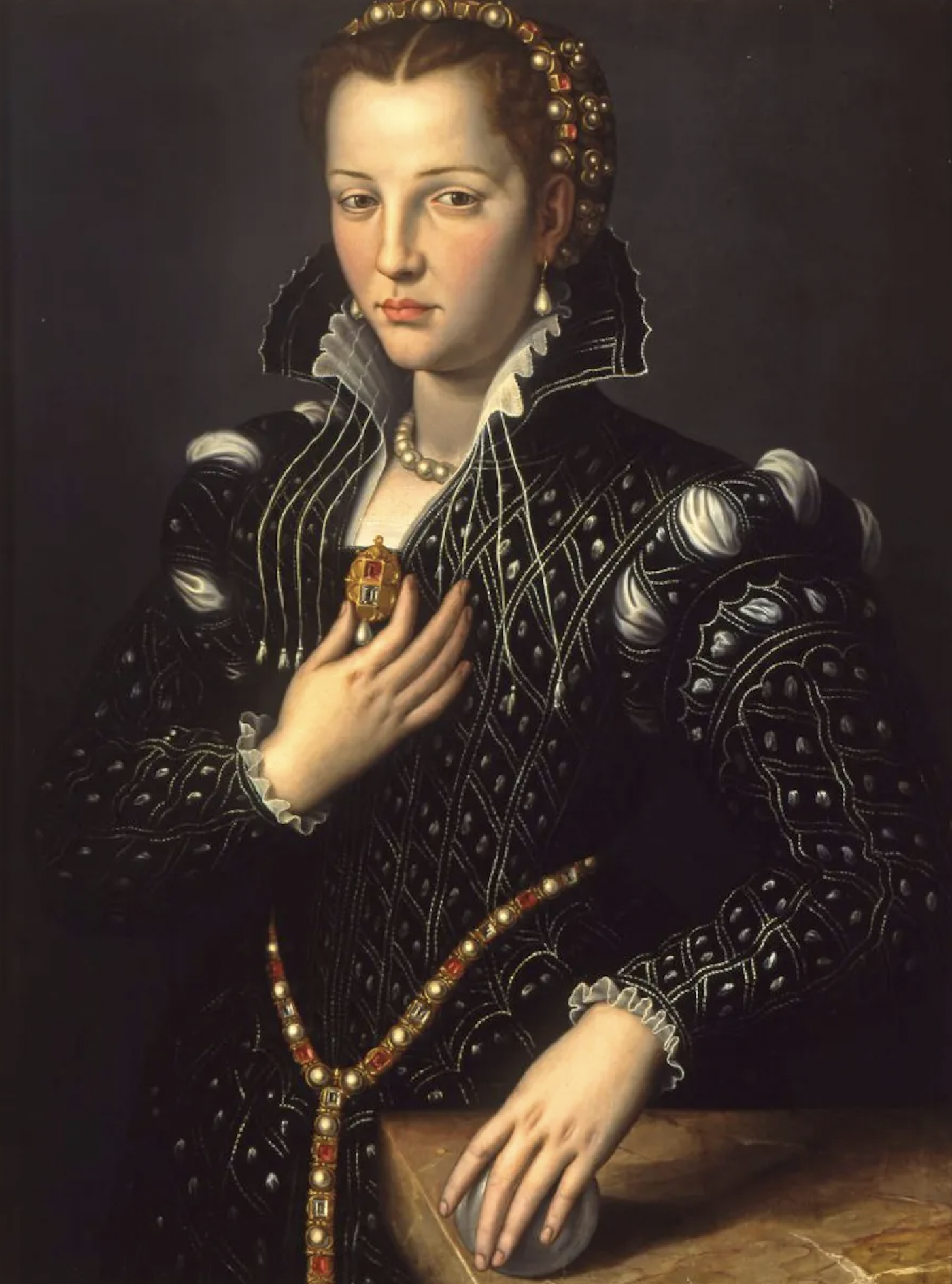
The Duchess of Browning's poem is Lucrezia de' Medici, Duchess of Ferrara, and the poem inspired author Maggie O'Farrell to write The Marriage Portrait (2022). This wonderful novel is a fictional imaging of the brief life of the Duchess of Ferrara.    

Born in Florence in 1545, Lucrezia was the third daughter of Cosimo I de' Medici, the Grand Duke of Tuscany. When she was thirteen years old she was married to Alfonso d'Este, the future Duke of Ferrara. Her time in Ferrara was short-lived as she died at the age of 16 from a mysterious illness, amid rumours she had been poisoned by her husband for failing to produce an heir. A portrait attributed to Bronzino is the only known contemporarneous image of this young woman.

As in her previous novel Hamnet (2020), O'Farrell has taken the few threads of information known about this young woman and woven an intricately detailed portrait of her life. In the opening paragraph 'Lucré' sits at a dining table opposite her husband and comes to the realisation that he intends to kill her.  Despite the forewarning of how this tragic tale will likely end, over the course of the novel, O'Farrell creates an intriguing, gripping and surprising story.

Lucrezia de' Medici c1560
(attributed to Bronzino or Alessandro Allori)
From her birth and childhood in Florence, Lucré is a bright, inquisitive girl - quite dissimilar to her older sisters Maria and Isabella. All the girls were destined to be married off at a young age to noble houses to solidify alliances and build the influence of their family. Unlike her sisters, Lucré was interested to nature and would spend countless hours drawing or painting the flora and fauna around her. Inexperienced and naive, Lucré is suddenly married to a stranger, whisked away from her family and all that she knows. While Lucre's parents had a loving relationship, and her mother was her father's confidant and friend, she has no hopes for this in her marriage. It is made abundantly clear that the Duke sees her only as a beautiful vessel for his future heirs. 

O'Farrell is a highly skilled writer, able to portray the richness of the palazzos and royal courts, the fashions and customs, and the landscapes and scenery of the Renaissance. She captures Lucrezia's loneliness, desire and resilience in the face of danger and isolation. Despite knowing what happens to her, the ending remains surprising and satisfying. 

I have always been an O'Farrell fan, and have read all of her work since her debut novel After You'd Gone (2000). Her previous novel Hamnet (2020) was my favourite novel that year, and one that I regularly recommend to readers. While I did not love The Marriage Portrait as much as Hamnet, it is a close second and I can't wait to see where O'Farrell takes us next.


Saturday, 29 October 2022

The Drop

Author Jane Harper introduced readers to Aaron Falk, fraud and financial crimes investigator with the Australian Federal Police, in her 2016 best selling novel, The Dry. Falk's second outing was the following year in Force of Nature (2017).  Falk disappeared for a while while Harper developed other characters, but he has returned in her latest novel, Exiles (2022). 

Falk is in Marralee, South Australia to attend the baptism of his godson Henry, child of his friend Detective Greg Raco. The christening was due to take place a year prior but it was cancelled abruptly when a local woman, Kim Gillespie, went missing on the opening night of a wine and food festival leaving behind her infant daughter in a pram. One year on, there are still no leads on what happened to Kim that night. Many locals seem to think she may have wandered off and either fallen or deliberately jumped into the deep reservoir. Kim has never been found, but her family, especially her teenage daughter Zara, is not convinced that she would have left on her own accord. 

Falk and Raco subtly begin to investigate. At the same time, as he builds relationships within the community, Falk reflects on his own upbringing in a small town and contemplates whether he is in the need of a tree-change from his bachelor life in Melbourne.  

Harper is an excellent writer with an ability to create a strong sense of place. Here she perfectly crafts a regional town, and the rhythm of the novel slows to the pace of this country life. Harper has infused this community with interesting characters, showcasing the tight-knit relationships of those who grew up in the town, with Falk as the outsider allowing him the means to observe from a distance,

I had hoped that Falk would become a character not dissimilar to Rebus or Cormoran Strike - a smart but not showy detective. While we learn more about Falk in this novel, he comes across as rather vanilla. He is so reserved that he lacks the rough edges that endear scruffy, flawed detectives to readers. Harper has said that this would be Falk's last outing (although she does leave an open door), and that may be for the best as her non-Falk novels have shown she doesn't need him to write a compelling mystery.

The novel was told from Falk's perspective, however, at the end of the book, Harper switches narrative lens and the last two chapters are told from the viewpoints of other characters. While this may have been a neat way to propel the story to its conclusion, I found it jarring to be pulled from Falk's narrative. But other than that minor quibble, I really enjoyed Exiles and would recommend it.

My reviews of Harper's previous novels are available on this blog:

The Dry was made into a 2021 film starting Eric Bana as Falk. Bana will reprise his role in an upcoming film of Force of Nature, starring alongside Anna Torv, Deborra-Lee Furness and Jacqueline McKenzie.

Tuesday, 18 October 2022

Booker Prize Winner 2022

The winner of the 2022 Booker Prize for fiction was announced today, with Sri Lankan author Shehan Karunatilaka receiving the £50,000 prize for his novel, The Seven Moons of Maali Almeida. 

Set in 1989, in Colombo, Maali Almeida is a war photographer, gambler and closet queen. He wakes in the afterlife to find that he has been killed but has no idea by whom. He has seven moons to contact his loved ones and alert them to some important photographs. 

The judges said of this novel: 'Life after death in Sri Lanka: an afterlife noir, with nods to Dante and Buddha and yet unpretentious. Fizzes with energy, imagery and ideas against a broad, surreal vision of the Sri Lankan civil wars. Slyly, angrily comic'.


Karunatulka is the second Sri Lankan author to win the Booker Prize (the first was Canadian/Sri Lankan author Michael Ondaatje for The English Patient in 1992). 

His previous works include Chinaman: The Legend of Pradeep Mathew (2010) and Chats with the Dead (2020). He has also written features for Rolling Stone, GQ, The Guardian and other publications.

Chair of the Judging panel, Neil MacGegor, said of The Seven Moons of Maali Almeida:

'Any one of the six shortlisted books would have been a worthy winner. What the judges particularly admired and enjoyed in The Seven Moons of Maali Almeida was the ambition of its scope, and the hilarious audacity of its narrative technique. This is a metaphysical thriller, an afterlife noir that dissolves the boundaries not juts of different genres, but of life and death, body and spirit, east and west...'

Here is the moment that the winner was announced and the award was presented to Shehan Karunatilaka by the Queen Consort.


I have not yet read this novel but I havre heard great things about it from readers I admire, so will have to find a copy and check it out. 

Sunday, 16 October 2022

Nobel Prize for Literature 2022

The Nobel Prize for Literature was announced this week, recognising French author Annie Ernaux 'for the courage and clinical acuity with which she uncovers the roots, estrangements and collective restraints of personal memory.'

I have several books by Ernaux sitting on my to-be-read shelf, but have not yet explored her work. I had hoped to read her work in French, but fear my abilities in that language have faded from disuse, so I may need to resort to an English translation or a bilingual tandem read. 

Born in 1940, Annie Ernaux was initially a teacher. She is known for writing in plain language about life from different perspectives. Many of her novels are brief and autobiographical. Ernaux has also published memoir, non-fiction, and diaries. 

Let's take a look at a few of her best known works.

Passion simple (1991) / Simple Passion (trans 2003) - The story of a woman's affair with a younger, married man. Set in Paris around the time of the fall of the Berlin Wall. This affair becomes all consuming, an adrenaline-fueled passion which burns fast and hot. She is infatuated, spending her time away from him constantly thinking about him and planning their next encounter.  While her whole life revolves around this man, she doesn't really know him.
L'evenement
(2000) / Happening (trans 2001) - 
Happening tells the story of a young woman who has a secret abortion in 1960s France, when terminations were illegal. At the time, oral contraception was also illegal, so when university student Anne becomes pregnant, she knows she is not equiped to have a child. She seeks out someone who can assist her to terminate the unwanted pregnancy. Happening has recently been adapted into a film directed by Audrey Diwan, which won the Golden Lion at the 78th Venice International Film Festival in 2021. 


Les Annees
(2008)
 / The Years (trans 2017) - Shortlisted for the 2019 Man Booker International Prize, The Years is a personal narrative spanning six decades of the author's lifetime. Starting in the1940s as a child in war-torn and post-war Normandy, to a young adult in the 1968 student uprisings, the changing Europe of the 1980s and 1990s, and the turn of the century.
Memoire de fille
(2016) / A Girl's Story (trans 2020) -
This is the story of a girl's first sexual encounter and what happens afterwards. At summer camp when she is 18, a naive young woman loses her virginity to a 22 year old camp counsellor. But rather than explore the story from the girl's perspective, the author views this experience from older age, reflecting back on this moment and what it meant then and now. 


While many of Ernaux's works focus on her life, she also writes about her family and their experiences. Ernaux turns her lens on her father, a grocer, in La Place (1983) / A Man's Place (trans 1992) and her mother's battle with dementia in Je ne suis pas sortie de ma nuit (1997) / I remain in darkness (trans 1999).

Learning about Annie Ernaux and her work once again encouraged me to reflect on the diversity of my reading and the need to include more writers in translation. I am intrigued by how Ernaux takes her own life experience and writes not as memoir but as inspiration for her fiction, blurring lines. I have Simple Passion, Happening and The Years, so will give Ernaux a whirl. 

Wednesday, 12 October 2022

Strike Force

I pre-ordered The Ink Black Heart (2022), the sixth novel in the Cormoran Strike series by Robert Galbraith (JK Rowling) and began reading it as soon as the book arrived. Nothing beats a gripping crime thriller and I have always loved this series, particularly the relationship between the two lead characters Cormoran Strike and his business partner Robin Ellacott.

Strike and Ellacott are hired to investigate the identity of 'Anomie', the co-creator of an online game based on a popular cartoon series, The Ink Black Heart. The creators of the cartoon have been the victims of a crime, and Anomie has been stirring up hatred towards one of the creators on Twitter and on the game. The private detectives have to infiltrate the game and its fandom, and try to determine the real-life identities behind the online aliases of the gamers. One-by-one they have to rule out potential Anomies, which is made harder because resources are stretched at the agency and there is a lot of gaming, stakeouts and undercover work to be done by the team. Plus, the closer they get to cracking the case, the more danger they face.

What I really enjoyed about this novel is the way in which Robin has come into her own. No longer Strike's sidekick, she is taking the lead, growing in confidence, and proving time and again how resourceful she is. The relationship between the two private detectives continues to bloom, simmering away and leaving readers in anticipation. 

I also admired the idea behind the plot - this online world where people hide behind anonymity and behave in ways they never would in real life. Cyberbullying, privacy, hate crimes, and more are covered in this novel. Rowling has created a world within a world which is wonderfully detailed and easy to see how people get sucked in. She is also able to craft a compelling mystery, with enough twists and turns to keep readers guessing whodunit. While reading, I also listened to the audiobook version brilliantly narrated by Robert Glenister who has performed all the novels in this series. 

However, as much as I wanted to love this novel, I was disappointed. At over 1000 pages, this doorstop book is too long, too complicated, and has too many characters. While the chapters depicting online chat threads of moderators within the game were innovative, after a while I found these repetitive and dull. I appreciate that Rowling needs time to explore characters but I honestly felt this book could have been edited down by 20-30% and been a tauter thriller. 

Rowling has said that she expects there will be ten novels in this series, and I look forward to seeing what happens next with these characters. While it will be at least another two years before the next instalment, the BBC has announced that Tom Burke and Holliday Granger will be back in a four-part adaptation of Troubled Blood. This is expected to be televised before Christmas 2022.


My reviews of previous books in the series are available on this blog:

Monday, 26 September 2022

Darkness on the Edge of Town

Claire Keegan's novella Small Things Like These (2021) has been shortlisted for the 2022 Booker Prize. The judges accurately describe it as 'a story of quiet bravery, set in an Irish community in denial of its central secret. Beautiful, clear, economic writing and an elegant structure dense with moral themes.' 

It's almost Christmas 1985 in the town of New Ross, County Wexford, Ireland. Bill Furlong is busily distributing coal and wood to locals, before closing for the holidays. Times are tough, stores have been boarded up, and some of Furlong's customers can barely afford a load of coal to keep warm in the biting cold. 

One of Furlong's deliveries is to the convent at the edge of town, a training academy for wayward girls who toil in the laundry to atone for their sins. On a visit, Furlong meets one of these girls, and while the nuns outwardly demonstrate kindness, in his gut he feels something isn't right. 

At home with his wife and five daughters, Furlong cannot stop thinking about the convent and the young women there. His own mother, who was 16 when she had her son, may have ended up in a similar situation had it not been for a benefactor who took them in. 

Keegan has done a wonderful job of contrasting the delights of festive season with the darkness of the Magdalene Laundries. There is a strong sense of community in this town, gathering together to turn on the Christmas lights and listen to the choir. At home, the Furlong family makes Christmas cake, decorates the tree and the girls write letters to Santa. If Furlong acts on his instincts, and probes more deeply into what is happening to these girls, he risks being ostracised and the social and economic impacts that will have on his family would be dire. But can he stay silent?

The Magdalene Laundries are a shameful part of Irish history in which an estimated 30,000 young women were confined in institutions operating from the 1700s until the mid-1990s. Run by Catholic nuns, the horrors of these facilities finally came to light when a mass grave was found in 1993. An inquiry followed and in 2013 the Irish leader Taoiseach Enda Kenny issues a formal state apology calling the laundries 'the nation's shame'. 

While Keegan only hints at the horrors of these facilities in Small Things Like These, in subtle ways she communicates the powers of the Church and the risks of speaking out. 

I really enjoyed this Dickensesque novella. Keegan's prose is rich, and in Furlong she has created a wonderfully memorable character. I am not certain that this should win the Booker Prize, but I am pleased to have been introduced to this gifted writer. 


Wednesday, 7 September 2022

Booker Prize Shortlist 2022

The Shortlist was announced today for the 2022 Booker Prize. The thirteen titles on the Longlist have been whittled down to six:

  • NoViolet Bulawayo - Glory (Zimbabwe)
  • Percival Everett - The Trees (USA)
  • Alan Garner - Treacle Walker (UK)
  • Shehan Karunatilaka - The Seven Moons of Maali Almeida (Sri Lanka)
  • Claire Keegan - Small Things Like These (Irish)
  • Elizabeth Strout - Oh William! (USA)

This is an interesting shortlist without an obvious front runner.  I haven't read any of these books yet (as always, whenever I read a longlisted title it is guaranteed not to make the shortlist - sorry Graeme Macrae Burnet!).  But I really want to read the titles by Claire Keegan, NoViolet Bulawayo, Percival Everett and have heard good things about the novel by Shehan Karunatilaka. 

A video of the shortlist announcement is available below. 


The Winner of the Booker Prize, and recipient of £50,000, will be revealed on 17 October. Better get reading!

Sunday, 4 September 2022

This Life

Jennifer Down won the 2022 Miles Franklin Award for her second novel, Bodies of Light (2021). It is an unflinching story of one woman's life, from a traumatic childhood in the suburbs of Melbourne, to reinvention in New Zealand and America as an adult, as she attempts to reconcile her past and claim her future.

Maggie Sullivan has reinvented herself in an effort to shed her past. After a vulnerable childhood, in which she experienced abuse and neglect as she was shuffled between foster care, group homes and institutions, Maggie continually tries to find a normal, quiet life. She is smart and full of potential, but at a disadvantage because of her upbringing and the systems and people who repeatedly failed her. When we first meet Maggie she is in her forties, living in America with a different name. An unsolicited Facebook message from someone looking for Maggie causes her to reflect on her past and her evolution from the child she was to the adult she is today. 
Bodies of Light explores difficult subject matters - child abuse, neglect, death, drug use, grief and more - but unlike so many novels, this trauma is not exploited for a voyeuristic reader. Maggie's story is authentic, and told with such beauty and trust. Her memories may be unreliable, clouded by loss and black spots, but her desire to make something of herself and find peace in her life is compelling. Along the way Maggie finds people who love her and help her on her journey, but given how often she has been let down in the past, she is always on the lookout for when she will be abandoned again. 

Every so often a character comes along that gets under your skin. I found myself so invested in Maggie's story that I could not stop thinking about her. Listening to the audiobook as I read, heightened my immersion in Maggie's life. 

Down is a poetic author, choosing adjectives that describe Maggie's world. Every sentence is beautifully crafted, and despite the dark themes, there is hope - a light in the darkness. While many readers might be put off by the subject matter, I would encourage people to give Bodies of Light their time. There are Maggies all around us and society should not shy away from understanding these experiences. 

I had the pleasure of hearing Jennifer Down speak at the Sydney Writers' Festival in May this year. She spoke about the challenges of writing this novel while working full time, the research she undertakes and the reasons why she wanted to tell this story. I am so pleased she has been recognised for this important novel with many award nominations and receiving the Miles Franklin Award. She deserves an audience for her work. I will certainly be keen to read more from Jennifer Down.

Saturday, 3 September 2022

File Corruption

Emily St John Mandel's brilliant novel Station Eleven (2014) centred around a devastating pandemic and was told in a non-linear way, switching timeframes between before, during and after the world collapsed. In The Glass Hotel (2020) Mandel creatively braided timelines and stories of people impacted by the collapse of a Ponzi scheme. In her latest novel, Sea of Tranquility (2022) Mandel ups the ante. She blends characters and locations from her previous novels with new people and places, and expands the narrative across five centuries.

It begins in 1912 when Edwin St John St Andrew is exiled to Canada after embarrassing behaviour at a family dinner party. He journeys across Canada, making his way to the remote fictional town Caiette, British Columbia (the site of The Glass Hotel), where he witnesses a strange phenomenon in the woods. In amongst the trees he is overwhelmed by the sound of a violin and experiences a sense of 'a flash of darkness, like sudden blindness or an eclipse. He has an impression of being in some vast interior, something like a train station or a cathedral...'. 

This sensation has been experienced in other times and places. The music is captured on film and used in a performance by a composer in 2020. Author Olive Llewellyn has a scene like this in her bestselling novel Marienbad. She travels from her home in Moon Colony Two to Earth on a book tour in 2203 when a pandemic breaks out. Later, in 2401, Time Institute Detective Gaspery-Jacques Roberts is sent back and forth in time to discover the source and make sense of this phenomenon.

It is hard to explain this novel to those unfamiliar with Mandel's work - its a kind of science/speculative/ literary fiction that defies pigeon-holing. You don't need to have read her previous novels to enjoy Sea of Tranquility. However, as a fan of her work I gained such pleasure from revisiting familiar characters and locations. It is a joy to marvel at the brilliance of the Mandel Universe. 

Mandel's prose is beautifully poetic and there is something hopeful in the way she explores themes of colonisation, climate change and pandemics. People endure dark days and remain resilient in the face of the difficult and unknown. While I loved her previous novels, Mandel has matured as an author and in Sea of Tranquility she has perfected her craft. The way in which the novel builds to its climax, bringing the story lines together, is brilliant and surprising. 

My reviews of Emily St John Mandel's previous novels  Station Eleven (2014) and The Glass Hotel (2020) are also available on this blog.