Wednesday, 9 March 2022

Stella Prize Longlist 2022

The 2022 Stella Prize longlist has been announced! The annual literary award celebrating women and non-binary writers of both fiction and non-fiction is named after Australian author Stella Miles Franklin. Past winners include:

  • Evie Wyld for The Bass Rock (2021)
  • Jess Hill for See What You Made Me Do (2020)
  • Vicki Laveau-Harvie for The Erratics (2019)
  • Alexis Wright for Tracker (2018)
  • Heather Rose for The Museum of Modern Love (2017)
  • Charlotte Wood for The Natural Way of Things (2016)
  • Emily Bitto for The Strays (2015)
  • Claire Wright for The Forgotten Rebels of Eureka (2014)
  • Carrie Tiffany for Mateship with Birds (2013)

  • I credit the Stella Prize with introducing me to many authors that I would not have otherwise read.

    On 2 March 2022, the longlist for this year's Stella Prize was announced with 12 nominees. I have not read any of the titles, and many of the authors are unknown to me, so I look forward to exploring these books further.

    The 2022 longlist is as follows:

    Randa Abdel-Fattah - Coming of Age in the War on Terror
    A non-fiction account of a generation growing up during the war on terror and the climate of Islamaphobia, fear and distrust that permeates young people's consciousness. Adbel-Fattah is an academic, author and lawyer who interviewed young people about the rise of the far-right and their sense of belonging. 
    Eunice Andrada - Take Care
    This is the first year that poetry is eligible for the Stella Prize. Andrada's collection of verse  has been described by the judges as a meditation 'on the ethics of care and the need to dismantle in order to recollect, to recover, and to create.' This poetry is personal and political, reflecting on rape culture, justice systems, sexual violence, colonialism and more. This is Andrada's second collection of poetry. Her previous collection
     Flood Damages was shortlisted for the Victorian Premier's Literary Award for Poetry.


    Evelyn Araluen - Dropbear
    This debut collection of  poetry and short prose exploring language and identity. Araluen critiques a nostalgic view of Australia. The judges report that 'Araluen's brilliance sizzles when she goes on the attack against the kitsch and the cuddly: against Australia's fantasy of its own racial and environmental innocence.' She bears witness to the present, and hopes for a decolonial future. 
    Paige Clark - She is Haunted
    Chinese/American/Australian author Paige Clark explores transnational identity, intergenerational trauma, mother-daughter relationships and more in this collection of short stories. The stories each feature protagonists caught in a moment of uncertainty. The judges report that 'Clark expertly threads together fractured lines of intergenerational, transnational, and diasporic identity'. 


    Anwen Crawford - No Document 
    Crawford is the author of Live Through This and is best known for her writing as a critic (The Monthly, Sydney Review of Books, The New Yorker). No Document is a long from poetic essay which explores grief as a catalyst for living with greater compassion. An elegy for the loss of a beloved friend, Crawford's work is described by the judges as 'a complex, deeply thought, and deeply felt ode to friendship and collaboration.' 

    Jennifer Down - Bodies of Light
    Maggie Sullivan is institutionalised, growing up in a foster homes and group facilities after her father is jailed. Neglected and abused, by 19 she is diagnosed with depression and trauma. The novel follows Maggie into adulthood, when she is forced to encounter her long buried past. The judges describe this novel as 'a daring and compelling work, suffused with pathos and an impressive degree of empathic vulnerability'.


    Anita Heiss - Bila Yarrudhanggalangdhuray
    Wiradjuri woman Dr Anita Heiss is an inspirational advocate for First Nations people. In this novel, inspired by a true story of Wiradyuri men who saved the lives of sixty people in a flood in 1852, the mighty Murrumbidgee River surges on Gundagai, devastating the town. This is a story of love, loss and belonging. Bila Yarrudhanggalangdhuray was shortlisted for the ARA Historical Novel Prize and Highly Commended in the 2022 Victorian Premier's Literary Awards. 

    Lee Lai - Stone Fruit
    In this graphic novel Bron and Ray are a queer couple who have reached a point of impasse in their relationship. While they love spending time with their six-year old niece Nessie, there are unresolved issues within their families of origin which they must address in order to move forward as a couple. Lai uses a muted colour palette of blues and greys to bring this story to life. The judges said 'this is a deceptively simple depiction of the many various and complicated versions of familial love and care in our lives'. 
    S J Norman - Permafrost
    This collection of short stories explores desire, loss and longing. The judges report that 'Norman has a real talent for creating a sense of disquiet... that is both eerie and restless, and not often found today in fiction.' Permafrost is Norman's first book. Artist, writer and curator, Norman spent twenty years compiling these stories. 
    Elfie Shiosaki - Homecoming
    A genre-defying book, Homecoming is a collection of poetry, prose and historical archives which is also an ode to the Noongar people. The judges report that 'Shiosaki has delivered a work of poetic and narrative genius and can be read either as an ensemble of poems or as a single piece that moves seamlessly between the elegiac and the joyful.' The author is a Noongar and Yawuru writer and a lecture at the School of Indigenous Studies at the University of Western Australia.


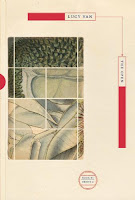
    Lucy Van - The Open
    A prose poetry collection, The Open explores the pressure of colonisation and capitalism, and the alienation and dislocation they engender. The judges report that 'Van starts with the familiar, then accelerates and expands on its implications, always taking the reader to a fresh space in which to turn these ideas over in the mind again and again and find new meaning in them.' Van's work has appeared in a variety of publications, but The Open is her first poetry collection.

    Chelsea Watego - Another Day in the Colony
    This is a collection of essays examining the ongoing and daily racism faced by First Nations people. Unapologetically written for her community, Watego stands her ground against colonialism. The judges report ' Watego's descriptions of the institutional and physical violence Aboriginal people are forced to endure in contemporary Australia are clear, urgent, and white hot with rage. At the same time, her portraits of moments with family, community, and ancestors are tender, vulnerable and joyous.' 


    For more information and the complete judges comments, see the Stella Prize website

    I am not sure how I feel about the longlist. It is pleasing to see such diverse authors recognised for their work and the exposure to wider audiences that an award like this brings. It is also lovely that poetry is now included, however this list seems to be have too many poetry collections and not enough novels and non-fiction for my liking. However as a reader, I am not really excited by the list. Normally there are a handful of titles that I am keen to read, but there is nothing here that I would rush out to find. Of the titles I would be most interested in are those by Anita Heiss, Lee Lai and SJ Norman.

    The Shortlist will be announced on 31 March 2022.  Happy reading!

    Sunday, 6 March 2022

    Fire Moves Faster

    Author Maxine Beneba Clarke's fourth volume of poetry, How Decent Folk Behave (2021) is a captivating and thought-provoking collection of verse. She channels the anger and despair of the events of the past two years - bush fires, pandemic, Black Lives Matter, Me Too, refugees, climate change, deaths in custody, domestic violence - into accessible, meaningful poems that provide both a fresh approach and a reminder to maintain the rage. 

    Beneba Clarke's poetry is political, addressing race, class and gender and the compounding impacts of privilege and power. In 'Something Sure' a mother talks to her son about growing up to be the sort of man who will stand up against domestic violence. 'Proximity' is about the victims of violence who never make the headlines. 'Wolf Pack' is about lone gunmen and the commonalities they share. 'The Monsters are Out' reminds us of the dangers on the streets and in our homes. 

    Many of her poems are heartbreaking. 'Trouble Walking' speaks of health care for people of colour. 'Muscle Memory' reminds readers of the impact of the pandemic on people of colour and the racism experienced. 'Home to Biloela' about the Muragappan family and their brutal treatment by the Australian government. 

    Beneba Clarke provokes readers, forcing them to stare into the ugly corners of our world, She is so direct and concise in her language, there is no ambiguity in her verse.  Her poem 'Capital' is a damning indictment on Australia's Parliament concluding with 'this place/is where women/get raped'.

    The final verse in this collection is 'Fire Moves Faster' - a searing 20-page reflection on 2020 starting with the bushfires and continuing through lockdowns, home-schooling, the death of George Floyd, the US election and more. Despite the challenging subject matter, and the way in which Beneba Clarke holds up a mirror to us all, there is something deeply hopeful in her verse.  

    I loved this collection of poetry and will return to it time and again to make sense of this period in our lives. The collection is prefaced with a quote for Nina Simone - 'An artist's duty, as far as I'm concerned, is to reflect the times.' Beneba Clarke has done this, capturing a time, a mood, and a moment in history. Absolutely brilliant. 

    Saturday, 19 February 2022

    Hollywood Romance

    Taylor Jenkins Reid's The Seven Husbands of Evelyn Hugo (2017) tells the story of a reclusive movie star and the young writer engaged to tell her story. 

    Evelyn Hugo became a film icon, rising through the 1950s Hollywood studio system, often cast as the sexy siren, who then established herself as a major talent in her later years by taking on more gritty, off-type parts. Along the way she married seven times - to Hollywood heartthrobs, directors, producers, and unknowns - and had a daughter she adores. Evelyn retired in the 1980s and disappeared from public view. Now at age 79, Evelyn decides to sell her collection of iconic designer gowns and donate the proceeds to charity. She agrees to give an interview to Vivant magazine to coincide with the auction. But there's a catch - Evelyn will only be interviewed by reporter Monique Grant. 
    Monique is a relatively unknown journalist and she has no idea why she was chosen for this story. But it has come at the right time. Monique has just separated from her husband and her writing career has stalled so she needs a distraction. She makes her way to Hugo's Upper West Side apartment and meets the star. Nearing 80 years of age, Evelyn is still glamorous, quick-witted, and determined to live life on her own terms.  As the interview begins, Monique learns that Evelyn has plans for a wholly different story. 

    To say more about the plot would spoil the story, but suffice it to say that we learn about the many marriages and true love of our heroine as she seeks to finally reveal her truth. Evelyn's story is remarkable, marrying to escape difficult situations, to shape her career, and to create a public persona. But the real Evelyn lies beneath, overcoming hardship and adversity, having to fight to achieve all that she has. The Golden Age of Hollywood was not a welcoming place for people who were different, and so often they, like Evelyn, had to hide parts of themselves to succeed. Evelyn Hugo is easily recognisable - I think of her as a mix of Rita Hayworth, Grace Kelly, Marilyn Monroe and Elizabeth Taylor - women admired primarily for their beauty and sex appeal when they should be recognised for their many talents. 

    I loved this book and found myself engrossed in the storytelling. Jenkins Reid intersperses the interview narrative with news articles from old Hollywood gossip rags, and switches between Evelyn and Monique's perspectives. Every so often Evelyn throws a curve ball that twists the plot in another direction, keeping the reader invested in the story. As she reveals her secrets to Monique, Evelyn shows she is so much more complex than she has ever been given credit for and reveals why Monique was chosen to write Evelyn's story.  This is a great book for readers seeking to escape or to reignite one's reading mojo.

    The Seven Husbands of Evelyn Hugo is being adapted for the screen and I look forward to revisiting Evelyn's story when it is released.

    Sunday, 13 February 2022

    Portrait of a Marriage: The Mister

    Ten years after publishing his debut novel Mrs Bridge (1959), Evan S Connell revisited the story with a companion novel Mr Bridge (1969). Covering the same time period - 1920s through 1940s - in this novel the story of the Bridge family is told from the perspective of the husband and father. 

    Walter Bridge is a busy lawyer with a devoted wife, India, and three children. The novel starts with a chapter on 'Love' in which he reflects on his deep devotion to his wife. 'My life did not begin until I knew her. She would like to hear this, he was sure, but he did not know how to tell her' (p1). 

    He expresses his love for his family through tirelessly working to secure their futures. He pays for their lifestyle, their country club membership, and gives them stock options as Christmas gifts. He tries to instil his conservative values in his children, which often leads to conflict. He is rigid in his thinking, and his children are often exasperated with his out-dated views. He bemoans his children's willingness to quit summer jobs, to hang out with friends who are beneath them in social status, and their frivolity with money. When his eldest daughter Ruth moves to New York she befriends artists. Mr Bridge considers himself 'reasonably broad-minded' (p180) but cannot understand how Ruth would become acquainted with homosexuals. 

    Mr Bridge is instantly recognisable as an archetype of a conservative, white, straight, family man. He is casually racist and antisemitic, but doesn't see himself as such because he can name a black or Jewish person that he likes. He doesn't understand why someone would invest in and admire art, cannot comprehend men dancing in a ballet, and won't give money to beggars as he believes that if they want money they should get a job. 

    We learn that Mr Bridge is just as confined by gender stereotypes as his wife is. There is a remarkable scene at a Chinese restaurant in the chapter 'Good Luck' where his wife swallows the paper fortune inside a fortune cookies. Mr Bridge realises his naive wife has been so sheltered and that since their marriage he had taken the role of her father and 'she knew nothing she had not been permitted to know' (p 210). He blames himself, but also judges her for not being more worldly. 

    Written in the same format as Mrs Bridge, this unconventional novel is told in 141 short, chronological chapters with titles like 'Boxtops', 'Tijuana' and 'Bleh!'. Interestingly each chapter is almost double the length of those in Mrs Bridge, as if Mr Bridge had more perspective to offer on this family despite spending so much time away from them.  He was a mysterious void in the first novel, but here we see a complicated, conflicted man determined to fulfil his role as provider, yet with numerous vulnerabilities he hides from others.

    I adored Mrs Bridge and enjoyed Mr Bridge almost (but not quite) as much. While I preferred the first book,  I am so pleased to have read both, as they are remarkable character studies written in such concise prose by a gifted writer. The Bridge family will stay in my memory for a long time.

    Saturday, 5 February 2022

    Portrait of a Marriage: The Missus

    I am not sure where I got the notion to read Evan S Connell's novels Mr Bridge (1959) and Mrs Bridge (1969) but it became an obsession. Getting my hands on a copy of Mrs Bridge was easy enough, but everywhere I looked was out of stock of Mr Bridge. Although I have had Mrs Bridge for several months, I did not want to start reading in case I never found her companion novel. Fortunately, late last year my set became complete and I have now had the absolute joy of reading these novels.

    Mrs Bridge is the story of an upper middle-class family in Kansas City, spanning the period between the First and Second World Wars. It is told from the perspective of Mrs Bridge, a housewife with three children. Her husband is a lawyer who spends most of his time, including evenings and weekends, at work. With live-in help and a largely-absent partner, Mrs Bridge has plenty of time on her hands so she spends her days visiting other society women, attending her country club and shopping.  But beneath this simple tale of a seemingly hum-drum middle-class domestic life lies something profoundly engaging.

    Told in 117 short, chronological chapters, we observe Mrs Bridge and her family through the social change and upheaval of the 1920s, 30s and 40s. Each chapter has a title - 'Tea Leaves', 'Chaperone', 'The Hat' - and then a vignette written in the most concise, arresting language that perfectly paints a moment in time for this family. The cumulative effect of reading these scenes is an empathy for these characters and a desire for their happiness.

    Mrs Bridge is a fantastic, complex character. She values manners above all and is acutely aware of the expectations of society. She wants things to be just right - the right kind of guest towels, the right amount of Christmas decorations, her children socialising with the right sort of people - and the fear of being judged weighs heavily on her. Relying on adages of her own upbringing, Mrs Bridge knows how things should be, but at every turn her world view is challenged. 

    The Bridges are a conservative, traditional family. Mrs Bridge defers to her husband with an unwavering faith that he knows best. At the same time, her hesitation to take action causes her discomfort. Even when she has a different view, she does not voice her opinion as she had 'for nearly a century had done as he told her' (p 112). She limits herself to conform to the image of a dutiful wife and mother which she feels she needs to present.

    Her children are a mystery to her. The eldest Ruth is distant. She is most fond of her daughter Carolyn, who is very much like her father. Her son Douglas is an oddity to whom she cannot relate. Indeed Douglas provides much of the novel's humour as Mrs Bridge is routinely shocked and perplexed by his actions like building a tower of junk in a vacant lot, concealing a pornographic magazine, or getting into a rock fight with another boy. 

    Yet there is something within Mrs Bridge that longs for a different life. From the outset we learn that her first name is India, which seems to her 'that her parents must have been thinking of someone else when they named her' (p1). After all, she could never live up to the excitement of her name. She is eager to learn and over the course of the novel she takes up various hobbies only to drop them unmastered - learning Spanish, painting, reading. Mrs Bridge briefly sees a therapist to address an unnamed sadness, a lack of meaningful connection.

    Underneath all of this is Mrs Bridge's concern about her husband's affection. He works hard to provide the life they need, and the family wants for nothing. He expresses his love through buying her things. But Mrs Bridge is lonely and longs to spend more time with him, which she gets when he takes her on a grand tour of Europe. 

    I absolutely adored Mrs Bridge although I cannot exactly pinpoint why. Connell's writing is brilliant as he infuses each scene with wit and irony. He uses such concise prose that the reader immediately understands the scene. The novel works because Connell makes the reader care for this family and even though modern life is so different from the setting of this book, the human experience is instantly relatable.

    Immediately upon finishing this novel I commenced reading Mr Bridge. A separate review will follow.

    Sunday, 23 January 2022

    Love and War

    The Trojan War is such a familiar story from Greek mythology, having been re-interpreted so many times. Homer made these events famous in his epic poems The Iliad and The Odyssey, and they have been retold in various forms - poems, plays, films, songs - ever since. I have recently been revising these myths through novels which retell the tales from the perspective of characters who had previously not been given a voice such as Pat Barker's The Silence of the Girls (2018) and The Women of Troy (2021), narrated by Briseis, the slave who was Achilles' war prize.

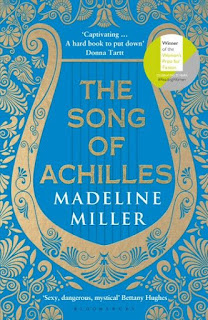
    Madeline Miller spent ten years writing her first novel, The Song of Achilles (2011), breathing new life into the story of Greece's most famous warrior. This novel tells the story of Achilles from the viewpoint of Patroclus, Achilles' closest confidante, friend and lover. 

    Patroclus is the son of Menoetius. As a young boy, he accidentally kills another boy and is exiled to Phthia, placed in the care of Peleus, the father of Achilles. When the two boys meet they are complete opposites - Achilles strong, brave and athletic; Patroclus introverted, innocent, intuitive. But Patroclus soon befriends Achilles and travels with him to Mount Pelion to be educated by Chiron, the Centaur. Here they learn warcraft, healing, cooking and other life skills. Slowly, they also discover their deep love for one another. 

    Achilles' mother Thetis hides her son on Skyros to keep him away from the war that is now building in Troy. She is aware of a prophecy that her son will become a legendary warrior, but he will die young, after killing Hector in battle. But Achilles cannot avoid his fate and before long he is his way to Troy and command his Myrmidon army in a decade-long war. 

    In selecting Patroclus as narrator, Miller allows the reader to bear witness to the events and see another side of Achilles, with Patroclus serving as his moral compass. Achilles is known for his wrath, his brutality on the battle field. But here, we see more tender moments between the two men. Miller's Patroclus is a lover, not a fighter, and over the course of the novel we see his character grow and display a different kind of bravery. 

    We know how this story will play out, but Miller's poetic writing and portrayal of this relationship makes the tale fresh and exciting. As a reader, I was invested in these characters and was keen to see how Miller would write the end of their tale. It was wonderful to read of the love these men had for one another. 

    In terms of comparison, I think I would have enjoyed The Song of Achilles more if I had not read Barker's version of this story in The Silence of the Girls, which I found to be superior. I also preferred Madeline Miller's second novel Circe (2018) which is one of the best novels I have read in recent years and started me on this journey through ancient myths. 

    The Song of Achilles won the Women's Prize for Fiction in 2012. Madeline Miller has announced that she is working on her next novel, taking on the story of Persephone. Cannot wait for this to be published!


    Saturday, 8 January 2022

    Chaucer Revisited

    Zadie Smith is a fascinating writer. Best known as a novelist, essayist and short-story writer, Smith is the recipient of countless awards for her works like White Teeth (2000), The Autograph Man (2002), On Beauty (2005), NW (2012), and Swing Time (2016). She has just written her first play, The Wife of Willesden (2021).

    Knowing I will likely never see this play performed live, I reserved a copy of the book from my local library and spent an afternoon reading it aloud. Smith has taken the form, characters and themes from 'The Wife of Bath's Tale' in Geoffrey Chaucer's The Canterbury Tales (c 1405) and modernised it for a contemporary audience. In her retelling, the Wife of Willesden is a 55 year old woman, Alvita, who has been married five times. At a pub on London's Kilburn High Road, after a few drinks, Alvita joins in the open mic night to talk about her life. Her husbands are present, as are her niece Kelly, her church-going aunt, a local minister, her best friend Zaire, and various other figures like God, St Paul, Black Jesus, Nelson Mandela, Socrates and more.  

    In Alvita's prologue she riffs about marriage and misogyny, sex and religion. She is vibrant, provocative, assertive and energetic. Alvita doesn't suffer fools and knows what she wants from life. She also won't put up with any crap from anyone, as in this example where she stops Eldridge (Husband #4) from slut-shaming women:

    'STOP RIGHT THERE. Please don't use, my brother,
    One type of woman to cuss another.
    We are all sisters. And don't try to neg
    Me. You feel free to take me down a peg
    Or two. Mention my crow's feet. Cellulite.
    Tell me I'm boring or not too bright.
    Cos you've worked out when I'm shy or sad
    I won't stray too far. I won't act too bad.
    But when I'm feeling myself; hear done right,
    Clothes on point? Then you nuh want me out nights.
    When I hit the club, it's full of your spied:
    Your cousin, your sister's man. Benny. Mike.
    You think your man dem can shut me down?
    Step to Me; we'll see who ends 'pon the ground!' 

    As you can see, the dialogue is infused with modern rhyming couplets, patois and a sense of urgency.  With other speakers she uses local dialects to reflect the diversity of the community. It is a remarkable feat of writing, and reminds me of how Lin-Manuel Miranda's Hamilton brought contemporary life to the Federalist Papers with his hip-hop rap battles. Here, the dialogue is energetic and vibrant.   

    After the lengthy prologue, The Wife of Willseden's tale transports us to 18th century Jamaica (rather than Arthurian England).  Here Auntie and Alvita introduce us to Queen Nanny, leader of the Jamaican Maroons - former slaves who fought the British in the First Maroon War (1728-1739) - and a poor Maroon who sought to discover what women want. 

    As a reader, you get a different experience reading a play from seeing it performed live. While there are stage directions, the reader doesn't have the benefit of a talented troupe of performers bringing life to the words on the page.  However, I really appreciated the writing of this play. It has been a long time (almost 30 years!) since I read Chaucer so I cannot comment on Smith's technical abilities in transforming this verse, but I think she did a great job in making Chaucer accessible to a modern audience. 

    Finally, the way in which this play came about is fascinating. In the introduction to the The Wife of Willesden, Smith explains that in 2018 the Borough of Brent was named London's Borough of Culture for 2020. Smith is a lifetime resident of Brent and much of her fiction is set here, so naturally she was asked by organisers if she would assist by writing something. Without thinking too much about what she would write, Smith agreed, indicating that she may modernise something from the Canterbury Tales. She boarded a plane to Australia and landed to a Twitter storm where her proposed contribution had been misinterpreted into Smith authoring her first play. After an initial panic and consideration of retreat, Smith sat down and penned The Wife of Willesden, which is currently being performed at the Kiln Theatre in London  (Nov 2021 to Jan 2022).

    Friday, 7 January 2022

    Into the Gap

    Chris Hammer's fourth novel Treasure and Dirt (2021) is a departure from his previous series featuring journalist Martin Scarsden, but retains all of his page-turning brilliance.

    In the outback mining town of Finnigans Gap, close to the NSW-Queensland border, a local opal miner Jonas McGee is found dead. Homicide detective Ivan Lucic (a minor character from Hammer's previous series) is sent from Sydney with two forensic experts to investigate. He is paired with Nell Buchanan, a junior detective from Lightening Ridge who was once stationed in the town.  Together they discover that nothing is what it seems and that everyone has a secret.

    Hammer is known for creating a sense of place in his novels. He has a way of describing a landscape, a town and its inhabitants so that the reader can become immersed - feeling the heat, smelling the dust and swatting the flies as you read. This is helpful as the characters spend a lot of time driving between the ridges, walking the streets and looking out over the arid plain. 

    There are a lot of characters in this novel and at almost 500 pages there are plenty of twists and turns to keep the reader guessing as to whether McGee was murdered, by whom and why. The plot is complex - covering the mining industry, the decline of towns based on exploiting natural resources, corruption, religious fanatics, share prices and more - and as the story evolves it becomes clear that there may be additional crimes here. 

    I have previously critiqued Hammer's superficial portrayal of women in his novels. He has redeemed himself with the character of Nell Buchanan - an authentic, complex and determined woman.  I really liked Nell's intellect and instinct, and the way she was a worthy partner for Ivan Lucic. I hope to see her character evolve and be central in future novels.

    Treasure and Dirt is a fine example of Australian noir and it is great to see Hammer branching out and moving away from the Scarsden series. My only quibble is with the length of the novel, as I think that it could have been trimmed back with less ancillary plot lines to make for a more taut crime thriller. 

    My reviews of Chris Hammer's previous novels are available on this blog:

    Sunday, 2 January 2022

    Planning for 2022

    After two years of a pandemic, it seems a little foolish to make plans for anything right now. With record high COVID cases, mounting pressure on the health system, leaders who are only interested in the coming election, the immediate future looks bleak. 

    There is so much happening that is outside my control, I can only plan for what I can control - like my reading. But I do like to be agile enough to respond to whatever comes my way and go wherever my moods and interests take me.

    I am looking forward to a number of new books due to be published in 2022, including:

    • Hanya Yanagihara - To Paradise (January)
    • Margaret Atwood - Burning Questions (February)
    • Jane Caro - The Mother (March)
    • Wendy McCarthy - Don't be too polite, girls (March)
    • Jennifer Egan - The Candy House (April)
    • Douglas Stuart - Young Mungo (April)
    • Emily St John Mandel - Sea of Tranquility (April)
    • Julian Barnes - Elizabeth Finch (April)
    • Kate Grenville - Elizabeth Macarthur's Letters (April)
    • Dervla McTiernan - The Murder Rule (May)
    • Geraldine Brooks - Horse (June)
    • Zadie Smith - The Fraud (September)
    • Anna Funder - Wifedom (September)
    • David Marr - A Family Business (November)
    • Samantha Maiden - Open Secrets (TBC)
    • Britney Higgins - memoir (TBC)

    While I won't get to all of them this year, I have preordered many from my library.

    I seem to consistently be able to read 30 books each year, but given the uncertainty this pandemic brings and the impact it will have on my workload, I do not want to increase the volume. Instead I will continue to explore new authors, genres and subject matters. To diversify my reading and to challenge myself to read more fiction, I have created a new checklist to add some fun to my reading.

    20th century
    modern classic

    Retelling of
    another story

    Novel in
    translation

    Poetry 
    collection

    Women's prize
    longlister

    First Nations
    Author/Issues

    Essay
    collection

    New to me
    author

    Biography
    or memoir

    Book on the
    1001 list

    Debut
    novel

    19th century
    classic

    Published 
    in 2022

    By a favourite
    author

    Non-fiction
    bestseller

    Short story
    collection

    Australian 
    literary prize
    longlister

    Current
    affairs/politics

    Protagonist
    is over 50

    LGBTIQ+
    Author/Issues

    Pre-19th 
    century classic
    Non-fiction
    history
    Book in my
    To Be Read pile
    Booker prize
    longlister
    Novella in 
    November

    New categories added this year include:
    • First Nations Author/Issues
    • LGBTIQ+ Author/Issues
    • Non-fiction History
    • Novella in November
    • 20th Century Classic
    • By a favourite author
    In adding these categories, I have removed ones that involved various settings (e.g. wartime, sea) or themes (e.g. coming of age). 

    Last year I focussed mainly on fiction. This year I want to add more non-fiction to my list, but also get back to the classics and include other forms of writing - poetry, drama - into the mix.

    Happy reading everyone!

    Friday, 31 December 2021

    My Reading Year 2021

    Like so many people, I had hoped that 2021 would be a better year. Unfortunately, the pandemic continued impacting all aspects of life. In the second half of 2021 I spent several months at home in lockdown. While this kept me safe from COVID, it was a drain on mental health and wellbeing. With a stressful job, in perpetual crisis-mode, I found it hard to concentrate and take my usual pleasure in reading. But I muddled through.  Fiction was my saviour - transporting me to new places and introducing me to new characters to escape the drama of real life.

    My reading goal for 2021 was 30 books with a focus on fiction, which I achieved by reading 31 titles this year. When planning for 2021 at the start of the year, I did not really name any specific titles, which served me well as I went wherever my interests took me.  Instead I used the reading bingo card I created to help me diversify my reading and my achievements are highlighted below. 

    B
    I NGO
    Set during
    Wartime 

    Retelling of 
    another story
     Novel in 
    Translation
    Poetry 
    Collection
    Women's Prize 
    Longlister
    Lesser known book 
    by a Famous Author
    Essay
    Collection 
    Set in the
    Future
    Booker Prize 
    Longlister
    About a non-Western 
    world leader 
    Debut 
    Novel
    19th Century
    Classic  
    Published
    in 2021 
    Biography 
    or Memoir
    Set in Space
    or at Sea
    Short Story
    Collection
    Australian Literary 
    Prize Longlister

    Current Affairs
    / Politics
    Protagonist 
    is over 50
    Coming of 
    Age Story
    Pre-19th Century 
    Classic
    First Novel
    in a Series
    Book on the 
    1001 List

    Fiction Based
    on a True Story
    Written by a 
    male author

    So here's what I read in 2021:

    Fiction
    This year I continued my interest in feminist retellings of ancient myths which I started with Madeline Miller's Circe in 2020. During lockdown I read two novels by Pat Barker back-to-back. The Silence of the Girls is the fascinating story of Achilles told from the perspective of his slave, Briseis. The Women of Troy continues this story, giving voice to the women left behind when Troy falls. Can't wait for the next instalment.

    Mid-year I discovered the Simon Serrailler series by Susan Hill. The Duchess of Cornwall has an online book club and I noticed on her instagram account that one of the books her club was reading was the first Serrailler novel, The Various Haunts of Men, which I had never heard of. So I tracked down a copy and soon fell down the rabbit hole, reading the first three novels in rapid succession. I am now taking a short break after The Pure in Heart and The Risk of Darkness, but will undoubtedly resume my reading of the Serrailler series in 2022. 


    I read some books that I have had for ages, including John Fowles' The CollectorEdna O'Brien's August is a Wicked Monthand Patricia Highsmith's The Price of Salt.   Other works of fiction I enjoyed included Tana French's The Searcher, Raven Leilani's Luster, Matt Haig's The Midnight Library, Joyce Carol Oates' short story collection The (Other) You, and Emily St John Mandel's The Glass Hotel

    After my 2021 hiatus from reading books authored by men, I finally got around to reading the two Chris Hammer books I had been looking forward to. Silver and Trust conclude the Martin Scardsen series. While neither lived up to the promise of Scrublands, I enjoyed reading both novels. In the new year I will read his next book Treasure and Dirt.

    Award longlists provide me with much reading inspiration. From the Stella Prize Longlist I read Intan Paramaditha's The Wandering and absolutely loved the winning title, Evie Wyld's The Bass Rock. One of the highlights of the year was reading Susanna Clarke's Piranesi - winner of the 2021 Women's Prize for Fiction - a uniquely brilliant story. From the Booker Prize Longlist, I really enjoyed Klara and the Sun by Kazuo Ishiguro.

    This year there were a handful of incredible novels that made a lasting impact that I have most often recommended or gifted to friends. Tara Moss' The War Widow is a wonderful crime novel featuring a plucky heroine, set in postwar Sydney. I loved this book and look forward to the next instalment. Two other Australian novels I enjoyed are Hannah Kent's Devotion and Emily Maguire's Love Objects - both of which I have thought about a lot since reading. But my most favourite novel of the year has to be Still Life by Sarah Winman. I absolutely lost myself in this epic tale of a group of misfits who form a family together in Florence. 


    Non-Fiction
    This year I didn't end up reading as much non-fiction as I normally do, having prioritised the escape of fiction. But what I did read, I thoroughly enjoyed.

    I began the year reading an amazing work of non-fiction by journalist Louise Milligan. Witness covers Milligan's investigation of sexual assault and child sexual abuse cases through the court system and how victims are treated. This was a thought-provoking, compelling book which should be essential reading for police and the legal profession.

    Kate Ellis' memoir of her time in Parliament, Sex, Lies and Question Time, was fascinating. The timing of publication was impeccable, with the allegations against members of Parliament and the March for Justice. An important book from someone who made a difference during her time in office. 

    Two books I was really looking forward to, by authors I really admire, didn't hit the mark for me. Sarah Krasnostein's The Believer was hit-and-miss, and while I loved certain stories, others didn't resonate. Tegan Bennett Daylight's collection of essays, The Details, was also uneven and missing something for me. But I am glad to have read both.

    Dolly Parton's Songteller - My Life in Lyrics was joyous, especially when accompanied by the audiobook where her stories were interspersed with song. I have huge admiration for Dolly - as an artist and a humanitarian. A look back on her life through her songwriting shows how she raised awareness about difficult issues.

    Finally, my reading year would not be complete without at least one Helen Garner. How to End a Story, the third volume of Garner's diaries. This volume chronicles the downfall of her marriage and her growing success as a writer. 

    While I really appreciated all the non-fiction I read this year, if I had to choose one favourite, without hesitation I would select Sean Kelly's The Game -  A Portrait of Scott Morrison. This is a fascinating, well-researched exploration of our Prime Minister and what has happened to our country. A must-read for anyone who cares about politics, ethics and the state of the nation.


    Best of 2021

    I read so many great books this year. I loved and highly recommend:
    If I had to choose my absolute favourites, I would pick Sarah Winman's Still Life (2021) and Sean Kelly's The Game (2021).  

    Tuesday, 28 December 2021

    Writer's Block

    The third volume of Helen Garner's Diaries, How to End a Story (2021) covers the years 1995-1998. During this time she continues her work as a writer in the aftermath of the success of her book The First Stone (1995). 

    In her previous volume of diaries, Garner commenced an affair with the married V (author Murray Bail) and eventually married him. It is a very uneven relationship - love, joy and companionship mixed with periods of intense jealousy and disappointment.  V is in the process of writing his Miles Franklin Award winning novel Eucalyptus (1998) and his work takes precedence. He prefers to write in silence at home, requiring Helen to rent rooms elsewhere to pursue her writing. She edits his work, provides constructive feedback, and supports him as he crafts this novel. In contrast, he is secretive, solitary and demanding. 

    She captures the creative differences between them in her diaries as follows: 

    'I say that since we've been together our lives have been arranged in such a way as to facilitate only his work needs: that he's an imaginative writer and needs seclusion in order to write, so we've got things set up domestically to create the best possible conditions for this. On the other hand, I'm a writer who works off and is nourished by the events of daily life, which means our living arrangements actively work against what I need...' (p 143-144)

    V has an artist friend X and spends increasing amounts of time with her. V compartmentalises X and his wife, keeping them away from each other and telling them both untruths. Garner attends a psychologist in an effort to reconcile her feelings, which V finds threatening. He also dislikes her writing in her diary, fearing he will be written about. As she learns more about his infidelity, Garner becomes increasingly erratic and self-doubting. 

    Meanwhile, Garner is troubled about her work. She continues to write reviews and various pieces for publication, but feels she has lost her ability to write fiction. The betrayal by her husband - the lies more than the infidelity - has impacted her in so many ways. Through her diaries she reflects upon the sadness and isolations feels, and finds the strength she needs to face up to the truth. 

    These diaries again show Garner's genius as a writer. She is frank, fierce and witty. Garner writes with such immediacy and intimacy that one cannot help but feel connected to her. 

    My review of Garner's previously published diaries also appear on this blog:

    Friday, 24 December 2021

    The Pretender

    I've never understood the appeal of Scott Morrison, Australia's 30th (current) Prime Minister. He always seemed like the guy who would say anything to get ahead. He would waffle and continually change his position, later denying he had done so. He would shut down questions of accountability (e.g. not talking about 'on water matters') and point fingers at others, never taking responsibility for anything. 

    During the past year my disregard for Morrison has boiled over into a genuine rage. The list of his failings has grown: his bungling of the vaccination roll out; his mixed messaging on COVID precautions; his disgraceful behaviour in light of the Britney Higgins allegations; his refusal to stand down Christian Porter; his shameful treatment of asylum seekers; his failure to evacuate people from Afghanistan; his endangering stance on climate change; his unwillingness to curb the dangerous COVID misinformation stemming from his ranks; and on and on. 

    I picked up Sean Kelly's The Game: A Portrait of Scott Morrison (2021) in an effort to try to understand the man behind the smirk. What drives him? What does he actually believe in? How did he get to where he is?

    Kelly's book is divided into three parts: The Man; A Country; A Time. The first section explores Morrison and the image he has crafted for himself as a man who makes curry once a week, follows the Cronulla Sharks, and loves his family. As Kelly writes, 'so few details, but such talkative details' (p46), with Morrison continually adding 'Go Sharks!' to every media encounter. But these details were crafted to convey an image of Morrison as Mister Middle Australia - a family man, rugby follower and a man who embraces multiculturalism and domesticity (even if only once a week).

    The section on the country contextualises Morrison's leadership against the backdrop of increasing calls for recognition of First Nations people and his refusal to acknowledge the harm the celebration of Australia Day causes. As the member for Cook, Morrison represents the Sutherland Shire where the Cronulla riots took place in 2005 - altercations between Anglo-Australians and those with Middle Eastern backgrounds. The way in which Morrison speaks of this and similar conflicts is to 'ignore the more troubling narrative and then replace it with one that vindicates ordinary Australians' (p159). 

    'A Time' focuses on the period of Morrison's prime ministership and the events that have tested his leadership, including the devastating bushfires, the coronavirus and violence against women. In each instance Morrison had the opportunity to demonstrate empathy, vision, action - and he failed. During the fires, he famously didn't 'hold a hose'. With the pandemic he started well, declaring the pandemic, locking down our big island and injecting stimulus into the economy, but failed to follow through with the long term protections of vaccines claiming it wasn't a race. On women, Morrison has been utterly tone deaf (despite having a wife and daughters, thereby somehow relating to the matter) and negligent in his failure to address deeply entrenched cultural issues. 

    This week Morrison showed more of the same, with an increasingly reckless and irresponsible approach to governing. His shameless pandering to the minority - in which he has declared COVID an individual responsibility and equated mask wearing to slapping on sunscreen and a hat (lest sunburn be contagious!)  - and his push back against any form of government intervention, shows that we are in for a bumpy election campaign. Further, his photoshoot at the site of the horrific accident in Tasmania in which several children were killed, was shameless opportunism. 

    Sean Kelly is a brilliant researcher and intelligent writer. He has painted a portrait of the enigmatic Morrison as someone who has manufactured a character for himself - 'Scomo' the average Aussie bloke - who views politics as a game of winners and losers. Morrison continually wins this game as he changes the rules to suit himself, but in doing so he erodes the democracy he is sworn to protect.  Kelly dispels Morrison's claims that he was utterly blameless for the ousting of Malcolm Turnbull, showing this to have been a pattern throughout his career.  More importantly however, Kelly turns the gaze back to ourselves - after all, we elected Morrison - and our role in creating him. It is an insightful biography of an elusive figure and a critique of the myth of Australia. 

    The Game did not make me view Morrison in a more favourable light, but it did help me understand how his prime ministership is possible. It also confirmed what I had suspected all along - Morrison is a pretender, playing a game, and unless we act to make change - we all lose. With an election looming, let's hope voters see past the pork barrelling, slogans and sledging and make a change for the better.

    Thursday, 23 December 2021

    The Rising Tide

    The third instalment of Susan Hill's Simon Serrailler series -  The Risk of Darkness (2006) picks up where the previous novel concluded.  In The Pure in Heart, Serrailler was investigating the disappearance of a nine-year old school boy, but all trails ran cold and the book ends without a resolution in the case. 

    In this novel, DCI Serrailler is called to Yorkshire where a similar child abduction has just taken place. Could this be the same perpetrator? Can his knowledge help the local police?  Is there enough evidence to link these cases? Once a suspect is caught, can they solicit a confession?

    Meanwhile, back in Lafferton, someone is distributing vile racist leaflets. Women are being approached by a grieving man who thinks they are his deceased wife.  Local priest Jane Fitzroy learns her mother has been violently attacked in her own home in London. The darkness seeps in everywhere. 

    Hill continues to flesh out the characters - particularly the Serrailler family - and there is a building sense that change is upon them all. Simon is rather aloof and unhappy. He toys with the feelings of the women in his life, and is at a crossroads in his career. His sister Cat Deerbon tries to keep him in check, and can reach him in a way that no one else can. Cat is struggling with the pressures of work and family life and contemplating a significant sea change. Sergeant Nathan Coates is about to have a family and is thinking about leaving Lafferton. Jane Fitzroy is wondering if she has made the right choices in her life. 

    Like in Hill's previous Serrailler novels, there are many threads running through this story and she uses her characters to provide a commentary on social issues - inequality, health care, gentrification, poverty, tabloid media.  Some of these characters are genuinely heartbreaking; Eileen Meelup and Natalie Coombs in particular are both mothers in parallel struggles to understand their daughters. I would have liked a little more detective work in this novel to flesh out the crime aspects of the tale.

    While it won't appeal to everyone, I find this a strangely compelling series. Part crime drama, part police procedural, part domestic fiction, it defies being placed in a single category.  I like the way Hill builds the story through the characters, and through them presents an interesting meditation on family, longing and loss.  This novel ends somewhat abruptly, but is set up for the next book in the series. I look forward to continuing this series and am pleased that I still have so many more to read.

    My reviews of other novels in this series are available on my blog:

    Wednesday, 1 December 2021

    Enduring Love

    Australian author Hannah Kent is well known for conducting extensive research to infuse her novels with authenticity as she writes about distant lands and historical settings. For her latest novel Devotion (2021), she transports readers to Prussia in the 1830s where we immerse ourselves in a Lutheran community in the village of Kay.

    The narrator of Devotion is Hanne, a teenage girl who lives with her parents and twin brother Matthias. Hanne is uniquely in tune with nature; the trees speak to her. While all the other girls in the village are focused on courtship and marriage, Hanne has no interest in local boys. She prefers to be alone, among the forest. Then she meets Thea and their connection is so deep that seemingly nothing can come between them. 

    The Lutheran community in Prussia was persecuted under King Frederick William who sought to outlaw many traditions and rites. Pastor August Kavel led an exodus of the 'Old Lutherans' to South Australia where they would settle and form the towns of Klemzig and Hahndorf. Kent uses this history in her novel, as the villagers of Kay plan to depart their home for a new life in an unfamiliar land. 

    The families board the Kristi to voyage to Australia.  Like so many migrants, they face many dangers on their journey to freedom; over cramped quarters, insufficient stores, inclement weather, sickness and disease. When the ship arrives in Adelaide, all aboard have been changed by their travels. 

    Kent follows these families as they begin to establish their community in a new, harsh land. They encounter the local Peramangk people and those villagers who are open to learning from them discover life-saving skills. 

    Devotion is a story of love and loss. While readers come to know and care for many characters in this community, it is the the deep, unbreakable, connection between Thea and Hanne and the obstacles they face that form the heart of this the novel. But the story is not predictable and Kent makes some brave choices in how she tells their tale.  

    As one comes to expect from this author, Devotion is a beautifully written book filled with prose that borders on poetry. Kent describes the natural world in such vibrant and lively prose one cannot help but become engrossed in it. While not my favourite of Kent's novels, it is highly recommended.

    My reviews of Hannah Kent's previous novels Burial Rites (2013) and The Good People (2016) are also available on this blog. 

    Saturday, 20 November 2021

    Novellas in November

    The other day on Twitter I stumbled across the #NovNov hashtag and discovered I have been missing out on an incredible reading event. 'Novellas in November' is a reading challenge designed to promote this form of prose fiction. 

    Novellas are longer than short stories and shorter than novels. Because of their length, novellas are generally fast-paced, character-driven and lack the various sub-plots of more complex novels. 

    When thinking about novellas, there are plenty of famous examples, including:

    • Joseph Conrad - Heart of Darkness
    • Thomas Mann - Death in Venice
    • Herman Melville - Billy Budd
    • Henry James - Turn of the Screw
    • Albert Camus - The Outsider
    • Franza Kafka - The Metamorphosis
    • Edith Wharton - Ethan Frome


    I really enjoy novellas. Some of my favourites are:

    • Kate Chopin - The Awakening
    • Alexsandr Solzhenitsyn - One Day in the Life of Ivan Denisovich
    • Ernest Hemingway - The Old Man and the Sea
    • Julian Barnes - The Sense of an Ending
    • Truman Capote - Breakfast at Tiffany's
    • John Steinbeck - Of Mice and Men
    • George Orwell - Animal Farm
    • Edith Wharton - Bunner Sisters

    I love the idea of Novellas in November. Not only does it draw attention to this form of literature and introduce readers to new authors, but it can also assist those of us with annual reading targets to get a few more books under our belt as we head to the end of the year!  

    Blogger Reading in Bed has written a brief history of Novellas in November which details how this challenge began and was amplified. Another post I recommend is by 746 Books this week 'For Translation Week: An Interview with Stella Sabin of Peirene Press' - which looks at the publisher's criteria for novellas (under 200 pages/50,000 words) and why they specialise in translations of contemporary novellas. 

    In combing through my bookcases I realise I have loads of novellas just waiting to be read. Time to make a cup of tea and curl up with a good book!

    Monday, 8 November 2021

    The Child in Time

     When I finished Susan Hill's The Various Haunts of Men last week, I promised to give her Simon Serrailler series another chance to see if the central character would grow on me. Over the past few days I have enjoyed reading the second novel in the series, The Pure in Heart (2005) and I am pleased that the enigmatic detective has now taken centre stage. 

    Not long after the tragic events of the previous story ended, DCI Simon Serrailler is on holidays in Venice. Recharging after a rough year, Serrailler is drawing and exploring parts of Venice not on the tourist trail. His peace is disrupted by an abrupt call from his father, urging him to return home immediately to attend to a family emergency. This sets off the personal narrative thread of the novel wherein we learn more about Serrailler's parents and siblings. Through the family dynamics, particularly the father-son relationship, we discover why Serrailler has such an impervious exterior, refusing to engage emotionally. Serrailler has successfully compartmentalised his life, but when a former love interest returns he is angered to find lines blurred. 

    The crime thread in the novel centres on a missing child. While waiting for his ride to school, nine-year-old David Angus is abducted. Serrailler's team are on the case, but thwarted by lack of witnesses and trails that run cold. Hill's depictions of the hard slog of this type of police work, and the way in which the Angus family is falling apart while awaiting news, feels very real. Reading this novel during the abduction and recovery of young Cleo Smith in Western Australia, provided a fascinating real-life parallel to the fictional Angus case. 

    There are other threads woven in this novel too as Hill provides an interesting social commentary on health care, euthanasia, imprisonment and class through various characters in the story.  Andy Gunton leaves prison intent on getting his life back together but his status as an ex-con and his lack of a familial safety net leaves him considering whether he would be better off back inside. Dr Chris Deerbon is stretched as his wife Cat is on parental leave and they cannot get locum support, so he is run ragged trying to maintain his GP practice while on call most nights. At a nursing home, staff discuss the quality of life of the various disabled residents. Elsewhere a wealthy American couple have bought a derelict mansion with promises to restore it to its former glory and contributing to the local community.  All of these side stories add to the complex microcosm of Lafferton, the fictional English village where the story takes place.

    Susan Hill is a very good writer, particularly in incrementally building characters and relationships that feel real. I also found the crime drama well constructed. It is not a fast-paced, page turning thriller, and doubtless some readers will be put off by the lack of immediate resolution. It is bold choice by a confident writer not to tidy up all the plotlines to please readers. Indeed this book seems more like a season of a police procedural television show, which ends with enough of a resolution to satisfy fans and enough of a cliffhanger to keep viewers interested until the next season rolls around. I look forward to the next novel in this series and learning to how these characters evolve.

    My review of Simon Serrailler book #1 - The Various Haunts of Men is also available on this blog.

    Friday, 5 November 2021

    Booker Prize Winner 2021

    The winner of the 2021 Booker Prize for fiction was announced this week, with South African author Damon Galgut receiving the £50,000 prize for his novel, The Promise

    Set on a farm outside Pretoria, a privileged white family gathers for the funeral of matriarch Rachel. Their faithful black maid Salome lives on the property and was promised the deed to her home by Rachel on her deathbed. Despite this promise, and the constant reminders from the youngest daughter Amor, the family does not act to transfer ownership and conflict ensues. 

    Galgut was previously shortlisted for the Booker for his novels The Good Doctor (2003) and In a Strange Room (2010). 

    Chair of the Judging panel, historian Maya Jasanoff, said of The Promise:

    'We felt among the judges that this book really is a tour de force. It combines an extraordinary story with rich themes – the history of the last 40 years in South Africa – in an incredibly well-wrought package.'

    Here is the moment that the winner was announced and the award was presented to Damon Galgut.

    During the award ceremony, short films were aired for each of the shortlisted titles. The film for The Promise is directed by Christine Ubochi and stars David Jonnson.

    I have not yet read The Promise but have it on my teetering stack of books to be read.