Saturday, 21 September 2019

After the Flood

Twenty years ago, long before I started this blog, I was engrossed in the His Dark Materials trilogy by Philip Pullman. Northern Lights (aka The Golden Compass) (1995) The Subtle Knife (1997) and The Amber Spyglass (2000) told the story of Lyra Belacqua, a smart young girl and her daemon Pantalaimon as she journeys through the multiverse. The fantasy series was clever and thrilling; exploring deep questions about morality, religion and science.

Pullman has now embarked on a new trilogy called The Book of Dust, Dust being the mysterious Rusakov particles attracted to objects formed by consciousness. The Magisterium (Church) is obsessed with Dust, seeing it as evil and corrupting, akin to the concept of Original Sin. Dust permeated the first trilogy and does so again here.

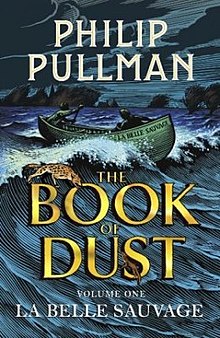
La Belle Sauvage is the first book, named after a canoe owned by young Malcolm Polstead. Set ten years before Northern Lights, here Lyra is a baby being cared for by nuns at an Oxford priory. Malcolm helps out at the inn his parents run, alongside a teenage girl named Alice. Malcolm sees and hears many things from the customers who stop by for a pint 'n pie. One day, a group of men arrive at the inn and start questioning Malcolm about Lyra. But when creepy Gerard Bonneville and his hideous hyena daemon arrive in town, Malcolm knows for sure that Lyra is in danger.

Flood waters are rising in Oxford as the Thames threatens to break her banks. Taking advantage of the inclement weather, Bonneville attempt to steal the child, but Malcolm and Alice are able to flee with Lyra in La Belle Sauvage. The three children, pursued by Bonneville and various others, undergo all sorts of ordeals as they try to find sanctuary after the flood.

I loved being back in the world of Dust, daemons and alethiometers - in fact whenever the story mentioned anything related to His Dark Materials (like Lord Asriel, Mrs Coulter, gyptians or Jordan College), I immediately became nostalgic. The mysterious 'Oakley Street', extremist Magisterium, and disturbing League of St Alexander kept the story moving along. While Malcolm is a great protagonist, feisty Alice is the one who interested me most, and I liked how their relationship changed over the course of their journey.

So far, I haven't found The Book of Dust as engrossing as the first trilogy.  The flood was a drag on the story; so many pages take place in the titular boat that it became a bit dry. The tone was also considerably darker than the first trilogy - which, admittedly, I kind of liked, but made me wonder what younger readers might think. To enhance my reading, I also listened along to the audiobook with Michael Sheen narrating the story. This enlivened the tale and I particularly loved his portrayal of Bonneville's hyena.

The second volume of The Book of Dust will be released on 3 October 2019 and from what I understand the story will fast forward to Lyra as a young woman. So I will be intrigued to see where this series takes us! But what I am really excited about is the new BBC series, Philip Pullman's His Dark Materials which will air in early November with James McAvoy, Ruth Wilson and Lin-Manuel Miranda among the cast.

Saturday, 7 September 2019

Unclean hands

In 2016, journalist Niki Savva produced a riveting book about the downfall of Tony Abbott titled The Road to Ruin. Her latest, Plots and Prayers (2019), is a sequel to that tale - focusing on the incredible fall of Abbott's successor, Prime Minister Malcolm Turnbull, and the subsequent victory of Scott Morrison.

Savva talks to all the insiders about what they were doing and thinking during that week in August 2018, when Peter Dutton attempted to oust Turnbull in an ill-advised and poorly-conceived coup. The forensic analysis of who said what, when, and to whom, paints a brutal portrait of our political leaders as a bunch of spoiled, privileged bullies who are only thinking of themselves.  Savva explores the issues plaguing the Coalition government in the months leading up to the overthrow: the National Energy Guarantee; Queensland; Abbott; Barnaby Joyce's affair and child with a staff member; and, Turnbull's inability to gain traction inside the party.

The events of that week were bizarre to those of us outside the 'Canberra bubble': Dutton gathering his forces; Turnbull urging him to put up or shut up; Abbott destabilising from the back stalls; Fifield defecting; Cormann backstabbing; and then, from seemingly nowhere, Morrison emerging victorious.

Over the past year, Morrison has repeatedly claimed that he was loyal to Turnbull, and that he stumbled into the top job once Turnbull's hopes of holding on were lost. But Savva reveals that his supporters were working the numbers and positioning Morrison to take advantage of the chaos they helped cause. It will be interesting to see what Turnbull makes of all this when his memoir is published early next year.

Plots and Prayers is a real-life political thriller - an intriguing, page-turning read. The writing is witty, wry, and intelligent. I knew I would enjoy it from the moment I read veteran journalist Laurie Oakes' endorsement on the front cover where he writes 'How good is this book!' - turning Morrison's catchphrase into wicked praise.

Wednesday, 4 September 2019

The Booker Prize Shortlist 2019

The shortlist has been announced for the 2019 Booker prize. The thirteen longlisted titles have been whittled down to six:

  • Margaret Atwood - The Testaments (Canada)
  • Lucy Ellmann - Ducks, Newburyport (USA/UK)
  • Bernardine Evaristo - Girl, Woman, Other (UK)
  • Chigozie Obioma - An Orchestra of Minorities (Nigeria)
  • Salman Rushdie - Quichotte (UK) 
  • Elif Shafak - 10 Minutes 38 Seconds in this Strange World (Turkey)


I am delighted that Atwood made the list, and I am eagerly awaiting my pre-ordered copy of The Testaments which will arrive next week on publication day. Of the shortlisted titles, she is my pick for winner.

I had only read two of the longlisted titles - My Sister, the Serial Killer by Oyinkan Braithwaite, and John Lanchester's The Wall - and was not surprised that they didn't make the cut. But I was disappointed that Max Porter's Lanny didn't survive. 

Here's what the Booker Prize judges had to say about the shortlist.


The Winner will be revealed on 14 October 2019.

Sunday, 1 September 2019

The Rising Tide

Our worst fears of climate change have occurred. The seas have risen. Millions of people are displaced and desperate. Young people are enraged by the inaction of older generations, effectively robbing them of their futures.

In Britain, the government has chosen isolation, building a massive sea wall around the entire island, to protect the country from waves of refugees - the 'Others' - who attempt to reach a safe haven. To defend themselves from these intruders, armed guards are conscripted and placed along the entire Wall, while the coast guard patrols at sea.

We meet Kavanagh, a new Defender, straight out of his initial training, and follow him as he navigates his new existence on the Wall. Defenders who fail, and allow the Others to traverse the Wall, will be put to sea and exiled. So the stakes are high, and Kavanagh must not let down his Captain, the Sergeant, and his fellow Defenders.

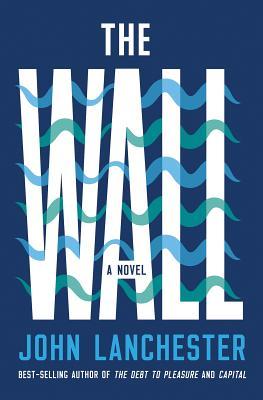
The Wall (2019) by John Lanchester has been longlisted for this year's Booker Prize. It is a quick and easy read, with the story moving at a good pace, particularly in the second part. He captures the droning boredom of the Defenders, then the sudden shift in to action. I am not sure it is Booker-worthy, as the writing is not exactly literary, but it is a compelling novel for readers who enjoy dystopian fiction.

It is a cautionary tale in many respects. There are shades of Trump's wall along the Mexican border and his racist demonisation of immigrants. There is also the isolation of Brexit, with Britain literally walling itself in to separate itself from the world. But the overriding caution is related to climate and the global failure to act to slow/reverse the effects of humans on our planet. Lanchester perfectly captures the resentment young people do and should feel towards our current political leaders for failure to act. For example, when a politician comes to speak to the Defenders, he describes the Change as follows:
'...The Change was not a single solitary event. We speak of it in that manner because here we experienced one particular shift, of sea level and weather over a period of years it is true, but it felt then and when we look back on it today still feels like an incident that happened, a defined moment in time with a before and an after. There was our parents' world, and now there is our world.' (p110)
The 'our world' Lanchester portrays is bleak and hopeless, with limited opportunities for young people. Let's hope he is wrong.

For those interested in speculative fiction, I would also recommend Margaret Atwood's Oryx and Crake (2003) trilogy.

Thursday, 29 August 2019

A Tiresome Tale

I was perusing the graphic novel section at my local public library when I noticed a book written by Jim Broadbent. Wait, Jim Broadbent? The Oscar winning actor? Professor Slughorn? Archmaester Ebrose? That Jim Broadbent?

Sure enough, the same Jim Broadbent has penned Dull Margaret (2018), his first graphic novel, illustrated by Dix. The story follows a woman who hunts eels to sell in the local market. She doesn't fit in to the local community, and is shunned and exiled.  Margaret concocts a potion to bring her wealth and companionship. Yet when she gets her friend, she has no ability to treat him well as she has never experienced friendship before. Margaret's desire for vengeance on a world that has wronged her sees her blur the lines between heroine and horror. 
Dix's illustrations are macabre but compelling. Many pages feature a series of images which show Margaret's actions and angst. His Margaret is pale, thin and ghostly. Dix uses a muted palette of browns and greens to illustrate Margaret's bleak existence. He is a talented artist, creating evocative and unsettling panels. 


Broadbent was inspired by Pieter Bruegel the Elder's painting Dulle Griet and crafted this story to explore Margaret's life outside the painting. While I appreciate his desire to create a story from a painting he loves, the story he created did not move me at all. I was not interested in Margaret and found the whole experience rather tiresome. Dull Margaret is indeed very dull.

Nick Drasno's Sabrina and Chris Ware's Jimmy Corrigan are much better graphic novels which explore themes of loneliness and longing.

Saturday, 3 August 2019

Miles Franklin Award Winner 2019

The winner of the 2019 Miles Franklin Award, Australia's most prestigious literary award, was announced on 30 July 2019. This year the award and its $60,000 prize went to Melissa Lucashenko for her novel Too Much Lip.

The chair of the judging panel said the novel 
is driven by personal experience, historical injustice, anger and what in Indigenous vernacular could be described as 'deadly Blak' humour. Lucashenko weave a (sometimes) fabulous tale with the very real politics of cultural survival to offer a story of hope and redemption for all Australians.
Melissa Lucashenko is the third Indigenous Autsralian to win the Miles Franklin Award, having been preceded by Kim Scott (Benang 2000 and That Deadman Dance 2011) and Alexis Wright (Carperntaria 2007).

Congratulations Melissa!

Sunday, 28 July 2019

Respect for Acting

After a busy day at work, there is nothing I love more than escaping with a good book. I read everywhere - on the bus, waiting for my train, before bed - even if it is just a couple of pages. The past few weeks have been hectic, with my work requiring great concentration and intensity, so the books I am currently reading did not provide the escape I need. Looking for a light and breezy read, a colleague recommended Michael Caine's newest book, and I am glad I took her advice.

Blowing the Bloody Doors Off: And Other Lessons in Life (2018) is the 85 year old actor's latest memoir. It is not a traditional bio, chronologically detailing his trials and triumphs - he has written plenty of memoirs like that before such as What's it All About (1992) and The Elephant to Hollywood (2010). Rather, in this book he imparts wisdom from his sixty year career.

In some respects, the advice he gives is what you would expect from a professional - be on time, be prepared, take opportunities to learn, get enough sleep, make the most of any difficulty. But the way he gives this advice, sharing his own failings and learning from his mistakes, is delightful. He name-drops so many celebrities - including Frank Sinatra, Elizabeth Taylor, Tony Curtis, Lawrence Olivier, Sean Connery, Elton John, David Bowie, John Houston, Leonardo De Caprio, Sandra Bullock, Christian Bale and Heath Ledger - and tells stories of his blockbuster films and quiet achievements. He is also self depreciating and has a great sense of humour about the many dud films he has done over the course of his career.

Parts of the book that were repetitive, but I think that was due to the chapter structure and his need to draw several lessons from one experience. My main quibble is that Caine glossed over certain things which were missed opportunities to share more life lessons. For example, he spoke about his alcohol addiction in a really simplistic way.

Before reading this book I was not really a Michael Caine fan per se. I have not seen many of his older films - the ones which made him a star - and know him more from his later supporting and character roles. But I became a fan, especially once I started listening to the audio version, and could hear him tell the story in his delightful cockney accent. His narration really brought the stories to life and he came across as a thoroughly decent, refreshingly humble, professional.  While written as advice for young actors, he applies his lessons to other careers as well and I was able to take away some positive lessons.

Friday, 26 July 2019

The Booker Prize Longlist 2019

This week the Longlist was announced for the 2019 Booker prize. The thirteen titles nominated include authors from Britain, Canada, Zimbabwe, Mexico, Nigeria, Turkey and Ireland - a shift from the past few years where American authors dominated since the eligibility rules changed in 2014 to expand beyond the Commonwealth.

I have only read one of these books (Braithwaite) but I am eagerly awaiting the publication of another (Atwood). What I love about the Longlist is that it introduces me to many books I do not know. From last year's Longlist I discovered the incredible graphic novel Sabrina by Nick Drasno, Belinda Bauer's page-turning Snap and was inspired to attend sessions at the Sydney Writer's Festival with Daisy Johnson (Everything Under) and Rachel Kushner (The Mars Room).

Let's take a look at the books that make up the longlist:

Margaret Atwood - The Testaments (Canada)
It is no secret that The Handmaid's Tale is one of my favourite novels. When Atwood announced she was returning to Gilead to resume the story 15 years after the last one ended, I cleared my schedule for September to read it upon its' release. Very little is known about the plot at this stage, but I am sure this will be magnificent. Atwood, a six time nominee, previously won the booker in 2000 for The Blind Assassin.


Kevin Barry - Night Boat to Tangier (Ireland)
Two ageing Irish drug smugglers, Charlie and Maurice, are waiting in Algeciras, Spain for a boat from Tangier. One has an estranged daughter, Dilly, who has been traveling in Spain and North Africa for the past three years, and they aim to find her. Darkly comic, this novel is described by judges as 'a work of crime fiction not quite like any other'.


Oyinkan Braithwaite - My Sister, the Serial Killer (Nigeria)
Ayoola has a habit of getting rid of her boyfriends and calling on her sister Korede to assist in the clean up. Korede knows she should report Ayoola, but the family ties are strong. However, Korede is conflicted once Ayoola starts dating someone Korede is interested in. Braithwaite hails from Nigeria and was a finalist for the Commonwealth Short Story Prize in 2016. This novel, the only debut on the Booker longlist, was shortlisted for the Women's Prize. I really enjoyed reading it (see review), after meeting the author at the Sydney Writers' Festival this year.


Lucy Ellmann - Ducks, Newburyport (USA/UK)
So, this is a bit different. This novel is over 1000 pages long and made up of eight long sentences, as a stream-of-consciousness narrative in the form of a monologue by an Ohio homemaker. The review in the Guardian described it as Anne Tyler writing as Gertrude Stein. While I am intrigued, I fear the lack of paragraph breaks and full justification would drive me crazy. Perhaps I will take a peak at the library and see if the book and I connect.

Bernardine Evaristo - Girl, Woman, Other (UK)
This novel features interconnected stories about a group of twelve black women in Britain. Each chapters centre on an individual character, but layers overlapping connections to the others, both strong and weak ties. Race, class and gender are explored while addressing contemporary issues like immigration, sexuality, transgender, relationships and more. 


John Lanchester - The Wall (UK)
I love dystopian novels so I am intrigued by the idea of this story. Set in a near-future Britain, climate change has altered the country. The coastline has been 'protected' by a 10,000 km concrete seawall, patrolled to stop migrants from arriving. Conscription is in effect for young people to serve two years as 'Defenders' on the wall. Lanchester is the bestselling author of The Debt to Pleasure and Capital.

Deborah Levy - The Man Who Saw Everything (UK)
Levy has previously been nominated for the Booker for Hot Milk (2016) and Swimming Home (2012) so she comes to this prize as a favourite. In this novel, Saul Adler is a historian who is hit by a car on Abbey Road in an incident which changes the trajectory of his life. But nothing is as it seems... the book is told in two parts - in the first the accident takes place in 1988, in the second it is 2016 and an older Saul is involved. 

Valeria Luiselli - Lost Children Archive (Mexico-Italy)
This is the author's first book written in English. It involves a young, blended family from New York, heads south to Arizona on a road trip. Meanwhile, a group of Mexican children trying to cross the border into the USA, encountering the American immigration policies determined to keep people out. Luiselli was longlisted for the 2019 Women's Prize.


Chigozie Obioma - An Orchestra of Minorities (Nigeria)
Loosley based on The Odyssey, Nigerian poultry farmer Chinonso falls in love with Ndali. She hails from a wealthy family who objects to their relationship due to his low status. The story is narrated by Chinonso's chi or spirit and the characters often switch between English and Igbo. This is a story about love, sacrifice, and resilience. The author was a finalist for the 2015 Booker prize for his debut novel The Fishermen


Max Porter - Lanny (UK)
Set in a village sixty miles from London, a family moves into town. Robert commutes to London for work, while his wife is an actress and aspiring writer. Their son Lanny roams the woods around the village and encounters Dead Papa Toothwort, an ancient spirit. When Lanny disappears, the prejudices of the townsfolk come to the surface. Porter is the author of Grief is the Thing with Feathers

Salman Rushdie - Quichotte (UK)
Inspired by the Miguel de Cervantes classic Don Quixote, this story features an ageing salesman Quichotte who spends much of his time on the road, staying on motels and watching TV. He becomes obsessed with a TV star and drives across America to meet her, with his imaginary son Sancho. 
Rushdie previously won the Booker in 1981 for Midnight's Children
Elif Shafak - 10 Minutes 38 Seconds in this Strange World (Turkey)
Leila is dying, her bashed and broken body has been dumped in a rubbish bin. As her brain shuts down, memories of her past surface, particularly those of five close friends who influenced her life. The story, set in Istanbul, covers broad themes like politics, prostitution, family, friendship, and the treatment of minorities.

Jeannette Winterson - Frankissstein (UK)
In this reimagination of Mary Shelley's classic, a transgender doctor has fallen in love with a professor in Brexit Britain. The professor is interested in the opportunities presented by artificial intelligence and technology enhanced humans. I am a big fan of Winterson as she is an intelligent author with a talent for daring ideas.  My review of her memoir is available here.


Of all these titles, the ones I am most interested in are Atwood (of course), Lanchester and Winterson. I was a bit surprised that Ali Smith was not nominated for Spring and I am so disappointed that Tayari Jones was not recognised for her brilliant An American Marriage. At this stage, my bet is on Atwood for the win.

The Shortlist will be announced on 3 September 2019, with the Winner revealed on 14 October 2019.

Saturday, 20 July 2019

The Swindon Sleuth

Mark Haddon's novel The Curious Incident of the Dog in the Night-time (2003) was a best seller and award winner at the time of publication. Ten years later it became an award winning play. It has been recommended to me countless times by many people and is on dozens of must-read lists. But for some reason, I never got around to reading it until now.

Fifteen year old Christopher Boone lives with his dad and Toby, his pet rat, in Swindon, England. They have a predictable, peaceful life together. Then one night the neighbour's dog is found dead and everything changes. Christopher decides to investigate despite his father telling him to mind his own business. In doing so, more mysteries are revealed and Christopher's life is inalterably upended.

What makes this novel unique is the narrative voice. Christopher has an unstated condition, possibly Asperger's syndrome, which manifests in a brilliant mathematical mind and a photographic memory, as well as a difficulty understanding other people's emotions and a distaste for anything yellow or brown. His innocence and naivety make him vulnerable and he finds it difficult to navigate his way through the world. He is often misunderstood by adults he encounters who think he is 'taking the piss' or a simpleton.

I found this book remarkable - at turns funny and emotionally poignant. I particularly enjoyed how Haddon got inside Christopher's mind and documented his thoughts in a notebook, which ranged from his love of The Hounds of the Baskervilles, prime numbers and the Monty Hall problem, to his thoughts about his family. The mystery part was rather predictable, but Christopher's dogged investigation made it enjoyable. Highly recommended.

Sunday, 7 July 2019

Risky Business

After having read Bob Woodward's Fear: Trump in the White House late last year, I swore I would not read another book about the failings of the President. In fact, I have tried to distance myself from all things Trump - unsubscribing to podcasts and avoiding other books that explore his terrible reign. I find Trump so odious, distasteful and ignorant, that my blood boils each time I hear him speak or his name mentioned. As such, I was surprised to find myself reading another book about the Trump Presidency while on holidays last month.

Michael Lewis' The Fifth Risk (2018) contains little of Trump himself, but instead focuses on the transition period between the Obama and Trump administrations. It is a fascinating portrait of how government works and the important role that the bureaucracy plays in all aspects of American lives. The book celebrates public servants, toiling away in anonymity on essential services and wicked challenges. It is also a reminder of how important it is for citizens to understand how their government works.

Lewis interviews John MacWilliams, employed in the Obama years as a senior advisor to the Secretary of the Department of Energy. MacWilliams declares that the top five risks facing America are: nuclear weapon accidents (known as "Broken Arrows"); North Korea; and nuclear Iran; cyberterrorism in the electricity grid; and, project management. 

The fifth risk sounds ill fitting with those that came before, but as Lewis' book unfolds it is absolutely correct. As he explores the transition in three key government departments - Agriculture, Commerce and Energy -  Lewis sees the failure of project management first hand. The incoming government is so partisan, so driven by a narrow agenda, and so ignorant as to the role these departments play, that they cut budgets for essential programs, make poor appointments to top jobs and ignore the advice of experts. 

Long term problems (like what to do with nuclear waste) are ignored, as the new administration sought short term solutions. They cut budgets to key agencies - for example, not understanding that the Department of Agriculture plays a crucial role in regulating food safety and the provision of food stamps for the poor. 

I was fascinated by the depiction of the National Weather Service, which has used advanced data collection, science and technology to improve weather predictions, thereby saving lives. The whole point of the service is to provide free, accurate advice to the public so citizens make informed decisions.  Trump then appoints Barry Myers, the CEO and owner of AccuWeather, a commercial weather service that has profited from the free data of the National Weather Service, to be the head of the National Oceanic and Atmospheric Administration (NOAA) with disastrous results. For a brief summary of this issue, see former NOAA administrator Jane Lubchenco's opinion piece in the New York Times on Myers nomination. 

The Fifth Risk is a quick and compelling read, providing insight into the important role of government agencies and the need for comprehensive project management in all areas of business. 

Saturday, 6 July 2019

Miles Franklin Award Shortlist 2019

The Miles Franklin Award is the most prestigious literary award in Australia, with a cash prize of $60,000 and the opportunity to join the ranks of past winners including Frank Morehouse, Tim Winton, David Malouf, Peter Carey, Sofie Laguna and Anna Funder.

The 2019 Shortlist was announced this week and it includes some familiar faces along with those less well known.


Michael Mohammed Ahmad - The Lebs
A coming-of-age novel about a teenage boy, Bani Adam growing up in Western Sydney in the post 9/11 days. This novel won the NSW Premier's Literary Awards - Multicultural NSW Award 2019. Bani and his friends at  Punchbowl Boys High School are navigating their way in the world as young Muslims.

Gregory Day - A Sand Archive
The narrator is a young writer who finds a strange manual called 'The Great Ocean Road: Dune Stabilisation and Other Engineering Difficulties' by FB Herschell. As the writer explores this manual, he discovers that Herschell composes poetry about sand in between the lines of his archive. The novel takes the reader back to France in the 1960s.


Rodney Hall - A Stolen Season
This novel explores the lives of three, seemingly unrelated people. One is an injured Iraq war veteran returning home. Another is a woman who was betrayed in marriage. Finally, there is a man who receives a bequest. Rodney Hall previously won this award for Just Relations (1982) and The Grisly Wife (1994). 

Gail Jones - The Death of Noah Glass
Noah Glass is an art historian who is found dead in his swimming pool after a trip to Italy. While his children grieve, they discover he is the suspect for a theft of a sculpture from a Palermo museum. Jones' novel was longlisted for the Stella Prize this year. 

Melissa Lucashenko - Too Much Lip
When her Pop is dying, Kerry Slater steals a Harley and heads south to see him. This novel was shortlisted for this year's Stella Prize with judges praising it as 'a fearless, searing and unvarnished portrait of generational trauma cit through with acerbic humour'. Lucashenko was longlisted for the Miles Franklin in 2014 for Mullumbimby.


Jennifer Mills - Dyschronia
When the sea disappears one morning from a small coastal town, one woman believes that she has foreseen this event. Sam's frequent migraines give her glimpses of the future. Mills' dystopian novel focuses on the perils of climate change.


To be honest, I am not sure how I feel about the shortlist as none of these titles particularly excite me. When the longlist was released in May, I thought for sure that Trent Dalton would win with his acclaimed Boy Swallows Universe. Now that he is out, I am hoping that Melissa Lucashenko takes home the prize. Of all the shortlisted novels, Too Much Lip is the only one I care to read, and I admire Lucashenko's work.

The winner will be revealed on 30 July.

Sunday, 30 June 2019

Fiction from Fact

The Tattooist of Auschwitz is Heather Morris' bestselling novel is based on the true story of a survivor of the Holocaust. It is a simply written love story that can be read quickly, so it is easy to see why it has been optioned for film and is popular with book clubs.

Lale Sokolov, a Slovakian Jew, was transported to Auschwitz and Birkenau in April 1942. His intelligence and ability to speak numerous languages made him a valuable asset to his captors. Lale was put to work as the tattooist, inking numbers into the forearms of his fellow prisoners. In exchange he was given certain privileges, like food rations and better accomodation, but he remained a prisoner nonetheless and always needed to be aware that one false step could result in torture or death.

One day, Lale tattoos a young woman named Gita and he falls in love at first sight. His passion for Gita compels him to survive the war and be with his love. The lengths he will go to in order to protect Gita and find some happiness in the most dire of circumstances is what has made the book a popular novel.

I have a keen interest in history and have spent time learning about the Holocaust, travelling to Auschwitz and Birkenau, and visiting Jewish history museums in Berlin, Warsaw, Krakow, Vienna, Prague, and Budapest. It is essential that the stories of those who lived through the terrors of the second World War are told, especially as we are nearing a time when there will be no one left who can give a first-hand account.

The main gate at Birkenau (June 2017)

Which is perhaps why Morris' book troubled me. In spinning a tale of romance and survival, I believe Morris has done a disservice to Sokolov, watering down the horrors of war and crafting some truly terrible dialogue. Morris has faced some criticism for the artistic license she has taken in telling Sokolov's story. She makes it clear that this is a fictionalised account, so this criticism doesn't bother me as much as the poor writing. Perhaps in the hands of a better writer, Sokolov's tale would have been more compelling.

There are certainly much better works exploring the war - both fiction and non-fiction - which are much better written. I would recommend Anne Frank's Diary of a Young Girl, Elie Wiesel's Night, Bernhard Schlink's The Reader, Thomas Keneally's Schindler's Ark, and Irene Nemirovsky's Suite Francaise, to name a few. I would recommend skipping Morris' novel and picking up one of these titles instead.

Sunday, 23 June 2019

Modern Love

Earlier this month Tayari Jones won the prestigious Women's Prize for fiction for her stunning novel An American Marriage (2018). I cheered aloud when Jones won, as I had just finished reading this remarkable novel while on holidays in Morocco.

An American Marriage is the story of newlyweds Celestial and Roy. He is an ambitious businessman, keen to be successful and ready to start a family. She us a talented artist who is wants to focus on her career and build her doll-making business. Barely a year into their marriage they are still navigating their lives together when tragedy strikes, and a miscarriage of justice sees Roy incarcerated. Both have to adjust to their new circumstances and thwarted ambition. Will their love survive his sentence?

Told in alternating points of view, often through letters to each other, Jones has crafted truly memorable and realistic characters.  This is the story of how people cope with change, the expectations on relationships, and the nature of love. An American Marriage is also a damning indictment on the American judicial system and the deep racism that pervades all aspects of society. As the Women's Prize judges claimed, Jones 'shines a light on today's America'.

Heartbreaking and beautiful, this novel will stay with me for a long time and I suspect will end up on my list of favourite reads in 2019.  Highly recommended for anyone interested in a moving, intimate, character-driven story.

Twisted Sister

At this year's Sydney Writers' Festival I attended a session with Nigerian author Oyinkan Braithwaite about her debut novel, My Sister, the Serial Killer (2018).  I so enjoyed the excerpts Braithwaite read from her book, and her journey as a writer, that I purchased a copy and quickly read it after the festival.

This is the story of two sisters and their strong familial ties. Korede, the narrator, is a nurse with a responsible job and a devoted commitment to her family. At the hospital where she works, Korede confides in a comatose patient and secretly yearns for Tade, a handsome doctor. Her self-absorbed sister Ayoola is impossibly beautiful and has the habit of ending relationships with murder.

The novel begins with a distress call in which Korede is required to attend to her sister. Ayoola has killed her boyfriend and needs Korede's help to clean up the mess. Korede is calm and methodical, after all this is not the first time she has helped her sister in this way.

Korede is an enabler, refusing to turn her sister in for her crimes, and becoming an accomplice in the aftermath. But when Ayoola meets Tade, Korede is fearful that the pattern will continue and she  must decide where her loyalties lie.

I really enjoyed this novel with its dark comedy and contemporary pop culture references. It is not a crime thriller, rather a noir family drama with morbid undertones. Braithwaite writes in short, sharp chapters, which gives the story momentum and encourages binge reading. I can't wait to see what she writes next.

My Sister, the Serial Killer was shortlisted for the Women's Prize.

Sunday, 12 May 2019

Homecoming

Vicki Laveau-Harvie won the 2019 Stella Prize and 2018 Finch Memoir Prize for her remarkable memoir, The Erratics (2018).  The author grew up just south of Calgary in Alberta, Canada near a remarkable glacial rock formation known as the Erratics.

Her childhood was traumatic due to her mother's behaviour and, upon reaching adulthood, Vicki and her sister both moved away from home. Residing in Europe, Asia and later Australia, Vicki became estranged from her parents who had ''disowned and disinherited' both their daughters.

One day Vicki gets word that her mother's hip has crumbled and she has been hospitalised. Vicki ventures back to Canada after a twenty-year absence, to help care for her elderly father. Vicki and her sister arrive at their childhood home only to find that their father has been essentially imprisoned. He is malnourished, medicated and has had all ties cut with the outside world by their mother. The sisters set about cleaning up the toxic house, which has become a hoarder's delight, and trying to reconnect with their father. They are deeply concerned that if their mother returns home, she will continue her abuse and eventually kill their father, so they work to ensure she stays away long enough to rescue their dad. In coming home the siblings need to confront their past, and their differing perspectives, to try and save their family.

Vicki's mother is like a monster in the closet or under the bed. We see little of her in this book, though she is a threatening presence throughout. The mother is manipulative, charismatic, narcissistic and cruel, but I never really got to understand why or how she became this way. Clearly she has had a tremendous impact on her children as Vicki is full of anger and pain. Her sister is too, but she has a different response and will shoulder much of the burden of caring for the father because she is nearer and feels obligated.

This memoir was bleak, but there was a dark humour that ran throughout, allowing light to get in. I read it in one sitting, and it was a gripping book. As a Canadian ex-pat living in Australia, I immediately felt nostalgic for my own childhood home. But there was something missing for me. Perhaps it was the detached narrative voice, as though Vicki didn't want to get too close to her own story.

In terms of The Erratics winning the Stella Prize, I am not sure why this book was chosen. I have read past Stella Prize winners like Heather Rose's The Museum of Modern Love (2017), Charlotte Wood's The Natural Way of Things (2016) and Emily Bitto's The Strays (2015) and took great delight in each of them. I would have preferred this prize to go to other nominated books like Bri Lee's memoir Eggshell Skull or Chloe Hooper's The Arsonist, both of which I found to be better written.

Saturday, 11 May 2019

Sydney Writers' Festival - My Big Weekend (part 2)

My weekend at the Sydney Writers' Festival continues with another action packed day. Here's a run-down of the final day of my weekend at the Festival.

Sunday 5 May 2019

Kerry O'Brien - A Memoir

Legendary journalist Kerry O'Brien has released a new memoir about his magnificent career. I last heard him speak at the 2016 Festival when he had published his book about Paul Keating.

O'Brien spoke with Philip Clark about his life in journalism. They began with his childhood at a repressive Catholic school, moving on to his early career as a reporter and later to his television career. O'Brien talked about interviewing Mandela, Thatcher, Springsteen and others as well as his time working as press secretary for Prime Minister Gough Whitlam. O'Brien spearheaded some incredible programs like Lateline, The 7:30 Report and Four Corners. 

I was interested in this session because my father was a journalist, and listening to O'Brien speak about his career reminded me of my dad. When O'Brien described how he loved the 'ambience of the newsroom, the thrill of the chase, the competition' for bylines, I thought of my dad's early days in print journalism and his later career in television. O'Brien's tale made me nostalgic; wishing I could talk with my dad more about his work. Unfortunately my dad passed away far too young. Had he lived he would have been O'Brien's vintage and would perhaps have written a memoir of his own remarkable life and career.


Trial By Fire

This is the session I was most been looking forward to - Chloe Hooper (The Arsonist) and Susan Orlean (The Library Book) in conversation about their works. In both books, the authors try to get to the bottom of why someone would commit the crime of arson.

Orlean and Hooper spoke to Matthew Condon, who posed really insightful questions, drawing out the parallels and differences of the two books.  Orlean's work is about the fire in the Law Angeles Central Library in 1986 which resulted in over 400,000 books being destroyed by fire and another 700,000 being damaged by smoke and water.  Handsome and charming, Harry Peak was arrested for the arson, but never indicted, leaving the crime technically still unsolved.  Orlean spoke about how the conditions were perfect for a fire of this magnitude with the layout of the building, the ready fuel in the form of books.

The Black Saturday fires of Hooper's book were wildfires, but again the conditions were perfect with the high heat, dryness, and the change in wind. Unlike Peak, Brendan Sokaluk was a simple loner who was convicted of starting the Churchill Fires and is currently imprisoned. What I particularly enjoyed about Hooper's discussion during this session was her sophisticated linking of social issues with arson - she spoke of the connection between unemployment, discontent and fire setters. 


Both women provide incredible descriptions of the fire and its movements in their books. They spoke in the session about how they learned about fire and its movements, and the animalistic qualities we ascribe to fire. 

I completed Hooper's book late last year and I am currently enjoying Orlean's work. After the session I had the great pleasure of meeting both authors and they kindly signed their books for me. I really enjoyed this session and, for me, it was the best session of the festival: a perfect mix of wonderful books, great speakers, and an excellent facilitator.


Daisy Johnson - Everything Under

Last year Johnson became the youngest person to ever be shortlisted for the Booker Prize. Her book Everything Under is a retelling of the Oedipus myth set in the Oxfordshire canals. She spoke with Nada Bailey. I chose this session as I haven't read the book and don't know the author, so I was eager to learn.


Johnson is an articulate, funny and interesting woman. She began with a reading of the first page of her book, and her prose was so beautiful that I was immediately entranced. Johnson spoke about her interest in fragments of memory and how they come to you out of sequence, unexplained and it is up to you to make connections and determine what is real. In this novel the characters have experienced trauma, and this has had an impact on the way her memory unfolds.

Everything Under is a retelling of the Oedipus myth and so Bailey asked about the rise of feminist retelling of ancient tales. Recent revisions include Madeline Miller's Circe and Pat Barker's The Silence of the Girls. Johnson said that she recalls reading Roald Dahl's Revolting Rhymes, revisions of fairy tales, and she enjoyed the idea of destroying and rebuilding things.

Johnson always wanted to be a writer, admiring the works of Keri Hulme, Roald Dahl, Stephen King and others - trying to understand how they crafted their works. She began writing short stories, and has a collection available called Fen. She said that she rewrote Everything Under from scratch seven times before the final, published version.

After the session I met Daisy Johnson and she has signed a copy of her book for me. Looking forward to reading this when I return from overseas.

Gabbie Stroud - Teacher

My festival friend alerted me to this session featuring an ex-teacher who has written a memoir about her time in the school system. She spoke with Education professor Nicole Mockler about the current education system and how it needs to be improved.

Stroud was a kindergarden teacher who was passionate about supporting children to learn. She began by reading a heartbreaking passage from her book about a morning at the school, where the key won't work, her impatient charges don't give her a second to think, there is that one child who will do the opposite of everyone else, and the teacher is faced with the sheer exhaustion of trying to meet everyone's needs.

Stroud took time off for parental leave and after a few short months she returned to find the teaching landscape had changed with a new national curriculum, standardised testing, professional teaching standards and more. She said she felt morally and ethically conflicted in her work, while she agrees with quality and accountability, she feels that trust has been eroded and teachers have lost their professional standing.

I found this session quite interesting, but didn't necessarily agree with all of Stroud's views.  I work in education, and have an understanding of and respect for quality standards and accountability. But I share Stroud's concerns about implementation of regulations and the lack of resourcing and respect. I liked her straight-talking manner. Her book sounds interesting and I may seek it out once I have whittled down my existing pile of reading. She has also written about this subject in the Griffith Review.

'I Do Not Want To See This In Print'

With an election only weeks away, it was great to attend this session about the relationships between sources and the media. Annabel Crabb spoke with Samantha Maiden, Niki Savva, and Shari Markson.

This powerhouse panel shared all sorts of wonderful insight about confidential sources, 'off the record' comments, the challenges of chasing down a lead, the disappointment when politicians publicly say the exact opposite of what they told you, and the competition for scoops.

Much of the commentary was about Barnaby Joyce. Markson broke the story last year about his lovechild, when in fact she was investigating potential travel rorts. Maiden shared a funny story about Peter Dutton accidentally texting her. Savva spoke about Tony Abbott and Peta Credlin and how she is now writing a book called Highway to Hell, about the undermining of Malcolm Turnbull's Prime Ministership.

There were a lot of laughs in this segment and it was a fun way to finish off my Festival for the year.

Final Thoughts

I always enjoy my time at the Sydney Writers' Festival. The biggest problem for me this year was that many of the sessions I wanted to attend were at times I could not go (weekdays) or were in conflict. So I had to make some difficult decisions as to what I would see and had to forego seeing a few authors I wanted to see like Jane Caro, Anna Funder, Sean Greer, Meg Wolitzer and Jane Harper. Fortunately I was able to meet Jane Harper and Meg Wolitzer at the festival in the breaks between sessions.

I really like the Carriageworks as a venue - it is close to home, compact and accessible. But the acoustics were shocking in a few of the rooms. I found the noise from other sessions distracting and disrespectful to both the authors and audience. I note that the Festival organisers were working hard over the course of the event to improve the sound and have since apologised. Hopefully they will rectify this before the 2020 event.

For the most part I am pleased with my choice of sessions. The ones I liked best were largely the ones of authors I was unfamiliar with, and part of the joy of the festival is in hearing new voices and being exposed to new ideas.

I was fortunate to have books signed by the following authors at Sydney Writer's Festival 2019:
  • Oyinkan Braithwaite - My Sister, the Serial Killer
  • Jane Harper - The Dry
  • Chloe Hooper - The Arsonist 
  • Daisy Johnson - Everything Under
  • Susan Orlean - The Library Book
  • Meg Wolitzer - The Female Persuasion
  • Clare Wright - You Daughters of Freedom
I am looking forward to reading the ones I haven't already explored.

I have written about my 2019 Sydney Writers' Festival experiences in three parts. You can access them at the following links: