Sunday, 25 November 2018

Black Saturday

On 7 February 2009 a series of bushfires blazed across Victoria killing 180 people and destroying over 2000 homes and a million acres of land.  An extreme heatwave of mid-40c temperatures and dry high winds created the right conditions for a rapid and extensive blaze. While some of the 400 fires were caused by accident - such as lightening or felled power lines - others were caused by arson. A Royal Commission investigated the fires, the response by authorities and the controversial 'stay or go' evacuation policy.

Australian author Chloe Hooper's latest book is The Arsonist (2018), subtitled 'a mind on fire', attempts to discover why someone would deliberately light such a debilitating fire. Hooper follows the detectives, the lawyers and the trial of the accused arsonist.

The Churchill fire in Central Gippsland began in a pine forest with two seperate ignition points 100 metres or so apart. Within days of the fire investigators knew it was arson and quickly honed in on suspects. By 12 February a local man, Brendan Sokaluk, was arrested and charged with arson causing death, intentionally lighting a bushfire and various other offences.

Sokaluk claims he was disposing of a cigarette and accidentally started the blaze - a scenario which is disputed and disproven. Instead, it is claimed that he deliberately lit the blazes and then went home and sat on his roof to watch the inferno which killed eleven people.

Sokaluk is not a cunning criminal mastermind - rather he had a terribly hard life growing up with undiagnosed autism. He was consistently bullied and found it hard to make and maintain friendships. His personality quirks and child-like behaviour caused problems at his maintenance job. His only friend is his beloved pet dog Brockie. Sokaluk's Legal Aid team find it hard to get him to understand what was happening to him and are continually wondering if he knows the magnitude of what he has done.

Hooper is a gifted writer, describing the fire as an incredible, devastating beast.  With the same investigative skills she employed in The Tall Man (2008), Hooper conducts extensive research to understand bushfires, and interviews people impacted by the fire - police, victims, emergency services and more. Reminiscent of Helen Garner's investigative work (like This House of Grief), Hooper is a keen observer and attempts to understand the 'why' of what has transpired by sifting through the ashes. While its writing, pacing and gripping story made The Arsonist and easy read, the subject matter is not easy at all. The stories of the survivors and those who were lost are devastating. Hooper tells these heartbreaking tales with dignity.

Saturday, 24 November 2018

The Brothers Bright

For months I have had the release date of Jane Harper's latest novel, The Lost Man (2018), in my calendar and I actually schedule time in my diary to acquire and read it. My excitement over this new release was based on my admiration for Harper's two previous novels, The Dry (2016) and Force of Nature (2017).  I inhaled her latest page-turner with the same eagerness and delight.

Set in outback Queensland, the three Bright brothers - Nathan, Cameron and Bub - live on isolated, neighbouring properties. Somewhat estranged, Nathan and Bub come together when their brother Cameron is found dead at the landmark Stockman's Grave. What was Cameron doing there, in the middle of the desert, in 40-degree heat, almost ten kilometres away from his vehicle? The car had not broken down, was fully loaded with water and other provisions. With all of his survival skills, why would Cameron venture out on his own?

In trying to determine what happened to Cameron, we are introduced to his wife and daughters, his mother, backpackers and workers on the land. Each one has secrets and as the mystery unravels we learn that there is much more going on here than first appeared. It is a place of hard living in an unforgiving and brutal land.

Much of the story is told through the eldest brother Nathan. Since childhood, he and Cameron never quite got along and their estrangement only grew. Nathan spends most of has days fixing fences and his only interactions are every six weeks or so when his online delivery of provisions arrive. His teenage son Xander has come home from Brisbane for the Christmas holidays and Nathan finds it hard to connect when they have such different lives.

While reading this I often thought about Rick Morton's memoir One Hundred Years of Dirt  about growing up on a large station in outback Queensland. He described a similar childhood of School of the Air, social isolation and a complex, brutal upbringing.  Harper channelled this completely in her novel. She has the ability to lure readers into the environment and make you feel as though you are there among the heat and dust. Her evocative descriptions of the harsh landscape and the weather allow you to immerse yourself in the story. She has also created vivid characters - particularly Nathan, Cameron's daughters, and Xander - and doles out clues to the mystery in such a way that keeps readers guessing.

Harper's previous novels featured Detective Aaron Falk, a character I have grown to love and hope to hear more from. I knew that he would not appear in this book and I was admittedly a bit apprehensive. While I greatly enjoyed The Lost Man, Falk was definitely missed and I long for his return! Will have to wait for the her next novel, which judging by her annual release pattern, is only a year away.

Sunday, 18 November 2018

My WOLWeek 2018

The week of 12-18 November 2018 is International Working Out Loud Week. Held twice annually in June and November, the week is designed to promote the practice of working out loud - sharing work in progress.

John Stepper, author of the book Working Out Loud (2015), describes working out loud (WOL) as follows:
'Working out loud is an approach to work and life. It helps you achieve your goals and feel better about your work while you discover more possibilities.'
I got interested in working out loud while being immersed in the learning and development profession in a previous role. I had the good fortune of coming in contact with brilliant WOL advocates and practitioners like Simon Terry, Helen Blunden, Michelle Ockers, Dr Jane Bozarth and many more. In previous WOLWeeks I tinkered around the edges, working out loud in a very limited, quiet, safe way. This year I took a leap forward, well out of my comfort zone, with a week of sharing my critical reflections on my work in progress within my organisation.

When not reading and blogging about books, I am the CEO of a children's charity. Over the past 18 months I have been gradually working to shift our organisational culture to bring about a renewed focus on learning, collaboration and performance. Even though I am in a position to make changes, I know I cannot bring people on a journey without leading by example, walking the walk.

Since joining the organisation last year, I have been sending out fortnightly email communiques to over one hundred employees in which I share what is happening across our organisation and what I have been working on and learning. Once our Intranet was created in early 2018 (yes, 2018!) I began blogging and starting conversations about our work on Sharepoint. The take up has been slow, as our organisation has been late in adopting technology and is still a bit Sharepoint-shy, but I am starting to make headway. Although I would often post things without any engagement, I persevered and found that people were lurking and listening. They may not comment publicly, but they would tell me privately how much they valued my sharing and what they got out of it. I knew I had crossed over in September when I attend a major industry conference and I tweeted and blogged about what I learned there. I was pleasantly surprised by the feedback from diverse staff who would stop me to discuss my learnings as I travelled through our organisation. People were listening and eager to engage and share.

In the weeks leading up to this WOLWeek I started telling colleagues about it; planting a seed. Then on 12 November I began to blog daily following the 'Seven Days of Working Out Loud' without really knowing what to expect or how far I would go.

On day one I shared my purpose, talking about why I have chosen to spend my career in the non-profit sector, what I am passionate about and why I chose to work at my organisation. The next day I talked about how I built a network, connecting to diverse people despite being an introvert. For day three I wrote about my contributions and those who have contributed to my work with shoutouts to those who have helped me in different ways.  On the fourth day I took an even bigger leap sharing my imperfect work in progress on a Strategic Plan project I am developing, inviting feedback and involvement. For day five I talked about how it is okay to ask others for assistance and how I have overcome my own reluctance to seek help. On day six I talked about gratitude and finding different ways to show appreciation. On the final day I summarised my WOLWeek experiences and invited my colleagues to continue on the journey with me through joining a WOL Circle.

Each post I wrote ended with a handful of reflective questions, an invitation to provide feedback and a genuine offer of any help I could give. A couple of colleagues responded to my posts on Sharepoint and others commented in person - each one contributing ideas and paying it forward. While it wasn't exactly a tsunami of a response, it was enough to make me feel that what I am doing is worthwhile. I am happy with the tiny ripple in our little pond and have confidence that one day a wave will begin to form.

In writing this WOL blog I opened myself up to my whole staff team, sharing my work and how I approach it. I shared stories of my successes and failures, exposed my fears and vulnerabilities, and spoke of my aspirations for myself and my organisation. In doing so I may disappoint some colleagues who think leaders should be infallible and know all the answers - I'm not and I don't - but I am okay with that. I have put myself out there and even surprised myself by how much I was prepared to share. My whole organisation can now hold me to account - which is, admittedly, a bit scary. WOLWeek has reminded of the necessity of critical reflection in my professional life and given me momentum to keep moving forward.  I can't wait to be part of what happens next...

Tuesday, 6 November 2018

Matterlightblooming Phenomenon

George Saunders won the Booker Prize in 2017 for his experimental novel Lincoln in the Bardo. 

Set in a graveyard, young Willie Lincoln, son of the sitting President has arrived and is placed in a crypt. Not yet realising that he is dead, Willie meets Hans Vollman, Roger Bevins III and other ghostly inhabitants, all of whom believe they are merely sick, lying in their 'sick-boxes' and will one day recover. Each is disfigured by unfulfilled desires, refusing to succumb to the 'matterlightblooming phenomenon' where they move on to the 'other place'.

Lincoln visits his embalmed son in his crypt, holds him tight and weeps for his loss. His grief is all consuming and told in extracts and quotes from numerous books. These commentators judge the Lincolns for holding a party while their son was ill, and question the President's behaviour.

My first attempt at reading the book was unsuccessful. I found it difficult to read because of the many different characters and the way in which the name of the speaker appears after the text. Reading it in fits and starts on my daily commute, I couldn't get into the rhythm of the narrative and identifying who said what. Frustrated, I tossed it aside, but for some strange reason it still called out to me.

I tried something different the second time around. I downloaded the audiobook on Audible and read alongside. Hearing Nick Offerman, David Sedaris and a cast of over a hundred read the story aloud was so much more engaging and allowed me to appreciate Saunders' language and wit.

This is an ambitious novel. Written like a play or a script, I particularly loved how Saunders would  have a dialogue between Bevins and Vollman and then suddenly have them quoting each other. Bawdy characters, wonderfully dark and saucy, mix with the more serious and serene.

More remarkable were the chapters made up of quotes - real and fake - from various sources. Many of these were voices purporting to be of Lincoln's time - notes from socialites and householders, soldiers and congressmen - who were critical of Lincoln and his politics. The audacity of creating fake academic sources, the setting of the bardo, the characters and the writing style all showcase Saunders' genius as a writer and his willingness to creatively experiment with our ideas of a novel.

Lincoln in the Bardo is a divisive novel - with lovers and haters passionately opposed. I can't say I loved this novel, but I am so pleased that I persevered. 

Sunday, 4 November 2018

The Festival of Dangerous Ideas 2018

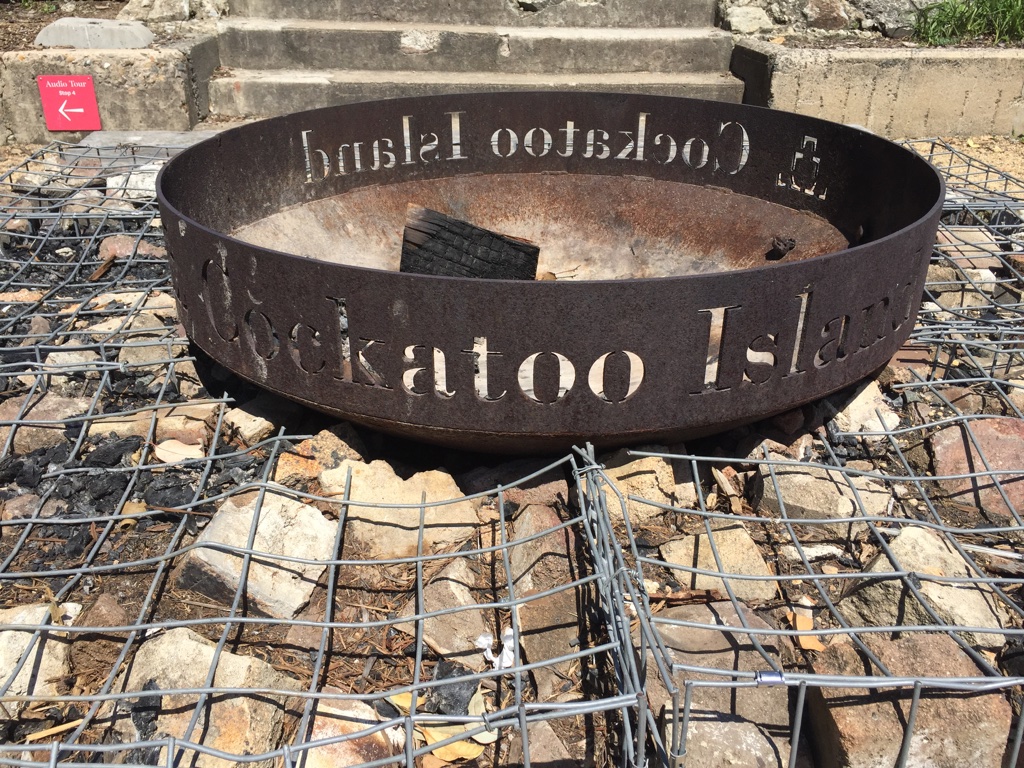
The Festival of Dangerous Ideas (FODI) took place this weekend (3-4 November 2018) for the first time since 2016. The Ethics Centre event, previously associated with the Sydney Opera House, it is now connected with UNSW Centre for Ideas and has moved to a new home on Cockatoo Island.

I have been attending FODI for years and what I love about it is being introduced to new thinkers and new ideas. In the early years I found the FODI program quite provocative with speakers that would get ones blood boiling. More recently however I felt the program has lost a bit of its edge. Indeed this year I found it hard to find enough sessions I wanted to attend. But I decided to spend a day at the Festival and here's what I attended:

In Praise of Economic Inequality
My first session was a panel discussion about economic inequality. Economists Richard Holden and Judith Sloan joined Constitutional lawyer Rosalind Dixon and journalist Nick Cater to discuss wealth and income. This was an interesting topic and the panel covered a number of important issues.

Looking at entrenched disadvantage, the panel talked about what would best assist a child born into poverty. There was heated debate about school funding and class sizes with Holden advocating strongly for smaller class sizes and Cater stating they make no difference (he's wrong by the way). Sloan pointed out that complex problems need interventions on a range for fronts - housing, health, education - as one approach alone is not sufficient. Dixon reminded us that we need to not take Medicare and education for granted as there are a lot of things Australia does right.

When talking about wage disparity, Sloan suggests that neurosurgeons should be paid substantially more because they have longer to study to enter their profession. Fair enough. But how do you justify high salaries elsewhere - in sports, celebrities, CEOs - where that scale may not apply? Why should a Kardashian earn more than a teacher?

There was a brief discussion on universal basic income which would have been a great debate in its own right. This was linked in to a point about Artificial Intelligence and the loss of certain jobs, which may mean a need for a jobs guarantee. Lots to unpack here and more time would have been needed to do this topic justice.

What If We Are Wrong?
Next up I attended the session of American journalist Chuck Klosterman. I had not heard of him before learning he was coming to FODI and I was interested in his idea of what tomorrow will think of today. Klosterman wandered back and forth across the stage with great animation. As I sat in the airless oven of the conference hall,  I kept thinking of how roasting he must be in his suit and tie. 

He spoke about his book What if we're wrong? and the way in which we often see things in the past as laughable now. He said 'the history of ideas is the history of people being wrong.'
Klosterman also spoke about the way we learn. He said that when his parents were kids everyone had to learn by rote, memorising large swathes of poetry and other texts. Now we have machines that do this for us so we have different ways of accessing memory. Rote memorisation is a huge waste of time. No one will ever do long division again, when they can use their phone.


His presentation was interesting albeit waffly, but the Q&A with Marc Fennell was insightful. Klosterman said in the future people will think many of our current ideas are wrong, citing our treatment of cancer with poisons, our eating meat and our playing of gridiron football as barbaric given the high volume of concussions that occur. This gave me a lot of food for thought. I would add our treatment of asylum seekers to this list.

Privacy is Over
The next session I attended was with American Google data scientist and author Seth Stephens-Davidowitz and Turkish New York Times columnist and academic Zeynep Tufekci. They were talking about big data and privacy and had very different views.

Stephens-Davidowitz is the author of Everybody Lies. He spoke about how Google can know that someone has pancreatic cancer three months before it is diagnosed based on your search patterns. He says that big data is worth sacrificing privacy because of what can be learned by government, business and more. He said that companies like Google can adjust algorithms to assist in public health - for example, searches related to depression, self-hard and suicide can yield results to hotlines and support networks.

Tufekci is the author of Twitter and Tear Gas. She said that there is power in big data but that regulation is needed. She says users are not fully informed about their data uses. Informed consent won't work because we don't even know the possible uses of our data.

The two got into furious debate about de-identified data as Tufekci argued there is no such thing when someone can get two or three pieces of data and rebuild a profile. She also said that data cannot be secured and that all data should be viewed as 'not yet revealed as hacked'.

They talked about the use of data in political campaigns to target and even disenfranchise people. This is not new, but as Tufekci pointed out now politicians and business can access your data cheaply, easily and at scale.

There was an interesting question from the audience about recent laws diminishing privacy in the name of combatting terrorism and whether big data can stop terrorist attacks. Tufekci says data is better used for public health as there is not enough good data to predict terrorism.

Kill All Normies
My last session at Cockatoo Island was to hear Angela Nagle talk about the online culture wars and her book Kill All Normies.  She spoke about how users of 4Chan and Tumblr - microblogging and imageboard sites - have been used by the alt-right and ultra PC leftists. Originally on the margins, these have now become part of the mainstream discourse and have real political consequences.

Nagle tried to be both critical and empathatic of the subjects in her book but was attacked from both sides. She said the online culture wars are making us all dumber and crueler, limiting debate to shouting from opposing fronts. She things we are on our way to a point where meaningful debate is no longer possible, but that we need to produce institutions that will nurture criticism.

I was a bit disappointed with this session. Nagle is smart and has a lot of interesting things to say. But the delivery was flat and unengaging. I think Nagle would have been great on a panel with Tufekci and Klosterman.

Without buying a single book (shocking, I know), I left the island for the mainland and the session I was most looking forward to.

The Hitch
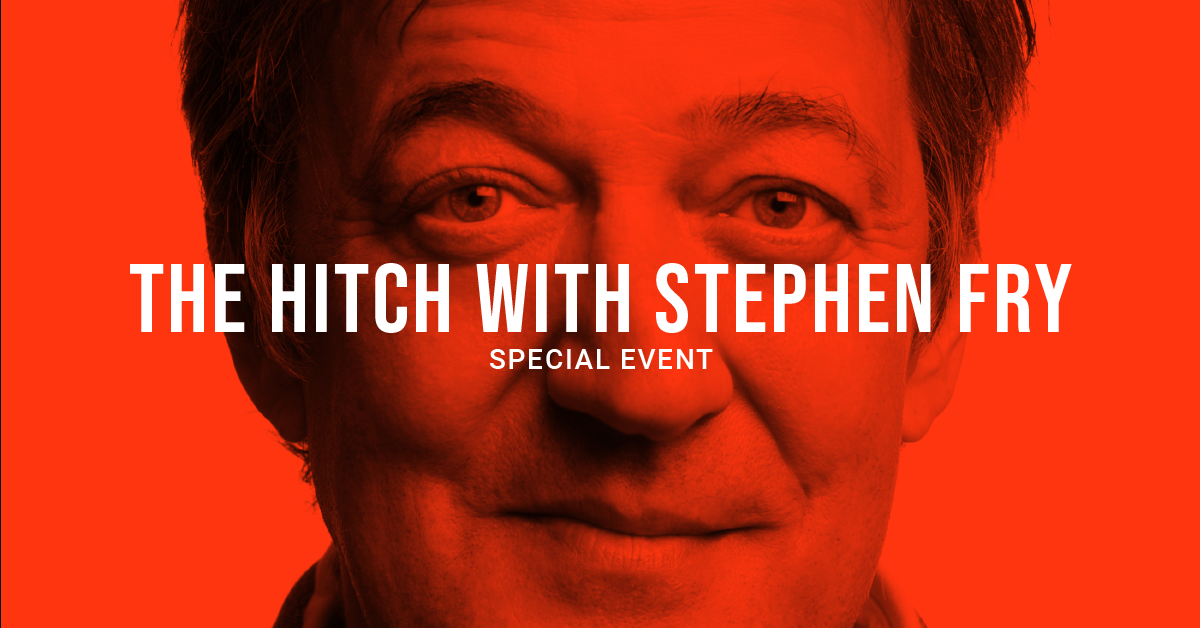
The gala session at FODI was a sold out Sydney Town Hall event called 'The Hitch'. Dr Simon Longstaff from The Ethics Centre explained that the late Christopher Hitchens delivered the inaugural keynote at FODI in 2009, a rollicking address which exemplified everything FODI stands for.

In reinventing FODI with its new partner UNSW, The Ethics Centre wanted to honour Hitchens with an annual address. They invited Hitch's good friend Stephen Fry to deliver the  address on the lost art of fabulous disagreement.

His forty minute lecture was warm, funny, erudite and on-point. He spoke lovingly of his friend and how he would go into battle for his convictions. In contrast, Fry described himself as a hailstone - firmer than a snowflake but still likely to melt in the heat. Where Hitchens would thrust into a fight, Fry would hide in the undergrowth and wait for the noise to pass.


Fry hypothesised on what Hitchens would make of today's world and how much we need his help to make sense of Trump, Brexit, and other world events. We are living in Lord of the Flies, he said, as no adults are in charge anymore and there is no Gandalf or Dumbledore to save us.

Fry posed some dangerous ideas of his own. First he said we should all refuse to include Trump in the newsfeed. Neutralise him by treating him as a Dr Seuss character the Trumpelow: 'He swells every time his name is mentioned, so shut up and watch him shrink'.

He then suggested we get rid of human testosterone to end aggression. He referred to two camps on the sides of an ever-widening grand canyon, shouting, pitchforks raised, while the rest of us cower in the valley below. He called for a plague on both their houses. He said there is no way to unite against a common enemy, like an alien invasion, because we have proven ourselves incapable of uniting against existing threats like climate change. So best we just disengage and refuse to be drawn into these opposing camps.

His final dangerous idea was simply to be kind. He said 'when people are acting like assholes, it doesn't automatically cancel it out to start acting like an asshole yourself. Be better.'

Fry is a human thesaurus and at times he could go a bit heavy on the adjectives. But I really enjoyed his self-depreciating, thoughtful and wise presentation. The best part of FODI by far.

Final thoughts
One last thing about the new FODI. Cockatoo Island is an incredible space. I love that we have such an interesting, historical spot in the heart of Sydney. However, I don't think that it is best suited to this sort of event. The cavernous industrial rooms have no air movement and no air con, so on a 32c day everyone was in agony with the heat. This, coupled with uncomfortable seating, made me long for the Opera House again. Plus, being on the island limited my attendance, as I would have been persuaded to spread my sessions over the two days. The ferry ride back to Barangaroo was problematic as we spent 15 minutes circling Darling Harbour as we were too early for the berth. A frustrating end to the day.

My posts about past FODI events are available on this blog:

Sunday, 28 October 2018

More Morsels of Verse

Last year I read Rupi Kaur's bestselling collection of poetry, Milk and Honey (2015). While I enjoyed some of the poems, I wasn't overly impressed by the collection, especially by many of the short verses which I described as fortune cookies. So, I wasn't really interested her next collection, The Sun and Her Flowers (2017).

Having just finished another 600 page whopper, and doing a lot of deep reading for work, I found myself needing something light and breezy to consume so I turned to Kaur's latest collection.

Divided into five parts - wilting; falling; rooting; rising; and blooming - the poems and Kaur's drawings align with these themes.

'Wilting' focuses on romantic break ups, with many sad poems about love gone wrong and trying to rebuild life again alone. I found these poems to be quite similar to Milk and Honey and was thinking about giving up on the collection as if I had read it all before.

But then I got to the 'rooting' section - with many poems about immigration and the voyages of refugees. I found this to be quite moving - poems about journeying across the sea, admiring the broken English of parents, the bravery and sacrifice that people make in the quest for a better life. There was quite a lot of depth here that I found missing in her other verse and this section alone saved The Sun and Her Flowers for me.

Sunday, 21 October 2018

Man Booker 2018 Winner

The Man Booker Prize for fiction was announced on 16 October 2018. From a Longlist of 13 titles and a Shortlist of five, Anna Burns was the winner of the 50,000GBP for Milkman.

This win returns the prize to the Commonwealth as, after three consecutive years of being won by American men, a woman from Northern Ireland has claimed victory. It has also been five years since a woman last won the prize, when Eleanor Catton won for The Luminaries in 2013.

Set in Belfast in the 1970s, during the Troubles, Milkman is a stream of consciousness story narrated by an 18 year old woman, middle sister, who is rumoured to be having an affair with a person known only as the Milkman. The novel explores truth and gossip, with a unique writing style.

Kwame Anthony Appiah, Chair of judges, said:
None of us has ever read anything like this before. Anna Burns' utterly distinctive voice challenges conventional thinking and form in surprising and immersive prose. It is the story of brutality, sexual encroachment and resistance threaded with mordant humour. Set in a society divided against itself, Milkman explores the insidious forms oppression can take in everyday life.
The book has seen sales increase dramatically since the award was announced. Publisher Faber & Faber must be delighted.

Saturday, 20 October 2018

Blackmail and Bridles

Cormoran Strike is back! Robert Galbraith (JK Rowling) has produced a hefty tome, a 600+ page monster of a mystery in Lethal White (2018), the fourth instalment of this wonderful series. The story is complex, with many twists and turns and sufficient red herrings to sustain the intrigue.

The story begins where the last book, Career of Evil (2016), left off. It is Robin's wedding to her long term boyfriend Matthew Cunliffe and tensions are high at the reception. Strike has showed up, much to Cunliffe's dismay and Robin's delight. As the newlyweds set off on their honeymoon, there is misery and regret on many fronts.

Flash forward one year and Strike's agency has bloomed as a result of his success. He has put on additional staff and taken a diverse range of clients. London is in the thrall of the 2012 Summer Olympics. One day Billy Knight appears at the agency, disheveled and anxious, claiming to have witnessed a murder when he was a child. Without anything more to go on than that, Strike seeks out Billy's brother Jimmy who tells him this recollection is untrue.

Jasper Chiswell, Minister for Culture, contacts Strike and claims that he is being blackmailed but for what he will not say. Robin goes undercover at Westminster to learn more and quickly discovers that the Minister for Sport, Della Winn, and her lecherous husband Geraint despise Chiswell. Robin also meets Chiswell's many adult children - all with names like Izzy and Fizzy - and his dissatisfied wife Kinvara.

The plot gets increasingly complex as it goes on, with storylines related to horses, far-left radicals, politics, infidelity, and more. To say more would lead to spoilers, so I will stop here. The mystery will keep readers guessing to the end, when all the different threads come together.

The life of a detective is not an easy one. At one point Kinvara tells Strike what she thinks of his work: "What a really, nasty, seedy job you do." As she said it I reflected on some of the compromising positions Strike, Robin, Barclay and other team members entered into in an attempt to meet their clients' needs: posing as other people; pretending to befriend those they are investigating; following cheaters and philanderers; digging up bones and risking their lives. The job is physically and emotionally draining, especially when surveillance is involved. It puts a strain on their relationships.

Beyond the main story, in Lethal White we learned more about Strike and Robin. Ghosts from Strike's past keep rearing their heads and Rowling shares much of his inner thoughts and feelings.  I particularly loved the way in which Robin's character was portrayed - full of anxiety, self-doubt, curiosity, gumption and empathy. Robin is complex, flawed and very human. I admire the way her relationship with Strike ebbed and flowed, showing the deep bonds they have. The depiction of Matthew Cunliffe (every-boring-entitled-white-guy-ever) was also genius - with his upward mobility and desire to keep up with the Joneses. He is the bad boyfriend/dud husband who does not even try to understand Robin and her passion for her job. Peripheral characters like investigator Barclay, police officer Wardle, and Strike's former flame Charlotte are also well depicted.


Despite its' length, I found myself savouring the book, wanting to delay the ending as long as possible. However, it would have benefited from a flow chart of the many intertwined characters. It will be some time before the next Strike book is written and released, but the good news is that BBC has announced they will be adapting Lethal White as a four part series. So that is something to look forward to.

I have previously read and enjoyed Robin and Strike's adventures in Career of Evil (2016), The Silkworm (2014) and The Cuckoo's Calling (2013). Can't wait to see what they get up to next.

Sunday, 30 September 2018

Believe Women

This week I have been mesmerised by the confirmation hearings of US Supreme Court nominee Judge Brett Kavanaugh. I watched as he lashed out against his accusers, as he talked back to Senators asking questions about his binge drinking, as he attempted to justify his actions during high school and college as the antics of 'boys being boys'. When he ranted and raved, all I could think about was his grotesque sense of entitlement and his absolute unfitness for the office he seeks to hold.

Meanwhile questions are being asked about why Professor Christine Blasey Ford and other accusers have waited so long to come forward. Dignified and resolute, Ford detailed her remembrance of the events 36 years ago and its enduring impact on her life. The constant narrative in sections of the media is about why these women didn't come forward at the time of an incident, with the subtext being that they must be lying. Any woman who has ever experienced sexual harassment or assault knows the answer. The confirmation hearings are a prime example of why women don't come forward: the misguided presumption that women lie.

While this was all unfolding I was reading Bri Lee's memoir Eggshell Skull (2018), about her experience of the Queensland legal system when she sought to bring forward a complaint of indecent assault that had happened many years prior when she was in primary school.

Lee worked as an associate for a Queensland District Court Judge, a job that saw her travel to regional towns around the State for a year, while she completed her Practical Legal Training to become admitted as a solicitor. The cases she heard were largely related to domestic violence, sexual assault and child abuse and exploitation. As she listened to complaints against fathers and step-fathers, she contemplated the strength needed to bring a complaint and how the jury could acquit these men (which they inevitably did). She grew sickened at the ways in which the complainants were re-victimised by the legal process.

At the end of her year as an associate, Lee has decided two things: that she didn't really want to be a lawyer; and, that she was determined to bring charges against her assailant.

What follows then is a two year battle to have her case brought to court. The delays, the bureaucracy and the whole process is designed to ensure complainants don't seek to have justice pursued. Once the complaint is made, the process is out of the complainant's hands and they are at the mercy of the police, the Crown prosecutors and the delay techniques of defence counsel. To endure the courts system is an epic act of resilience that requires a fierce determination and the support of a loving family.

It was heart breaking to read this memoir, but I believe it should be essential reading for every law student and everyone working in the judicial system. I could relate to Lee on so many levels: as a law student, as a woman who can claim #MeToo, and as someone who is appalled at the way in which women are treated by a patriarchal justice system.

Lee wrote a question that I cannot stop thinking about:
Why can a man be charged with negligent, reckless driving after getting himself drunk, but he can argue the same level of voluntary intoxication led him to honestly and mistakenly believe a woman consented to intercourse, and be acquitted of a rape charge accordingly? (p 226)
I thought about this as Kavanaugh spoke of his love of beer and how he would go out on the cans with his friends in high school and college. I thought about this as I read Padma Lakshmi's account of her assault at age 16, which she never told people about. I thought about this as I listened to Professor Ford testify.

My sincere hope is that as more people come forward and add their stories to this growing chorus we won't have to ask questions like this. The presumption will shift and women will simply be believed.

Thursday, 20 September 2018

The Booker Shortlist 2018

Today the Shortlist was announced for the 2018 Man Booker prize, consisting of:
  • Milkman by Anna Burns (UK)
  • Washington Black by Esi Edugyan (Canada)
  • Everything Under by Daisy Johnson
  • The Mars Room by Rachel Kushner (USA)
  • The Overstory by Richard Powers (USA)
  • The Long Take by Robin Robertson (UK)
So Nick Drnaso's graphic novel Sabrina has fallen off the list, as has Michael Ondaatje's Warlight which I though would have been a shoo-in.

The winner will be announced on 16 October 2018.

Here's what the judges had to say about the shortlist.


Monday, 17 September 2018

Unhealed Wounds

I didn't know much about Rick Morton when I picked up his memoir One Hundred Years of Dirt (2018). All I knew was that he was a social affairs reporter with The Australian and I had seen him a few times on ABC's The Drum and liked what he had to say. So I came to his memoir with few expectations but a genuine curiosity.

Morton grew up on his family's expansive cattle farm, Pandie Pandie Station, just south of Birdsville in outback Queensland. Life on the land was harsh and the Morton family suffered terribly in their isolation. Rick's father Rodney was a violent man who grew up in fear of his own brutish father; this violence was handed down through generations.

When Rick was just a boy, his brother was badly wounded in a terrible fire. The Royal Flying Doctors were called in and his brother, mother and newborn sister were whisked away to the burns unit at a Brisbane hospital. Rick stayed behind with his father and nanny, trying to make sense of events. Fast forward several years and Rick's mother is hovering on the poverty line trying to raise her three children single handed. Rick's brother falls into trouble with drugs, causing problems for the family. Rick has his own scars to bear, and the author is open about his struggles to find his way in the world, dealing with his feelings of isolation and loneliness.

In many ways this memoir reminded me of JD Vance's Hillbilly Elegy (2016) in its meditations on poverty and its call for more equality between rich and poor. Morton litters his book with many facts about drug addition, the lack of a social safety net and the absence of political will to tackle these burning issues. Sometimes these references to journal articles and other external sources are jarring and take you away from the narrative. But other times they are well integrated and show Morton's skills as a reporter. He is keenly critical too of the media's lack of willingness to cover stories related to poverty.

Ultimately this memoir is a story of love for the author's mother Deb, who sacrificed so much to give Rick and his siblings a better life. As I read I thought a lot about my own mother and the many sacrifices she made for my brother and me throughout our lives. Maternal love and sacrifice is a debt that can never be repaid, but in One Hundred Years of Dirt Morton has shown the heroism of his mother and his unending love for her.

Sunday, 16 September 2018

Listening and Learning (16/09/18)

My podcast obsessions continues as I seek out new podcasts to enjoy on my commute to/from work each day. So here (hear!) are some of the podcasts I have been listening to lately.

The Teacher's Pet
For many weeks I have been obsessed by the Australian's podcast series, The Teacher's Pet. Journalist Hedley Thomas has spent years investigating the disappearance of Lynette Dawson, a young mother of two who has not been seen since the early 1980s. Two coroner's inquests have ruled that Lyn is dead, presumed murdered by her husband Chris. But the charismatic athlete Chris Dawson has evaded charge for the past 36 years, saying she left him to join a religious cult.

The podcast is a compelling murder mystery, in which we hear from Lynette's family and friends, the police involved in investigating the disappearance, and Joanne Curtis, the teenage lover of Chris Dawson who was moved into his house within 48 hours of Lyn's disappearance.

This is a gripping tale, set on Sydney's northern beaches. With the release of each episode I would debrief with a friend about what had transpired and speculated on what would happen next.

ABC's Australian Story aired an episode about this case on 10 September 2018 and within days police announced that they would be digging up the backyard of Chris and Lyn's former home looking for evidence.

I am hoping that there will be a second season of this podcast, one which covers Chris Dawson's trial for murder.

Slow Burn
The first season of Slow Burn was all about Watergate. In season two, journalist Leon Neyfakh's turns his attention to the impeachment of President Clinton.

Unlike Watergate, I lived through the Clinton years and remember the Whitewater investigation, Vince Foster's suicide, Paula Jones sexual harassment allegations and Monica Lewinsky. But listening to this podcast has brought forward many facts that I had not known or had forgotten.

Being the same age as Ms Lewinsky, I have always felt that she has been done wrong by the media, Ken Starr and the Clintons.  I seethed with rage over Linda Tripp's betrayal of Lewinsky and her attempts to justify her actions. Lewinsky did not participate in this podcast and I sincerely hope that this renewed attention does not place pressure on her.

In the #MeToo era this is a timely podcast about abuse of power, sexual harassment and slut shaming. But it also has parallels to the current occupant of the White House and his blatant misogyny. While the events of this podcast took place over 20 years ago, there are repercussions to this day with many participants back then having roles today (e.g. Supreme Court nominee Brett Kavanaugh was a member of the Starr investigation team).

The eight episode second season is airing now and I look forward to seeing how it plays out.


Dr Death
Last year I listened to an incredible podcast by Wondery called Dirty John, which followed a true story of an anaesthesiologist who was not all that he purported to be. Wondery has released its newest series called Dr Death, which probes into the life of another man with a secret.

Dr Christopher Duntsch was a Dallas based neurosurgeon who showed great promise. He held himself out to be a skilled back surgeon who many people turned to in the hopes of alleviating their back and neck pain. But when a number of surgeries resulted in serious complications questions began to be raised.

Was Dr Duntsch deliberately maiming or killing his patients? Was he incompetent? An imposter? Under the influence of drugs or alcohol? To find the answers to these questions, listen to the podcast.

Normally I hate podcasts with ads, but the advertisements in Dr Death are hilarious and I actually look forward to them. They are all linked to the theme. For example, an ad for mattresses talks about experiencing back pain and getting a good night's sleep. Another ad refers to needing comfort food after listening to the podcast. Love it.

So those are my latest podcast obsessions. Stay tuned for more Listening and Learning.

If you want to hear about my past podcast finds, you can find them here:

Saturday, 15 September 2018

On Loss and Loneliness

It has been sometime since I last read a graphic novel, but when the Man Booker longlist was announced and included Nick Drnaso's Sabrina (2018) I jumped at the chance to become reacquainted with the genre.

The story is simple, but loaded with complex contemporary themes. When Sabrina goes missing, her boyfriend Teddy is unable to cope. He goes to stay with his friend Calvin, shuts himself into a spare room and withdraws from the world. Meanwhile shock-jocks and social media are screeching conspiracy theories and Teddy is spiralling downward into anxiety and depression.

Calvin is also struggling as he is missing his ex-wife and daughter who have moved interstate. He wants to have a better relationship with them but he doesn't know how. He spends most of his life working shifts in a nondescript military base watching screens. When he returns home he tries to connect with Teddy, who remains despondent.

The world Nick Drnaso portrays is bleak and uninviting. People live in isolation, unable to meaningfully connect. It is a damning critique of the 24-hour news cycle, fake news, and click-bait. A meditation on modern loneliness, where we are surrounded by people but unable to connect.

Using a limited colour palate, and many panels without dialogue, Drnaso creates a lonely world. The style reminded me of Chris Ware and his Jimmy Corrigan: The Smartest Kid on Earth (2000).

Mundane daily routines are beautifully rendered. Tension builds as the stakes get higher, and I found myself engrossed in what Calvin and Teddy were seperately going through. Despite the melancholy subject matter, I really enjoyed this novel.

I did have some troubles with it. For example, at times I found it difficult to distinguish the characters as some looked similar to others - indeed all the military guys looked identical. While Sabrina is the title character, you don't get much of a sense of her. The abrupt ending left me wanting more.

Sabrina is a beautiful book to behold. The large hardcover is a weighty tome of over 200 pages. As you flick through the pages, you are drawn in and enjoy the physical act of turning each page. This is a book meant to be read in hardcopy, an e-reader would not do it justice.

It will be interesting to see if Sabrina stays on the Booker radar and makes the shortlist. Regardless, I am glad to have had the introduction to this book, and will definitely track down Drnaso's other work.

Sunday, 2 September 2018

Into the Badlands

Australian journalist Chris Hammer's debut novel Scrublands (2018) is a gripping page-turner that had me in its' spell from beginning to end. Despite the novel's length (almost 500 pages), this is a complex thriller with plenty of twists and turns to keep readers engaged.

Riversend is a small, dying town in the drought-stricken Riverina. On a hot summer's day the town's beloved priest commits an uncharacteristic act of violence, shooting and killing five parishioners. A media swarm followed and then quickly moved on, leaving the locals to come to terms with what happened.

Journalist Martin Scarsden has spent much of his career in war zones as a foreign correspondent. He has returned home after a trauma in Gaza, and is trying to put his life and career back together. His editor sends him to Riversend to write a story on the town and its people for the first anniversary after the killings.

Scarsden checks into the aptly named Black Dog Motel and sets about exploring this ghost town, where shopfronts are boarded up or open irregularly. As Scarsden begins to speak to the locals and dig into the events of a year ago, he discovers that previous reports of the incident were not entirely accurate and there is a much bigger story here. The pace quickens as more reporters come to town and Scarsden finds himself in the spotlight and having to face his own demons.

This is a suspense novel with many layers. Hammer's writing is descriptive and evocative, accurately depicting the dust and heat of the scrublands. He writes believably about the landscape and its inhabitants, creating some uniquely memorable characters. The plot line of competing media interests caused me to think of Sonia Voumard's The Media and the Massacre, and the ethics of covering violent crimes.

Scrublands has already been optioned for television and will be produced by Ian Collie, who brought Peter Temple's Jack Irish series to the screen. So that will be something to look forward to.

I am loving the current wave of Australian crime novels and I am intrigued with so many being set in rural areas, like Emily Maguire's An Isolated Incident, Jane Harper's The Dry, and now, Scrublands.

P.S. Jane Harper's next book, The Lost Man, is due for release on 23 October 2018. Can't wait.

Thursday, 30 August 2018

Miles Franklin Award Winner 2018

The winner of the 2018 Miles Franklin Award was announced on 26 August 2018. This year the award and its $60,000 prize went to Michelle de Krester for her novel The Life to Come.

Set in Sydney, Paris and Sri Lanka, the satirical story explores themes of intimacy, friendship and loneliness. Richard Neville, Chair of the Judging Panel, said "With her characteristic wit and style, Michelle de Krester dissects the way Australians see ourselves and reflects on the ways other parts of the world see us."

De Krester won the Miles Franklin Award in 2013 for Questions of Travel. 


Saturday, 18 August 2018

Close Encounters

Last year, two beautiful hardcover collections of Garner's work were published: True Stories, her collected non-fiction, and Stories, her collected short stories. I purchased both at this year's Sydney Writers' Festival and have just finished the latter.

Readers of this blog will know how much I love Helen Garner's writing. In fact, I have never met a Garner I didn't love... until now. I am sorry to say that Garner's collection of 14 short stories did not win my heart. This left me perplexed, feeling as though I had failed as a reader, and trying to understand why I could not get into these stories.

I love short stories and have written previously about gifted storytellers like Alice Munro, Tegan Bennett Daylight, Angela Carter, Raymond Carver and others. I marvel at how authors can convey such depth in such brevity.

So why didn't I love Garner's collection? She is a gifted writer, and ofttimes I would marvel at her turn of phrase. She is also a laser-sharp observer of people, and can un-peel their many layers before your eyes. But the stories themselves all felt so morose and lonely. While I didn't enjoy every story in the collection, there were several stories that I thought were pretty good, like 'My Hard Heart' in which a woman is blindsided by her husband's infidelity.

In the end, perhaps my expectations were too high and I have over-Garnered myself. I have recently read Garner's brilliant novella The Spare Room and I am midway through her True Stories collection. So for now I am going to put Helen on hold and read other writers, so I can come back and enjoy her brilliance anew.

Saturday, 4 August 2018

The Booker Longlist 2018

This week the Longlist was announced for the 2018 Man Booker prize. The thirteen titles nominated are diverse, with authors from America, Canada, Ireland and the UK.

I have not yet read any of these books, in fact I haven't heard of most of them. But what I love about the Longlist is that it introduces me to many books and authors I do not know. Four of the authors are debut novelists (Robertson, Mackintosh, Gunaratne and Johnson) and four are past nominees (Ondaatje, Edugyan, Ryan and Powers).

Let's take a look at the books that make up the longlist:

Snap by Belinda Bauer (UK)
English author Belinda Bauer is an award winning crime writer. This novel is about a woman who goes missing, leaving her three children behind. Set in Somerset, this captivating thriller features twists and turns. Val McDermid called it 'the best crime novel I've read in a long time'. Sounds like an intriguing read...


Milkman by Anna Burns (UK)
Set in Belfast in the 1970s, during the Troubles, Milkman is a stream of consciousness story narrated by a young woman who is rumoured to be having an affair with a person known only as the Milkman. The novel explores truth and gossip, with a unique writing style. Burns was shortlisted for the Orange prize in 2002 for No Bones. 


Sabrina by Nick Drnaso (USA)
This is the first time a graphic novel has been longlisted for the Booker, an achievement in itself. The story centres on the disappearance of Sabrina and the aftermath for her friends and family. I am intrigued to read this and have just bought a copy of this beautiful book. I greatly enjoyed Chris Ware's Jimmy Corrigan, and the pictures I have seen of Sabrina remind me Ware's work.


Washington Black by Esi Edugyan (Canada)
This novel focusses on an eleven year old slave, Washington Black, who leaves a Barbados plantation when his owner dies, and he is taken in by an eccentric new master. They travel the globe - the Arctic, London, Morocco - opening Washington's eyes to new experiences and knowledge.


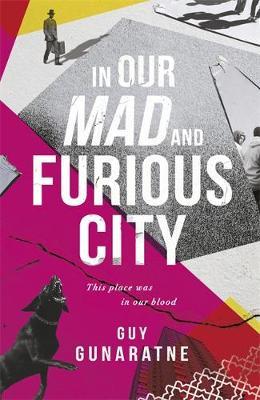
In Our Mad and Furious City by Guy Gunaratne (UK)
Set in a London council estate, three young men are enjoying their summer when the killing of a British soldier sparks riots across the city. The novel brings the grit and grime of the city to life over a heated 48 hours.


Everything Under by Daisy Johnson (UK)
At age 27, Johnson is one of the youngest Booker nominees for her debut novel. This is the story of Gretel, who as a child lived on a canal boat with her mother. Together the mother-daughter pair invented a language for their exclusive use. Now an adult, Gretel hasn't seen her mother in many years and has all but forgotten their secret language.

The Mars Room by Rachel Kushner (USA)
Romy Hall is incarcerated in a women's correctional facility, serving consecutive life sentences. Her seven year old son is now being cared for by his grandmother. While life goes on outside, he women inside experience a different routine.

The Water Cure by Sophie Mackintosh (UK)
Three sisters grow up on an isolated island with their parents. Protected from the outside world, they never visit the mainland. When three men wash up on shore, everything the girls have ever learned comes into question. A dystopian novel of survival in a hostile world from this debut novelist.


Warlight by Michael Ondaatje (Canada)
I love Michael Ondaatje and always look forward to reading his novels. This is the story of siblings in London, who stay behind when their parents move to Singapore in 1945. Earlier this year Ondaatje won the "Golden Booker" - The English Patient (1992) was named the favourite Booker winner in the past 50 years, so it will be interesting to see whether he progresses to the shortlist.


The Overstory by Richard Powers (USA)
This novel is environmental or eco-fiction - centred on diverse characters that have had various experiences with trees and now fight to save a virgin forest. The Booker judges called this 'an ecological epic, a novel of ideas'.

The Long Take by Robin Robertson (UK)
British poet Robin Robertson has written a noir tale of a veteran with post-traumatic stress disorder which leaves him unsettled, trying to piece his life together. I am intrigued by this genre-bending, film-like poem and look forward to tracking down a copy.


Normal People by Sally Rooney (Ireland)
Connell and Marianne grow up together in a small town in Ireland, but have very different lives. When they both attend Trinity College, Dublin, they realise they have a connection. This is an intimate character study and a love story, with a backdrop critique of class and privilege.


From a Low and Quiet Sea by Donal Ryan (Ireland)
Ryan's book tells three seperate stories of men who have experienced loss. Farouk is a Syrian refugee seeking asylum in Western Europe with his wife and child. Irishman Lampy has just been left by his girlfriend and is tending to his broken heart. John is filled with sadness over his failed relationship and remorse for his actions.


The shortlist will be announced on 20 September 2018, with the winner named on 16 October 2018.

I was a bit surprised that Ali Smith wasn't nominated for Winter, as she has been for her previous season Autumn. I also thought the Kate Atkinson or Rachel Cusk may be on the longlist. Having read none of the titles, I find it hard to predict the winner, but I reckon the following will be shortlisted: Drnaso, Johnson, Ondaatje, Rooney, Ryan. I also reckon that after the last two winners have been American, this year the prize will go to a member of the Commonwealth. A complete guess, but that is where I will start my Booker reading.