Thursday, 29 August 2024

Coming Home

Over a decade ago, I read and adored Colm Toibin's Brooklyn (2009). The story of a young woman, Eilis Lacey, who leaves her home in County Wexford, Ireland to travel to America is a delightful novel. In Brooklyn she meets an Italian-American plumber, Tony, and Eilis has to decide if she will stay with him or return home to her family. She makes a short trip home and is wooed by Jim, so now has to decide whether to settle down in Ireland, or go back to Tony in America. In 2015 a wonderful film was made of Brooklyn, starring Saoirse Ronan in the lead role.

When I heard that Toibin was releasing a sequel, I preordered Long Island (2024) and read it over a weekend. Set in 1976, Eilis has been married to Tony for twenty years and has two teenage children. She is deeply entrenched in the tight-knit Fiorello family, who live together in neighbouring houses.  In the opening chapter Eilis' contentment is disrupted when a man comes to the door announcing his wife is pregnant with Tony's child and that he intends to leave the child with her when it is born. Eilis is stunned by the news of her husband's infidelity and is determined not to raise this child, while Tony's family see the unborn child as one of theirs, pressuring Eilis to change her mind. With the family closing ranks, Eilis needs time and space to consider her options, so she journeys home to Enniscorthy for her mother's eightieth birthday.

In Ireland the novel switches perspective to focus on Eilis and two other key characters. Eilis' childhood best friend Nancy stayed behind in their hometown, married and had children. Now widowed, Nancy runs a chip shop and has grown close with Jim, Eilis' old flame. When Eilis returns home she disrupts the rhythm of this sleepy town, and causes Jim and Nancy to behave in ways they would not have without her return. It is clear that Jim has never gotten over his love for Eilis, presenting Eilis with the potential of the life she could have chosen all those years ago.  Eilis also has to deal with her mother, who has been distant and seems to resent her daughter's choices.

What I loved about this sequel is how it captured these characters in their forties, older and wiser, with more complexities to consider when making decisions. Eilis is no longer the passive girl she once was - she now has a steely determination. Eilis is also a stranger in her home town - seen as having been Americanised - while she is also not wholly part of her new country. Having emigrated myself, I understand that feeling of being in between two hometowns, not wholly belonging. I also appreciated how Toibin kicked off this novel with the conundrum, front loading the crisis, unlike the slow burn of the previous book and he leaves plenty of room for things unsaid. 

Do you need to read Brooklyn to enjoy Long Island? No. I loaned both to a friend and she read the novels in reverse order and loved them. So you can read Long Island as a standalone book, but I think you will get more out of it if you read Brooklyn first. My review of Brooklyn can also be found on this blog.

It was great to be back in Toibin's Ireland, and Long Island reminded me of what a talented writer he is. I have other books of his on my shelf, which I will move higher up on my to-be-read pile.

Tuesday, 20 August 2024

The Human Stain

Can you love art, but dislike the artist? In the past few years so many artists have fallen from grace, been exposed for their ill deeds, or expressed contemptible views. For fans of their work, it can be difficult to know what to do when something they love is tainted by the actions of the person who created it.

Take, for example, JK Rowling. I love Harry Potter and the Cormoran Strike series, but I am deeply troubled by her hateful views against the transgendered community. For someone who created a world in which misfits found safe haven, I cannot reconcile this with her anti-trans campaign. So, can I still enjoy her books or by reading them am I condoning the author's views? As writer Claire Dederer poses in Monsters: A Fan's Dilemma (2023), 'How do we seperate the maker from the made?'.

Dederer's roll call of problematic artists includes Roman Polanski, Bill Crosby, Woody Allen, Pablo Picasso, Sid Vicious, Norman Mailer, Miles Davis, Johnny Depp, Caravaggio, Ernest Hemingway, Michael Jackson, Phil Spector, and more. To this you can add Will Smith, Kevin Spacey and on and on. These artists have been convicted of crimes, accused of heinous acts, are misogynists or racists, or are garden variety creepers. Are some of the artists geniuses precisely because of their ill behaviour? Perhaps. 

In her book Dederer shows how she is trying to experiment with different ways of looking at art. As a cultural critic, she cannot view art in the same way as her male colleagues. In one chapter she looks at Woody Allen's acclaimed film Manhattan in which Allen's character dates a high school student. For Dederer this is problematic, made more so by Allen's later real-life actions of leaving his partner for his teenage step-daughter and allegations of abuse by his adopted daughter. Dederer's male colleagues say she should ignore this, and just appreciate the film as a work of art. But can she? Should we?

Dederer also looks at Virginia Woolf, Laura Ingalls Wilder, Willa Cather - authors who made anti-semitic or racist comments in their work - and Doris Lessing who abandoned her children to have a career. I found the chapter on female monsters fascinating, as it always boils down to women failing as mothers when putting their art above their family - which many male artists do but is not viewed as irregular.

What I liked about Dederer's book is that she is working out loud. She is grappling with the concerns of consuming art with or without a moral lens. She asks whether some artists can be given a pass, or whether the failings of artists should be seen in the context of their time. She also points out that in modern times we know more about the artists behind the work than in previous generations where their work can be enjoyed in isolation. I also liked that Dederer didn't solve the problem. She is against cancel culture. She calls for consumers of art to be wise and to challenge their own assumptions. Dederer challenges her reader to think and be open to wallowing in the messiness. Whether you agree with Dederer or not, this is a thought-provoking book. 

Saturday, 17 August 2024

Love and Loss on the Western Front

Sometimes a novel will grab its reader and not let them go. Alice Winn's In Memoriam (2023) gripped me tightly and I could not stop reading. When I was away from the novel I kept thinking about the characters and wondering how they were faring. And now that I am done, I am saddened that I will never get to read it again for the first time.

Two teenage boys attend an elite English boarding school, Preshute. It is 1914 and their school newsletter, The Preshutian, publishes lists of their colleagues and alumni who have been killed or injured in war. On the streets young women hand out white feathers to men of fighting age to shame them in to enlisting. Prefect Sidney Ellwood is obsessed with poetry, Tennyson in particular. His best friend Henry Gaunt is a scholar of Ancient Greek. The two are in love with one another, but cannot admit their feelings even to themselves. Despite his youth, Gaunt enlists in the Royal Kennet Fusiliers and is off to France. It does not take long for Ellwood to join him. Here at the front they are able to act on their feelings, even if they cannot express themselves in words, knowing that what happens here cannot continue when they return home. The sense that any day can be their last makes their love more urgent. 

At Ypres, Loos and Somme, the battle rages. The boys are separated and become shadows of themselves through the trauma they endured. All the soldiers and officers experience such loss, injured physically and mentally, forever scarred. 

At its heart, this is a queer love story. The novel presents a realistic portrait of forbidden romance at a time when homosexuality was illegal. There is such tenderness and beauty in the way this relationship is portrayed. Beyond this is a heartbreaking tale of war, when so many young lives were lost. Winn does not shy away from the brutalities of battle - the barbed wire, the gas, the trench warfare. She also showcases the way social class was observed at the front, where merit did not determine rank. Despite the darkness, there is much humour and lightness. The interactions between all the men, and the harebrained schemes of POWs attempting escape, provide a counter balance to the war. 

What makes the novel so good is Alice Winn's writing. She has a beautiful, thoughtful way of crafting sentences and pacing the story. Her ability to create realistic characters who are transformed by war shows a maturity that makes one forget that this is her debut novel.

In Memoriam is so good. It is like a perfectly written combination of Evelyn Waugh's Brideshead Revisited, Timothy Findley's The Wars, and Sebastian Faulks' Birdsong.  This is definitely a contender for my favourite book of the year. 

Prime Minister's Literary Award 2024 Shortlist

The Prime Minister's Literary Awards Shortlist for 2024 has been announced. These awards have a significant prize pool ($600K) and serve to recognise 'established and emerging Australia writers, illustrators, poets and historians'. 

Here are the 2024 shortlisted titles in the categories I have most interest in.

Fiction

I have read and adored the novels by Grenville and Wood. I started the Lucashenko when it was longlisted for the Stella Prize, but got waylaid and will need to return to it. Dao was longlisted for the Miles Franklin Award.  I had not heard of McNamara but her nominated collection of short stories sounds quite interesting. 


Non-Fiction

  • Daniel Browning - Close to the Subject: Selected Works
  • Sarah Firth - Eventually Everything Connects
  • Maggie McKellar - Graft: Motherhood, Failure and a Year on the Land
  • Alex Miller - A Kind of Confession
  • Harry Saddler - A Clear Flowing Yarra
I have read none of these shortlisted titles. Maggie McKeller was longlisted for the Stella Prize so I have heard of her book. I am familiar with Alex Miller's fiction so I am intrigued by his look at his writing life. Bundjalung and Kullilli journalist Browning's essays sound interesting as well. Nature writer Saddler's exploration of the Yarra River is not my cup of tea. I have just purchased Sara Firth's illustrated essays. I heard Firth speak at the 2022 Sydney Writers Festival, when she was pulling this collection together and it is one of the first books published by Nakkiah Lui's publishing house Joan. 

Australian History

  • Ryan Cropp - Donald Horne: A Life in the Lucky Country
  • Rose Ellis - Bee Miles
  • Kate Fullagar - Benelong and Phillip: A History Unravelled
  • David Marr - Killing for Country: A Family Story
  • Alecia Simmonds - Courting: An Intimate History of Love and the Law
I love David Marr and I am interested in his book about his own family's history as part of Australia's frontier wars. My mother has just finished it and thought it was exceptional. I am interested in Alecia Simmonds book about how jilted lovers could seek legal redress and have just ordered a copy. The other book that is of interest is Rose Ellis' look at Bee Miles, a bohemian character who did not conform to societal expectations. 

The PM Literary awards also cover Children's Literature, Young Adult Literature and Poetry. For information on these categories and on all the nominated titles, see the Creative Australia website. The winners will be announced on 12 September 2024.

Sunday, 4 August 2024

Booker Prize Longlist 2024

This week the Longlist was announced for the 2024 Booker Prize. After being disappointed by the Booker  in the past few years, the 2024 Longlist is really exciting.  I have already read and loved two of the titles and there are many more on my wish list. A few days ago I released my predictions of who might make the list and I managed to correctly guess (Huzzah!) four of the titles - marked with an asterix.

So let's take a quick look at the nominees:

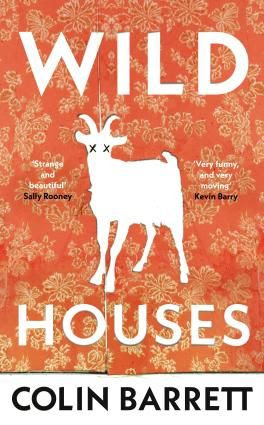
Colin Barrett - Wild Houses   
(Ireland)
This debut novel by Irish author Colin Barrett is set in Country Mayo, in a town called Ballina. Gabe and Stretch are small-time crooks who abduct Doll English in an effort to retrieve a drug debt. Doll's girlfriend Nicky just wants to find Doll and escape this town. The judges write: 'Wild Houses is a propulsive, darkly comic and superlatively written account of frustration and misadventure in a small Irish town.' While this is Barrett's first novel, he is an acclaimed short story writer, best known for his collection Homesickness (2022).

Rita Bullwinkel - Headshot 
(USA)
Eight teenage girls compete in a boxing championship in Nevada. In a rundown warehouse they face off against one another, each with their own reasons for getting in the ring. The judges describe Headshot as 'A gripping and gutsy depiction of a young women’s boxing tournament in Nevada. In a compelling series of interconnected snapshots, Bullwinkel weaves a tapestry around several diverse, steely characters, each with their own unique back stories, motivations and perspectives.' Bullwinkel is the author of the short story collection Belly Up (2022). Headshot is her first novel.


Percival Everett - James *  (USA)
If James was not on the Longlist, I would have given up on the Booker forever. I loved this novel and it is my favourite to win every available prize. James is a satirical retelling of The Adventures of Huckleberry Finn from the perspective of Jim, the enslaved man who travels along the Mississippi River with the young rascal Huck. The judges describe this as 'a captivating response to Mark Twain's classic that is a bold exploration of a dark chapter in history and a testament to the resilience of the human spirit'. Everett was previously shortlisted for the Booker in 2022 for his brilliant novel The Trees.

Samantha Harvey - Orbital  * 
(UK)
Six astronauts float high above the Earth at a space station where they conduct experiments on an extended mission. As they orbit the Earth, Harvey shares information about each astronaut showcasing their different pasts and their common present. The judges write 'Orbital offers us a love letter to our planet as well as a deeply moving acknowledgement of the individual and collective value of every human life.' Harvey was previously longlisted for the Booker in 2009 for The Wilderness.


Rachel Kushner - Creation Lake   
(USA)
Undercover agent Sadie Smith is sent to infiltrate a commune of eco-activists in France. She meets the communes charismatic leader Bruno Lacombe. The judges write 'what’s so electrifying about this novel is the way it knits contemporary politics and power with a deep counter-history of human civilisation. We found the prose thrilling, the ideas exciting, the book as a whole a profound and irresistible page-turner.’ Kushner's novel The Mars Room was shortlisted or the Booker in 2018.

Hisham Matar - My Friends *  
(UK/Libya)
Two Libyan teens meet at university in Edinburgh. They travel to London to participate in an anti-Qaddafi demonstration outside the Libyan embassy where both are wounded. The novel follows the relationship of the friends into adulthood, forever changed by what happened in London and their homeland. The judges write 'My Friends is both a complex and unsentimental meditation on what friendship means and a searingly moving exploration of how exile impacts those who are forced to live in this state of loss. It is a book that we loved for its spareness of language and its deeply affecting storytelling.’ Matar was previously shortlisted for the Booker in 2006 for In the Country of Men. I have heard such great things about this novel, I really want to read it.

Claire Messud - This Strange Eventful History  * 
(UK)
In June 1940 Paris falls to the Germans. In Salonica, naval attache Gaston Cassar has sent his wife and children to Algeria to be safe. Instead of being welcomed home, the family find themselves unwanted by relatives. Over the next seventy years, Messud follows generations of Cassar's family as they scatter across the globe. The judges write 'epic in its scale, while intimately rooted in each character’s internal landscape, the novel reminds us how literature can be expansive and timeless.'  Messud was previously longlisted for the Booker in 2006 for The Emperor's Children.

Anne Michaels - Held   
(Canada)
Spanning four generations, Held travels back and forth from a French battlefield in 1917 to 1930 in Yorkshire, and on through the ages. The judges write that Michaels is 'writing about war, trauma, science, faith and above all love and human connection; her canvas is a century of busy history, but she connects the fragments of her story through theme and image rather than character and chronology, intense moments surrounded by great gaps of space and time.' Michael is a Canadian poet and novelist who is best known for her 2020 novel Fugitive Pieces. 

Tommy Orange - Wandering Stars   
(USA)
In this follow up to his acclaimed debut There There, Tommy Orange follows the descendants of the1864 Sand Creek massacre. Spanning centuries of Native American experience, Orange shows the intergenerational trauma of colonisation, addiction and loss. The judges write 'through well-crafted prose and deftly drawn perspectives, Tommy Orange paints a vivid portrait of the Native American experience – both the pain of displacement and the resilience of those who continue ancestral traditions.' 
Sarah Perry - Enlightenment   
(UK)
In a small Baptist community in Aldleigh, Essex, Thomas Hart is a fifty-something bachelor who writes a column for the local paper and yearns to see the world. Teenage Grace Macaulay is also restless, but tethered to the church. The two form an unlikely friendship. The judges write 'the novel takes its main characters – a middle-aged novelist and reporter for a local paper and the 17-year-old daughter of the local pastor – and weaves a novel of great ambition. This is a book of deep pleasures, full of passion for the life of ideas, richly and satisfyingly written.' Perry is best known for her novels Melmoth, The Essex Serpent and After Me Comes the Flood.

Richard Powers - Playground   
(USA)
On the French Polynesian island of Makatea, a group plan to send floating, autonomous cities into the open sea. The ocean is the last place we have yet to colonise. The judges write 'this is a characterful, capacious and engaging novel, distilling subjects as diverse as oceanography, climate change, the legacies of colonialism and the arc of a lifelong friendship into an exhilaratingly entangled narrative in which Powers’ unparalleled gifts for revealing the magic and mystery of the natural world are on full display.' Powers is no stranger to the Booker Prize. He was longlisted in 2014 for Orfeo, and shortlisted twice - in 2018 for The Overstory and 2021 for Bewilderment.
 
Yale van der Wouden - The Safekeep 
(Netherlands)
Fifteen years after the end of World War II, the Netherlands is quiet and has been reconstructed. In a rural Dutch province, Isabel lives a peaceful life in her late mother's country home. When her brother Louis and his girlfriend Eva show up for an extended stay, Isabel's life is disrupted.  The judges said that they 'loved this debut novel for its remarkable inhabitation of obsession. It navigates an emotional landscape of loss and return in an unforgettable way.' Dutch author van der Wouden is a lecturer in literature and creative writing. 
Charlotte Wood - Stone Yard Devotional   
(Australia)
I squealed with joy to learn Wood was longlisted for Stone Yard Devotional - a captivating novel by one of my favourite writers. The judges said 'a woman settles into a monastery in rural Australia and discovers that no shelter is impermeable. This novel thrilled and chilled the judges.' I loved this novel about a woman searching for solitude and is unnerved by three disruptive incursions. It has been many years since an Australian author made the Longlist. I had hoped Wood would have been recognised for her amazing novel The Natural Way of Things (2015), but I am I so pleased she has been longlisted and more people will be introduced to this gifted writer.


The Booker Prize Longlist is often a mixed bag of novels, but what I love about the Longlist is that it introduces me to many authors and books I do not know. Last year's Longlist didn't thrill me, but I am delighted by the 2024 list. Debut authors and Booker favourites mingle. This is also the first year in many where I have read some of the titles before the Longlist is announced. 

Of all the titles, the ones I am interested in are those by Kushner, Matar, Messud, van der Wouden, and Harvey. If I could vote for a winner though, I would choose Everett's James!

The Shortlist will be announced on shortlist on 16 September 2024 and the winner on 12 November 2024. Better get reading!

Saturday, 3 August 2024

The Australian List

A few weeks ago I wrote about The New York Times' list of the 100 Best Books of the 21st Century. While the list contained some incredible titles, what was missing was any books by Australian authors. Fortunately, Australian bookstore Readings responded with a list of the 30 Best Australian Books of the 21st Century.  Here's what they came up with*:


I love this list! Many of my favourite authors and most beloved titles are on this list, along with many books on my teetering 'to be read' pile. The list is a timely reminder that I haven't read some of the most highly regarded Australian books of the past 25 years and I had best turn my attention to catching up!

* Bold = Read, Link is to my review

Friday, 2 August 2024

Miles Franklin Award Winner 2024

The winner of the 2024 Miles Franklin Literary Award, Australia's most prestigious literary award, was announced on 1 August 2024. This year the award and its $60,000 prize went to Alexis Wright for her novel, Praiseworthy.

Praiseworthy is the name of a fictional town in northern Australia, a remote Aboriginal community. Praiseworthy is covered in a red haze which is stifling the area. A local man, Cause Man Steel, has a plan to help his people by creating an Aboriginal-owned carbon neutral transport company using feral donkeys. 

The judges said "Wright's literary technique is a superb mash-up of different languages, ancient and modern, and displays an exceptional mastery of craft. The novel is imbued with astonishing emotional range, deploying Wright's signature humour despite its powerful sense of the tragic. Through its sheer ambition, astringency and audacity, Praiseworthy redraws the map of Australian literature and expands the possibilities of fiction.”

Author Alexis Wright is a Waanyi author best known for her novel Caprentaria which won the Miles Franklin in 2007. 

I have not read Praiseworthy, but I am intrigued. It won the Stella Prize and the James Tait Black Memorial Prize. 

Sunday, 28 July 2024

Revisiting Never Let Me Go

When The New York Times recently published its list of the '100 best books of the 21st century' I was surprised to see that Kazuo Ishiguro's Never Let Me Go (2005) was in the top ten. I read it when it first came out and now, almost 20 years later, I had practically no memory of the tale. A week or so later, NYT readers weighed in, casting their votes on the top 100 and Never Let Me Go remained in its number 9 spot. This led me to wonder whether I had missed some magic in that novel, as both the 'literary luminaries' and punters rated it so highly. So I found the first edition on my shelf and re-read Never Let Me Go. 

In the 1970s, at the Hailsham boarding school in the English countryside, we meet Kathy, Ruth and Tommy as young students. Their teachers, known as 'Guardians', drip feed morsels of information to the children about what their future holds for them. Their ambitions are to be limited, as they have a preordained path. 

They have no real contact with the outside world. Their only possessions are bric-a-brac items they purchased at the 'Sales' for tokens they have earned. These coveted treasures (like pencil cases, cassettes and toys) are saved by students in their secret collections. Students can also use their tokens to purchase artwork made by their colleagues, although Madame takes the best pieces for the gallery. 

When they finish their schooling the three friends end up at the Cottages, residing with other young adults who have been schooled in similar facilities. Kathy has a fondness for Tommy, but he has paired off with Ruth. Kathy is a keen observer of their relationship and, when she tires of being a third wheel, she commences training to become a carer. 

To say much more would give away too much and spoil the reading for others. This has been classed as a dystopian novel (my favourite genre!) and there is an underlying sinister element that is gradually revealed. But while it does depict a bleak alternative future, it is not a strong representative of the genre.

I really liked the narrative voice of the story as told by Kathy, age 31, reflecting back on her life.  She speaks directly to the reader and her memory may be unreliable. She regularly has to give asides or go back a bit to give context to what she is saying. As such, the story meanders in a stream of consciousness reflections.  But what is lacking is an emotional connection.

While there were aspects of the novel I admire, overall I was underwhelmed by Never Let Me Go. As I re-read the novel, I realise that I forgot so much of the story as it didn't resonate and linger in my mind. I am at a loss to understand how it rated so highly in this poll. I much preferred Ishiguro's Klara and the Sun (2021).

Never Let Me Go film

Perhaps the popularity of the novel was increased by the film released in 2010 starring Carey Mulligan (Kathy), Keira Knightly (Ruth) and Andrew Garfield (Tommy), directed by Mark Romanek. I watched the film for the first time this weekend as soon as I finished the book. The three leads played their parts well, especially Mulligan, and the drama is centred more around a love triangle.  I was fascinated by what the film makers chose to cut out of the film. While the omissions moved the story along, it made the story more shallow than the original text and hollowed out the characters.  The film looks lovely with a muted palate of greys and blues, particularly the scene where they go to visit a boat washed ashore. But there is a coldness to the film which makes it hard to connect with the story. Ultimately though, the book is better than the film.


Saturday, 27 July 2024

Listening and Learning (July 2024)

This month I have been listening to some new podcasts on my commute to/from work each day. Here (hear!) are some of the podcasts I have been listening to lately.

Trial By Water

The Sydney Morning Herald/The Age have been reviewing the Robert Faraquharson case to see whether there is new evidence that would enable him to appeal.

On Father's Day in September 2005, Faraquharson was driving his three sons through rural Victoria when his car veered off the road, through a fence and into a deep dam. The man escaped, but Jai (8), Tyler (6) and Bailey (2) drowned in the murky dark waters. He claimed he had a coughing fit causing him to black out (cough syncope) and that this was a terrible accident. The jury disagreed and found him guilty of murder. He was sentenced to thirty-three years in jail. 

Twenty years later more is known about cough syncope and there is better ways to test his claims about how the car ended up in the dam. While Faraquharson's appeals have been exhausted, a change of law and new scientific evidence may allow him one more chance to have his version of events heard. 

I was keen to hear this podcast as I followed the case at the time. Helen Garner's book This House of Grief  (2014) explores the case in depth. Garner was in court each day, reviewing the evidence as the jury had done. 

I was also interested to learn if there had been a miscarriage of justice. There have been several cases in Australia where parents have been wrongly convicted of murdering their children - like Lindy Chamberlain and Kathleen Folbigg. Was Farquharson also wrongly convicted?

Over a five episode podcast, journalist Michael Bachelard seeks to review the case and ask if it is possible that Faraquharson might be innocent. I have listened to all episodes and can see that there may be some holes in the case which may raise questions in another jury, but I don't know that it would be sufficient to put the conviction in doubt. Interesting Bachelard released a bonus episode to respond to listeners' questions. I will continue to follow this case and see if and how the justice system responds to this new appeal.

Bronwyn

In 2018 I was obsessed with journalist Hedley Thomas' The Teacher's Pet podcast in which he investigated the 1982 disappearance of Lynette Simms, a young wife and mother. The podcast investigated Lyn's husband, Chris Dawson, a local school teacher who moved his teenage girlfriend into the home moments after his wife disappeared. The podcast was removed from download when Dawson was arrested, but reinstated after Dawson was convicted for Lyn's murder. Dawson is now incarcerated in Long Bay Correctional Centre on a 24 year sentence.
Bronwyn is Hedley Thomas' latest podcast series. It is an eerily similar cold case about a wife and mother disappearing without a trace. Bronwyn Whitfield lived in Lennox Head (near Byron Bay, NSW) with her husband Jon and two young girls. Jon was a possessive man, subjecting Bronwyn to coercive control.  Bronwyn was in the process of separating from her husband - had engaged lawyers and had moved out of the family home with the children. Jon had taken a job in Sydney and would be away for a while, so Brownyn and the girls moved back home, in part to argue for a share of the house during their divorce. 

In May 1993 Jon returned home, spoke with Bronwyn and then he claims she disappeared saying she was taking a break. Bronwyn has never been seen again and Jon has always denied wrongdoing, pointing to a family history of mental illness. But Bronwyn's family and the Whitfield's neighbours have their suspicions.

Bronwyn is an interesting story. It did not grip me in quite the same way as The Teacher's Pet, perhaps in part because there are so many parallels. Over ten episodes, Thomas pursues various lines of enquiry and witnesses come forward with evidence and theories that should have been investigated at the time. Indeed many of witnesses did go to police but their statements were not recorded or not followed up, pointing to a culture of misogyny and disregard for the realities of domestic and family violence. It is hard to fathom how there can be such disinterest by police in investigating violence against women.

Episode ten was to be the last, but momentum grew in episodes 7-10 and there is much more of the story to uncover. So there will be a second season later this year, and hopefully a renewed police interest which will see the case solved and justice prevail. Look forward to what Thomas uncovers next.

The trailer is here:

Sunday, 21 July 2024

Booker Prize Predictions 2024

The Booker Prize Longlist will be announced next week. It is always difficult to predict which novels will make the cut. Sometimes there will be obvious contenders, but the Booker always throws in some surprises. 

To be eligible, the novel has to have been written in English and published in UK/Ireland between 1 October 2023 and 30 September 2024. While I am not across when novels were published in UK/Ireland, I am going to take a guess at who might appear on the longlist.

My predictions are:

  1. Kaveh Akbar - Martyr!
  2. Percival Everett - James
  3. Samantha Harvey - Orbital
  4. Hisham Matar - My Friends
  5. Claire Messud - This Strange Eventful History
  6. Alan Murrin - The Coast Road
  7. Chigozie Obioma - The Road to the Country
  8. Andrew O'Hagan - Caledonian Road
  9. Elif Shafak - There are Rivers in the Sky
  10. Joelle Taylor - The Night Alphabet
  11. Colm Tóibín - Long Island
  12. Alexis Wright - Praiseworthy


At this stage I have only read Everett and Toibin, but I am keen to read several others.

The longlist will be announced on 30 July, followed by the shortlist on 16 September and the winner announcement in 12 November. 

Saturday, 20 July 2024

One Life

Australian Author Kate Grenville has a knack for crafting historical novels based on the lives of real women. In her latest novel, Restless Dolly Maunder (2023), Grenville has drawn on the life of her grandmother Dolly - who wanted more from her life than society expected of women. 

Dolly was born in 1881 on a sheep farm near Currabubula, New South Wales, about 30 kilometres from Tamworth.  She was the second youngest of seven children in a household where their father kept them in line with a brass buckled belt. Their father believed girls were only good for cooking, milking cows and child-rearing and did not need an education. When a law came in that all children had to go to school until they were fourteen, their father objected as they were needed on the farm. But his hand was forced when he was threatened with fines, and he reluctantly let them go. 
Dolly thrived at the one room schoolhouse. She was a sharp, diligent student. She took great pride in the felt stars she earned for her fine recitations of 'The Wreck of the Hesperus'. She dreamed of becoming a teacher and running her own school one day. At fourteen, she seeks to take an exam to become a pupil-teacher, her father responds that she would go over his dead body as 'no daughter of mine goes out to work'. He expected her to be back on the farm now that her schooling was done. Without his permission she could not fulfil her dream and had to find some other means of escaping the hard labour on the farm. To get out from under her father's hands, her only option was to marry. 

Dolly could see that her future was mapped out for her - she would wed some local farmer, have children and live the same small life as her mother. There was little scope for suiters in the bush, and class and religion further limited her options and caused her to give up on prospects that she could have been very happy with. At age 28 she was still at home on the farm, a spinster. Her mother pushed her towards Bert Russell, an employee of her father. It was not a love-match, but Bert was an amiable man and it allowed her to get away from the farm. They married in January 1910 and honeymooned at the Caledonian Hotel in Tamworth. Shortly after their marriage they move to Gunnedah, where Dolly learns of a humiliating secret hidden by her mother and Bert. She wants to leave, but there is no way to live alone. 

Disappointed and betrayed, Dolly shrinks her ambitions again and resigns herself to married life. As the years pass, the couple form a liveable routine and have three children. They spend their years together moving around regional NSW and Sydney suburbs running various businesses like shops, pubs and boarding houses. With her business acumen, Dolly is the engine behind their business. She does the accounts, develops the business plans to expand their offerings and thrives but each time they start to get settled, they are forced to move on.

Dolly is a tough woman who never really experienced affection. She has been repeatedly disappointed in life and had to scale back her restless ambitions. She represses her emotions, forging distance with her children and grandchildren.  While this is the story of one woman, there were undoubtedly many women like Dolly who could have gone on to great things but were thwarted by societal executions. Dolly did not want to be a man, but wanted a man's freedom to forge his own destiny. This is also the story of Australia, as it develops from a British colony in the Victorian era through to the post war era.

As in her previous novel, A Room Made of Leaves (2020) which followed the life of Elizabeth Macarthur, Grenville has brought a little known woman into the forefront. Grenville has a wonderful way of describing the Australian landscape and the people in these regional towns. I particularly enjoyed learning about Dolly as I had read Grenville's One Life (2015), a memoir of her mother Nance, Bert and Dolly's daughter. Restless Dolly Maunder was shortlisted for the 2024 Women's Prize. While it is not my favourite Grenville, I greatly enjoyed my time with Dolly and would heartily recommend this novel. 

Saturday, 13 July 2024

Homecoming

In 2021 I read Tana French's novel The Searcher (2020), a slow paced mystery that unfurls like a western movie. Retired Chicago Detective Cal Hooper relocates to the small fictional Irish town of Ardnakelty where he hopes to live a quiet life. There he meets a troubled young teenager Trey who seeks Cal's help in locating her missing brother. I really loved The Searcher with its deliberate pacing and the way in which French forces readers to slow down and immerse themselves in the story. 

The second novel in the series, The Hunter (2024) is set two years later. Cal has been teaching fifteen year old Trey carpentry and she has become his skilled apprentice. Cal has a close relationship with Lena, and the couple have become surrogate parents to Trey. While Cal is part of the community, he is still an outsider and doesn't fully understand the unspoken rules that the locals abide by.

Into this mix comes Trey's wayward father Johnny Reddy who has been absent for four years living in London. Johnny waltzes back into town with an Englishman and tries to get the locals to join a scheme to find gold in the area. Both Cal and Trey know Johnny is up to no good and each independently try to uncover his motivations and the truth behind his scheme. Cal feels the need to protect Trey, but Trey sees an opportunity to get back at those who harmed her family in the past. The only thing they both know for certain is that Johnny will not stay long once he has whatever he wants.

I loved The Hunter.  The Ardnakelty environment and the local characters are realistically portrayed. The three main characters - Cal, Lena and Trey - reveal themselves gradually and give hints of greater depths that may come forth in future stories. 

Tana French has done something remarkable with this pair of books - flipping the conventional crime novel on its head by slowing down the pace and letting the tension build slowly. I would recommend reading the series in order as French presumes the reader has knowledge of The Searcher and it would enhance the reading experience.

Friday, 12 July 2024

Books of the Century

Over the past five days, the New York Times published its list of the '100 Best Books of the 21st Century'. The list was compiled by asking hundreds of 'literary luminaries' - like Steven King, Marlon James, Roxane Gay, Bonnie Garmus and others - to name the most important books of the past 25 years.  The criteria was simply books published since 1 January 2000 in the United States in English (including in translation). I love a good list and admire many of the people involved in this compilation, so throughout the week I would check in each day as the New York Times gradually revealed the top 100. 

My List of Best Books of the 21st Century 

The New York Times list then got me thinking about what books I would put on this list. I looked back over my fourteen years of blogging (2011-now) and my catalogue of books read for the years 2000-2010 to see which books I loved. I limited myself to 25 titles for the quarter century and came up with the following (links to my reviews):

*also on the New York Times list

The NYT 100 Best Books of the 21st Century

Here's the New York Times' list, with links to my reviews where available. Visit the Times website for more information about each book and why it was chosen.

  • 100. Denis Johnson - Tree of Smoke (2007)
  • 99. Ali Smith - How to Be Both (2014)
  • 98. Ann Patchett - Bel Canto (2001)
  • 97. Jesmyn Ward - Men We Reaped (2013)
  • 96. Saidiya Hartman - Wayward Lives, Beautiful Experiments (2019)
  • 95. Hilary Mantel - Bring Up The Bodies (2012)
  • 94. Zadie Smith - On Beauty (2005)
  • 93. Emily St John Mandel - Station Eleven (2014) 
  • 92. Elena Ferrante - The Days of Abandonment (2005)
  • 91. Philip Roth - The Human Stain (2000)
  • 90. Viet Thanh Nguyen - The Sympathiser (2015)
  • 89. Hisham Matar - The Return (2016)
  • 88. Lydia Davis - The Collected Stories of Lydia Davis (2009)
  • 87. Torrey Peters - Detransition, Baby (2021)
  • 86. David W Blight - Frederick Douglass (2018)
  • 85. George Saunders - Pastoralia (2000)
  • 84. Siddharta Mukherjee - The Emperor of All Maladies (2010)
  • 83. Benjamin Labatut - When We Cease to Understand the World (2021)
  • 82. Fernanda Melchor - Hurricane Season (2020)
  • 81. John Jeremiah Sullivan - Pulphead (2011)
  • 80. Elena Ferrante - The Story of the Lost Child (2015)
  • 79. Lucia Berlin - A Manual for Cleaning Women (2015)
  • 78. Jon Fosse - Septology (2022)
  • 77. Tayari Jones - An American Marriage (2018)
  • 76. Gabrielle Zevin - Tomorrow, and Tomorrow, and Tomorrow (2022)
  • 75. Mohsin Hamid - Exit West (2017)
  • 74. Elizabeth Strout - Olive Kitteridge (2008)
  • 73. Robert Caro - The Passage of Power (2012)
  • 72. Svetlana Alexievich - Secondhand Time (2016)
  • 71. Tove Ditlevsen - The Copenhagen Trilogy (2021)
  • 70. Edward P Jones - All Aunt Hagar's Children (2006)
  • 69. Michelle Alexander - The New Jim Crow (2010)
  • 68. Sigrid Nunez - The Friend (2018)
  • 67. Andrew Solomon - Far From the Tree (2012)
  • 66. Justin Torres - We the Animals (2011)
  • 65. Philip Roth - The Plot Against America (2004)
  • 64. Rebecca Makkai - The Great Believers (2018)
  • 63. Mary Gaitskill - Veronica (2005)
  • 62. Ben Lerner - 10:04 (2014)
  • 61. Barbara Kingsolver - Demon Copperhead (2022)
  • 60. Kiese Laymon - Heavy (2018)
  • 59. Jeffrey Eugenides - Middlesex (2002)
  • 58. Hua Hsu - Stay True (2022)
  • 57. Barbara Ehrenreich - Nickel and Dimed (2001)
  • 56. Rachel Kushner - The Flamethrowers (2013)
  • 55. Lawrence Wright - The Looming Tower (2006)
  • 54. George Saunders - Tenth of December (2013) 
  • 53. Alice Munro - Runaway (2004)
  • 52. Denis Johnson - Train Dreams (2011)
  • 51. Kate Atkinson - Life After Life (2013) 
  • 50. Hernan Diaz - Trust (2022)
  • 49. Han Kang - The Vegetarian (2016)
  • 48. Marjane Satrapi - Persepolis (2003)
  • 47. Toni Morrison - A Mercy (2008)
  • 46. Donna Tartt - The Goldfinch (2013)
  • 45. Maggie Nelson - The Argonauts (2015)
  • 44. NK Jemisin - The Fifth Season (2015)
  • 43. Tony Judt - Postwar (2005)
  • 42. Marlon James - A Brief History of Seven Killings (2014)
  • 41. Claire Keegan - Small Things Like These (2021) 
  • 40. Helen Macdonald - H Is for Hawk (2015)
  • 39. Jennifer Egan - A Visit from the Goon Squad (2010)
  • 38. Robert Bolano - The Savage Detectives (2007)
  • 37. Annie Ernaux - The Years (2018)
  • 36. Ta-Nehisi Coates - Between the World and Me (2015)
  • 35. Alison Bechdel - Fun Home (2006)
  • 34. Claudia Rankine - Citizen (2014)
  • 33. Jesmyn Ward - Salvage the Bones (2011)
  • 32. Alan Hollihghurst - The Line of Beauty (2004)
  • 31. Zadie Smith - White Teeth (2000)
  • 30. Jesmyn Ward - Sing, Unburied, Sing (2017)
  • 29. Helen DeWitt - The Last Samurai (2000)
  • 28. David Mitchell - Cloud Atlas (2004)
  • 27. Chimamanda Negozi Adichie - Americanah (2013)
  • 26. Ian McEwan - Atonement  (2002)
  • 25. Adrian Nicole LeBlanc - Random Family (2003)
  • 24. Richard Powers - The Overstory (2018)
  • 23. Alice Munro - Hateship, Friendship, Courtship, Loveship, Marriage (2001)
  • 22. Katherine Boo - Behind the Beautiful Forevers (2012)
  • 21. Matthew Desmond - Evicted (2016)
  • 20. Percival Everett - Erasure (2001)
  • 19. Patrick Radden Keefe - Say Nothing (2019)
  • 18. George Saunders - Lincoln in the Bardo (2017)
  • 17. Paul Beatty - The Sellout (2015)
  • 16. Michael Chabon - The Amazing Adventures of Kavalier and Clay (2000)
  • 15. Min Jin Lee - Pachinko (2017)
  • 14. Rachel Cusk - Outline (2015)
  • 13. Cormac McCarthy - The Road (2006)
  • 12. Joan Didion - The Year of Magical Thinking (2005)
  • 11. Junot Diaz - The Brief Wonderous Life of Oscar Wao (2007)
  • 10. Marilynne Robinson - Gilead (2004)
  • 9. Kazuo Ishiguro - Never Let Me Go (2005)
  • 8. WG Sebald - Austerlitz (2001)
  • 7. Colson Whitehead - The Underground Railroad (2016)
  • 6. Robert Bolano - 2666 (2008)
  • 5. Jonathan Franzen - The Corrections (2001)
  • 4. Edward P Jones - The Known World (2003)
  • 3. Hilary Mantel - Wolf Hall (2009)
  • 2. Isabel Wilkerson - The Warmth of Other Suns (2010)
  • 1. Elena Ferrante - My Brilliant Friend (2012)

The list is interesting - containing many books on my wish list and a huge number that I have never even heard of. I was pleased to see that it was not only American authors, that it included works in translation, and that there was a mix of fiction and non-fiction. But I do think there are some authors who are over-represented (Elena Ferrante, Jesmyn Ward, George Saunders) with multiple titles appearing in this list of 100.  As at July 2024 I have only read 14 titles on the list, so it has certainly inspired me to reprioritise my 'to be read' shelf as there are so many great books to read, and never enough time to read them all.


Saturday, 6 July 2024

Old Man River

On my list of most anticipated books this year was Percival Everett's James (2024), a retelling of Mark Twain's classic The Adventures of Huckleberry Finn (1886) from the perspective of Huck's travelling companion, Jim, an escaped slave. Prior to embarking on the retelling, I went back to the source material and re-read Twain's The Adventures of Tom Sawyer (1876) and The Adventures of Huckleberry Finn (1886), paying close attention to Twain's portrayal of Jim.

In James the narrative is changed from Huck's first person account, to the point of view of the enslaved man Jim - who wishes to be called by his proper name. The novel neatly parallels the original story, so readers experience familiar scenes -  like being bitten by the snake, meeting the Duke and King - but from James' perspective. Everett then crafts new scenes so we can see what happened to James while he was left alone on the island or the raft while Huck was off on his adventures, further enhancing the original story.  

In Everett's hands, slaves are literate, witty and forthright, simplifying their speech and becoming the caricatures expected of them when in the presence of white people. Speaking in a slave patois, they are disregarded and viewed as unintelligible by their masters. When able to speak freely, the slaves are erudite. James explains to his daughter that 'white folks expect us to sound a certain way and it can only help if we don't disappoint them'. There is a hilarious scene where James runs language lessons for children, teaching them how to undertake 'situational translations' wherein they dumb-down their speech to meet the expectations of their masters. They must teach the children that their literacy must remain hidden to keep them safe.
James is constantly under threat - he is on the run, with a bounty on his head as an escaped slave. He wants is his freedom and the ability to purchase the freedom for his wife and child. James also wants to tell his story. With a stolen pencil, procured at a deadly cost, he writes:
'I can tell you that I am a man who is cognisant of his world, a man who has a family, who loves a family, who has been torn from his family, a man who can read and write, a man who will not let his story be self-related, but self-written. With my pencil, I wrote myself into being, I wrote myself to hear.'
For James, reading is essential but also risky. He has a revelation when he realises that even if he were caught with a book, it would be assumed that he cannot read and is just staring at the pages without comprehension. He explains:
'At that moment the power of reading made itself clear and real to me. If I could see the words, then no one could control them or what I got from them. They couldn’t even know if I was merely seeing them or reading them, sounding them out or comprehending them. It was a completely private affair and completely free and, therefore, completely subversive.'
There are dark themes in this novel - slavery, racism, poverty, violence - but Everett skilfully tackles these with an edgy humour that disarms the reader. He is a master of language, a sharp satirist willing to challenge his readers, make them uncomfortable, and guide them to consider different perspectives.

Retellings of familiar and beloved tales can often miss the mark, losing the magic of the original story. In the hands of a skilful author like Everett, a retelling can enhance and surpass the original tale. James is a brilliant standalone novel which takes its source material and infuses it with the richness of storytelling. It is one of the best novels I have read in ages and I am making an early call that this will be my favourite book of the year. 

Percival Everett is having a moment right now. The author of over thirty books - novels, short stories, poetry - he had been quietly going about his writing for decades when the spotlight turned on him. I first became aware of his writing with his Booker Prize shortlisted novel The Trees (2021) a story about modern crimes that have a link to the gruesome lynching of Emmett Till. More recently his novel Erasure (2001) was made into the brilliant film American Fiction (2023) which won best adapted screenplay at the 2024 Academy Awards. Everett is a brilliant writer and I am so glad he has an extensive back catalogue that readers can enjoy while they await whatever he comes up with next.