Showing posts with label Translation. Show all posts

Wednesday, 7 October 2026

National Book Award Finalists 2026

The Finalists for the 2026 National Book Awards have been announced. These annual American literary awards have been presented since 1936. Each finalist received $1000, a medal and a citation, while the winners get $10,000 and a bronze sculpture. 


Past recipients include: William Faulkner (Collected Stories 1951; Ralph Ellison (Invisible Man 1953); Philip Roth (Goodbye Columbus, 1960); Joyce Carol Oates (them 1970); William Styron (Sophie's Choice 1980); John Irving (The World According to Garp 1980); John Updike (Rabbit is Rich 1982); Alice Walker (The Colour Purple 1983);  Don DeLillo (White Noise 1985); E Annie Proulx (The Shipping News 1993); Jonathan Franzen (The Corrections 2001); Jesmyn Ward (Salvage the Bones 2011); and Percival Everett (James, 2024)

The Finalists for 2026 are:

Fiction

  • Hannah Lilith Assadi, Paradiso 17
  • Edwidge Danticat, Dey 
  • Julian Delgado Lopera, Pretend You're Dead and I Carry You
  • Valeria Luiselli, Beginning Middle End
  • Morgan Thomas, Mad Eden
Some big names have fallen off the list. I would have thought Louise Edrich (Python's Kiss), Marlon James (The Disappearers) or Kenan Orhan (The Renovation) would have made the cut. Of these books, I am most interested in the novels by Assadi and Luiselli.


Non-Fiction

  • Colin Asher, The Midnight Special: The Secret Prison History of American Music 
  • Abdelrahman ElGendy, Huna: A Memoir of Revolution, Prison, and Becoming 
  • Campghne Felix, Let the Poets Govern: A Declaration of Freedom 
  • Sara Novic, Mother Tongue 
  • Joseph Osmundson, Spawning Season: An Experiment in Queer Parenthood 


Poetry
  • Victoria Chang, Tree of Knowledge 
  • Carolina Ebeid, Hide
  • Brenda Hillman, Still House in the Desert
  • Fady Joudah, Exhibit G: Poems, Essays and Photographs of Gaza
  • Susan Stewart, Bramble


Translated Literature 
  • Karl Ove Knausgaard, The School of Night - Translated from Norwegian by Martin Aitken
  • Vicente Luis Mora, Centroeuropa - Translated from Spanish by Rahul Bery
  • Intan Parmaditha, Night of a Thousand Hells - Translated from Indonesian by Stephen Epstein and Tiffany Tsao
  • Mohamed Mbougar Sarr, Pure Men - Translated from French by Lara Vergnaud
  • Samar Yazbek, Your Presence is a Danger to Your Life: Voices of Survival and Witness in Gaza - Translated from Arabic by Leri Price


Young People's Literature 
  • Elena K Arnold, Holloway
  • Tae Keller, When Tomorrow Burns
  • Keala Kendall, That Which Feeds Us
  • David Leviathan, Gabriel Duckels, TheFight of Our Lives: AIDS in America
  • Julian Randall, Shook 

Friday, 18 September 2026

National Book Awards 2026 Longlist

The longlist for the 2026 National Book Awards has been announced. These annual American literary awards have been presented since 1936. Each finalist received $1000, a medal and a citation, while the winners get $10,000 and a bronze sculpture. 

Past recipients include: William Faulkner (Collected Stories 1951; Ralph Ellison (Invisible Man 1953); Philip Roth (Goodbye Columbus, 1960); Joyce Carol Oates (them 1970); William Styron (Sophie's Choice 1980); John Irving (The World According to Garp 1980); John Updike (Rabbit is Rich 1982); Alice Walker (The Colour Purple 1983);  Don DeLillo (White Noise 1985); E Annie Proulx (The Shipping News 1993); Jonathan Franzen (The Corrections 2001); Jesmyn Ward (Salvage the Bones 2011); and Percival Everett (James, 2024)

The Longlists for 2026 are:

Fiction

  • Hannah Lilith Assadi, Paradiso 17
  • Kimberly Blaeser, Red Ants
  • Edwidge Danticat, Dey 
  • Julian Delgado Lopera, Pretend You're Dead and I Carry You
  • Louise Edrich, Python's Kiss
  • Marlon James, The Disappearers
  • Valeria Luiselli, Beginning Middle End
  • Alexander Maksik,  Passengers
  • Kenan Orhan, The Renovation
  • Morgan Thomas, Mad Eden
James and Orhan are both Longlisted for the Booker for their novels, so I reckon either of them has a good chance of taking the National Book Award.


Non-Fiction

  • Rozina Ali, Seasons of Fury: Four Families and the Rise of Islamophobia in America 
  • Colin Asher, The Midnight Special: The Secret Prison History of American Music 
  • Zayd Ayers Dohrn, Dangerous, Dirty, Violent, and Young: A Fugitive Family in the Revolutionary Underground 
  • Abdelrahman ElGendy, Huna: A Memoir of Revolution, Prison, and Becoming 
  • Campghne Felix, Let the Poets Govern: A Declaration of Freedom 
  • Wil Haygood, The War Within a War: The Black Struggle in Vietnam and at Home 
  • Sara Novic, Mother Tongue 
  • Joseph Osmundson, Spawning Season: An Experiment in Queer Parenthood 
  • Angela Pelster, The Evolution of Fire: Essays on Crisis and Becoming 
  • Wendy S Walters, A Dead White: An Argument Against White Paint

Poetry
  • Victoria Chang, Tree of Knowledge 
  • Carolina Ebeid, Hide
  • Brenda Hillman, Still House in the Desert
  • Richie Hofmann, The Bronze Arms
  • Fady Joudah, Exhibit G: Poems, Essays and Photographs of Gaza
  • Layli Long Soldier, We
  • Johan Mixon-Webster, Promise/Threat
  • Jake Rose, Joan
  • Jake Skeets, Horses
  • Susan Stewart, Bramble

Translated Literature 
  • Egana Djabbarova, My Dreadful Body - Translated from Russian by Lisa C Hayden 
  • Alvaro Enrigue, Now I Surrender- Translated from Spanish by Natasha Wimmer
  • Karim Kattan, Eden at Dawn -Translated from French by Jeffrey Zuckerman
  • Karl Ove Knausgaard, The School of Night - Translated from Norwegian by Martin Aitken
  • Ping Lu, To The East of the East - Translated from Chinese by Jeremy Tiang
  • Vicente Luis Mora, Centroeuropa - Translated from Spanish by Rahul Bery
  • Intan Parmaditha, Night of a Thousand Hells - Translated from Indonesian by Stephen Epstein and Tiffany Tsao
  • Mohamed Mbougar Sarr, Pure Men - Translated from French by Lara Vergnaud
  • Maria Stepanova, The Disappearing Act - Translated from Russian by Sasha Dugdale
  • Samar Yazbek, Your Presence is a Danger to Your Life: Voices of Survival and Witness in Gaza - Translated from Arabic by Leri Price

Young People's Literature 
  • Delali Adjoa, The Free Verse Society
  • Elena K Arnold, Holloway
  • T A Chan, The Celestial Seas
  • Tae Keller, When Tomorrow Burns
  • Keala Kendall, That Which Feeds Us
  • David Leviathan, Gabriel Duckels, TheFight of Our Lives: AIDS in America
  • Chanel Miller, The Moon Without Stars
  • Eric Darnell Pritchard, Shannon Wright, Clothes to Make You Smile: Patrick Kelly Designs His Dreams
  • Julian Randall, Shook
  • Matthew Swandson, Robbi Behr,  Life on the Moon


Thursday, 21 May 2026

International Booker Prize Winner 2026

The International Booker Prize 2026 winner has been announced with the prestigious award going to Taiwan Travelogue by Yang Shuang-zi (translated by Lin King). 

In announcing the winner, Natasha Brown, Chair of the judges said: 
‘Can love overcome a power imbalance? Taiwan Travelogue, winner of the International Booker Prize 2026 teases out the nuances of this question against a backdrop of 1930s Taiwan under Japanese colonial rule.

‘Taiwan Travelogue follows Aoyama, a well-meaning author from Japan, and her Taiwanese interpreter, Chizuru, on a government-sponsored tour of Taiwan. From their first meeting, sparks fly between the two women. The power dynamics inherent to their burgeoning relationship, however, prove difficult to navigate. Chizuru is a cipher: enchanting, yet unknowable. She resists all of Aoyama’s efforts to pierce her carefully-constructed mask of professionalism.

‘This book doesn’t shy away from the complexities (both real and fictional) of its journey into the English language. Instead, it uses the hallmarks of a more traditional text – introductions, footnotes, afterwords – to wrap an intriguing metafictional layer around its core love story. Lin King’s deft translation perfectly conveys the nuances of the novel’s narrative voices.

‘Taiwan Travelogue pulls off an incredible double feat: it succeeds as both a romance and an incisive postcolonial novel. As judges, we’ve enjoyed rich discussions about the many layers of this book. It’s a captivating, slyly sophisticated novel.’

The prize awards £25,000 to the author and £25,000 to the translator, in recognition of the essential work of translators in bringing fiction to a wider audience. Congratulations to Yang Shuang-zi and Lin King!

Wednesday, 1 April 2026

International Booker Prize Shortlist 2026

The International Booker Prize 2026 Shortlist has been announced with six titles of fiction translated into English, from a longlist of thirteen. 

The shortlist is as follows:

  • The Nights are Quiet in Tehran by Shida Bazyar (translated by Ruth Martin)
  • She Who Remains by Rene Karabash (translated by Izidora Angel)
  • The Director by Daniel Kehlmann (translated by Ross Benjamin)
  • On Earth as it is Beneath by Ana Paula Maia (translated by Padma Viswanathan)
  • The Witch by Maria NDiaye (translated by Jordan Slump)
  • Taiwan Travelogue by Yang Shuang-zi (translated by Lin King)

Natasha Brown, Chair of the judges writes of this shortlist:

"With narratives that capture moments from across the past century, these books reverberate with history. While there's heartbreak, brutality, and isolation among these stories, their lasting effect is energising. Rereading each book, we judges found hope, insight and burning humanity – along with unforgettable characters to whom I'm sure readers will return again and again."

The prize awards £25,000 to the author and £25,000 to the translator, in recognition of the essential work of translators in bringing fiction to a wider audience. I am keen to read more translated fiction, and some of the titles on this shortlist sound interesting if I can track them down, although many are not yet available in Australia.

The winner will be announced on 19 May 2026.

Wednesday, 25 February 2026

International Booker Prize Longlist 2026

The International Booker Prize 2026 Longlist has been announced with thirteen titles of fiction translated into English.

The longlist is as follows:

  • The Nights are Quiet in Tehran by Shida Bazyar (translated by Ruth Martin)

  • We are Green and Trembling by Gabriela Cabezon Camara (translated by Robin Myers)
  • The Remembered Soldier by Anjet Dianne (translated by David McKay)
  • The Deserters by Mathais Enard (translated by Charlotte Mandell)
  • Small Comfort by Ia Genberg (translated by Kira Josefsson)
  • She Who Remains by Rene Karabash (translated by Izadora Angel)
  • The Director by Daniel Kehlmann (translated by Ross Benjamin)
  • On Earth as it is Beneath by Ana Paula Maia (translated by Padma Viswanathan)
  • The Duke by Matteo Melchiorre (translated by Antonella Lettieri)
  • The Witch by Marie NDiaye (translated by Jordan Stump)
  • Women Without Men by Shahrnush Parispur (translated by Faridoun Farrokh)
  • The Wax Child by Olga Ravn (translated by Martin Aitken)
  • Taiwan Travelogue by Yang Shuang-zi (translated by Lin King)
Natasha Brown, Chair of the judges writes of this longlist: 
'Many of the submitted books examined the devastating consequences of war, which is reflected in our longlist. The list also features petty squabbles between neighbours, mysterious mountain villages, Big Pharma conspiracies, witchy women, ill-fated lovers, a haunted prison, and obscure film references. The page counts range from “pocket-friendly” to “doorstopper”. And while the books’ original publication dates span four decades, each story feels fresh and innovative.'

The prize awards £25,000 to the author and £25,000 to the translator, in recognition of the essential work of translators in bringing fiction to a wider audience. 

The only one of these titles that had been on my radar was The Director about a filmmaker who flees Nazi Germany for Hollywood. However, I am interested in The Remembered Soldier which sounds like an interesting story about a man who lost his memory in World War One and a woman who claims to be his wife. The Nights are Quiet in Tehran also sounds intriguing, about a family fleeing and then returning to Iran.  I need to read more translated fiction, so will be keen to investigate these titles further and see if I can track them down at the local library.

The shortlist of 6 titles will be announced on 31 March and the winner on 19 May 2026.

Sunday, 21 September 2025

National Book Award 2025 Longlist

The New Yorker has announced the longlist for the 2025 National Book Awards. These annual American literary awards have been presented since 1936. Each finalist received $1000, a medal and a citation, while the winners get $10,000 and a bronze sculpture. 

Past recipients include: William Faulkner (Collected Stories 1951; Ralph Ellison (Invisible Man 1953); Philip Roth (Goodbye Columbus, 1960); Joyce Carol Oates (them 1970); William Styron (Sophie's Choice 1980); John Irving (The World According to Garp 1980); John Updike (Rabbit is Rich 1982); Alice Walker (The Colour Purple 1983);  Don DeLillo (White Noise 1985); E Annie Proulx (The Shipping News 1993); Jonathan Franzen (The Corrections 2001); Jesmyn Ward (Salvage the Bones 2011); and Percival Everett (James, 2024)

The Longlists for 2025 are as follows:

Fiction

  • Rabih Alameddine, The True True Story of Raja the Gullible (and His Mother)
  • Susan Choi, Flashlight
  • Angela Flournoy, The Wilderness
  • Jonas Hassen Khemiri, The Sisters
  • Megha Majumdar, A Guardian and a Thief
  • Kevin Moffett, Only Son
  • Karen Russell, The Antidote
  • Ethan Rutherford, North Sun: Or, the Voyage of the Whaleship Esther
  • Bryan Washington, Palaver
  • Joy Williams, The Pelican Child
Moffett and Rutherford are debut writers. Susan Choi is a past winner, having received this award in 2019 for Trust Exercise. She is also Longlisted for the Booker for Flashlight, so I reckon she has a good chance of taking the National Book Award.

Non-Fiction

  • Omar El Akkad, One Day, Everyone Will Have Always Been Against This
  • Caleb Gayle, Black Moses: A Saga of Ambition and the Fight for a Black State
  • Julia Ioffe, Motherland: A Feminist History of Modern Russia, from Revolution to Autocracy
  • Fatemeh Jamalpour and Nilo Tabrizy, For the Sun After Long Nights: The Story of Iran's Women-Led Uprising
  • Yiyun Li, Things in Nature Merely Grow 
  • Lana Lin, The Autobiography of H Lan Thao Lam
  • Ben Ratliff, Run the Song: Writing about Running about Listening
  • Claudia Rowe, Wards of the State: The Long Shadow of American Foster Care
  • Jordan Thomas, When It All Burns: Fighting Fire in a Transformed World
  • Helen Whybrow, The Salt Stones: Seasons of a Shepherd's Life
Of all these titles, the one I have heard the most about is Li's Things in Nature Merely Grow about losing her two sons to suicide. She is an award winning writer and I imagine she will make the shortlist, if not win.


Poetry
  • Gbenga Adesina, Death Does Not End at the Sea
  • Gabrielle Calvocoressi, The New Economy
  • Cathy Linh Che, Becoming Ghost
  • Tiana Clark, Scorched Earth
  • Rickey Laurentiis, Death of the First Idea
  • Esther Lin, Cold Thief Place
  • Natalie Shapero, Stay Dead
  • Richard Siken, I Do Know Some Things
  • Patricia Smith, The Intentions of Thunder: New and Selected Poems
  • Fargo Nissim Tbakhi, Terror Counter


Translated Literature 
  • Solvej Balle, On the Calculation of Volume (Book III) - Translated from Danish by Sophia Hersi Smith and Jennifer Russell
  • Jazmina Barrera, The Queen of Swords - Translated from Spanish by Christina MacSweeney
  • Gabriela Cabezón Cámara, We Are Green and Trembling -Translated from Spanish by Robin Myers
  • Anjet Daanje, The Remembered Soldier - Translated from Dutch by David McKay
  • Saou Ichikawa, Hunchback - Translated from Japanese by Polly Barton
  • Hamid Ismailov, We Computers: A Ghazal Novel - Translated from Uzbek by Shelley Fairweather-Vega
  • Han Kang, We Do Not Part - Translated from Korean by e. yaewon and Paige Aniyah Morris
  • Mohamed Kheir, Sleep Phase - Translated from Arabic by Robin Moger
  • Vincenzo Latronico, Perfection - Translated from Italian by Sophie Hughes
  • Neige Sinno, Sad Tiger - Translated from French by Natasha Lehrer

Young People's Literature 
  • María Dolores Águila, A Sea of Lemon Trees: The Corrido of Roberto Alvarez
  • K Ancrum, The Corruption of Hollis Brown
  • Derrick Barnes, The Incredibly Human Henson Blayze
  • Mahogany L Browne, A Bird in the Air Means We Can Still Breathe
  • Kyle Lukoff, A World Worth Saving
  • Amber McBride, The Leaving Room
  • Daniel Nayeri, The Teacher of Nomad Land: A World War II Story
  • Hannah V Sawyerr, Truth Is
  • Maria van Lieshout, Song of a Blackbird
  • Ibi Zoboi, (S)Kin

Saturday, 24 May 2025

International Booker Prize Winner 2025

The International Booker Prize 2025 Winner has been announced.

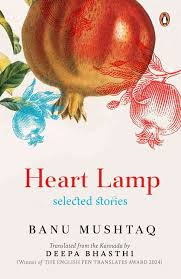
The Winner is Heat Lamp by Banu Mushtaq (translated by Deepa Bhasthi). 

Max Porter, Chair of the judges writes of this winner:
 
"Heart Lamp is something genuinely new for English readers. A radical translation which ruffles language, to create new textures in a plurality of Englishes. It challenges and expands our understanding of translation. These beautiful, busy, life-affirming stories rise from Kannada, interspersed with the extraordinary socio-political richness of other languages and dialects. It speaks of women’s lives, reproductive rights, faith, caste, power and oppression. 
 
‘This was the book the judges really loved, right from our first reading. It’s been a joy to listen to the evolving appreciation of these stories from the different perspectives of the jury. We are thrilled to share this timely and exciting winner of the International Booker Prize 2025 with readers around the world.
’

The prize awards £25,000 to the author and £25,000 to the translator, in recognition of the essential work of translators in bringing fiction to a wider audience. 

Wednesday, 9 April 2025

International Booker Shortlist 2025

The International Booker Prize 2025 Shortlist has been announced with thirteen longlisted titles of fiction translated into English, whittled down to six.

The shortlist is as follows:

  • A Leopard-Skin Hat by Anne Serre (translated by Mark Hutchison)
  • Heat Lamp by Banu Mushtaq (translated by Deepa Bhasthi)
  • Perfection by Vincenzo Latronico (translated by Sophie Hughes)
  • Under the Eye of the Big Bird by Hiromo Kawakami (translated by Asa Yoneda)
  • Small Boat by Vincent Delecroix (translated by Helen Stevenson)
  • On the Calculation of Volume 1 by Solvej Balle (translated by Barbara J Haveland)

Max Porter, Chair of the judges writes of this longlist: 
"Our selected six awakened an appetite in us to question the world around us: How am I seeing or being seen? How are we translating each other, all the time? How are we trapped in our bodies, in our circumstances, in time, and what are our options for freedom? Who has a voice? In discussing these books we have been considering again and again what it means to be a human being now.

"This list is our celebration of fiction in translation as a vehicle for pressing and surprising conversations about humanity. These mind-expanding books ask what might be in store for us, or how we might mourn, worship or survive. They offer knotty, sometimes pessimistic, sometimes radically hopeful answers to these questions. Taken together they build a miraculous lens through which to view human experience, both the truly disturbing and the achingly beautiful. They are each highly specific windows into a world, but they are all gorgeously universal."
The prize awards £25,000 to the author and £25,000 to the translator, in recognition of the essential work of translators in bringing fiction to a wider audience. 

The winner will be announced on 20 May 2025.

Wednesday, 26 February 2025

International Booker Longlist 2025

The International Booker Prize 2025 Longlist has been announced with thirteen titles of fiction translated into English.

The longlist is as follows:

  • A Leopard-Skin Hat by Anne Serre (translated by Mark Hutchison)
  • On a Woman's Madness by Astrid Roemer (translated by Lucy Scott)
  • Heat Lamp by Banu Mushtaq (translated by Deepa Bhasthi)
  • Perfection by Vincenzo Latronico (translated by Sophie Hughes)
  • Eurotrash by Christian Kracht (translated by Daniel Dowles)
  • Under the Eye of the Big Bird by Hiromo Kawakami (translated by Asa Yoneda)
  • Hunchback by Saou Ichakawa (translated by Polly Barton)
  • Small Boat by Vincent Delecroix (translated by Helen Stevenson)
  • Reservoir Bitches by Dahlia de la Cerda (translated by Julis Sanches, Heather Cleary)
  • Solenoid by Mircea Cartarescu (translated by Sean Colter)
  • There's a Monster Behind the Door by Gaellle Belem (translated by Kareen Fleetwood, Laetitia Saint-Loubert)
  • On the Calculation of Volume 1 by Solvej Balle (translated by Barbara J Haveland)
  • The Book of Disappearance by Ibtisam Azem (translated by Sinan Antoon)
Max Porter, Chair of the judges writes of this longlist: 
'Translated fiction is not an elite or rarefied cultural space requiring expert knowledge; it is the exact opposite. It is stories of every conceivable kind from everywhere, for everyone. It is a miraculous way in which we might meet one another in all our strangeness and sameness, and defy the borders erected between us... 
‘In these books people are sharing strategies for survival; they are cheating, lying, joking and innovating. Some people are no longer of this earth, or they are sending visions from the future or from parallel universes. These books bring us into the agony of family, workplace or nation-state politics, the near-spiritual secrecy of friendship, the inner architecture of erotic feeling, the banality of capitalism and the agitations of faith.'

The prize awards £25,000 to the author and £25,000 to the translator, in recognition of the essential work of translators in bringing fiction to a wider audience. I need to read more translated fiction, so will be keen to investigate these titles further.

The shortlist of 6 titles will be announced on 8 April and the winner on 20 May 2025.

Tuesday, 31 December 2024

My Reading Year 2024

2024 was a wonderful year for reading - a year in which I was introduced to new authors, spent time with a few favourites and learned much about the world.

My reading goal for 2024 was 30 books, which I surpassed reading 34 titles this year. When planning for 2024 at the start of the year, I had a stack of books on my to-be-read pile, and managed to read only a handful before I got distracted by other titles. In January I updated my reading bingo card to diversify my reading. While I didn't read all categories, I succeeded in most of them (highlighted) but failed to read a poetry collection, short story collection and a handful of other categories.


So here's what I read in 2024:

Fiction

Reflecting on my novel reading for 2024, I can see that I was influenced by a couple of key factors:
  • Hearing authors speak at festivals encouraged me to seek out their work. 
  • Favourite authors releasing new novels or series sequels. 
  • Award longlists introduced me to books and authors I did not know.
  • Film/TV adaptations based on novels which I wanted to read before I saw the adaptation.
  • Recommendations from friends, family and fellow book bloggers.

In March I attended the All About Women festival at the Sydney Opera House where I was able to meet Mary Beard, Anne Enright, Anna Funder and other authors I admire. It was wonderful to talk with Irish author Anne Enright about her latest novel, The Wren, The Wren (2023) which I absolutely loved. I followed it up by reading The Gathering (2007) which had languished on my shelf for far too long. These two novels, read back-to-back alongside Enright's audiobook recording, made me wonder why I had not read her work before. I now have her back catalogue and look forward to reading more of her novels. 

Another author I read multiple books by in 2024 was Colson Whitehead. I met him at the Sydney Writers' Festival in 2023 where he signed many of his books for me. I had previously loved his novel The Nickel Boys (2019), so this year I read Harlem Shuffle (2021) the first in a planned trilogy about Ray Carney, a furniture salesman and fence of stolen goods. I read this alongside the audiobook brilliantly performed by Dion Graham. Whitehead is an amazing genre-switching author and I was keen to read his early novel Zone One (2011) about a zombie apocalypse. While I didn't love that novel, I certainly appreciate Whitehead's thoughtful prose. 

Sequels I was looking forward to this year did not disappoint. Colm Toibin's Long Island (2024) was the long awaited sequel to his novel Brooklyn (2009), which tell the story of Eilis Lacey, a young Irish woman who moves to New York and then twenty years later returns home to visit her family. Toibin's storytelling is magical and it was wonderful to revisit this heroine. Pat Barker's trilogy retelling Homer's Iliad from the perspective of women concluded with The Voyage Home (2024) focussing on Cassandra and Clytemnestra. This novel was a worthy successor to The Silence of the Girls (2018) and The Women of Troy (2021). Highly recommended.


Mid-year I embarked on a wonderful reading journey. Percival Everett's James (2024) is a retelling of Mark Twain's novels The Adventures of Tom Sawyer (1876) and The Adventures of Huckleberry Finn (1886). Before reading James, I went back to the source material and re-read the Twain books I read decades ago. This greatly enhanced my appreciation of what Everett achieved with his novel - he is a master of language and James is a sharp, edgy satire. Without any hesitation, the best novel I read this year!

Among the various novels I read that were award nominees, the Women's Prize and the Booker Prize gave me the most amount of joy. From the Booker Prize shortlist I read Charlotte Wood's Stone Yard Devotional (2023), Everett's James (2024) and winner Samantha Harvey's Orbital (2023).  The 2024 Women's Prize shortlist gave me Anne Enright's The Wren, The Wren (2023) and Kate Grenville's Restless Dolly Maunder (2023) 

Two books I chose because I wanted to see the film adaptations, but prefer to read the book first. Robert Harris' Conclave (2016) was a gripping thriller about the selection of the Pope. It has been made into a brilliant film starring Ralph Fiennes. Kazuo Ishiguro's Never Let Me Go (2005) was adapted into a film with Carey Mulligan, Keira Knightley and Andrew Garfield in 2010. I wanted to see the film but was sparked to re-read the book when it appeared on a list published by the New York Times of the best books of the 21st century. I didn't love it as much as the NYT readers and the film was uninspiring. 

Recommendations from friends, families and fellow readers led me to many of my favourite reads of the year. Alba de Cespedes Forbidden Notebook (2023),  originally published in the 1950s, focusses on an Italian housewife who records her inner life in a diary.  Elizabeth and Elizabeth (2021) by Sue Williams explores the friendship between two women who were instrumental in the early days of Sydney. Claire Keegan's novella Foster (2010) is a gem of a story about a girl who spends a summer away from home. Lisa See's wonderful Lady Tan's Circle of Women (2023) transported me to the Ming Dynasty. Miranda July's brilliant All Fours (2024) was a delight that I have recommended to many friends. Unlike the other novels which focus on women, Alice Winn's gripping In Memoriam (2023) explores the lives of men at war in a novel I will not soon forget.

Crime thrillers always make their way into my reading cycle. Aussie noir shows no signs of stopping and this year I read two great novels by some of my favourite writers in this genre. Chris Hammer's The Valley (2024) is his latest in the Lucic/Buchanan series and was a ripping yarn! Garry Disher's The Way it is Now (2021) is a standalone crime thriller set in the Mornington Peninsula. Journalist Louise Milligan made her fiction debut with Pheasants Nest (2024), a page-turning novel about a journalist who goes missing. 

Of course Aussies aren't the only crime writers around. Tana French continued her western-style crime series with The Hunter (2024), a sequel to The Searcher (2020) which follows retired American detective Cal Hooper, now residing in a small town in Ireland. I also read another novel in the Simon Serrallier series by Dame Susan Hill, The Vows of Silence (2008) in which the detective has to track down a potential serial killer targeting newlywed women. Finally, I read Dorothy B Hughes' In a Lonely Place (1947) which has been on my shelf for years! Hughes is an amazing writer and this was an interesting take on the genre, told from the perspective of the killer.

Non-Fiction

This year I didn't read as much non-fiction as I had planned to and will need to rectify this in 2025.

I really enjoyed the Quarterly Essays this year. I have subscribed for the past decade and each year there are usually one or two on topics that I am not that interested in. 

This year I read three fantastic essays. Alan Kohler's The Great Divide focussed on the housing crisis. Don Watson's High Noon was all about the 2024 Presidential election. Lech Blaine's Bad Cop showcased the opposition leader Peter Dutton. All were well written and worth reading.


Memoirs and biographies always intrigue me. I love learning about real people, their lives and how they became who they are. Journalist Paddy Manning explores the life of Lachlan Murdoch, media scion, in The Successor (2023). I heard Manning speak about this at the 2023 Sydney Writers' Festival and was keen to read it against the backdrop of the Murdoch family dramas. Richard Flanagan's Question 7 (2023) is unlike any memoir I have ever read as he blends genre and takes readers on a strange journey which links the author's existence to HG Wells and the atomic bomb. I love Flanagan as a novelist and while Question 7 didn't work for me, I admire his twist on the genre.


Sarah Firth's graphic essay collection Eventually Everything Connects (2023) is a beautiful exploration of life. I loved the way Firth tackled big topics and everyday activities in illustrated form. Claire Dederer's book Monsters - a Fan's Dilemma (2023) looks at art and how to balance works of genius created by people who are contemptible. This was a fascinating way to consider what we consume and whether we can seperate the work from its maker.  Finally, I absolutely loved journalist Nick Bryant's The Forever War (2024), an exploration of American political history and how to make sense of what is happening today in the United States.

Best of 2024

I read so many great books this year. I loved and highly recommend:

If I had to choose my absolute favourites for 2024, without any hesitation I would pick Percival Everett's James and Nick Bryant's The Forever War.


Well, that's my year of reading! A new year starts tomorrow and I cannot wait to discover new books and rediscover old favourites. Happy New Reading Year!

Saturday, 6 January 2024

A Room of One's Own

My first book read in 2024 is the delicious novel Forbidden Notebook (2023) by Alba de Cespedes. The Forbidden Notebook was originally published in serial form in 1951 and as a book, Quaderno probito,  in 1952. Recently rediscovered, it has been newly translated by Ann Goldstein and published by Pushkin Press with an introduction by Jhumpa Lahiri.

Valeria Cossati buys a black notebook on a whim. Upon bringing it home she searches for a place to hide it: the linen closet; under a pile of mending; where she stores her cleaning supplies; a disused suitcase. She moves it every few days as she does not want it to be found by her husband of 20+ years, Michele, or by her young adult children Riccardo and Mirella. At night, after the family is asleep, Valeria snatches moments to write - recording her observations and thoughts, anxious that this rebellious act of writing will be discovered and she will be ashamed for having her own thoughts.

Through her diary entries we learn that Valeria married Michele at age 21, moved into a small apartment in Rome and had two children. Now at forty-three years old, she questions the life she has been living, obeying conservative gender norms, and worries that she is getting old before her time.  She reflects on the early days with Michele, their courtship, their correspondence while he was off at war, and contrasts this with the present day where they coexist but have lost that spark of early love.  Since the children were born, Michele has called her 'Mamma', but she longs to be called by her name and be seen as a woman not just a mother. 

The diary is written from December 1950 to May 1951 when Italy is recovering from World War II and the oppression of the Mussolini years. It is a period of change, and through her daughter Mirella she tries to reconcile her conservative upbringing and the new social mores that her daughter subscribes to - going out at night with an older man, taking up a job in his law firm. She also sees the scorn of their poverty, when her daughter longs for beautiful things her parents cannot afford. She records in the diary her feelings toward her son - once the apple of her eye, now determined to run off to Buenos Aires with a girl Valeria feels is not worthy of him. Through her children's actions, she questions the choices she has made.

Valeria links the disquiet in her mind to when she began writing in the notebook. She writes:

'I am increasingly convinced that this anxiety took possession of me starting the day I bought the notebook: an evil spirit, the devil seems hidden in it. So I try to neglect it, leave it in the suitcase of the closet, but that is not enough. And in fact the more tightly bound I am to my duties, the more limited my time, the more urgent the desire to write becomes.' (p 124) 

But the notebook is a necessary vehicle for Valeria to process her thoughts. Even in her own house, she has no place of her own. While the children can each escape to their rooms, and Michele can withdraw to the chair where he reads the papers and listens to the radio, Valeria has nothing of her own. Gradually she begins to understand that she needs the notebook as she has no other confidante. She writes:

'It's strange: our inner life is what counts most for each of us and yet we have to pretend to live as if we paid no attention to it, with inhuman security.' (p 199)

Through her notebook, readers are transported to a different time and place, where women's place in domestic life is narrowly defined. The transgressive act of writing this diary, doing something for herself, opens Valeria's world to new possibilities and different choices, the potential to free herself from the role she has been given.

I am so pleased to have read this book, finding it in the City of Sydney Library.  I became interested in this book in December 2023 when I read an article in the New York Times about it and was intrigued by this photo of the author, Cuban-Italian writer Alba de Cespedes. She worked as a journalist and was jailed in 1935 for anti-fascist activities. Two of her novels were banned and moved to Paris after World War II. I hope that more of her writing is translated and reaches a wider audience, as de Cespedes deserves to be read.