Showing posts with label Young Adult. Show all posts

Saturday, 21 November 2026

National Book Award Winners 2026

The Winners for the 2026 National Book Awards have been announced. These annual American literary awards have been presented since 1936. Each finalist received $1000, a medal and a citation, while the winners get $10,000 and a bronze sculpture. 


Past recipients include: William Faulkner (Collected Stories 1951; Ralph Ellison (Invisible Man 1953); Philip Roth (Goodbye Columbus, 1960); Joyce Carol Oates (them 1970); William Styron (Sophie's Choice 1980); John Irving (The World According to Garp 1980); John Updike (Rabbit is Rich 1982); Alice Walker (The Colour Purple 1983);  Don DeLillo (White Noise 1985); E Annie Proulx (The Shipping News 1993); Jonathan Franzen (The Corrections 2001); Jesmyn Ward (Salvage the Bones 2011); and Percival Everett (James, 2024)

The Winners for 2026 are:

Fiction - Hannah Lilith Assadi, Paradiso 17

The judges citation reads:
 "Paradiso 17 tells the moving tale of Sufien, born in Palestine five years before the Nakba. With elegant lyricism and an ambitious bending of time and space, Assadi compassionately sets aglow Sufien’s griefs and wants and joys—from birth to exile—through love and lust and parenthood and aging, past dreams of return to whatever hope or homecoming might lie beyond death. A visionary, finely wrought portrait of rupture and endurance.

Non-Fiction - Abdelrahman ElGendy, Huna: A Memoir of Revolution, Prison, and Becoming 

The judges citation reads:
“In the space between violence and becoming there is something like a breath; Huna: A Memoir of Revolution, Prison, and Becoming by Abdelrahman ElGendy inhabits that breath. Hunais a lyric testament to survival and resistance threaded through with a father-son story of love, endurance, resilience, and hope. Inspired by the Arab protest song ‘Sawfa Nabqua Huna (We Will Remain Here),’ this debut memoir is a phenomenal liberation story that resists all forces of authoritarian silencing and erasure with full-throated song.

Poetry - Brenda Hillman, Still House in the Desert

The judges citation reads:
“Deeply intimate yet thrillingly expansive, Brenda Hillman’s Still House in the Desert: An eco-contemplation is a rigorously unsentimental portrait of the stillness—both as silence and as continuance—of the poet’s childhood home after her mother’s death, and the human archive of photographs, used furniture, and beloved memorabilia contained within it. Zooming restlessly through microscopic, cosmologic, and ontologic spaces, these poems are masterworks of lyric imagination that explore the limits of intellectual possibility to reveal the impossible scale of grief.”


Translated Literature - Vicente Luis Mora, Centroeuropa - Translated from Spanish by Rahul Bery

The judges citation reads:
“Vicente Luis Mora’s Centroeuropa, deftly translated from the Spanish by Rahul Bery, takes us on a mysterious, intoxicating journey through the frozen fields of a Prussian village, where a widower named Redo tries to carry out a pathetic wish to become a beet farmer only to unearth dead soldiers from wars past. Centroeuropa is an absurd historical novel, Kafkaesque and Gogolian in its mad and tender portrayal of Redo’s attempt at survival while history keeps depositing its dead at Redo’s feet.”


Young People's Literature - David Leviathan, Gabriel Duckels, The Fight of Our Lives: AIDS in America

The judges citation reads:
“In this superb work of nonfiction, David Levithan and Gabriel Duckels provide readers with the vital history of HIV/AIDS in the United States while exploring the urgency and depth of the epidemic with compassion and nuance. The Fight of Our Lives: AIDS in America employs detailed timelines, essays and poems, contemporaneous media coverage, and more to memorialize the various communities impacted by the disease and honor the tireless work of activists who refused to stay silent.”

Wednesday, 7 October 2026

National Book Award Finalists 2026

The Finalists for the 2026 National Book Awards have been announced. These annual American literary awards have been presented since 1936. Each finalist received $1000, a medal and a citation, while the winners get $10,000 and a bronze sculpture. 


Past recipients include: William Faulkner (Collected Stories 1951; Ralph Ellison (Invisible Man 1953); Philip Roth (Goodbye Columbus, 1960); Joyce Carol Oates (them 1970); William Styron (Sophie's Choice 1980); John Irving (The World According to Garp 1980); John Updike (Rabbit is Rich 1982); Alice Walker (The Colour Purple 1983);  Don DeLillo (White Noise 1985); E Annie Proulx (The Shipping News 1993); Jonathan Franzen (The Corrections 2001); Jesmyn Ward (Salvage the Bones 2011); and Percival Everett (James, 2024)

The Finalists for 2026 are:

Fiction

  • Hannah Lilith Assadi, Paradiso 17
  • Edwidge Danticat, Dey 
  • Julian Delgado Lopera, Pretend You're Dead and I Carry You
  • Valeria Luiselli, Beginning Middle End
  • Morgan Thomas, Mad Eden
Some big names have fallen off the list. I would have thought Louise Edrich (Python's Kiss), Marlon James (The Disappearers) or Kenan Orhan (The Renovation) would have made the cut. Of these books, I am most interested in the novels by Assadi and Luiselli.


Non-Fiction

  • Colin Asher, The Midnight Special: The Secret Prison History of American Music 
  • Abdelrahman ElGendy, Huna: A Memoir of Revolution, Prison, and Becoming 
  • Campghne Felix, Let the Poets Govern: A Declaration of Freedom 
  • Sara Novic, Mother Tongue 
  • Joseph Osmundson, Spawning Season: An Experiment in Queer Parenthood 


Poetry
  • Victoria Chang, Tree of Knowledge 
  • Carolina Ebeid, Hide
  • Brenda Hillman, Still House in the Desert
  • Fady Joudah, Exhibit G: Poems, Essays and Photographs of Gaza
  • Susan Stewart, Bramble


Translated Literature 
  • Karl Ove Knausgaard, The School of Night - Translated from Norwegian by Martin Aitken
  • Vicente Luis Mora, Centroeuropa - Translated from Spanish by Rahul Bery
  • Intan Parmaditha, Night of a Thousand Hells - Translated from Indonesian by Stephen Epstein and Tiffany Tsao
  • Mohamed Mbougar Sarr, Pure Men - Translated from French by Lara Vergnaud
  • Samar Yazbek, Your Presence is a Danger to Your Life: Voices of Survival and Witness in Gaza - Translated from Arabic by Leri Price


Young People's Literature 
  • Elena K Arnold, Holloway
  • Tae Keller, When Tomorrow Burns
  • Keala Kendall, That Which Feeds Us
  • David Leviathan, Gabriel Duckels, TheFight of Our Lives: AIDS in America
  • Julian Randall, Shook 

Friday, 18 September 2026

National Book Awards 2026 Longlist

The longlist for the 2026 National Book Awards has been announced. These annual American literary awards have been presented since 1936. Each finalist received $1000, a medal and a citation, while the winners get $10,000 and a bronze sculpture. 

Past recipients include: William Faulkner (Collected Stories 1951; Ralph Ellison (Invisible Man 1953); Philip Roth (Goodbye Columbus, 1960); Joyce Carol Oates (them 1970); William Styron (Sophie's Choice 1980); John Irving (The World According to Garp 1980); John Updike (Rabbit is Rich 1982); Alice Walker (The Colour Purple 1983);  Don DeLillo (White Noise 1985); E Annie Proulx (The Shipping News 1993); Jonathan Franzen (The Corrections 2001); Jesmyn Ward (Salvage the Bones 2011); and Percival Everett (James, 2024)

The Longlists for 2026 are:

Fiction

  • Hannah Lilith Assadi, Paradiso 17
  • Kimberly Blaeser, Red Ants
  • Edwidge Danticat, Dey 
  • Julian Delgado Lopera, Pretend You're Dead and I Carry You
  • Louise Edrich, Python's Kiss
  • Marlon James, The Disappearers
  • Valeria Luiselli, Beginning Middle End
  • Alexander Maksik,  Passengers
  • Kenan Orhan, The Renovation
  • Morgan Thomas, Mad Eden
James and Orhan are both Longlisted for the Booker for their novels, so I reckon either of them has a good chance of taking the National Book Award.


Non-Fiction

  • Rozina Ali, Seasons of Fury: Four Families and the Rise of Islamophobia in America 
  • Colin Asher, The Midnight Special: The Secret Prison History of American Music 
  • Zayd Ayers Dohrn, Dangerous, Dirty, Violent, and Young: A Fugitive Family in the Revolutionary Underground 
  • Abdelrahman ElGendy, Huna: A Memoir of Revolution, Prison, and Becoming 
  • Campghne Felix, Let the Poets Govern: A Declaration of Freedom 
  • Wil Haygood, The War Within a War: The Black Struggle in Vietnam and at Home 
  • Sara Novic, Mother Tongue 
  • Joseph Osmundson, Spawning Season: An Experiment in Queer Parenthood 
  • Angela Pelster, The Evolution of Fire: Essays on Crisis and Becoming 
  • Wendy S Walters, A Dead White: An Argument Against White Paint

Poetry
  • Victoria Chang, Tree of Knowledge 
  • Carolina Ebeid, Hide
  • Brenda Hillman, Still House in the Desert
  • Richie Hofmann, The Bronze Arms
  • Fady Joudah, Exhibit G: Poems, Essays and Photographs of Gaza
  • Layli Long Soldier, We
  • Johan Mixon-Webster, Promise/Threat
  • Jake Rose, Joan
  • Jake Skeets, Horses
  • Susan Stewart, Bramble

Translated Literature 
  • Egana Djabbarova, My Dreadful Body - Translated from Russian by Lisa C Hayden 
  • Alvaro Enrigue, Now I Surrender- Translated from Spanish by Natasha Wimmer
  • Karim Kattan, Eden at Dawn -Translated from French by Jeffrey Zuckerman
  • Karl Ove Knausgaard, The School of Night - Translated from Norwegian by Martin Aitken
  • Ping Lu, To The East of the East - Translated from Chinese by Jeremy Tiang
  • Vicente Luis Mora, Centroeuropa - Translated from Spanish by Rahul Bery
  • Intan Parmaditha, Night of a Thousand Hells - Translated from Indonesian by Stephen Epstein and Tiffany Tsao
  • Mohamed Mbougar Sarr, Pure Men - Translated from French by Lara Vergnaud
  • Maria Stepanova, The Disappearing Act - Translated from Russian by Sasha Dugdale
  • Samar Yazbek, Your Presence is a Danger to Your Life: Voices of Survival and Witness in Gaza - Translated from Arabic by Leri Price

Young People's Literature 
  • Delali Adjoa, The Free Verse Society
  • Elena K Arnold, Holloway
  • T A Chan, The Celestial Seas
  • Tae Keller, When Tomorrow Burns
  • Keala Kendall, That Which Feeds Us
  • David Leviathan, Gabriel Duckels, TheFight of Our Lives: AIDS in America
  • Chanel Miller, The Moon Without Stars
  • Eric Darnell Pritchard, Shannon Wright, Clothes to Make You Smile: Patrick Kelly Designs His Dreams
  • Julian Randall, Shook
  • Matthew Swandson, Robbi Behr,  Life on the Moon


Sunday, 21 September 2025

National Book Award 2025 Longlist

The New Yorker has announced the longlist for the 2025 National Book Awards. These annual American literary awards have been presented since 1936. Each finalist received $1000, a medal and a citation, while the winners get $10,000 and a bronze sculpture. 

Past recipients include: William Faulkner (Collected Stories 1951; Ralph Ellison (Invisible Man 1953); Philip Roth (Goodbye Columbus, 1960); Joyce Carol Oates (them 1970); William Styron (Sophie's Choice 1980); John Irving (The World According to Garp 1980); John Updike (Rabbit is Rich 1982); Alice Walker (The Colour Purple 1983);  Don DeLillo (White Noise 1985); E Annie Proulx (The Shipping News 1993); Jonathan Franzen (The Corrections 2001); Jesmyn Ward (Salvage the Bones 2011); and Percival Everett (James, 2024)

The Longlists for 2025 are as follows:

Fiction

  • Rabih Alameddine, The True True Story of Raja the Gullible (and His Mother)
  • Susan Choi, Flashlight
  • Angela Flournoy, The Wilderness
  • Jonas Hassen Khemiri, The Sisters
  • Megha Majumdar, A Guardian and a Thief
  • Kevin Moffett, Only Son
  • Karen Russell, The Antidote
  • Ethan Rutherford, North Sun: Or, the Voyage of the Whaleship Esther
  • Bryan Washington, Palaver
  • Joy Williams, The Pelican Child
Moffett and Rutherford are debut writers. Susan Choi is a past winner, having received this award in 2019 for Trust Exercise. She is also Longlisted for the Booker for Flashlight, so I reckon she has a good chance of taking the National Book Award.

Non-Fiction

  • Omar El Akkad, One Day, Everyone Will Have Always Been Against This
  • Caleb Gayle, Black Moses: A Saga of Ambition and the Fight for a Black State
  • Julia Ioffe, Motherland: A Feminist History of Modern Russia, from Revolution to Autocracy
  • Fatemeh Jamalpour and Nilo Tabrizy, For the Sun After Long Nights: The Story of Iran's Women-Led Uprising
  • Yiyun Li, Things in Nature Merely Grow 
  • Lana Lin, The Autobiography of H Lan Thao Lam
  • Ben Ratliff, Run the Song: Writing about Running about Listening
  • Claudia Rowe, Wards of the State: The Long Shadow of American Foster Care
  • Jordan Thomas, When It All Burns: Fighting Fire in a Transformed World
  • Helen Whybrow, The Salt Stones: Seasons of a Shepherd's Life
Of all these titles, the one I have heard the most about is Li's Things in Nature Merely Grow about losing her two sons to suicide. She is an award winning writer and I imagine she will make the shortlist, if not win.


Poetry
  • Gbenga Adesina, Death Does Not End at the Sea
  • Gabrielle Calvocoressi, The New Economy
  • Cathy Linh Che, Becoming Ghost
  • Tiana Clark, Scorched Earth
  • Rickey Laurentiis, Death of the First Idea
  • Esther Lin, Cold Thief Place
  • Natalie Shapero, Stay Dead
  • Richard Siken, I Do Know Some Things
  • Patricia Smith, The Intentions of Thunder: New and Selected Poems
  • Fargo Nissim Tbakhi, Terror Counter


Translated Literature 
  • Solvej Balle, On the Calculation of Volume (Book III) - Translated from Danish by Sophia Hersi Smith and Jennifer Russell
  • Jazmina Barrera, The Queen of Swords - Translated from Spanish by Christina MacSweeney
  • Gabriela Cabezón Cámara, We Are Green and Trembling -Translated from Spanish by Robin Myers
  • Anjet Daanje, The Remembered Soldier - Translated from Dutch by David McKay
  • Saou Ichikawa, Hunchback - Translated from Japanese by Polly Barton
  • Hamid Ismailov, We Computers: A Ghazal Novel - Translated from Uzbek by Shelley Fairweather-Vega
  • Han Kang, We Do Not Part - Translated from Korean by e. yaewon and Paige Aniyah Morris
  • Mohamed Kheir, Sleep Phase - Translated from Arabic by Robin Moger
  • Vincenzo Latronico, Perfection - Translated from Italian by Sophie Hughes
  • Neige Sinno, Sad Tiger - Translated from French by Natasha Lehrer

Young People's Literature 
  • María Dolores Águila, A Sea of Lemon Trees: The Corrido of Roberto Alvarez
  • K Ancrum, The Corruption of Hollis Brown
  • Derrick Barnes, The Incredibly Human Henson Blayze
  • Mahogany L Browne, A Bird in the Air Means We Can Still Breathe
  • Kyle Lukoff, A World Worth Saving
  • Amber McBride, The Leaving Room
  • Daniel Nayeri, The Teacher of Nomad Land: A World War II Story
  • Hannah V Sawyerr, Truth Is
  • Maria van Lieshout, Song of a Blackbird
  • Ibi Zoboi, (S)Kin

Tuesday, 17 June 2025

Revisiting Murder on the Canadian

I have just returned from a holiday in Canada. One of the highlights of my trip was to spend four days on The Canadian travelling from Vancouver to Toronto. The Via Rail train took us through the Rocky Mountains, across the Prairies and over the Canadian Shield, showcasing the natural beauty of Canada's trees, rivers, fields and canyons. When I arrived in Toronto many of my friends jokingly asked whether there had been a murder on the train! 

As children in the 1980s we had read Eric Wilson's novel Murder on the Canadian (1976), the first in his Tom and Liz Austen mystery series, and my friends' question reminded me of the story. While in Toronto I picked up a copy of the book and refreshed my memory of this tale from long ago which I initially read when I was 9 or 10 years of age. Would the story still hold up forty years later?

Young Tom Austen is obsessed with the Hardy Boys and longs to be a detective. He boards the Canadian in Winnipeg bound for Vancouver to spend time with his grandparents. He is a solo traveller, but soon finds his frenemy Dietmar Oban is sharing his berth. The two boys are in search of adventure and their imaginations run away with them as they explore the train. 

A scream brings Tom running down the corridor to the scene of a crime. A woman is dead and Tom reckons he can find the killer. Using the deduction skills he has learned from Sherlock Holmes and the Hardy Boys he looks for clues. As he begins to piece together what occurred he finds himself face-to-face with the killer!

The Canadian - Dome Car
Murder on the Canadian
is aimed at young adults. Not unlike an Agatha Christie novel, Wilson has used the confined space of the moving train to his advantage in the plotting of this novel. Having been on The Canadian, I enjoyed Wilson's descriptions of the dome car and the dining car, which remain as they were half a century ago. Wilson has also filled the train with interesting passengers for Tom to encounter as he attempts to rule out suspects.

Revisiting this novel as an adult was a nostalgic experience. As a child Tom's adventures were thrilling, and he was a delightful protagonist with his quick wit and ability to get out of tricky situations. There is something very pure about Tom's naiveté. At only 122 pages, it is a quick and easy read.

This is the first of twenty books in the series, which includes Vancouver Nightmare (1978), Terror in Winnipeg (1979), The Lost Treasure of Casa Loma (1980), and Cold Midnight in Old Quebec (1989). I recall reading a couple of these in my childhood, before I moved on to the Choose Your Own Adventure series. 

Ultimately, I would recommend this for young readers and found that it is still an exciting story all these years later.  For older readers, I would highly recommend travelling on The Canadian - it is an unforgettable journey!

Saturday, 14 September 2024

Prime Minister's Literary Award Winners 2024

The winners of the 2024 Prime Minister's Literary Awards were announced this week. These awards have a significant prize pool ($600K) and serve to recognise 'established and emerging Australia writers, illustrators, poets and historians'. 

The winners are:

  • FICTION - Andre Dao - Anam
  • NON-FICTION - Daniel Browning - Close to the Subject: Selected Works
  • AUSTRALIAN HISTORY - Ryan Cropp - Donald Horne: A Life in the Lucky Country
  • CHILDREN'S LITERATURE - Violet Wadrill (and co-creators) -  Tamarra: A Story of Termites on Gurindji Country
  • YOUNG ADULT LITERATURE - Will Kostakis - We Could Be Something
  • POETRY - Amy Crutchfield - The Cyprian
 
See the Creative Australia website for more information. You can also watch the winner's announcement on YouTube below.

Saturday, 21 September 2019

After the Flood

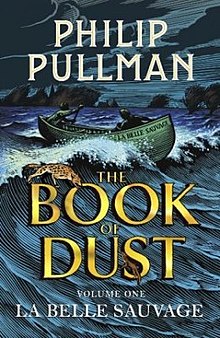
Twenty years ago, long before I started this blog, I was engrossed in the His Dark Materials trilogy by Philip Pullman. Northern Lights (aka The Golden Compass) (1995) The Subtle Knife (1997) and The Amber Spyglass (2000) told the story of Lyra Belacqua, a smart young girl and her daemon Pantalaimon as she journeys through the multiverse. The fantasy series was clever and thrilling; exploring deep questions about morality, religion and science.

Pullman has now embarked on a new trilogy called The Book of Dust, Dust being the mysterious Rusakov particles attracted to objects formed by consciousness. The Magisterium (Church) is obsessed with Dust, seeing it as evil and corrupting, akin to the concept of Original Sin. Dust permeated the first trilogy and does so again here.

La Belle Sauvage is the first book, named after a canoe owned by young Malcolm Polstead. Set ten years before Northern Lights, here Lyra is a baby being cared for by nuns at an Oxford priory. Malcolm helps out at the inn his parents run, alongside a teenage girl named Alice. Malcolm sees and hears many things from the customers who stop by for a pint 'n pie. One day, a group of men arrive at the inn and start questioning Malcolm about Lyra. But when creepy Gerard Bonneville and his hideous hyena daemon arrive in town, Malcolm knows for sure that Lyra is in danger.

Flood waters are rising in Oxford as the Thames threatens to break her banks. Taking advantage of the inclement weather, Bonneville attempt to steal the child, but Malcolm and Alice are able to flee with Lyra in La Belle Sauvage. The three children, pursued by Bonneville and various others, undergo all sorts of ordeals as they try to find sanctuary after the flood.

I loved being back in the world of Dust, daemons and alethiometers - in fact whenever the story mentioned anything related to His Dark Materials (like Lord Asriel, Mrs Coulter, gyptians or Jordan College), I immediately became nostalgic. The mysterious 'Oakley Street', extremist Magisterium, and disturbing League of St Alexander kept the story moving along. While Malcolm is a great protagonist, feisty Alice is the one who interested me most, and I liked how their relationship changed over the course of their journey.

So far, I haven't found The Book of Dust as engrossing as the first trilogy.  The flood was a drag on the story; so many pages take place in the titular boat that it became a bit dry. The tone was also considerably darker than the first trilogy - which, admittedly, I kind of liked, but made me wonder what younger readers might think. To enhance my reading, I also listened along to the audiobook with Michael Sheen narrating the story. This enlivened the tale and I particularly loved his portrayal of Bonneville's hyena.

The second volume of The Book of Dust will be released on 3 October 2019 and from what I understand the story will fast forward to Lyra as a young woman. So I will be intrigued to see where this series takes us! But what I am really excited about is the new BBC series, Philip Pullman's His Dark Materials which will air in early November with James McAvoy, Ruth Wilson and Lin-Manuel Miranda among the cast.

Saturday, 20 July 2019

The Swindon Sleuth

Mark Haddon's novel The Curious Incident of the Dog in the Night-time (2003) was a best seller and award winner at the time of publication. Ten years later it became an award winning play. It has been recommended to me countless times by many people and is on dozens of must-read lists. But for some reason, I never got around to reading it until now.

Fifteen year old Christopher Boone lives with his dad and Toby, his pet rat, in Swindon, England. They have a predictable, peaceful life together. Then one night the neighbour's dog is found dead and everything changes. Christopher decides to investigate despite his father telling him to mind his own business. In doing so, more mysteries are revealed and Christopher's life is inalterably upended.

What makes this novel unique is the narrative voice. Christopher has an unstated condition, possibly Asperger's syndrome, which manifests in a brilliant mathematical mind and a photographic memory, as well as a difficulty understanding other people's emotions and a distaste for anything yellow or brown. His innocence and naivety make him vulnerable and he finds it difficult to navigate his way through the world. He is often misunderstood by adults he encounters who think he is 'taking the piss' or a simpleton.

I found this book remarkable - at turns funny and emotionally poignant. I particularly enjoyed how Haddon got inside Christopher's mind and documented his thoughts in a notebook, which ranged from his love of The Hounds of the Baskervilles, prime numbers and the Monty Hall problem, to his thoughts about his family. The mystery part was rather predictable, but Christopher's dogged investigation made it enjoyable. Highly recommended.

Friday, 28 December 2018

Tales from the Crypt

Each year I give my two nieces, currently aged 8 and 11, books as Christmas gifts. I enjoy trying to track down books that I think they may enjoy - from graphic novels like Phoebe and her Unicorn, to classics like Anne of Green Gables. I try to do my homework to make sure they are age appropriate and, wherever possible, I try to read the book in advance. This year I gave them:

  • The Mulberry Tree by Allison Rushby
  • Friday Barnes, Girl Detective by RA Spratt
  • Ruby Redfort Look Into My Eyes by Lauren Child
  • The Graveyard Book by Neil Gaiman
I managed to read Gaiman's book before the holidays and think it will be greatly enjoyed by the recipients.

The Graveyard Book (2008) begins with a scary, dark scene in which a knife-weilding man enters a family home and kills all inside except an infant boy who has escaped from the home and wandered into a local graveyard. The dead shelter the boy and two of the ghosts adopt him and name him Nobody Owens, Bod for short. Silas, a groundskeeper of sorts, becomes his guardian and teaches him ghostly behaviour like fading, haunting and dream walking. Bod is told never to leave the graveyard and as such gets about exploring the crypts and tombs, meeting all sorts of undead. 


As the years go by, Bod grows older and he longs to move beyond the cemetery gates. He befriends a young girl named Scarlett who visits the graveyard, journeys out to the centre of town, and later he attends a local school. But the best lessons are the ones he learns from the ancient inhabitants of the graveyard.

What I particularly liked was that each chapter is a self-contained story, which makes for perfect bedtime reading. I also enjoyed the way each new ghostly character was introduced via what was written on their headstones ('Traveler Lay Down Thy Staff'). This is an enchanting book, with a fine balance of darkness and light. 

The Graveyard Book won a stack of awards including the Carnegie Medal (UK) and  Newberry Medal (US) for the best children's book.

Sunday, 1 January 2017

My reading year - 2016

2016 has come and gone. Before I commence my planning for the coming year, I will reflect on the year that has gone by. In 2016 I set myself a goal of reading 24 books - two a month - and blogging in equal measure. I managed to write 47 blog posts this year, but fell short of the 24 books, completing only 22 by 31 December 2016.

At the start of the year I wrote a post about what I had planned to read in 2016, in which I announced my goal of the year and some of the books I wanted to read.

At the outset I wanted to finish some of the books that I had already started but never finished. I managed to complete several of them, including:

But somehow I never finished other books I am midway through - Not My Father's Son (Alan Cumming), Executioner's Song (Norman Mailer) and My Brilliant Friend (Elena Ferante) - all of which I enjoy while reading but never seem to hold my attention long enough to finish.

I also read a lot of things that are not books, and late in 2016 I decided to add "Random Reads" posts to my blog to account for some of the articles I was reading.

My reads in 2016 can be roughly clustered as follows:

Fiction

I read some great Australian fiction in 2016, including my favourite read the year - Charlotte Wood's The Natural Way of Things (2015) which has lingered long after I finished the book. Winner of the Stella Prize and countless other accolades, Wood has a remarkable voice and I look forward to reading whatever she publishes next.

I also greatly enjoyed Emily Maguire's An Isolated Incident (2016), and Anna Funder's brief novella The Girl with the Dogs (2015).

A new author I found and admired is Graeme Macrae Burnet with His Bloody Project (2015), a Booker prize shortlisted novel which has taken the publishing world by storm. It was a terrific novel and I am thrilled to have found this new author.

Other fiction included Tegan Bennet Daylight's short story collection Six Bedrooms (2015), Fleur Ferris' Risk (2015), JK Rowling's Harry Potter and the Cursed Child (2016) and her alter-ego Robert Galbraith's Career of Evil (2015).

Non-Fiction
For a second year running, I read a lot of biographies this year which told the life stories of remarkable women. I really enjoyed reading Gloria Steinem's recollection of her years travelling in My Life on the Road (2016). Meeting her at the Sydney Writers' Festival in May 2016 was one of the highlights of my year. She has long been a hero of mine and to hear her speak in person and have her sign a copy of her book, was a real treat.

I also enjoyed Jeannette Winterson's bio Why Be Happy When You Can Be Normal? (2012) which I read after hearing her speak at the Sydney Writers' Festival this year. Clementine Ford's memoir Fight Like a Girl (2016) was another interesting read.

While not strictly a biography, Helen Garner's Everywhere I Look (2016) is a wonderful collection of essays which gives great insight into Garner's thinking on a range of topics. It was a delightful read, so crisply written.

Two tales of loss bookended my reading this year: Helen Macdonald's H is for Hawk (2015) and Joan Didion's The Year of Magical Thinking (2005) both explored grief and the aftermath of losing a loved one. Didion's book had long been on my list to be read and I am so pleased to have read it.


I read a lot of other non-fiction in 2016 including Nikki Savva's expose on Tony Abbott in The Road to Ruin (2016).  This juicy account of the downfall of the Abbott government was a real page-turner.


I also really enjoy the Quarterly Essay which arrives every three months in my mailbox. In 2016 I read:

Bits and Pieces

In 2016 I also read some poetry, completing Kate Tempest's Brand New Ancients, starting (although not finishing) Clive James' latest collection, re-reading the inimitable Dorothy Parker. I enjoy poetry and have quite a lot of it, but I don't always make the time to enjoy it.

I blogged about many of the events I attended, like the Sydney Writers' Festival, the Festival of Dangerous Ideas, and All About Women. I also wrote about plays like All My Sons, Speed The Plow and The Literati and about various literary awards that crop up throughout the year.


Favourites of 2016
If I had to chose, I would select as my favourites of 2016, Charlotte Wood, Gloria Steinem and Helen Garner would be my choices. But I would give an honourable mention to Emily Maguire and Graeme Macrae Burnet. 


All in all it was a good year of reading. I tackled some new authors (Wood, Maguire, Burnett, Paine, Savva), and enjoyed some old favourites (Rowling, Steinem, Winterson, Garner). I also managed to complete some books that were lingering on my "To Be Read" pile (Macdonald, Galbraith, Didion). Looking forward to new adventures in reading in 2017! 

Monday, 11 April 2016

Cyber security

Growing up in Toronto in the 1980s there were a number of kids my age abducted and killed. Leslie Mahaffy, Alison Parrott, Kristin French, Sharin' Morningstar Keenan are just a few of the girls whose tragic ends were embedded in my mind as a cautionary tale against stranger danger. In those days, we kids would play outside in laneways and parks until the streetlights came on, yet we were all too aware of the looming threat of creepy strangers.

Today there are still a lot of creeps, but they lurk in different shadows, behind proxy servers, pseudonyms and online identities. They troll the internet and engage in predatory grooming of unsuspecting young people who are just looking for friendship, love or adventure.

Fleur Ferris' debut young adult novel Risk (2015) centres on two fifteen year old girls who have been best friends since birth. Sierra is gregarious, full of life and always up for excitement. Taylor is more reserved, living with her mum after her dad's passing a few years earlier. Both are navagating the awkward teenage years of high school, first loves, parents and friendships.

Sierra has been grounded and is not allowed to use the Internet. So one day at Taylor's, Sierra strikes up an online chat with a man named Jacob Jones. He says he is only a year or two older, goes to a local school and has a lot in common with her. Jacob sends Sierra a photo; she swoons and makes plans to meet him on Friday after school. When Sierra doesn't return from her date, Taylor gets plunged into the world of online predators. 

Risk is an interesting novel. Admittedly I am not the target audience for this book, but I really enjoyed it. The novel could have been preachy and dull, instead it gave a solid message to young people about online safety. The characters felt real and believable. The story keeps momentum and comes to a satisfying conclusion. 

Ferris herself has an interesting backstory. Before turning to writing she was a police officer and a paramedic. She is acutely aware of the dangers young people can face and the need to talk openly with children about cyber safety.  I would recommend this book, especially to parents and young people.