Thursday, 3 August 2023

Booker Prize Longlist 2023

This week the Longlist was announced for the 2023 Booker prize. The thirteen titles nominated are dominated by four authors from Ireland. There are four debut novelists, and three authors who have previously been on the Booker longlist.

The Booker Prize Longlist is often a mixed bag of novels, but what I love about the Longlist is that it introduces me to many authors and books I do not know. For example, from last year's Longlist I read and really enjoyed Graeme Macrae Burnet's Case Study, Claire Keegan's Small Things Like These and Percival Everett's The Trees

Eli Edugyan, chair of the judges, said of the 2023 Booker Longlist:
'The list is defined by its freshness - by the irreverence of new voices, by the iconoclasm of established ones. All 13 novels cast new light on what it means to exist in our time, and they do so in original and thrilling ways. Their range is vast, both in subject and form: they shocked us, made us laugh, filled us with anguish, but above all they stayed with us. This is a list to excite, challenge, delight, a list to bring wonder. The novels are small revolutions, each seeking to energise and awaken the language. Together - whether historical or contemporary - the offer startling portraits of the current.'
I haven't read any of the books on this year's Longlist yet, so let's take a quick look at the nominees:


Ayobami Adebayo - A Spell of Good Things  
(Nigeria)
Set in Nigeria, Eniola is a teenage boy who runs errands to raise money when his father loses his job. His family is struggling, unable to pay school fees or rent. Wuraola is a young doctor working in a public hospital. She is engaged and seems to have it all. Despite their different socio-economic positions, Eniola and Wuraola's paths cross unexpectedly. The Judges describe this as a 'powerful, staggering read'. This is Adebayo's second novel. Her previous book Stay With Me was shortlisted for the 2017 Women's Prize.

Sebastian Barry - Old God's Time
 
(Ireland)
Tom Kettle has retired as a police officer and is enjoying his new home on the Irish coast. He spends his days joyfully remembering his marriage to June, and sadly recalling trauma from his childhood. His isolation is disrupted when two former colleagues show up to ask about a cold case which still haunts him. The Judges write that 'both the legacy of historic child abuse in Ireland and the enduring power of love are sensitively explored in this compassionate and quietly furious book'. Barry was previously shortlisted for the Booker for A Long Long Way (2005) and The Secret Scripture (2008).

Sarah Bernstein - Study for Obedience 
(Canada)
A woman moves to a 'remote northern country' to be her brother's housekeeper. He lives on the edge of a small village. She realises that the local community views outsiders with curiosity and suspicion. The Judges describe this as 'an absurdist, darkly funnily novel about the rise of xenophobia, as seen through the eye of a stranger in an unnamed town...'. Bernstein is a Canadian writer now residing in the Scottish Highlands. Her previous novel was The Coming Bad Days (2021).

Jonathan Escoffery - If I Survive You 
(America)
This is Escoffery's debut novel, which the Judges lauded 'for its clarity, variety and fizzing prose.' Told as linked short story form,  from different perspectives, timeframes and places, the novel focuses on the family of Topper and Sanya. In 1979, the couple flee the political violence in Kingston to Miami, where they hope for a better life. As immigrants, they are not welcomed and their sons grow up facing racism, poverty and displacement. 

Elaine Feeney - How to Build a Boat  
(Ireland)
Set in the West of Ireland, Jamie O'Neill's mother Noelle died when he was born. At age 13 all he wants is to connect with is mother and to build a Perpetual Motion Machine. His teachers Tess and Tadhg support him in his creative endeavours. The Judges write that this is 'an absorbing coming-of-age story which also explores the restrictions of class and education in a small community.' This is Feeney's second novel, after her 2020 debut As You Were.

Paul Harding - This Other Eden  
(America)
On Apple Island, off the coast of Maine, castaways have built their home. In 1792 Benjamin Honey, a former slave, arrives to make a life with his Irish wife Patience. Descendants of this couple remain on the island generations later, when in the early 20th century white missionaries arrive.  The Judges were 'moved by the delicate symphony of language, land and narrative that Harding brings to bear on the story of the islanders,' Harding is the Pulitzer Prize winning author of Tinkers (2010) which I did not enjoy, so I am not in a rush to read this one.

Sian Hughes - Pearl  
(England)
Marianne is eight years old when her mother goes missing, leaving her with her infant brother and grief stricken father in a small village. As a teen she remains haunted by her mother's disappearance and explores the many unanswered questions the loss of her parent raises. The Judges describe Pearl as 'an exceptional debut novel... both a mystery story and a meditation on grief, abandonment and consolation.'

Viktoria Lloyd-Barlow - All the Little Bird-Hearts 
(England)
Sunday lives with her sixteen year old daughter Dolly. They live a fairly structured life, which is disrupted when a glamorous couple, Vita and Rollo move next door. Vita is completely different from Sunday, who is autistic, and as their friendship grows the author explores mother/daughter relationships. The Judges say this 'is a poetic debut which masterfully intertwines themes of familial love, friendship, class, prejudice and trauma with psychological acuity and wit.' 

Paul Lynch - Prophet Song 
(Ireland)
Set in Dublin, Eilish Stack is a mother of four. One night, two officers from Ireland's secret police show up seeking her husband. As the government lurches towards tyranny, Eilish does whatever she can to keep her family together. The Judges write 'Paul Lynch's harrowing and dystopian Prophet Song vividly renders a mother's determination to protect her family as Ireland's liberal democracy slides inexorably and terrifyingly into totalitarianism.' This is Lynch's fourth novel. I love dystopian fiction, so will seek this one out.
Martin MacInnes - In Ascension 
(Scotland)
Leigh grew up in Rotterdam, enchanted by the sea. She becomes a marine biologist and joins an expedition to explore a trench in the Atlantic Ocean, and the on to a space agency in the Mojave desert. She then has to make a choice between a career opportunity and her family. The Judges says 'In Ascension is a Solaris for the climate-change age'. This is MacInnes' third novel. 

Chetna Maroo - Western Lane  
(Kenya/Britain)
Gopi is a keen squash player who has become obsessed with the sport since her mother died, distracting her from her grief.  Trained by her father, she grows distant from her sisters. The Judges said 'Western Lane is a deeply evocative debut about a family grappling with grief, conveyed through crystalline language which reverberates like the sound "of a ball hit clean and hard... with a close echo".' This is Maroo's first novel.

Paul Murray - The Bee Sting  
(Ireland)
The Barnes family is falling apart. Dickie is about to lose his car business. While his wife Imelda is selling her jewellery, Dickie is off in the woods building a bunker to see out the apocalypse. Their daughter Cass is binge drinking through her final exams and younger brother PJ is planning to run away. Where did it go wrong, and can they find their way back? Best known for Skippy Dies, The Bee Sting is Murray's forth novel.
Tan Twan Eng - The House of Doors  
(Malaysia)
Based on real events, this novel explores love and betrayal. W Somerset Maugham is unwell, in an unhappy marriage and struggling to write. With his secretary/lover Gerald, he visits his old friend Robert Hamlyn and his wife Lesley, who live in the Straits Settlements of Penang. Here he forms a close relationship with Lesley and she confides a tale of murder, which inspires Maugham's story 'The Letter'. Eng was longlisted for the Booker in 2007 for The Gift of Rain, and shortlisted in 2012 for The Garden of Evening Mist


Once again I am disappointed that there are no Australian authors nominated. I didn't make any predictions this year as to who would be on the list, but had thought that Barbara Kingsolver (Demon Copperhead),  Eleanor Catton (Birnam Wood), Maggie O'Farrell (The Marriage Portrait) and Zadie Smith's The Fraud might make it.  

I must admit I am not really excited by this longlist. Of all the titles, the only ones I am interested in are those by Sebastian Barry, Paul Lynch and Tan Twan Eng. 

The Shortlist will be announced on shortlist on 21 September 2023 and the winner on 26 November 2023. Better get reading!

Wednesday, 26 July 2023

Miles Franklin Award Winner 2023

The winner of the 2023 Miles Franklin Literary Award, Australia's most prestigious literary award, was announced on 25 July 2023. This year the award and its $60,000 prize went to Shankari Shandran for her novel, Chai Time at Cinnamon Gardens.

Set in the Cinnamon Gardens nursing home in Western Sydney, which serves as a refuge for residents. Many of the residents hail from Sri Lanka and were traumatised by the Sri Lankan Civil War. When a local councillor lodges a complaint against the owners of the nursing home, accusing them of racism, tensions boil over and anti-immigrant sentiments surface. 

The judges said "It treads carefully on contested historical claims, reminding us that horrors forgotten are horrors bound to be repeated, and that reclamation and retelling of history cannot be undertaken without listening to the story-tellers among us.”


Author Shakari Chandran is a lawyer of Tamil heritage, based in Sydney. Chai Time at Cinnamon Gardens is her third novel.

I have not read Chai Time, and to be honest it hasn't really been on my radar. There were other titles on the longlist that I was more interested in. But, I have found that the Miles Franklin Award has exposed me to some great writers. I particularly enjoyed Bodies of Light by 2022 winner Jennifer Down

Sunday, 16 July 2023

Revisiting The Professor

It has taken me an unusually long time to make my way through Charlotte Bronte's The Professor (1857) and almost gave up at several points through the tale. But I have been determined to undertake the #BigBronteReadalong2023 and after my disappointment with Shirley (1849), I hoped that I would be able to find the magic of Charlotte Bronte's Jane Eyre (1847) to make my reading worthwhile. 

The Professor is narrated by William Crimsworth, as he tries to establish a career path. Not wanting to join the clergy, as preferred by some in his family, William wishes to work in trade. His elder brother Edward has become highly successful in this field and offers William a position as a clerk in his business. The brothers do not get along, and Edward treats William poorly. William leaves the Yorkshire mill and travels to Brussels to take up a position teaching at a boy's boarding school. After establishing his reputation as a teacher, he is recruited by Mademoiselle Reuter who runs the adjoining girls' school. William falls for Reuter, but soon learns he is in a love triangle. He then turns his romantic attentions to Frances, a teacher that he tutors. 

Charlotte Bronte studied and taught in Brussels in 1842, and used this experience as a foundation for her novel. She later revives these ideas for her novel Villette (1853).

The Professor was Charlotte Bronte's first novel, but she was unable to secure publication until after her death and the success of her other books. Dry and dull, The Professor is lacking the passion, intrigue, and self-exploration of Jane Eyre. It also lacks the compelling characters of Shirley - as challenged as I was with that novel, at least there were characters one could root for. This is a mundane tale, narrated by a boring man, and without any characters to care for, I disengaged. It feels very much like an early draft which would have best been left in a drawer. 

Saturday, 15 July 2023

Revisiting Nineteen Eighty-Four

Two books I have been looking forward to reading this year are Anna Funder's Wifedom (published July 2023), about George Orwell's wife Eileen, and Sandra Newman's Julia (published October 2023) which retells Orwell's Nineteen Eight-Four (1949) from the perspective of the female character. I have pre-ordered both, and with Wifedom on its way to my mailbox, I thought it would be wise to re-read Nineteen Eighty-Four. 

I first read George Orwell's Nineteen Eighty-Four in the 1980s when I was too young to fully comprehend the tale. I re-read it in the early 1990s when I was studying political science and had a better understanding of totalitarianism. By the time I read it again in the early 2000s, the internet age was upon us, so tele-screens and the cult of personality added deeper meaning to the novel. Now, in 2023 I have re-read it as an adult who has travelled the world and seen the consequences of oppressive regimes and the novel's impact is even more chilling, especially in the Trumpian post-truth era. This time I was also more keenly aware of the character of Julia as I deliberately read with her in mind.

The plot is well-known. In a dystopian world ravaged by perpetual war, the globe is shaped by three totalitarian super-states. In London (part of Oceania) Winston Smith is an Outer Party member who works at the Ministry of Truth. His job is to rewrite historical records and destroy the past. Spies are everywhere, with ever-observant telescreens keeping people in line. Winston becomes a 'thought-criminal', purchasing a diary to secretly record his thoughts about the regime. He then commences a covert affair with Julia, a young co-worker, putting both of them at risk. The couple meet O'Brien who purports to be part of The Brotherhood, a counter-revolutionary, but they are uncertain whether he can be trusted.

Nineteen Eight-Four is riddled with phrases that have become common parlance. Its themes of nationalism, surveillance, classism, and censorship resonate and are terrifying given the current state of the world.

I often read dystopian / speculative fiction and have written extensively about my enjoyment of this genre. Nineteen Eighty-Four is among my favourite novels, one that gives the reader something new on each re-read. On this occasion, I listened to the audio book performed by Stephen Fry as I read along, which really enhanced my experience of the novel. No doubt, in another decade I will read it once more.

Friday, 30 June 2023

Academy of Broken Dreams

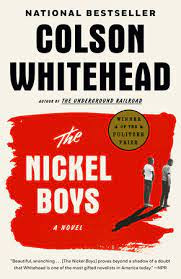
In Tallahassee, Florida, high school student Elwood Curtis is inspired by Martin Luther King Jr and the civil rights marches. As a young African American he is acutely aware of racism and his limited opportunities, but he remains optimistic that the civil rights movement will bring about vital change. Elwood is intelligent and his high school curriculum is far beneath him. A teacher sees his potential and helps him secure a spot at a local college. But before he can start, a wrong turn finds Elwood charged with a crime and sent to the Nickel Academy, a reform school.

The Nickel Academy is a terrible place where the boys are subject to hard labour and are brutalised with physical and sexual violence. Segregated by race, the white boys receive better treatment. Here Elwood befriends Jack Turner, who is the cynic to Elwood's optimist. Turner has street-smarts and is determined to survive Nickel, while Elwood has misplaced faith in systems that are supposed to protect children. The longer he stays at Nickel, the more he sees that the system is corrupt and unwritten rules are subject to change. When it becomes apparent that Elwood's life is endangered by staying at Nickel, the boys attempt to escape. 

Told on two time horizons, the chapters switch between 1960s Florida and Elwood's time at Nickel, to 2010s  in New York City where Elwood is trying to live the best life he can, still haunted by his childhood trauma. The portrayals of these characters - particularly Elwood and Turner - is so compelling, the reader cannot help but be invested in their future and rooting for their success. 

Nickel Academy was inspired by the Arthur G Dozier School for Boys in Marianna, Florida. This notorious reform school was the subject of multiple investigations and inquiries before it was closed in 2011. At Dozier, at least 80 boys had died from the brutal beatings, their unmarked graves discovered by anthropologists in 2012. Reading about Dozier, I am appalled at how authorities turned a blind eye for so long. 

The subject matter in this novel is confronting but essential reading. Whitehead handles these dark issues with crisp, beautiful prose. The depictions of violence need to shock as the physical violence against these children leaves to deep rooted scars that last a lifetime. The heartbreaking portrayal of entrenched racism reveal how little progress has been made since the 1960s. While reading The Nickel Boys (2019), I often thought of Percival Everett's brilliant satire The Trees (2021) and the tragic outcomes for Emmett Till and Elwood Curtis.

Unsurprisingly, Whitehead won the Pulitzer Prize for this novel. It is so well crafted, challenging readers to understand that this racism and injustice is not in the past, it is very much present. 

The Nickel Boys is definitely a contender to be one of my favourite books read this year.

I met Colson Whitehead at the Sydney Writers' Festival last month and he signed a stack of books for me, including The Nickel Boys.

Wednesday, 21 June 2023

Miles Franklin Shortlist 2023

The 2023 Miles Franklin Award shortlist was announced last night, made up of the following works:

  • Khgshak Akec - Hopeless Kingdom
  • Robbie Arnott - Limberlost
  • Jessica Au - Cold Enough for Snow
  • Shankari Chandran - Chai Time at Cinnamon Gardens
  • Yumna Kassab - The Lovers
  • Fiona Kelly McGregor - Iris

Richard Neville, Chair of the judging panel, said of the shortlist:
'The 2023 Miles shortlist celebrates six works that delve deeply into archives and memory, play confidently with style and structure and strike new grounds in language and form. From deeply immersive tales to polished jewels of craft, from lyrical mappings of land to convention-breaking chronicles, this is novel-writing at its freshest and boldest.'

When I predicted which titles would make the cut, I guessed that Arnott, Au, Coleman, Janson and McGregor would make the shortlist. I was only half right!  

There hasn't been much time between longlist and shortlist so I have not read any of these titles. However, I have long had an interest in Au, Arnott and McGregor. Having seen McGregor at the Sydney Writers' Festival talk about her novel Iris, I am going to root for this to win.

Each of the shortlisted authors will receive $5,000 and the Winner will receive $60,000. The winner will be revealed on 25 July 2023.

Saturday, 17 June 2023

Independent Women

At the recent Sydney Writers' Festival, I attended a session on the rise of independent candidates in Australian politics. One of the panelists was journalist Margot Saville who followed the so-called 'teal' candidates at the 2022 federal election and wrote a book called The Teal Revolution (2022). I was intrigued to learn more so picked up a copy at the festival.

Australian politics has been dominated by two major parties - Labor and the Coalition (Liberal and National parties) - with both losing ground to parties on the left and right. The Greens are the most established alternative, but Pauline Hanson's One Nation, Clive Palmer's United Australia Party, the Jacqui Lambie Network, Katter's Australian Party and others threaten to disrupt the hold of the two-party system. And then there are the independent candidates who do not align with any party.

I first became interested in the independents during the 2010 federal election when Julia Gillard's minority government secured confidence and supply agreements with the Greens and three independents. That same year, Andrew Wilkie was elected to represent Clark (Tasmania) and a few years later Cathy McGowan (Indi) ousted Sophie Mirabella (a long-term Liberal representative). These independents seemed to be community-minded voices of reason. Helen Haines' election in 2019, following McGowan's retirement, marked the first independently-held seat to retain independence despite the change of candidate. Like her predecessor, Haines has contributed greatly to the Parliament, leading the call for a Federal Independent Commission Against Corruption. In 2019 independent Zali Steggall (Warringah) was victorious over former Prime Minister Tony Abbott on a climate change platform.

The 2022 election was remarkable with six independent female candidates running in apparently safe traditionally Liberal seats. In NSW Allegra Spender ran in Wentworth, Kylea Tink in North Sydney, Dr Sophie Scamps in Mackellar. In Victoria Dr Monique Ryan took on Treasurer Josh Frydenberg in Kooyong, and Zoe Daniel unseated Tim Wilson in Goldstein. In Western Australia, Kate Chaney ran in Curtin. Each of these women were high achieving professionals who rallied grassroots campaigns on issues of integrity and climate change.

Saville begins by answering the question 'who are the teals?'. Dubbed the teals by the media to reflect 'a mix of blue for conservative liberal economic values, and green for their focus on effective action on climate change' (p1). If the Liberal/National party had been more progressive and less patriarchal, these women would have been prized candidates. These electorates may be affluent, educated and traditionally conservative, but they want action on issues that matter to them and have long been taken for granted. 

Saville details how these grassroots campaigns begun and built momentum, how they were supported by Climate 200 and a groundswell of volunteers, and how they were victorious despite the well-resourced campaign machines of their opponents. Saville follows these campaigns in the lead up to the formal election period, and throughout the intense six weeks to election. In the epilogue she writes about what might happen next. Clearly the Australian electorate wants change and these women have shown how it is possible to achieve success. 

I appreciate the thoroughness of Saville's research, her keen analysis, and the way in which she brought the campaigns to life. I look forward to seeing the impact of these independents in the 47th Parliament of Australia.

Thursday, 15 June 2023

Women's Prize for Fiction Winner 2023

The winner of the 2023 Women's Prize for fiction has just been announced. Barbara Kingsolver has won for her novel, Demon Copperhead.  Kingsolver is the first author to have won this award twice, having been recognised in 2010 for her novel The Lacuna. 

Chair of Judges Louise Minchin announced the winner, stating:

“Barbara Kingsolver has written a towering, deeply powerful and significant book. In a year of outstanding fiction by women, we made a unanimous decision on Demon Copperhead as our winner. Brilliant and visceral, it is storytelling by an author at the top of her game. We were all deeply moved by Demon, his gentle optimism, resilience and determination despite everything being set against him.

An exposé of modern America, its opioid crisis and the detrimental treatment of deprived and maligned communities, Demon Copperhead tackles universal themes – from addiction and poverty, to family, love, and the power of friendship and art – it packs a triumphant emotional punch, and is a novel that will withstand the test of time.”

Set in Virginia, in the Appalachian Mountains, this is a modern re-imagining of Charles Dickens' David Copperfield

Kingsolver received the £30,000 prize and the award ‘Bessie’, a limited-edition bronze figurine. She is a Pulitzer Prize winning novelist, essayist and poet. Kingsolver is probably best known for The Poisonwood Bible (1998), The Lacuna (2009) and Flight Behavior (2012). 

I have started reading this epic novel and am intrigued by the homage to Dickens. 

Update: See my review of Barbara Kingsolver's Demon Copperhead (2022).


Friday, 9 June 2023

Sydney Writers' Festival 2023 - Day Five

Sunday 28 May 2023 was the last day of the Sydney Writer's Festival. My festival friend and I had tickets to two sessions but bought rush seats for two more.

Barrie Cassidy and Friends

We always love seeing former ABC Insiders host Barrie Cassidy in conversation with esteemed journalists about current affairs. This year his panel featured journalists Laura Tingle (ABC 7:30), Niki Savva (SMH/The Age) and Amy Remeikis (The Guardian). They talked about the year in politics and what has happened in the first year of the Albanese Labor government. (Exactly one year ago we saw Barrie in conversation on election day when the outcome was not yet known). 

The panel talked about the key moments of the past year - advancing The Uluru Statement from the Heart and announcing the referendum, re-establishing Australia's reputation globally, and restoring cabinet government. They also dissected some of the problems the government faces - the economy and the looming stage three tax cuts, the environment, and the shift towards independents. 

There was consensus among the panel that the opposition has lost its way - lurching further towards the fringe. Remeikis gave an impassioned plea to listen to younger people who will make up the majority of the electorate and are concerned about social justice, the environment and housing as priorities. In all, an excellent conversation.

Fifty Shades of Teal

Barrie Cassidy mentioned in his session that he was also chairing a panel discussing the rise of independent candidates, so we bought rush seats to attend. The panel featured Independent MP for Indi Helen Haines, philanthropist Simon Holmes A Court (The Big Teal) and journalist Margot Saville (The Teal Revolution). They discussed the success the independents had in the last election, unseating key Liberals in what were thought of as safe-seats, like Treasurer Josh Frydenberg in Kooyong. 

The panel discussed the dissatisfaction of voters in these electorates who were frustrated at the Liberal government's lack of action on climate change, the lack of integrity and the way they took their electorates for granted. Holmes A Court described how the Climate 200 campaign supported candidates and how the media presented the campaign as a billionaire influencing elections, when it was largely crowd-funding to support the campaign. Haines spoke about the role of the independents in Parliament and how in this term they have been given more opportunities to be involved. 

The rise of the independents is a fascinating evolution in Australian politics. After the session I bought a copy of Saville's book The Teal Revolution and I look forward to learning more. 

This is Their Life

Laura Tingle chaired a panel on writing biography with authors Paddy Manning (The Successor - about Lachlan Murdoch), Margaret Simons (Tanya Plibersek: On Her Own Terms), and Niki Savva (Bulldozed - about the Morrison government). The panel discussed the challenges of writing about other people's lives, especially when unauthorised or the subject is not cooperative.

One of the interesting parts of the discussion is about the personal lives of the people they are writing about and what is or is not in the public interest. Generally the thought was that the private lives of public people are off-limits, except where there was a contrast with their public persona (e.g. a conservative politician who espouses family values but is having an adulterous affair), or where something in a private life impacts a decision made (e.g. Plibersek deciding not to run for leadership so she could support her daughter).

The panel also discussed the challenge of publishers wanting a scoop to sell the book and the difference between writing about an individual or about a government. 

After the session I bought a copy of Manning's book The Successor which promises to be an interesting read. 

The Voice to Parliament

For our final session of the Sydney Writers' Festival we bought rush seats to hear about the Voice to Parliament and the book written by Indigenous leader Thomas Mayo and veteran journalist Kerry O'Brien, called The Voice to Parliament: All the detail you need. Chaired by lawyer Jennifer Robinson, the two men spoke about the Voice and this moment in the history of our nation where we have an opportunity to make a significant step towards Reconciliation. 

O'Brien spoke about why this is an important issue for him. He dismayed at the way the way this issue has been politicised and expects that the harm it will do to First Nations people will be similar to the harm done to the LGBTQIA+ community during the same-sex marriage plebiscite. 

Mayo spoke about the reasons why the Voice is needed, what it is and is not, and what it will mean to First Nations people if the referendum fails. He concluded the session, by standing centre-stage and reciting The Uluru Statement from the Heart. This was such a moving moment. While I have read the Uluru Statement many times, to have it articulated like this was breathtaking. 


So that's a wrap on my Sydney Writers' Festival 2023. Twenty-two sessions over five days, and I thoroughly enjoyed every single session. Highlights included:

  • The mateship between Sam Neill and Brian Brown 
  • Bernardine Evaristo talking about her work and life
  • Helen Garner and Hedley Thomas discussing crime and justice
  • Eleanor Catton discussing Birnam Wood with Beejay Silcox
  • Colson Whitehead's laughter in conversation with Michael Williams
  • Sarah Holland-Batt reading her poetry from The Jaguar
  • Amy Remeikis' voice of reason in the panel on politics with Barrie Cassidy
  • Thomas Mayo's rousing rendition of the Uluru Statement from the Heart
  • Meeting authors at book signings - including Sam Neill, Jane Harper, Geraldine Brooks, Eleanor Catton and many more.
  • Spending time with my festival friend!
I now have plenty of things to read before next year's festival!

Books Purchased at SWF2023

  • Peter Frankopan - The Silk Roads
  • Sarah Holland-Batt - The Jaguar
  • Suzie Miller - Prima Facie
  • Margot Saville - The Teal Revolution
  • Paddy Manning - The Successor
  • Thomas Mayo and Kerry O'Brien - The Voice to Parliament
  • Helen Garner - Honor and Other People's Children

Read more about my SWF2023 here:

  • SWF2023 - Overall impressions
  • Day One - Bernardine Evaristo; Shehan Karunatilaka
  • Day Two - Sophie Cunningham; Anne Casey-Hardy; Fiona Kelly McGregor; Brigitta Olubas; Robbie Arnott; George Monbiot; Sarah Holland-Batt; Jane Harper; Richard Fidler; Peter Frankopan
  • Day Three - Geraldine Brooks; Sally Colin-James; Pip Williams; Eleanor Catton; Raina MacIntyre; Clementine Ford; Colson Whitehead
  • Day Four - Jennifer Robinson; Hedley Thomas; Helen Garner; Sarah Krasnostein; Pip Williams; Richard Flanagan; Eleanor Catton; Colson Whitehead; Tracey Lien; Sam Neill; Bryan Brown
  • Day Five - Barrie Cassidy; Laura Tingle; Niki Savva; Amy Remeikis; Margot Saville; Simon Holmes A Court; Helen Haines; Margaret Simons; Paddy Manning; Kerry O'Brien; Thomas Mayo

Thursday, 1 June 2023

Sydney Writers' Festival 2023 - Day Four

On Saturday 27 May 2023 I was joined by my festival friend, who flew up from Melbourne to attend the Sydney Writers' Festival. Together we saw a bunch of fantastic sessions. 

Beginnings: Jennifer Robinson

Human rights lawyer Jennifer Robinson is best known in Australia for representing Julian Assange. She is a strong advocate who I have tremendous admiration for, so I was pleased to have the opportunity to hear her speak on the Curiosity Stage as part of the Beginnings series on Crimes and Histories. She read for five minutes from her book How Many More Women? Exposing how the law silences women (2022) which she co-authored with Keina Yoshida. The section she read was about a woman in the UK who wrote about the domestic violence she experienced on Facebook and her husband sued her for libel. As Robinson read this section my rage metre boiled over. It reminded me of The Hidden Gender of Law (2002) by Regina Graycar and Jenny Morgan which I read when I was at law school. 

Crime and Justice

I was so looking forward to this panel as it featured my favourite Australian writer, Helen Garner, and Hedley Thomas, the journalist who created The Teacher's Pet podcast I am obsessed with. The session was chaired by Sarah Krasnostein. 

Helen Garner has written a few books about a true crime case including The First Stone (1995),  Joe Cinque's Consolation (2004) and This House of Grief (2014). Krasnostein started by asking them what sparks interest in a story?

Garner spoke of the ambiguity, not knowing whether or not the person was guilty. In This House of Grief which followed the case of a man convicted of murdering his three sons by driving a car into a dam, Garner could not comprehend how someone could commit such a crime and was intrigued as the man was not a monster. She would not have written about the case if he was. 

Thomas on the other hand knew Chris Dawson, the man at the centre of his investigation 'was a bastard'. There was no question in his mind of Dawson's guilt of the murder of his wife Lynette Simms in 19982. 

Krasnostein asked them how they handled the long periods in which nothing happened. Garner is a journal keeper and she wrote daily of her reactions to the story, which helped her when it came time to write.  Thomas has started investigating the matter decades before and filled a box of files which he left in the roof of his carport. He had mulled it over for a long time and eventually decided the time was right to pull the story together. He started a podcast in 2018 which snowballed as more witnesses came forward as episodes aired.  

This was a fascinating discussion about journalism and justice. Thomas is currently writing a book on the Dawson case which I am eagerly anticipating. Garner has become obsessed with AFL as she takes her grandson to his matches. She is a Bulldogs fan and may write something about this. I am not a fan of sports ball, but Garner can make anything interesting. 

Unfortunately, Garner did not attend the booksigning afterwards. 

Pip Williams: The Bookbinder of Jericho

I am currently reading The Dictionary of Lost Words (2021) and had hoped to have finished it prior to seeing Pip Williams at the festival, but alas.

In this session, Williams was interviewed by Cassie McCullagh about her newest 'companion' novel, The Bookbinder of Jericho (2023). While I had seen Williams the day before as part of the panel on historical novels, the content of this session was entirely different. She explained that this novel is set in WWI and as the men enlist to fight in the war, the women have to take up occupations to keep the country running. 

Twin sisters Peggy and Maude work at the bookbinding department at Oxford University Press. Their job is to fold and gather the pages that will be sewn together to make books. Peggy is keen to read these books, but only accesses sections in this factory-like setting. Oxford is divided into town (workers) and gown (university) and she is very much on the town side, but looks longingly across the road to Somerville College where women learn. When European refugees arrive in Oxford fleeing the war, Pegg's mind is opened in new ways.

Williams explained that she wanted to write about working class women who were largely invisible. Her process was to write at least one word per day so she always feels she has made progress and has a sense of achievement.

McCullagh asked her about the success of The Dictionary of Lost Words. Williams explained that it sold beyond expectations, has been translated into dozens of languages, turned into a play and now optioned for a TV series. She said she gave the playwright and the screenwriters free rein, as she feels it is important that they adapt the story in their own ways. Williams says she plans to write a third companion novel, but wants to do something different first.

Panel: The State of the Art

I chose this panel as I really wanted to see Richard Flanagan (The Narrow Road to the Deep North), in conversation with Eleanor Catton (Birnam Wood), Colson Whitehead (Harlem Shuffle) and Tracey Lien (All that is Left Unsaid). This session was chaired by Kate Evans. 

Evans began by asking each of them 'What is the state of your art?'. As a debut novelist, Lien spoke about moving from journalism to fiction writing. Colson spoke about wanting to try new genres. Flanagan and Catton also spoke about wanting to evolve in their writing and try new things. 

They were asked about threats to the novel by artificial intelligence. Lien gave an excellent answer to this, explaining that ChatGPT will never give the soul needed to a novel. Evans asked Whitehead about censorship and the book banning that is happening across America. Whitehead explained he is more fearful of the impact of gun violence, while Catton said this kind of censorship can happen anywhere. Flanagan said the greatest threat to fiction is the lack of funding for the arts and the monopoly of booksellers like Amazon which drive down the wages of writers.

Evans concluded by asking about the future of the novel. All authors were optimistic about the state of the art. This was an intelligent, thoughtful discussion and it was wonderful to have these novelists together on stage. 

Sam Neill: Did I Ever Tell You This?

We then raced into the city to the glorious Town Hall to hear Sam Neill in conversation with his dear friend Bryan Brown about Neill's memoir Did I Ever Tell You This?

Brown started by asking him about why he wrote a memoir. Neill explained that he was diagnosed with cancer and her wanted to write stories of his life for his children. So he wrote memories about his childhood, his parents, the early days of Australian cinema, and his brilliant career.

Neill spoke about career highlights and lowlights,  telling tales about when he got the call from Spielberg about Jurassic Park. The two men spoke about the 1970s and 1980s in Australian cinema and their mutual friends Wendy Hughes, Roger Donaldson and others who impacted their careers. 

What I loved about this session was the mateship between the two men and their deep love and affection for each other. They had a genuine banter and were able to tackle both the serious and frivolous in this session. 

After the session I met Sam Neill when he signed a copy of his book for me.


Book Signings

I have met a lot of writers and had many books signed over the year's but tonight's book signing was awesome. Sam Neill signed a copy of Did I Ever Tell You This? There was a very long queue and I believe I was around #70 in the line. He was a genuinely likeable man, giving time to each person he met. He asked me what I had been doing that day and I explained I had been attending the festival all week. He then asked for my expert opinion on his session, 'was it any good?'.  I told him it was pretty good, top five maybe. I told him Bryan Brown was excellent and I look forward to Brown writing a memoir, which gave him a laugh. I ended up leaving Town Hall well after 10pm - so in all a huge day at the Festival.

Read more about my SWF2023 here:

  • SWF2023 - Overall impressions
  • Day One - Bernardine Evaristo; Shehan Karunatilaka
  • Day Two - Sophie Cunningham; Anne Casey-Hardy; Fiona Kelly McGregor; Brigitta Olubas; Robbie Arnott; George Monbiot; Sarah Holland-Batt; Jane Harper; Richard Fidler; Peter Frankopan
  • Day Three - Geraldine Brooks; Sally Colin-James; Pip Williams; Eleanor Catton; Raina MacIntyre; Clementine Ford; Colson Whitehead
  • Day Four - Jennifer Robinson; Hedley Thomas; Helen Garner; Sarah Krasnostein; Pip Williams; Richard Flanagan; Eleanor Catton; Colson Whitehead; Tracey Lien; Sam Neill; Bryan Brown
  • Day Five - Barrie Cassidy; Laura Tingle; Niki Savva; Amy Remeikis; Margot Saville; Simon Holmes A Court; Helen Haines; Margaret Simons; Paddy Manning; Kerry O'Brien; Thomas Mayo

Wednesday, 31 May 2023

Sydney Writers' Festival 2023 - Day Three

On Friday 26 May 2023 I had tickets for three sessions but also saw two more on the Curiosity Stage. 

Bringing the Past to Life

I really wanted to see Geraldine Brooks at SWF and tossed up between attending her solo session about her latest novel Horse, or attending this panel session on writing historical novels. I am so pleased that I went with the panel session, as it allowed me to learn more about the craft of historical novel writing and hear from authors I may not have seen otherwise. 

This session was chaired by Kate Evans and featured Geraldine Brooks, Pip Williams (The Dictionary of Lost Words) and Sally Colin-James (One Illumined Thread). Evans asked each of the women to think of an object which sparked their interest in the subject of their novels. Brooks spoke about the skeleton of the racehorse Lexington which had been in the attic of the Smithsonian, for Williams it was a bone folder used in traditional bookbinding, and for Colin-James it was a black glass vial with a stopper. 

They each told the backstory of their novels and what drew them to it. To be honest, prior to the session I wasn't really interested in Geraldine Brooks' novel Horse as I find all sports with animals abhorrent. But as she spoke about the book, I realised it was a far deeper story. Brooks said 'I thought it was just going to be about the horse' but she soon learned that slavery underpinned the horsing industry. Her story about the book was so interesting, I ended up getting a copy of the book after the session!
Both Williams and Colin-James wrote about women who were largely invisible. I had never heard of Colin-James or her novel One Illumined Thread, which is a sweeping tale that begins in King Herod's Judea and traverses time to Renaissance Florence and modern day Australia.

The panel spoke about their research process and agreed that sometimes you can go down rabbit-holes that may not be helpful. Brooks said 'I let the story tell me what I need to know. There is a risk you get lost in the research. I try and resist cramming everything in and follow the line of fact as far as it leads.' 

After the session I met Pip Williams and she signed a copy of The Dictionary of Lost Words for me. I had met Brooks the day before at the book signing.

Eleanor Catton: Birnam Wood

Having finished Birnam Wood just days before the festival, I was thrilled to attend the session on the book with author Eleanor Catton interviewed by Beejay Silcox. 

This was a fascinating session. Catton is erudite, articulate and accessible. Silcox asked such thought-provoking questions that added greatly to my admiration of both the author and the novel. 

Catton was interested in irony. 'We often feel most ourselves when pretending to be someone else. I knew I wanted to write a Shakespearian tragedy.' She spoke about Macbeth and his addiction to prophecy and how any one of the novel's characters could be Macbeth as each has a blindspot which risks bring about their downfall and a Lady Macbeth character on their shoulder. 

Silcox praised her writing and the complex themes across the novel, particularly as it was unclear where Catton stood on the topics raised. 

Catton said she was influenced by Jane Austen's Emma and praised the way the reader is able to see things that Emma does not (like Mr Elton's desire for her), and as such the reader feels superior - 'the exact quality that Austen satirises'. Catton said that 'Austen is the heir to Shakespeare's comedy. There is not much difference between comedy and tragedy. Any book that takes human beings seriously needs to be a comedy.' I now want to re-read Birnam Wood and reflect on the Austen influence.

After the session I met Cattton at the book signing where she signed my copies of Birnam Wood and The Luminaries

Raina MacIntyre: Dark Winter

Next up, I swung by the Curiosity stage to listen to UNSW Professor Raina MacIntyre, epidemiologist, speak about pandemics. 

MacIntyre was the voice of reason I listened to throughout the pandemic and I was interested to hear what she was talking about. She has just written a book, Dark Winter: An insider's guide to pandemics and biosecurity (2022), and talked about the recurring pattens of denial and failure to learn from each outbreak. 

She spoke about virus mutations, engineering, lab leaks, and cover ups - giving examples of historical and contemporary events. She also talked about insider threats and information warfare.

It was a fascinating session but one which turned my anxiety up to 11! By my reckoning, less than 10% of festival attendees wore masks despite the new wave of COVID and the bad flu season. I wore one throughout and after MacIntyre's session I am so glad I did!

Clementine Ford: The Myth of Marital Happiness

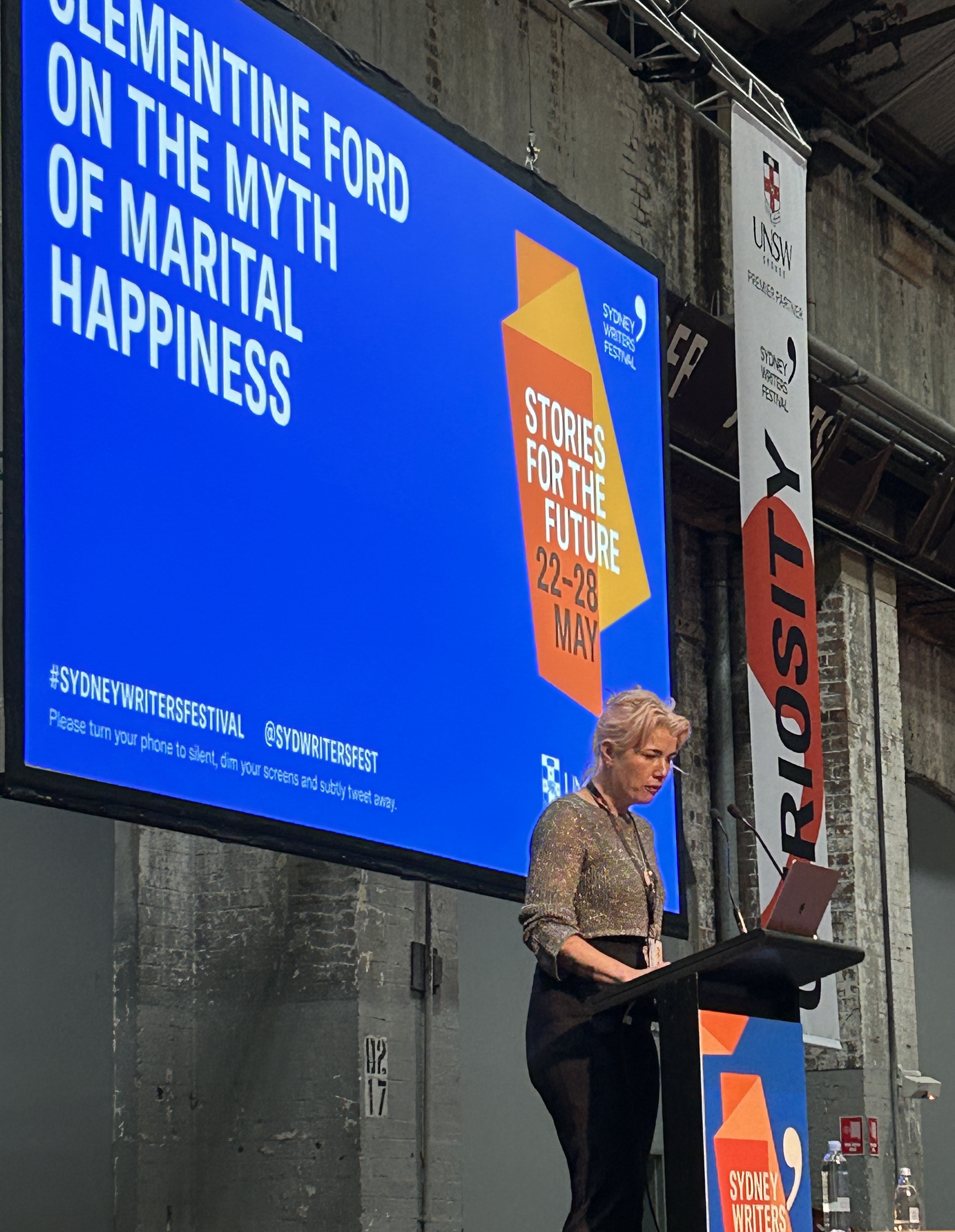
I stayed at the Curiousity stage to hear feminist writer Clementine Ford deliver a talk from her forthcoming book I Don't, due for publication on 31 October 2023. In this lecture Ford spoke about weddings and various traditions that have arisen in the recent past to further the objectives of the 'wedding industrial complex'. She spoke about bouquet tosses, virginity tests, white wedding dresses and more. She also spoke about the cost premium on weddings (venues, flowers, cakes etc). I have a real soft spot for Ford as a fearless and outspoken advocate for women. I enjoyed this session and will most likely read her book when it is published.


Colson Whitehead: Harlem Shuffle

American Pulitzer Prize winning novelist Colson Whitehead was interviewed by Michael Williams about his latest book Harlem Shuffle (2021) and his forthcoming sequel Crook Manifesto (2023). 

Williams began by asking him why he changed genre from book to book. Whitehead explained that he admires filmmakers like Scorsese and Kubrick who push themselves to do something different each time. He said 'usually when I am done I want to do something very different.' After the success of The Underground Railroad and The Nickel Boys, he decided he wanted to do a heist novel. 

He said 'I love the heist genre' and referred to great heist films like Ocean's 11, Rafifi and Asphalt Jungle.  They spoke about the mechanics of a heist, bring a crew together. Williams asked him who he would be in heist. Whitehead suggested he would be the master planner or demolition expert. He said he wouldn't be the wheelman as he only got his driver's licence a year ago. 
In Harlem Shuffle the protagonist is the fence, an unusual choice. The novel is divided into three capers, and is the first of a trilogy of novels. This one is set in the 1950s and 1960s, but the sequels will age with Ray through the decades. 

After the session I met Colson Whitehead and he signed copies of The Underground Railroad,  The Nickel Boys and Harlem Shuffle for me. While I haven't bought it yet, his zombie novel Zone One is also of interest.

Book Signings 

Today I met Pip Williams, Eleanor Catton and Colson Whitehead and had the following books signed; 

  • Pip Williams - The Dictionary of Lost Words (2020) 
  • Eleanor Catton - The Luminaries
  • Eleanor Catton - Birnam Wood
  • Colson Whitehead - The Nickel Boys
  • Colson Whitehead - The Underground Railroad
  • Colson Whitehead - Harlem Shuffle

Read more about my SWF2023 here:

  • SWF2023 - Overall impressions
  • Day One - Bernardine Evaristo; Shehan Karunatilaka
  • Day Two - Sophie Cunningham; Anne Casey-Hardy; Fiona Kelly McGregor; Brigitta Olubas; Robbie Arnott; George Monbiot; Sarah Holland-Batt; Jane Harper; Richard Fidler; Peter Frankopan
  • Day Three - Geraldine Brooks; Sally Colin-James; Pip Williams; Eleanor Catton; Raina MacIntyre; Clementine Ford; Colson Whitehead
  • Day Four - Jennifer Robinson; Hedley Thomas; Helen Garner; Sarah Krasnostein; Pip Williams; Richard Flanagan; Eleanor Catton; Colson Whitehead; Tracey Lien; Sam Neill; Bryan Brown
  • Day Five - Barrie Cassidy; Laura Tingle; Niki Savva; Amy Remeikis; Margot Saville; Simon Holmes A Court; Helen Haines; Margaret Simons; Paddy Manning; Kerry O'Brien; Thomas Mayo