Saturday, 21 July 2018

Holiday (Un)Reads

For the entire month of June I travelled with my family throughout the United Kingdom. We drove from Edinburgh down to London, passing through Glasgow, the Lake District, York, Manchester, Cambridge, Norfolk and Suffolk, and beyond.

With two 24 hour flights from Australia to London and back, and countless hours on trains and other forms of transport, I figured I would have a lot of time to read. Before I left I carefully planned my holiday reading, loading up my e-reader with books inspired by my travel plans. However, with the hustle and bustle of sightseeing and catching up with friends I came home having read none! So here's a look at what I didn't read on my vacation.

Our first stop was London, and I had tickets to see Hamilton in the West End. Some weeks before my trip I started reading Ron Chernow's bestselling biography Hamilton (2004), on which the musical was based. It is an interesting read, although I have not yet finished it.  Historical political biographies can be dry and dull, but not Chernow's. Hamilton is such a fascinating character, coming from nothing to be a Founding Father of a new America. I look forward to continuing this book now that I am home.

Lin-Manuel Miranda's musical is an incredible adaptation of this biography. Mum and I scored front row seats and were literally within spitting distance of the action. The diverse West End cast were gifted actors who drew us into the story from the moment they stepped on stage. Since returning from holidays the soundtrack has been played on repeat during my daily commute and I cannot wait to see this show again if they ever bring it to Australia.

We travelled by train from Kings Cross to Edinburgh Waverley - a lovely trip through the countryside. Each time I journey this way I marvel at how the scenery changes once you cross into Scotland; the landscape becoming rugged and green. For my train trip I flicked through my ereader and found a title to enjoy: Patricia Highsmith's Strangers on a Train (1950). The story is about two men who meet on a train and agree to swap murders. Highsmith is a gifted writer and I always enjoy her work. Alas, I did not finish it before the end of my trip, and will need to pick it up again on or before my next train journey.

Edinburgh always feels like a second home to me. I have many fond memories of past visits, and delight in catching up with old friends whenever I am in town. Each time I go to Edinburgh I get a hankering to read Ian Rankin. As you wander down the Royal Mile, and peek in the closes, you feel as though you are walking alongside Inspector Rebus. 

Throughout the 1990s, long before I began blogging, I was obsessed with Rebus and read the books in order from Knots and Crosses (1987) to The Hanging Garden (1998), savouring each one and anxious for the next instalment. Then the TV series came, and I got distracted by new obsessions so did not return to Rebus. I thought I would get back into Rebus with book #10, Dead Souls (1999) on this trip but my reading time was limited in Scotland by my hectic social life, and I will have to save this for another day.


After a couple of days in Glasgow I was drawn to architect and designer Charles Rennie Mackintosh more than to any authors or books. I love Mackintosh's art deco work and enjoyed time visiting his home and tea rooms. It was devastating to hear that his Glasgow School of the Arts building was destroyed by fire a few days after we left the city. 

Our next stop was the Lake District, where we stayed in an isolated art deco hotel on the edge of a lake. As my family and I sat in the dining room, we remarked how very Christiesque the setting was, as if Poirot himself would suddenly appear and deduce which among us was a murderer! The location was beautiful and had we more time there, I would have loved to curl up in a leather armchair in front of the fire and read the next Agatha Christie on my list, The Murder of Roger Ackroyd (1926), as it would have been the perfect setting. 

The Lake District is a beautiful part of England and we enjoyed several days here, visiting family history sites and taking in the scenery. One of the highlights of our stay was our visit to Beatrix Potter's home Hill Top. We toured her cottage and garden and enjoyed lunch in a local historic pub. It was lovely to see the setting of the tales I enjoyed so much as a child. As we strolled around her home and nearby village you could sense Peter Rabbit, Flopsy, Jemima Puddle-Duck, Squirrel Nutkin, Tom Kitten and so many more beloved characters. 

After a brief stop in York we arrived in Manchester, a delightful city infused with a rich culture. We visited the Lowry, and saw the incredible 'Matchstick Men' works of Salford's most famous artist LS Lowry. We visited the stunning Manchester Central Library and I delighted in the displays on the women's suffrage movement. 

Manchester has a diverse literary history with writers from Karl Marx to Anthony Burgess having lived and/or worked here. For me Manchester is all about Elizabeth Gaskell, one of my favourite writers of all time. I have read many of her works, including North and South (1855) and Wives and Daughters (1865) several times, but the one book I was hoping to read on this trip was her first novel Mary Barton (1848). I had also wanted to visit her home in Manchester but it is only open three days a week and did not align with our travel plans. Something to look forward to on my next visit...

We spent a week or so travelling across the English countryside through Cambridgeshire, Norfolk, Suffolk, and Hertfordshire. Our days were filled with family history, churches and cathedrals, and even the viking burial ground at Sutton Hoo. 

Every time I visit England I think about Jane Austen. On this trip, Austen loomed even larger as we went to Gretna Green, spent a day in Bath and went to the Jane Austen Centre, and travelled around Hertfordshire. Austen was a pervasive figure on our trip. I have read all of Austen's novels countless times and each re-read reveals something new. I didn't even attempt to delve into one again on this trip, although I did get very nostalgic and almost tempted by Persuasion!

Back in London for our last few days we wandered through Bloomsbury, once home to writers like JM Barrie, Charles Dickens, John Wyndham, William Butler Yeats and Virginia Woolf. We visited Denmark Street, home and workplace of Detective Cormoran Strike, en route to Foyles Bookstore on Charing Cross. We also attended the hilarious West End production of Book of Mormon (a book I have no desire to read). 

I did pick up a few books on my travels that I have long wanted to read including Janet Malcolm's The Journalist and the Murderer, and Julian Stodd's Social Leadership Handbook, but elected to pack them in my suitcase, rather than read them on the return voyage home.

While I didn't actually finish any books on my holiday, I had an incredible month of learning and came home with a renewed passion for literature. Best get reading then...

Tuesday, 5 June 2018

End of Watch

On a crisp autumnal Sunday afternoon, I curled up with a cup of tea and spent a few hours in the company of an old friend, Helen Garner's The Spare Room (2008).  

Garner is my favourite Australian author and having seen her recently at the Sydney Writers' Festival I have been on a bit of a Garner kick - reading or rereading some of her work. The Spare Room is a delightful short novel that can be read in a few hours.  

Set in Melbourne, Helen is busily preparing her home for the Nicola's arrival. Nicola has come to stay with her for three weeks while she undergoes treatment for her advanced cancer at the Theodore Institute, a clinic offering hope to the terminally ill by way of vitamin C injections and caffeine enemas. As Helen spends her days in waiting rooms and nights changing sheets, tending for her friend, she suspects the treatments are doing more harm then good. She grows frustrated with Nicola’s unwillingness to come to terms with her situation and finds it difficult to be a supportive friend. 
Anyone who has cared for someone during a debilitating illness will be able to relate to this story.

I love Garner’s crisp prose. She has an uncanny ability to get under the skin of a character and doesn’t shy away from a situation riddled with complexities. This book is deceptively simple but provides much to think about long after you have turned the last page. 

Sunday, 27 May 2018

The Wanderer

With a lot on at work, I was looking for a quick and easy, escapist read. I grabbed a copy of Lee Child's Killing Floor (1997), the first novel in the bestselling Jack Reacher series, and read it on my daily commute over the course of a week.

Reacher is a former military police officer who was passing through the town of Margrave, Georgia when he was arrested for a murder he knows nothing about. Without identification or an alibi, Reacher is definitely in the wrong place at the wrong time. As he works to convince Detective Finlay and Officer Roscoe of his innocence, Reacher needs to figure out who the real killer is to be exonerated. But what looks like a simple murder is actually a much bigger crime with far reaching consequences.

Having spent several days with Jack Reacher, I am utterly perplexed by the popularity of this series. Reacher is a ridiculous confection - tall, handsome, smart, and able to take out five guys with his bare hands, he easily picks up the only woman in town for mind-blowing shower sex, and inevitably breaks the case wide-open. 

A few times I felt like giving up on this book, but I kept going as it was an easy read and there was enough of a plot to move the story along. But the prose is dreadful, with Child relying on short, dull, repetitive sentences ("There was carpet"). The dialogue is simplistic and the mystery has gaping holes. I also had to remind myself that the book is twenty years old, when I was wondering why they were using fax machines and landlines. And yet, there was enough momentum to make me want to learn how the story would pan out.

From what I understand Child's writing improves as the 22 books in the series progress. I doubt I will read any more Reacher novels but at least I now know what the hype is about.

Saturday, 26 May 2018

Miles Franklin Award Longlist 2018

The Miles Franklin Award is the most prestigious literary award in Australia, with a cash prize of $60,000 and the opportunity to join the ranks of past winners including Frank Morehouse, Tim Winton, David Malouf, Peter Carey, Sofie Laguna and Anna Funder.

The 2018 Longlist was announced this week and it includes some familiar faces along with those less well known.

The Longlist is:

Peter Carey - A Long Way From Home
Two time Booker Prize winner, and past Miles Franklin Award recipient, Peter Carey's latest novel is set in 1950s Victoria. It revolves around a couple who love cars and embark upon an epic motor challenge to circumnavigate Australia. This is Carey's 14th novel.


Felicity Castagna - No More Boats
In 2001 the Norwegian container ship, Tampa, picked up 438 refugees who were sinking en route to Australia. The captain wanted to dock and offload the refugees, but the Australian government refused access to any port. Castagna uses this event as the backdrop for her novel about migration, multiculturalism and empathy. Castagna previously won the Prime Minister's Literary Award for her book The Incredible Here and Now (2014).


Michelle de Krester - The Life to Come
Set in Sydney, Paris and Sri Lanka, the satirical story explores themes of intimacy, friendship and loneliness. De Krester won the Miles Franklin Award in 2013 for Questions of Travel. This novel was also on the shortlist for this year's Stella Prize.


Lia Hills - The Crying Place
This is a novel about friendship, grief and guilt. Saul wants to know why his best friend Jed killed himself, so sets out to discover why. He journeys into Central Australia, to the remote Aboriginal Community where Jed recently worked.


Eva Hornung - The Last Garden
In a small Lutheran settlement Warheit, a murder-suicide shatters young Benedict. He hides in a barn with his beloved horses to mourn. The community's spiritual leader Pastor Helfgott watches over the boy. This novel won the 2018 Premier's Award at the Adelaide Festival Awards for Literature.


Wayne Macauley - Some Tests
In this dark satirical novel, aged-care worker Beth is sent to a doctor for some tests. These lead to more tests and referrals to specialists searching for what is wrong with her. But is there actually anything wrong?


Catherine McKinnon - Storyland
In this novel, five interwoven stories explore diverse people in and around  Lake Illawarra over a period of almost 500 years. From Matthew Flinders' first encounter with local indigenous peoples to early colonisation and on through the years to the near-future, the novel blends historical, literary and dystopian fiction.


Gerald Murnane - Border Districts
The New York Times recently called Gerald Murnane "the greatest living English language writer most people have never heard of". I was one of those people and have never read any of his books. This is purported to be his last work. The story revolves around a man who moves from Melbourne to a remote town to live out the rest of his life.


Jane Rawson - From the Wreck
In August 1859 was shipwrecked off the coast of South Australia with most of the passengers clinging to wreckage for days on end before perishing. This novel tells the story of George Hills, one of the survivors and how he made it with supernatural assistance.


Michael Sala - The Restorer
Separated from her husband  Roy for a year, Maryanne decides to give her marriage another try. To rebuild their family life, they move from Sydney to Newcastle and start to restore a derelict property. The novel is told from the perspective of the couples teenage daughter.


Kim Scott - Taboo
Scott has won the Miles Franklin on two previous occasions for his novels: That Deadman Dance (2010) and Benang (1999). His latest novel tells the story of the Noogar people of Western Australia who revisit a site of a massacre. The farmer who owns the land today hopes the presence of these visitors will cleanse the land of its' past sins.


The Shortlist will be announced 17 June 2018 and the winner will be revealed on 26 August.

Sunday, 13 May 2018

Sydney Writers' Festival - My Big Weekend (pt 2)

After a long day at the Festival, I opted for a shorter Sunday of only four sessions.

Sunday 6 May 2018

Amy Goldstein - Janesville
Washington Post journalist Amy Goldstein is interested in how economics affect people. She spoke with George Megalogenis about her book Janesville - a case study in the impact of the recession on a Midwestern town.

During the global financial crisis, Goldstein was looking for a story about people falling out of the middle class onto welfare. Goldstein said that 'The American dream has a forward trajectory and these people were heading downward.' While most reporters were taking the macro-view, Goldstein went to Janesville Wisconsin, a microcosm of what was happening.

Goldstein wanted to write about this particular downturn, not decades of boom and bust. So Janesville was the right place as it had survived past depressions/recessions. The General Motors plant was the main employer in Janesville, and most of the other businesses in town were suppliers to GM or the people who worked there.

GM was having difficulty, as the gas-guzzling SUVs made at the plant were not selling due to the high price of petrol. Instead of changing to another vehicle, GM decided to close its plant - ending the employment of 9,000 of Janesville's 63,000 people.

Goldstein followed three families for five years to see what would happen to them. One of her most interesting findings was around the retraining of retrenched workers. Surprisingly, she found that those who did not undertake training were better off.

Last year I read JD Vance's Hillbilly Elegy, a fascinating first person account of growing up in the rust-belt. Janesville sounds just as interesting, and if it was good enough for Obama, it is good enough for me. I bought a copy of Janesville, signed by Goldstein. and look forward to reading it.

Tegan Bennett Daylight and Charlotte Wood - If you don't laugh, you'll cry
I am a great admirer of Australian authors Tegan Bennett Daylight and Charlotte Wood so jumped at the chance to hear them talk about how humour can enliven even the most serious literature.

Wood and Daylight spoke about writers who use laughter in their writing which beings about a rhythm. Daylight is a huge fan of George Saunders and read extracts of his short stories. Wood agreed that 'Saunders' humour is in the sadness'. Wood finds Anne Enright is funny in a dark way, likewise Edna O'Brien is self-depreciating and puts humour in her woundedness.

The authors talked about Australian novelist Kim Scott and how he uses humour to diffuse the hurt, and that play is an important part of his work.

They spoke about boring characters and how witty they can be. Daylight told how Jane Austen does this in a brilliant way - for example in Pride and Prejudice's Mr Collins, who is pompous and boring. Wood recommended the pretentious Maynard in Joan London's The Good Parents.

Saying the unsayable is also a source of humour. They referred to Helen Garner's essay 'The Indignity of Age' and Elizabeth Strout's Olive Kittredge, where older women behave appallingly.

They then turned to their own works and how they use humour. Neither author is promoting new works (alas!), but I can highly recommend Daylight's Six Bedrooms and Wood's The Natural Way of Things.  When Natural Way was being published in America, the publishers changed 'ute' to 'pick-up' and a few other Australian-isms were lost. I think this is a shame, as readers can look words up and learn as they read. But Wood and Daylight found the humour in that.

Various Speakers - The Changing Face of Australia
My final panel of the festival was on the topic of the shifting make up of Australia with the influx of migrants from China, India and the Philippines.

Race Discrimination Commissioner Tim Soutphommasane spoke of the waves of migrants - British, then European, and then, once the White Australia Policy ended, increasingly non-white migrants from all over the world. He said that 85% of Australian feel multiculturalism is good for our nation, and 80% say we should not discriminate with immigration. He spoke of the dangers of the global rise of far right movements.

Former Foreign Minister Gareth Evans said he has been advocating for diversity for 50 years. He spoke of the decline of learning Asian languages in school and how short-sighted that is. He also spoke about Peter Dutton and his dog-whistling (e.g. favouring white South African farmers over Syrian refugees).

Linda Jaivin spoke about how we talk of 'China' without realising that Chinese is not a homogenous group. We also speak of China when we mean the political institutions and we should be referring to Beijing, the way we speak of Washington or Canberra. Jaivin is a huge advocate for Australians learning more about Chinese culture, history and language. It was great to hear Jaivin speak, as I admired her Quarterly Essay on translation.

The Lowy Institute's Richard McGregor spoke about how in America the elite is culturally diverse, but in Australia it is not. He spoke about the changing global world order, with China wanting America to go through a bourgeois decline.

I really like George Megalogenis as a writer (e.g. Quarterly Essay QE61) but not so much as a facilitator. In both sessions today it felt like he was disinterested and disengaged. He spoke to the audience coldly and (as he wanted to monitor the session times) was frequently checking his phone, which gave the impression of disrespect to the speaker and those in attendance. I would think twice before attending his sessions in the future.

Jennifer Egan - Closing Address
The final session of the Festival was the closing address by Pulitzer Prize winning author, Jennifer Egan. I didn't know what to expect from this session, only that she would be talking about technology and fiction. She said she thought it was ironic that she was taking on this subject since she still writes all her novels by hand.


Egan described her youth and how she took a gap year in 1981 when she realised she didn't want to be an archaeologist but had no other plan. She backpacked across Europe at 18, armed only with a Eurorail pass and a journal. In those days she was genuinely isolated from everyone, but 'writing tied me to the world'. She said she would 'never have experienced the solitude that lead me to be a writer' if she were doing this today.

She spoke of the nostalgia we often have for a time we never experienced, and how this has fuelled her writing. Egan then went on to talk about her various books- Invisible Circus, Look at Me, A Visit from the Goon Squad - and her latest Manhattan Beach. In each one she has experimented with form - for example, Goon Squad was designed to be like a concept album and has a chapter written as a PowerPoint presentation. She also described the Twitter Novella she wrote called The Black Box, for the New Yorker.

Egan also spoke about the importance of empathy, how it is our chief tool as writers for bringing people into another person's consciousness. If writers do this well, people will read.

It was an interesting lecture and a great end to the festival.

Final Musings
A few thoughts on the festival itself: I have been to the Sydney Writers' Festival quite a few times and I have always struggled to pick sessions as there have been so many I want to see, often two or three in each timeslot. This year I felt the program was a bit flat, and I struggled to find sessions I really wanted to attend. I really liked the new Carriageworks venue - it is warmer and easier to hear speakers there than the Wharf venue. The walk to Seymour Centre was not too far. I am also pleased to see Gleebooks is still involved. I will definitely be back again!

See also:

Saturday, 12 May 2018

Sydney Writers' Festival - My Big Weekend (pt 1)

I spent the weekend of 5-6 May 2018 at the Sydney Writers' Festival, attending ten sessions over the two days. Here's a run-down of my weekend at the Festival.

Saturday 5 May 2018

Sarah Krasnostein - The Trauma Cleaner
Krasnostein was attending a legal conference when she met Sandra Pankhurst, a trauma cleaner. Intrigued by this unusual profession, Krasnostein sought to learn more, quickly discovering that Pankhurst's job was the least interesting thing about her.

Assigned male at birth, Pankhurst has a life story that includes adoption, assault, marriage, parenting, prostitution, gender reassignment and running a business. Krasnostein said Pankhurst's character 'would not be believed if the book were fiction'.

Krasnostein spoke of the challenges of writing without the certainty of facts and figures. Pankhurst has many time gaps, and chronological difficulties. She said she needed a good spreadsheet to keep track of everyone.

Spending so much time with her subject, attending crime scenes and hoarder clean ups with her, Krasnostein was overwhelmed by empathy and spoke about the problem of exclusion and isolation.

For several months I have been in the queue at City of Sydney Libraries to get a copy of this book. I have finally been able to release my reserve as I purchased a copy and had it signed by the author. The Trauma Cleaner has won countless awards including the Victorian Premier's Literary Award for Non-Fiction.

Peter Greste - The First Casualty
Journalist Hugh Riminton interviews Peter Greste about his career as a foreign correspondent, his time in prison in Egypt on false terrorism charges and his book The First Casualty about the assault on freedom of the press.

The session was timely as nine journalists had been killed this week in a suicide bomb attack specifically targeting the media. Greste spoke about how other journalists have been attacked, including Maria Grazia Cutuli and his colleague Kate Peyton. He sees his unjust incarceration as part of this continuum of undermining the media.

Greste spoke about the changing nature of war. What was once a conflict over tangible things - water, land etc - since 9/11 wars have been fought over ideas. Journalists have become targeted because they are vectors for those ideas.

In order to do their job, journalists need to get the whole story by talking to all parties to a conflict. George W Bush stated categorically that you are 'with us or against us' and now we fight on extremes. Increasingly draconian laws passed since 9/11 have used the threat of terrorism to deprive citizens of rights. Whistleblowers are no longer protected given the metadata laws.

Greste said 'we need journalists to stick to first principles - accuracy, fairness, balance' and that 'we need to protect the grey zone' which is a space to debate ideas.

This was an interesting session. I last heard Greste speak at the Festival of Dangerous Ideas 2015, when he spoke with the late Mark Colvin, a few months after his release from prison.

Leigh Sales - On Doubt
About ten years ago, Leigh Sales wrote an essay On Doubt. At the time she was concerned about the increasing move toward opinion instead of fact in journalism. In the age of fake news and Trump, Sales recently updated the book with a new afterward. At the festival she spoke with Julia Baird, about the essay and modern day journalism.

Sales was unequivocal, stating Í think the truth matters. Integrity matters' and is dismayed that even when you expose the lies it doesn't matter as 'people don't like to hear things that don't accord with their beliefs'. She recently had the opportunity to interview former FBI Director James Comey, and shed the light on her approach to interviews.

Baird inquired about how Trump has changed the role of the journalist. Sales said that Trump speaks in a 'word salad' and that it is essentially a 'wall of sound' that comes out of his mouth. She said it would be virtually impossible to interview him since he goes all over the place.

Baird asks how much the media is to blame for creating a culture of disbelief. Sales said the media shares culpability. For example, calling out politicians as flip-floppers, denies them the opportunity to change their mind.

They spoke about the 'insidious propaganda' that arises when the media is unchecked and the personal attacks that take place where instead of debating ideas, we attack individuals. Sales said 'the rise of Trump makes me thing there is a market for nastiness'.

Sales has a new book coming out in October, called Any Ordinary Day about how ordinary people cope when life changes on them suddenly. I enjoyed this session, listening to two intelligent women discussing ideas. I recently read Julia Baird's amazing Victoria: The Queen, so it was great to see her in person.

Various Authors - The Body Politic
One of the things I love about going to writers' festivals is learning about new authors and books I have never heard of. I booked into this session, precisely because I knew nothing about the international authors on this panel.

Carmen Maria Machado (USA), Emma Glass (UK) and Sharlene Teo (Singapore) had each written books which placed the human body centre stage.

Glass' debut novel Peach is about the aftermath of a violent assault. Teo's Ponti is about a young woman remaking a cult horror story that once stared her mother. Machado's short story collection Her Body and Other Stories, also uses the horror genre.

There was much discussion about gender and language in this session. Machado's book sounded quite interesting, but I doubt I will read any of these authors. Still, it was good to learn about what some up-and-coming novelists are writing about.

Various Writers - Its' Not a Moment, It's a Movement
After a full day at Carriageworks, I travelled into the city to attend two evening sessions at Town Hall with my Festival friend. First up was this timely panel about the #MeToo movement.

Journalists Tracey Spicer, Irin Carmon and Jenna Wortham spoke with Sophie Black about evens that happened in the last 48 hours: the scandal engulfing the Nobel Prize for Literature judges, the allegations against author Junot Diaz resulting in his sudden withdrawal from the writers' festival and return to the USA, and Carmon's expose of an additional 21 complaints against Charlie Rose.

They spoke about the victim blaming playbook being continually used and the 'himpathy' in which a disproportionate empathy is displayed for men we have a relationship with - like male celebrities (e.g. Cosby, Spacey).


Carmon spoke at length about the reporting she did on the Charlie Rose case, and the difficulty of getting sources to speak out. Spicer argued that Australian defamation laws have restricted the ability of journalists to report on cases - Don Burke had been a known predator for thirty years.  Wortham spoke about social media and its use to out R Kelly. The #MuteRKelly campaign is trying to get him off the radio.

The most powerful moment of the night came when one woman came to the mike and said she was someone who had contacted Spicer to report on something that had happened to her. She spoke with gratitude to journalists like Spicer and Kate McClymont and the importance of believing women. She encouraged media companies for being bolder in allowing reports to be made.

This was a thought-provoking panel. I was particularly keen to hear Carmon speak as I read her wonderful biography on Ruth Bader-Ginsburg earlier this year, the Notorious RBG.

Julia Gillard - Power and Gender
The Town Hall was abuzz with excitement waiting for Julia Gillard to be interviewed by Laura Tingle about gender and power.

The opening question was whether Gillard thought people had changed their views on her. She said that over time the 'froth and bubble' gets forgotten and they tend to remember what was underneath. She talked about her legacy of the NDIS, the Royal Commission into Child Abuse, the Carbon Price and various other achievements.

Gillard talked about her current work. She is Chair of Beyond Blue and her she spoke passionately about the importance of mental health. Gillard is also Chair of the Global Partnership for Education, which focuses on education for children in developing companies. Earlier this year Gillard opened the Kings College Global Institute for Women in Leadership which is involved in researching what works and doesn't in terms of leadership initiatives to increase women's representation in positions of power/authority.

They spoke about the #MeToo movement and Gillard is of the view that this will be part of a major wave of feminism. She says that MeToo must have meaning for cleaners, migrant workers etc, not just those with labour market power.

Tingle asked whether there has been a loss of respect for leadership roles. Gillard said there has been 'a loss of respect and faith in institutions - school principals, bank managers, doctors, teachers, and priests were held in high regard. We are in an age of more cynicism'.

It was a fascinating discussion, which ended in a standing ovation for Julia Gillard. I read her memoir, My Story, in 2015 and at the time I wondered what would happen to her. I am pleased to see she is following her passions for education, feminism and mental health issues. She has a lot to offer the world.


So that was my big day out at the Writers' Festival. Stay tuned for my recap of Day 2.

See also:

Sydney Writers' Festival - Helen Garner

Readers of this blog will know that I love Helen Garner! Her incredible coverage of the Farquharson murder trial in This House of Grief (2014) was my favourite non-fiction title the year it was published. Her collection of essays and diary entries, Everywhere I Look (2016) was marvellous.  I last heard her speak at the Sydney Writers' Festival in 2015 while promoting This House of Grief. Three years later, Garner is as dynamic as ever.


Helen Garner's Savage Self-Scrutiny (Thursday 3 May 2018)
To a sold out crowd at the City Recital Hall, Garner spoke with Matthew Condon about her writing life. For an hour they reflected on her early days, her approach to writing, and her current role as a courts columnist for The Monthly.

Garner spoke about how, after three attempts, she realised she had 'no talent at being married' and how she  'crashed through' people's lives during the 1970s. Her early fiction draws on elements from her past.

The discipline of writing daily in her diary for at least an hour, has resulted in countless volumes of her transcribed thoughts. She feels the 'urge to preserve' even if nothing ever happens with these diaries.

Unexpectedly, Garner spoke about the time she visited a faith healer in an effort to seek relief from her sore back. She re-enacted the encounter to great applause, 'healing' Condon and crawling on the floor. She spoke of her faith and how her back pain was relieved by simply purchasing a new pen.

Garner described how she finds stories that appeal to her. Reading the paper in the morning she may discover news of a trial underway. She will ride her bicycle down to the courts and sit in on the hearing to ascertain whether it is worth writing about. If the defendant is clearly a monster, she will avoid writing about the trial, preferring cases where an ordinary person behaved in a manner out of character. For this reason, she chose not to follow the trials of Ivan Milat.

Perhaps the best insight from Helen Garner was her mantra of  'let your life be your witness' which she learned from her friend Tim Winton. Instead of worrying about your legacy and what you leave behind, simply live a good life. Words to live by.

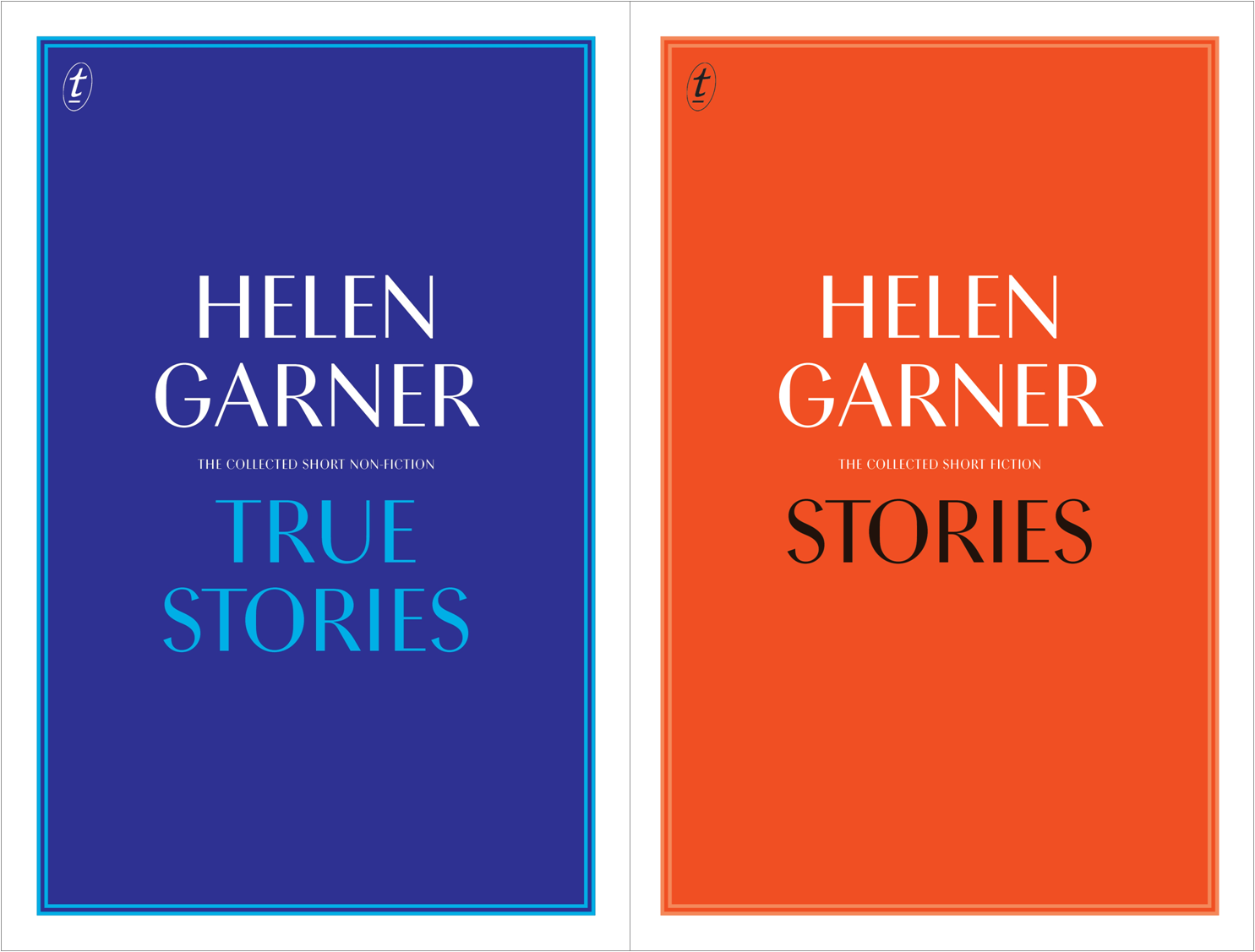
Last year Garner published two collections - Stories: Collected Short Fiction and True Stories: Complete Short Non-Fiction -  both of which I purchased during the festival. Can't wait to read them.

Thursday, 3 May 2018

Sydney Writers' Festival - Insiders Live

The 2018 Sydney Writers' Festival has begun! Ordinarily I would take a few days off work to immerse myself in the festivities. This year I am saving my annual leave for an overseas holiday, so will have to limit myself to evening events and an action-packed weekend. But I will be sharing my festival experiences on Twitter (@inaguddle) and blog about them here as I have done in past years.

Insiders Live (Wednesday 2 May 2018)
A special event at the Sydney Writers' Festival is Insiders Live which I attended with my festival friend. The host of ABC's Insiders program Barrie Cassidy spoke with journalists Annabel Crabb, Niki Savva and Malcolm Farr.
Barrie Cassidy, Annabel Crabb, Malcolm Farr, Niki Savva

The panel discussed politics starting with the news of the day, that Labour MP Tim Hammond has resigned to spend more time with his family. There was much discussion about the challenges of being in Parliament when a parent of young children, especially when your home is far from Canberra.

While only May and the budget a week away, the panel reflected on the year so far, exploring the downfall of Barnaby Joyce, the 30th Newspoll, the Banking Royal Commission, company tax cuts, the SA State election and much more. Niki Savva described the Joyce/Campion affair as a 'fluid situation' which sent waves of laughter across the auditorium. Sounds like Savva has plenty of material for an update of her deliciously juicy book The Road to Ruin. 

There was much speculation on when the next Federal election will be held, ending in a wager in which Cassidy placed $50 on an October 2018 election. The rest of the panel took the wager, convinced that (barring any leadership disaster) the election will take place after the Victorian and NSW state elections, sometime in April 2019.

Mike Bowers, Fiona Katauskas, David Rowe

My favourite part of Insiders is Mike Bowers' 'Talking Pictures' segment. At Insiders Live he spoke with cartoonists Fiona Katauskas and David Rowe. Bowers asked them about their approaches to their work, and spent some time reviewing Rowe's latest cartoons for the Australian Financial Review - particularly his Trump nudes. They reviewed work by various cartoonists and talked about some incredible photography, like the work of Alex Ellinghausen.

Video was used well to break up the segments, including two gems from Huw Parkinson (including the Turnbullnator 30 below) and several news montages, including one on the expressive Michaelia Cash.


The evening ended with a montage of Matt Price Moments - those quirky political moments which the late Matt Price would have loved. Looking back over the 10 years of winning Matt Price Moments was a reminder of so many hilarious, cringe-worthy faux pas.

A great start to the Festival!

Sunday, 29 April 2018

Vivat Regina!

For the past few weeks I have been engrossed in the epic biography of Queen Victoria. Dr Julia Baird, historian and journalist, has crafted a fascinating portrait of the long-reigning monarch. Victoria the Queen (2017) is meticulously researched, drawing on correspondence, diaries and other primary sources from Victoria and those around her to produce fresh insight into the influential Queen.

Prior to reading this biography I knew very little of Queen Victoria and, in truth, had little interest. My image of Victoria was one of a grumpy old monarch, she of statues and memorials, aligned with the Dickensian bleakness of the era she defined. For months I would look at Baird's Victoria in each bookstore I passed, flick through the pages and wonder if I should give it a go. I am not sure what compelled me to finally pick up this weighty tome, but I am delighted that I did. Baird's biography of the Queen is an incredibly readable tale of an extraordinary woman.
Victoria was an unlikely monarch. Fifth in line to the throne at birth in 1819, she was never expected to rule. Her various uncles had no surviving legitimate children, so when she was just 18, upon William IV's death, she became queen. The young Victoria was a petite, adventurous girl who loved to dance. She became estranged from her mother, but was devoted to her governess and tutor, Baroness Louise Lehzen. A passionate young woman, Victoria was curious and keen to rule.

Many royals have arranged marriages, designed to strengthen alliances. Fortunately, Victoria was madly in love with her betrothed, Albert, and their union had all the hallmarks of a fairytale romance. However, in marrying Albert, Victoria essentially gave up her brief enjoyment of her important royal duties to become a homemaker. Albert had traditional views on gender roles in marriage, and Victoria settled in to being a wife and mother. Meanwhile, Albert increasingly took on the Queen's official duties, involving himself in the politics and policy of the realm.

Reading of Victoria's many pregnancies - each one fraught with danger for mother and child - one marvels at her pioneering spirit and the endurance of a woman who spent almost twenty years giving birth. Victoria ignored medical advice and sought pain relief by inhaling chloroform, and her actions paved the way for British women to follow her lead. But as I read of Victoria's challenges of motherhood, her tense and controlling relationships with many of her children, and the physical toll successive pregnancies took on her petite frame, I wondered at what might have been if Victoria had access to birth control. Would she have had fewer children, enjoyed them more, and returned to work earlier to actively rule alongside Albert?

The premature death of her beloved Albert, at age 42, sank Victoria into a deep mourning. She retreated from public view and wore black to display her grief. Disreali coaxed her back to official duties in the late 1860s.

Queen Victoria was influenced by a number of important men in her life. Lord Melbourne, the first Prime Minister (1835-1841) during her reign, was a paternal figure who guided her understanding of politics and her role as monarch.  Her beloved husband Prince Albert, with whom she had nine children between 1840 and 1857, expanded her thinking and helped her rule. Prime Minister Benjamin Disraeli (1874-1880) was also a close friend and adviser. As a widow, Victoria sought friendship from her highland servant, John Brown, and in late life had an unusual relationship with her Indian Munshi, Abdul Karim.

During Victoria's 64 year reign, Britain and the world underwent a tremendous transformation. In telling the story of Victoria, Baird covers the industrial revolution, the political unrest and overthrow of European monarchs, colonisation across India, Africa and the Far East, the Irish famine and movement for self-rule, suffrage and social reform campaigns, and numerous bloody wars. Importantly, Queen Victoria was a constant during a tumultuous time.

Victoria was a mass of contradictions. She vocally protested against racism and inequality yet turned a blind eye to the suffering of so many. She would not have identified as a feminist, but promoted women's education and was dismissive of the women's suffrage movement. Baird writes:
Victoria described herself conveniently as 'anomalous'. She protested that women should not hold power, all while being increasingly vigilant about the protection of her own power.
These contradictions make Victoria a frustratingly fascinating character and her life story a compelling read.

Baird is a gifted storyteller, using her talents as a journalist to explore Victoria's life and times in a captivating way. As a historian, she used her research skills to dig deep, examine diverse sources and uncover new facts about Victoria. Baird discovered that Victoria's family censored her correspondence, burning communications relating to John Brown and Abdul Karim, and removing items related to Victoria's domestic life and motherhood - a tremendous loss to history.

I would highly recommend Julia Baird's Victoria: The Queen to anyone with an interest in history and biography.

Saturday, 14 April 2018

The Stella Prize 2018

The Stella Prize winner was announced this week with the award going to Alexis Wright for her biography of Tracker Tilmouth, titled Tracker.

Tracker Tilmouth was an Aboriginal leader and entrepreneur who died in 2015 at 62 years of age. Part of the Stolen Generation, Tilmouth was raised on a mission on Croker Island, and went on to become a well regarded activist who established the Central Australian Aboriginal Legal Aid Council. Wright was a family friend, who set out to write his memoir by talking with those who new him.

At the presentation ceremony on 12 April 2018, the Chair of the Stella Prize judging panel, Fiona Stager said:
In awarding the 2018 Stella Prize to Alexis Wright for Tracker, the judges wish to acknowledge the craft of the author and pay tribute to the richness of the memories shared by the many people she interviewed. This book will enrich and change the understanding of readers. A man like Tracker Tilmouth could change our world. It takes a writer like Alexis Wright to change the world of Australian letters.
Sounds like a fascinating depiction of an extraordinary man.

Alexis Wright is writer of both fiction and non-fiction. She is possibly best known for her novel Carpenteria (2006) which was lauded by critics and received the 2007 Miles Franklin Award, Queensland Premier's Literary Award and numerous other commendations.

Monday, 9 April 2018

Sydney Writers' Festival - Geoffrey Robertson

The 2018 Sydney Writers' Festival (SWF) Program has been announced, plans have been made and tickets have been purchased. While the Festival itself does not take place until May, I was fortunate to attend a SWF event on 26 March - An Evening with Geoffrey Robertson - with my festival friend.

Geoffrey Robertson QC is now 71 years old and in his 'anecdotage'. He has just published an autobiography, Rather His Own Man (2018), in which he shares memories from his childhood in Sydney, his move to the UK, becoming a barrister and celebrated human rights lawyer. Founder of Doughty Street Chambers, Robertson was called to the bar in 1977 and took silk in 1988. He initially became a high profile criminal defence lawyer in London, before moving into libel and media cases, and later numerous international human rights cases.
Robertson is such a great storyteller and for 90 minutes he kept the audience enraptured as he told tales of growing up, attending school in Epping, life as a student at University of Sydney and then his departure to England. Erudite and witty, Robertson then went on to share many fascinating legal cases he championed, and his perspective on world events. He spoke lovingly of his ex-wife, Australian author Kathy Lette, and their adventures together including tales of their visits to 'Buck House'. He was also able to shut down an annoying heckler who attempted to disrupt the event by shouting out conspiracy theories.

Perhaps the most moving segment was when Robertson read from his new memoir about the death of his mother. He spoke of the tyranny of distance, getting a call from afar to hear your parent has been hospitalised, quickly booking a flight home, communications silence while travelling around the world, then the bedside vigil while awaiting death. He was unprepared for being orphaned at age 70 and wrote lovingly of his parents.

All in all, it was great night out at the Sydney Writers' Festival, leaving me excited for the main event in May.

Sunday, 25 March 2018

Boredom in the Bunker

I am halfway through Julia Baird's remarkable Victoria: The Queen - An Intimate Biography of the Woman Who Ruled an Empire (2016), a 700+ page history. I am loving this book and regret I don't have more time to read.

I decided to take a break from the Queen to breeze through a quick novel. I greatly enjoyed reading The Mysterious Affair at Styles (1920) last year, so thought I would continue Agatha Christie's adventures with Hercule Poirot in his second outing, The Murder on the Links (1923).

I was a bit worried about this book because I hate golf - ('a good walk spoiled' attributed to Mark Twain) - but fortunately one needs to know nothing about golf to appreciate this novel.  The story takes place on a golf course in France where a body is found, yet presumably no golf is ever played.

Narrated by Captain Hastings, the story centres on the murder of Paul Renauld, a French-Canadian businessman who has been stabbed in the back. His wife had been tied up by two masked men who broke into their home. Poirot is called to the scene to investigate alongside his rival, the local detective Monsieur Giraud.

Who had motive and opportunity to commit such a crime? Could it have been Renauld's son Jack who was about to depart for South America? Was it Madame Daubreuil, a neighbour who may or may not have been blackmailing the Renaulds? Was it the mysterious woman the dimwitted Hastings let in to the murder scene? Or does the case have links to events more than twenty years ago?

To say I found this novel disappointing is an understatement. I could not get in to the rhythm of this book. There were so many red herrings, possible suspects, and theories of the case that it was hard to keep track. Hastings was incredibly annoying with his simplistic commentary and stupid antics. Ultimately I was bored and did not care whodunnit or howdunnit. I think Christie greatly overcomplicated and embellished the plotting of what is essentially a Midsomer Murder. 

While I will not give up on reading more Hercule Poirot, I will wait some time before moving on to The Murder of Roger Ackroyd (1926). But for now, it is back to Queen Victoria!