Wednesday, 25 May 2022

Miles Franklin Award Longlist 2022

On 23 May 2022, the longlist was announced for Australia's most prestigious literary awards, the Miles Franklin Award, with twelve authors vying for the $60,000 prize. Richard Neville, Librarian from the State Library of NSW, said on behalf of the judges: 

“This year's longlist, drawn from a robust pool of entries, reflects the thematic richness and the formal adventurousness of the contemporary Australian novel, as our writers respond to our times. Diverse in every sense, it extends from world of realism to novels in a more experimental vein, proving that the nation's storytellers are continuing to test the boundaries of what the novel can do.” 
Let's check out the Longlist:

Michael Mohammed Ahmad - The Other Half of You
Bani Adam carries the weight of expectation. His family expects him to marry the right kind of girl and be the right kind of Muslim. But Bani wants to decide for himself, even if he makes mistakes or goes against the wishes of his family and faith. Ahmed's previous novel, The Lebs, won the 2019 NSW Premier's Multicultural Literary Award and was shortlisted for the Miles Franklin Award.

Larissa Behrendt - After Story
Jasmine is an Indigenous lawyer who takes her mother, Della, on a literary tour of England. This trip is an opportunity to bring them closer together and reconcile the past. When a child goes missing on Hampstead Heath, Jasmine recalls the disappearance twenty-five years ago of her older sister. Having heard Larissa Behrendt speak about this novel at the Sydney Writers Festival last weekend, I am keen to read it.


Michelle de Krester - Scary Monsters
This book is written in a flip format, where you read from the front to the middle one narrative, then flip the book over and read it the other way. The first narrative is by Lili, a South Asian migrant to Australia who is teaching in France in the 1980s. She worries about a creepy neighbour and the treatment of North African immigrants. The second narrative is by Lyle, who lives in a near-future radically right-wing Australia. He and his wife live in fear of repatriation so shun their past and embrace the consumerism and individualism of Australia. De Krester won the Miles Franklin Award twice previously: Questions of Travel (2013), The Life to Come (2018)

Jennifer Down - Bodies of Light 
Maggie Sullivan is institutionalised, growing up in a foster homes and group facilities after her father is jailed. Neglected and abused, by 19 she is diagnosed with depression and trauma. The novel follows Maggie into adulthood, when she is forced to encounter her long buried past.  I heard Jennifer Down speak at the Sydney Writers Festival last weekend and found her extremely impressive. While I reckon this will be a challenging novel, due to the subject matter, I am interested in reading it and becoming acquainted with this author.


Briony Doyle - Echolalia
Emma Cormac is struggling with her life and suffering postpartum depression. From the outside, she has everything anyone could ever want - a marriage to the stoic Robert, three small children and a prestige home. Emma's depression deepens, and when something happens to one of the children, Emma unravels. Doyle is the author of the novel The Island Will Sink and a memoir, Adult Fantasy.


Max Easton - The Magpie Wing
In this debut novel, Easton spans the 1990s to today in the suburbs and inner city of Sydney. Helen, Walt and Duncan are looking to escape their complex family histories and forge new lives for themselves as they enter adulthood. 


John Hughes - The Dogs
Hughes is the acclaimed author of The Remnants, Asylum, and most recently No One, which was shortlisted for the Miles Franklin Award in 2020. In The Dogs, Michael Shamamov is running away form life's responsibilities. His marriage has failed and he has barely seen his son or his ageing mother. A discussion with a nurse at his mother's nursing home leads him to realise that the needs to stop running away and instead reconnect. 

Jennifer Mills - The Airways
In 2019, Mills' novel Dyschonia was shortlisted for the Miles Franklin Award. In her latest novel, The Airways, she focuses on two characters Adam and Yun. Adam is a Greek-Australian living in Beijing. Adam is haunted by Yun's disembodied voice over something that happened between them years before. Described as a 'powerful, inventive and immersive novel' which unsettles 'the boundaries of gender and power, consent and rage, self and other, and even life and death'.


Alice Pung - One Hundred Days
Set in Melbourne in the 1980s, Karuna is the only daughter of an Australian man and a Philipino mother. When sixteen year old Karuna falls pregnant, her mother confines her to their fourteenth story housing-commission flat. Her mother wants to keep her safe and ensure she doesn't get into any more trouble. In the claustrophobia of her confinement, the mother-daughter relationship is at breaking point as they struggle for control. 

Claire Thomas - The Performance
Bushfires rage in the nearby hills, coating the city streets with ash. Three women attend a performance of a Beckett play. Margot is preoccupied by thoughts of her ailing husband. Ivy is distracted by a man snoring beside her. Summer can't concentrate as she is concerned about the safety of her girlfriend in the bushfire zone. By the time the curtain falls, they have a new understanding of their world. I bought this book on the recommendation of a friend, and have somehow never gotten around to reading it. Will make it a priority now. 


Christos Tsiolkas -
7 1/2 
Seeking solitude to write a book, a man arrives at a house on the coast. In the quiet, he recalls his childhood, his early experiences with sexuality. He tries to write a novel about Paul, an American former porn star who returns home to partake in an offer he cannot refuse. This autofiction is a mediation on beauty. Tsiolkas is the critically acclaimed author of seven novels including Barracuda and Damascus. He is best known for The Slap (2009), which was longlisted for the Booker prize.


Michael Winkler - Grimmish
In 1908 Italian-American boxer Joe Grim toured Australia, losing fights but winning fans who marvelled at his physical resilience. This genre-defying book unfolds through conversations between the narrator and his uncle. JM Coetzee called it 'The strangest book you will ever read this year'. Sounds intriguing...


At this stage I have not read any of these novels, but I do have several of these titles in the queue to be read.  Regardless, I will guess that the following authors will make the shortlist: Berhendt, Down, de Krester, Hughes, Thomas and Tsiolkas. 

The Shortlist will be announced 13 June 2022 and the winner will be revealed on 20 July 2022.

Sunday, 8 May 2022

Colonial Correspondence

In 2020 Australian author Kate Grenville published A Room Made of Leaves, a fictionalised memoir of Elizabeth Macarthur. I enjoyed that novel and became very interested in Mrs Macarthur, as her life and contributions to early settlement life in Sydney were overshadowed by her husband John. He was a mercurial man, often regarded as the 'father of Australian wool', who put a great strain on his family through his long absences and difficult temperament. 

Grenville's novel is a wholly fictional work, but the impetus for that book came from Elizabeth's own letters. Now, Grenville has compiled and edited a collection of Elizabeth Macarthur's Letters (2022) so that readers may hear from Elizabeth directly. In this selection, Elizabeth Macarthur writes to her mother and friends in England, later to her sons, and in reading these letters we better understand the challenges of Elizabeth's life in the early days of settlement.

The Elizabeth Macarthur we come to know through her correspondence is a devoted mother and grandmother, keen botanist, and a shrewd business woman. Each letter is prefaced with a commentary from Grenville, often providing the context for writing or giving insight into how the letter related to Grenville's novel.

It must have been so daunting for young newlywed Elizabeth to contemplate moving from England and all she had known, to the far side of the world. In a letter to her mother dated 8 Oct 1789, she writes about how she tries to soften the blow of the great distance, telling her mother "...it is much the same, whether I am two hundred or more than many thousand miles apart from you."

Initially I was perplexed by this collection, preferring the fictional Mrs Macarthur to the one found in these letters. But as I read, I became more and more fascinated by both the woman and the letters themselves. The correspondence back and forth from England was the lifeblood of the community, read by the intended recipient and passed around to family and friends to give news of the colonies or homeland. As such, Grenville argues these letters may be a form of fiction too, wherein Elizabeth didn't share her true self, but a version of herself she chose to present. 

Many of Elizabeth's letters detail the ships which carried correspondence back and forth -  "I hope you will have received my letter, dated August 1790, which I sent by the Scarborough transport, by way of China" - or the person the letter has been entrusted to see safely delivered. Oftentimes letters are in response to ones received many months previously, or written in haste when a ship announces a sudden departure. 

While I enjoyed reading many of these letters, it is her ones to her sons Edward and John which carry the most weight. In these letters she gossips about mutual acquaintances but also tells of their father's increasing mental illness. I knew John Macarthur was ill-tempered, but I didn't realise he suffered from debilitating depression. It would have been such a challenge for Elizabeth, especially as her husband worsens, when mental health was so misunderstood.  

In a letter to her son John on 18 Dec 1826 she writes "Your dear father is gone to bed not in good spirits.... He is suffering again from one of those fits of despondency which are sure to succeed extraordinary exertion and over-excitement." The day before she had written to her son Edward, "You will observe from my letter to John that your dear father has had a severe attack of his old tormenting complaint, with all the accustoming attendants of despondency and low spiritless". As Elizabeth copes with her husband's 'gloomy apprehensions', the family suffer a tragedy when their son John dies in April 1831. Elizabeth had not seen him since he was a young child, sent back to England for schooling. The grief at this loss is evident in her letters and is only magnified by her husband's volatility. 

I enjoyed reading this collection, especially having read Grenville's novel A Room Made of Leaves. It is wonderful to hear about Elizabeth's life in her own words. 

Friday, 29 April 2022

Stella Prize Winner 2022

The winner of the Stella Prize was announced this week with Goorie-Koori author Evelyn Araluen awarded the prize for her debut collection, Dropbear. 

Using a mix of poetry and essay, Araluen critiques a nostalgic view of Australia. She explores language and identity, inviting readers to adopt a different perspective.  The judges report that 'Araluen's brilliance sizzles when she goes on the attack against the kitsch and the cuddly: against Australia's fantasy of its own racial and environmental innocence.' She bears witness to the present, and hopes for a decolonial future. 

The Chair of the Judging Panel, Melissa Lucashenko, said:

"When you read Evelyn Araluen's Dropbear you'll be taken on a wild ride. Like the namesake of its title, this collection is simultaneously comical and dangerous. If you live here and don't acquire the necessary local knowledge, the drop bear might definitely getcha! But for those initiated in its mysteries, the drop bear is a playful beast, a prank, a riddle, a challenge and a game. Dropbear is remarkably assured for a debut poetry collection, and I think we can safely say it announced the arrival of a stunning new talent to Australian literature." 
Araluen received the award and its $50,000 prize money. She will be a guest at the upcoming Sydney Writers' Festival.

Wednesday, 27 April 2022

Women's Prize Shortlist 2022

The 2022 Women's Prize shortlist has been announced!  The six titles on the shortlist are:

  • Sorrow and Bliss - Meg Mason
  • The Island of Missing Trees - Elif Shafak
  • Great Circle - Maggie Shipstead
  • The Book of Form and Emptiness - Ruth Ozeki
  • The Bread the Devil Knead - Lisa Allen-Agostini
  • The Sentence - Louise Erdrich


When the Longlist was announced in March, I predicted that Edrich, Shafak, Ross and Shipstead would be on the shortlist. Leone Ross missed out for This One Sky Day, but I was right about the others. Not bad guess work when there were 16 excellent titles on the longlist!

I have started Great Circle, and have The Sentence, The Island of Missing Trees and Sorrow and Bliss on my bedside waiting their chance to be read.  I have the others on order with my local library, but won't likely get them for a while.

To learn more about these shortlisted titles, there is a summary on each book on my blog, and the judges have released a short video announcing the shortlist below. You can also read interviews with the authors on the Women's Prize website.


The winner will be revealed on 15 June 2022. Better get reading!

Saturday, 23 April 2022

The Social Network

In 2010 Jennifer Egan won the Pulitzer Prize for her remarkable novel A Visit from the Goon Squad. It was unlike anything I had ever read. Egan cleverly played with form and style, creatively writing with wit and intellect. Each chapter was its own short story, with memorable characters who appear in each other's narratives. Linking these stories were themes of music and the passage of time. The sheer delight I experienced reading (and re-reading) Goon Squad was profound, a high I have been searching for ever since. 

My cravings have been satisfied with Egan's latest novel The Candy House (2022). While not exactly a sequel to Goon Squad, it is more like a companion piece. Written in the same non-linear way, the interlinked chapters reconnect readers with beloved characters, woven in a tight tapestry that is only fully visible when you zoom out at the end. 

Instead of the backdrop of music, technology is the temptation of The Candy House. Bix Bouton, founder of social media giant Mandala, has developed a new product called 'Own Your Unconscious' where you can download your entire memory bank to a cube and review past events you may have forgotten or not registered at the time. If you choose, you can upload all or parts of your memory to the 'Collective Consciousness' where others can view it. Even if you choose not to engage, you may appear in other people's memories of shared experiences. While some characters engage willingly with these tools, others (like Chris Salazar and his company Mondrian) are 'eluders', fighting against this loss of privacy, endeavouring to disrupt invasive technology. While this may sound like a dystopian sci-fi story, it is actually a tautly written meditation on human connection.

Egan has an incredible ability to write in a diverse range of styles. One chapter is written as a series of emails between a number of different characters. Another is as an instruction manual to a field agent on a mission. We learn of the 'algebraization' of people's experiences, and the way in which human behaviour can be counted, predicted and compartmentalised. We learn about language, the 'word-casings' of overused words that have lost all meaning. While some styles and chapters worked better for me than others, I loved becoming reacquainted with characters like Sasha, La Doll, Lulu,  Lou, Lincoln and more, as we explored the near future in the digital age. 

Readers do not need to have read A Visit from the Goon Squad to enjoy The Candy House, but your reading experience will definitely be enhanced by reading both. It takes some time to get used to the way these novels work, but an open-mind and a willingness to experiment will definitely reward readers. 

My review of Jennifer Egan's A Visit from the Goon Squad is also available on this blog.

Saturday, 9 April 2022

To Have and Have Not

I first heard about Miranda Cowley Heller's debut novel, The Paper Palace (2021) a few weeks ago when it was longlisted for the Women's Prize. Reading a brief synopsis, it sounded like it was the story of a love triangle, which didn't really interest me. But then I read a rave review, so I decided to read the first chapter and see if it was worth my time. I am so glad I did as The Paper Palace is a wonderfully engrossing novel. 

Eleanor 'Elle' Bishop seems to have the perfect, privileged life. She is fifty years old, married to a devoted husband, and has three lovely children. She lives in New York but holidays at her family's rustic cottage/camp at Cape Cod, known as the Paper Palace. The book opens with Elle taking an early morning swim on the lake and reflecting on her actions the night before. Last night she had sex with her oldest friend Jonas, while both of their partners were nearby, unaware. Over the next 24 hours, Elle must choose whether to stay with her husband Peter or upend her life to pursue Jonas, her childhood love. In order to understand the choice that Elle eventually makes, the reader is taken back over the past fifty years to learn about Elle's life and her relationship with each man.

The Paper Palace features richly drawn, complex characters. Elle's standoff-ish older sister Anna is hardened by their early life. Their opinionated mother Wallace is a fascinating woman, unlikable yet delightful. Their absent father fails the girls repeatedly, henpecked by his partners. The odious step-brother Conrad and his unobservant father Leo. The uxorious Peter, brooding Jonas and so many more. Elle herself is complicated and contradictory and as the narrator of this tale, her recollections of the past shape her present and the decisions she makes for the future. 

This novel was so much more than it first appeared, shocking the reader with each reveal of family secrets buried deep. There are dark themes in this novel, but each flashback is mercifully short, written in punchy prose.  I was swept away by the story, keen to find out what happened next. The writing is strong, evoking a sense of time and place, especially of the deep woods of the Paper Palace.  I also loved the ending of the story, which I shall not reveal here. 

This is a strong debut by Miranda Cowley Heller and I look forward to seeing what she does next. I am delighted to learn that this novel has been optioned for a TV series. 

Thursday, 31 March 2022

Stella Prize Shortlist 2022

The 2022 Stella Prize Shortlist has been announced! The twelve nominees have been whittled down to six finalists in the running for this important literary award.

The 2022 shortlist is as follows:
  • Evelyn Arluen - Drop Bear
  • Eunice Andrada - Take Care
  • Jennifer Down - Bodies of Light
  • Lee Lai - Stone Fruit
  • Elfie Shiosaki - Homecoming
  • Anwen Crawford - No Document

In compiling this shortlist, the chair of the judging panel, Melissa Lucashenko says:
“The 2022 Stella Prize shortlist is big on emerging voices writing in unconventional ways - from regions, positions and literary forms that transcend the mainstream. These authors are writing back, insisting that 'other' lives - First Nations lives, poor women's lives, queer lives and Filipina lives - matter on the page, just as they do in everyday affairs.” 
For more information about these titles, see my post on the longlist.

The winner will be announced on 28 April 2022. I haven't read any of these books, but I will be seeing Jennifer Down at the upcoming Sydney Writer's Festival so that book is at the top of my list. 

Saturday, 26 March 2022

The Colour and The Shape

On 24 January 2000 my brother Mark and I saw the Foo Fighters on their 'There is Nothing Left to Lose' tour at the Metro theatre in Sydney. The Metro is a great venue for gigs, small enough that fans can get up close to the stage, and large enough to enjoy the atmosphere of a like-minded crowd. Mark and I would rush down to the stage front to thrash and head-bang to our favourite songs, then retreat to the back to catch our breath, before lunging into the crowd once more. It was an awesome concert, solidifying my love of the Foo Fighters, and creating a memory of an incredible shared experience with my brother.

It was no surprise then, that Mark gave me Dave Grohl's The Storyteller (2021) for Christmas - a perfect gift. Subtitled 'Tales of Life and Music' Grohl tells stories about his lifelong passion for music from his childhood, through to his days with Scream, Nirvana, the Foo Fighters and Them Crooked Vultures. 

To enhance my reading experience, I downloaded the audiobook so Grohl could tell his stories in his own voice as I read along. His storytelling was rich and warm, adding a depth to the words on the page. It also made him seem more personable and familiar, like an old friend sharing stories.

The Storyteller is a fascinating book.  Grohl shared anecdotes about aspects of his life, tales from tours and recording studios, but never resorts to gossip. This is not a behind-the-scenes, tell-all. Rather, it is a collection of vignettes from a most extraordinary life, told with humour, empathy, humility and intelligence. 

For me, The Storyteller, instantly threw me back to my past. The music Grohl loved and the bands he toured with, was the soundtrack of my life. I spent much of the nineties attending Lollapalooza and various other gigs and festivals, attending live music events wherever I could - Pearl Jam, Sonic Youth, Soundgarden, Smashing Pumpkins, Beastie Boys, Red Hot Chilli Peppers, Rage Against the Machine and on and on... It was such an incredible period in music.

In one chapter he recalls a tour with Scream in June 1990 which included 'two of my favourite cities on earth, Montreal and Toronto' and describes how much he loves travelling in Canada. As a Canadian, I beamed with pride reading his thoughts on my homeland: 'Because, let's face it, Canadians are fucking awesome. Laid-back, genuine, and funny as all hell. I defy anyone to walk one city block without making a fast friend in Canada' (p99). True!

What comes through in the book is how deep Grohl's love of music is. Of course, he is an incredible artist, but beyond that he is a mega fan. He shared memories of collaborations and experiences with Tom Petty, Paul McCartney, Joan Jett, AC/DC and many other legends he has shared a stage or studio with - a who's-who of music in the past thirty years. He shares many moments where he cannot believe he is in the presence of a legendary musician for whom he has such admiration. 

But beyond music is family. Grohl talks with great pride about being a father to his three daughters. He is incredibly close with his ever-supportive mother, who keeps him grounded. He has deep friendships, many from childhood, and he values these relationships tightly.  It is his family and friends that have kept him humble and down-to-earth.

You don't have to be a fan of Dave Grohl's music to enjoy The Storyteller, but I would defy anyone to come away from reading this book without becoming a fan of the man himself. 


ADDENDUM
A few hours after I posted this review, Foo Fighters drummer Taylor Hawkins died in Bogata Columbia, where the band was touring. Hawkins, age 50, had been with the band for 25 years. In The Storyteller, Dave Grohl describes Hawkins as 'my brother from another mother, my best friend, a man for whom I would take a bullet'. They were 'an unstoppable duo, onstage and off, in pursuit of any and all adventure we can find'. My heart breaks for Dave, the band, and the Hawkins family. He was a remarkable talent.

Sunday, 13 March 2022

A League of Her Own

The League of Nations was founded in 1920 following the Paris Peace Conference at the end of the First World War.  Based in Geneva, the League aimed to prevent wars through disarmament, resolution of disputes between nations and collective security. Despite its promise, The League of Nations was ultimately ineffective, failing to prevent several conflicts, including the second World War. It was replaced in the 1940s by the United Nations. I hadn't given much thought to the League since my undergraduate days, but memories of my studies came flooding back as I read Frank Moorhouse's remarkable novel Grand Days (1993). 

In this fictional account of the League's early years, plucky young Australian Edith Campbell Berry travels to Geneva to take up a role in the newly established organisation. On the train from Paris she meet Major Ambrose Westwood, a British officer at the League. Their flirtation over dinner is the start of a fascinating relationship. Edith is determined to live according to her morals and has created a list of rules to live by which guide her behaviour (such as the 'Way of Companionable Confession' in which one tells a minor confession to someone in order to bring them into closer confidence). Over time Ambrose challenges her thinking by introducing her to 'Weimar' experiences like underground night clubs, which expose Edith to other ways of being. 

Edith is an idealist who has tremendous faith in the League's ability to bring about world peace. Throughout the novel she mixes and mingles with characters both fictional and real. She works closely with Sir Eric Drummond, Secretary-General (1919-1922), was mentored by John Latham (Australian politician), had her image drawn by Hungarian caricaturist Emery Kelen, and has an opportunity to hear a lecture by birth control advocate Margaret Sanger. This blending of fact and fiction brings the story to life and is a testament to Moorhouse's extensive research. 

Edith's commitment to her organisation extends to her designing of uniforms for League staff, and creating stationary and document holders for meeting attendees - which promptly get stolen as keepsakes by delegates, much to her chagrin. But her commitment often blinds her to the League's failures, and Moorhouse does a great job of explaining how things work in this bumbling bureaucracy.

The novel has much wry humour, often in the form of witty dialogue, and Edith finds herself in some strangely comical predicaments. But Grand Days also has darkness as nationalism is on the rise in parts of Europe. Modern readers will find the racism and sexism of the 1920s confronting, but also concerning as these sentiments echo a hundred years later. 

Grand Days also follows Edith's sexual awakening. Her relationship with Ambrose challenges her traditional views. Impromptu encounters with a black jazz musician in Paris and a provocative woman spark her curiosity. She also experiences sexual violence when a club she visits is raided. These encounters allow the author, through Edith, to reflect on race, eugenics, sex and sexuality.

Moorhouse has crafted a coming of age story which shows the evolution of a woman, of Australia and of an international institution. It is quite remarkable how he has inserted Edith into real events to explore 1920s Europe. 

I greatly enjoyed reading Grand Days. At almost 700 pages it does take some commitment, but it is well worth the journey. I would recommend it to anyone interested in this fascinating time in history. Reading it against the backdrop of war once again in Europe, the failures of diplomacy, and the rise of nationalism, one wonders what Edith would think today. 

This book has been on my 'to be read' list since 2016 when I met Frank Moorhouse at the Sydney Writers Festival. During that session he was speaking about his admiration of George Eliot (also a favourite of mine) and how well Eliot would have got on with Edith. When he signed a copy of Grand Days for me we spoke about the trilogy and he said that people often just read the sequel Dark Palace, so he was pleased that I was starting at the beginning. He said he hoped I would enjoy it. Well, Frank, I certainly did. Thank you!

The Edith Trilogy consists of Grand Days (1993),  Miles Franklin Award Winner Dark Palace (2000) and Cold Light (2011). I am definitely intrigued to follow the adventures of Edith Campbell Berry and look forward to continuing this series. 


Friday, 11 March 2022

Women's Prize Longlist 2022

On International Women's Day the 2022 Women's Prize longlist has been announced! The annual literary award celebrating women writers has previously recognised the talents of so many gifted writers, including these past winners:

  • Susanna Clarke - Piranesi (2021)
  • Maggie O'Farrell - Hamnet (2020)
  • Tayari Jones - An American Marriage (2019)
  • Lionel Shriver - We Need to Talk About Kevin (2005)
  • Andrea Levy - Small Island (2004)

  • On 8 March 2022, the longlist for this year's Women's Prize was revealed with 16 nominees. I have a handful of these books to read, and a couple of others on reserve from my local library. I look forward to exploring these titles. 

    The 2022 longlist is as follows:

    Lisa Allen-Agnostini - The Bread the Devil Knead 
    Port of Spain boutique manager Althea Lopez is about to turn 40 and from outward appearances she seems fashionable and independent. But this is masking the domestic violence she faces at home. When she witnesses a woman murdered by her partner, she realises she needs to make a change or that could be her fate. Allen-Agnostini is a writer, editor and stand-up comedian from Trinidad and Tobago. This is her first novel for adults. 


    Lulu Allison - Salt Lick
    Britain's food production has moved overseas and the rural economy has collapsed. Towns and villages are abandoned as residents move to larger cities. Set in a near-future UK, this novel is not dystopian but perhaps speculative. Lulu Allison is a British visual artist. Her first novel was Twice the Speed of Dark. I am intrigued by this novel and will try and locate a copy. 


    Kirsty Capes - Careless
    A debut novel by Kirsty Capes who's recently completed her PhD under the supervision of author Bernadine Evaristo. In this coming-of-age story, fifteen-year-old Bess has just discovered she is pregnant to a nineteen-year-old. She is in foster care, with a patchy support system.  The novel explores issues of teen pregnancy, out of home care, generational trauma and the importance of friendship.


    Catherine Chidgey - Remote Sympathy
    Set during the Holocaust, Frau Greta Hahn leaves Munich to move to Buchenwald where her husband, SS Sturmbannfuhrer Dietrich Hahn, has taken up a position as the prison camp's administrator. Doctor Weber, an inventor. is married to Anna, a Jewish woman living in Frankfurt. Weber is transferred to the camp where he has to treat Frau Hahn. Catherine Chidgey is a writer from New Zealand. Her  previous novels include The Transformation (2003) and The Wish Child (2016).


    Miranda Cowley Heller - The Paper Palace
    Elle is a fifty-year-old married mother of three. At her family's summer home in Cape Cod, The Paper Palace, she wakes early and goes for a swim, The night before she and her childhood love Jonas snuck outside to have sex while their unknowing spouses chatted away. Will she stay with her husband or risk it all for Jonas? This is American author Heller's debut novel. (Update: Read Review)


    Rachel Elliott - Flamingo
    Two families live side-by-side: Sherry and Leslie with their two daughters; Eve with her son Daniel. They spend a lot of time together, friends as well as neighbours. Eventually Eve and Daniel move away and the relationship ends. Then one day an adult Daniel shows up at Sherry's door. Elliott's previous novel Whispers Through A Megaphone (2015) was previously long listed for the Women's Prize.


    Louise Erdich - The Sentence
    In Minneapolis, a small independent bookstore is haunted by Flora, the store's most annoying customer. Tookie attempts to solve the mystery of the haunting during a year of grief. Set from November 2019 to November 2020, the novel spans world events like the pandemic and the death of George Floyd. Erdrich won the Pulitzer Prize for her previous novel, The Night Watchman.  The Sentence has been recommended to me by friends and I am looking forward to reading it.


    Violet Kupersmith - Build Your House Around My Body
    In 1986 a young Vietnamese girl goes missing. 25 years later a Vietnamese-American women disappears from her home in Saigon. Both women will have their revenge. Spanning 50 years of Vietnamese history, this novel shows how the fates of these women are interlinked. This is Kupersmith's first novel. She has previously published a short story collection, The Frangipani Hotel. 


    Meg Mason - Sorrow and Bliss
    Martha believes there is something wrong with her.  Her husband Patrick thinks she is fine, she just needs to keep going, but she feels things are falling apart. This is a character-driven story about grappling with mental illness and how it impacts families and friends. New Zealander Mason is the author of Say it Again in a Nice Voice and You Be Mother. She now lives in Sydney.


    Charlotte Mendelson - The Exhibitionist
    Famous artist Ray Hanrahan is preparing for an exhibition of his art. His three children gather for a weekend prior to the exhibition. But what of his long-suffering wife, herself an artist. She has always put her husband and children first and is now seeking to change focus. This is a story of a dysfunctional family, personal freedom, art and sacrifice. British novelist Mendelson is the author of various titles including Daughters of Jerusalem, Almost English and When We Were Bad. I like the sound of this novel and will try and track it down. 


    Ruth Ozeki - The Book of Form and Emptiness
    When Benny's father dies, the teenager begins to hear voices he cannot fully understand. He tries to ignore them, but they follow him around. So he seeks refuge in the public library where the books teach him to listen to the things that matter. American author Ozeki was previously shortlisted for the Booker Prize for her novel A Tale for the Time Being. 


    Leone Ross - This One Sky Day
    On the archipelago of Popisho people are born with a magical power that manifests before they reach adulthood. One person can season food with his hands, another can diagnose disease by touch, each person is different. This imaginative novel of magical realism takes readers to a strange land where important subjects - like love, grief, sexism, infidelity, colonialism and more - can be explored. British author Ross is best known for her previous novels All the Blood is Red and Orange Laughter.


    Elif Shafak - The Island of Missing Trees
    Two teens meet in Cyprus in 1974 a a tavern to listen to music, eat good food, and forget about the world outside. One is Greek, the other Turkish, so they must love in secret. A fig tree grows through a cavity in the tavern roof. Decades later in London, A sixteen year old girl has never visited her parents' homeland but she has a fig tree growing in her back yard. Greece is near the top of my travel wish list and I love the idea of a novel about homelands, so this has been added to my list. Shafak was shortlisted for the Booker Prize for her novel 10 Minutes 38 Seconds in This Strange World. 

    Maggie Shipstead - Great Circle 
    In prohibition era Montana, teenage Marian drops out of school and finds a patron who will support her desire to become a pilot. As a daredevil aviatrix, she circumnavigates the world and flies over the poles. A century later, actress Hadley Baxter is set to play Marian in a biopic and becomes immersed in the pilot's disappearance in Antarctica. Shipstead is the author of Astonish Me and Seating Arrangements. I have had this book on my 'To Be Read' pile since it was Longlisted for the Booker Prize last year.  

    Dawnie Walton - The Final Revival of Opal & Nev
    This is the story of an iconic interracial rock duo and their dramatic rise and fall. Opal is a fiercely independent Afro-punk woman from Detroit. Nev is a British singer/songwriter. Together they make music in 1970s New York. Decades later they consider a reunion and a music journalist seeks to curate an oral history of the pair. This is American author Walton's debut novel.


    Morowa Yejide - Creatures of Passage
    In Washington DC, Nephthys drives a haunted car, battles with alcoholism and mourns the loss of her twin brother Osiris. Her estranged nephew Dash is drawn to the river where Osiris died, and has concversations with someone he calls 'River Man'. This is a story of grief, ghosts, and family ties. Yejide is the author of Time of the Locus. Creatures of Passage is her second novel. 


    I have not read any of these titles yet, and haven't heard of many.  I have copies of Great Circle and The Sentence  on my bedside table ready to read. I am keen to track down the works by Elif Shafak and Charlotte Mendelson, and potentially Allen-Agnostini. 

    I was surprised that Sarah Winman's Still Life, Rachel Cusk's Second Place and Nadifa Mohamed's The Fortune Men did not make the cut. I had also hoped that two Australian authors would have made the list -  Hannah Kent for Devotion and Emily Maguire for Love Objects. It was nice to see four debut authors gain exposure for their work by these nominations.

    If I had to pick a shortlist, I would bet on Erdrich, Shafak, Ross, and Shipstead to be among those listed. The shortlist will be announced on 27 April 2022 and the winner will be revealed on 15 June 2022. Happy reading!

    Wednesday, 9 March 2022

    Stella Prize Longlist 2022

    The 2022 Stella Prize longlist has been announced! The annual literary award celebrating women and non-binary writers of both fiction and non-fiction is named after Australian author Stella Miles Franklin. Past winners include:

  • Evie Wyld for The Bass Rock (2021)
  • Jess Hill for See What You Made Me Do (2020)
  • Vicki Laveau-Harvie for The Erratics (2019)
  • Alexis Wright for Tracker (2018)
  • Heather Rose for The Museum of Modern Love (2017)
  • Charlotte Wood for The Natural Way of Things (2016)
  • Emily Bitto for The Strays (2015)
  • Claire Wright for The Forgotten Rebels of Eureka (2014)
  • Carrie Tiffany for Mateship with Birds (2013)

  • I credit the Stella Prize with introducing me to many authors that I would not have otherwise read.

    On 2 March 2022, the longlist for this year's Stella Prize was announced with 12 nominees. I have not read any of the titles, and many of the authors are unknown to me, so I look forward to exploring these books further.

    The 2022 longlist is as follows:

    Randa Abdel-Fattah - Coming of Age in the War on Terror
    A non-fiction account of a generation growing up during the war on terror and the climate of Islamaphobia, fear and distrust that permeates young people's consciousness. Adbel-Fattah is an academic, author and lawyer who interviewed young people about the rise of the far-right and their sense of belonging. 
    Eunice Andrada - Take Care
    This is the first year that poetry is eligible for the Stella Prize. Andrada's collection of verse  has been described by the judges as a meditation 'on the ethics of care and the need to dismantle in order to recollect, to recover, and to create.' This poetry is personal and political, reflecting on rape culture, justice systems, sexual violence, colonialism and more. This is Andrada's second collection of poetry. Her previous collection
     Flood Damages was shortlisted for the Victorian Premier's Literary Award for Poetry.


    Evelyn Araluen - Dropbear
    This debut collection of  poetry and short prose exploring language and identity. Araluen critiques a nostalgic view of Australia. The judges report that 'Araluen's brilliance sizzles when she goes on the attack against the kitsch and the cuddly: against Australia's fantasy of its own racial and environmental innocence.' She bears witness to the present, and hopes for a decolonial future. 
    Paige Clark - She is Haunted
    Chinese/American/Australian author Paige Clark explores transnational identity, intergenerational trauma, mother-daughter relationships and more in this collection of short stories. The stories each feature protagonists caught in a moment of uncertainty. The judges report that 'Clark expertly threads together fractured lines of intergenerational, transnational, and diasporic identity'. 


    Anwen Crawford - No Document 
    Crawford is the author of Live Through This and is best known for her writing as a critic (The Monthly, Sydney Review of Books, The New Yorker). No Document is a long from poetic essay which explores grief as a catalyst for living with greater compassion. An elegy for the loss of a beloved friend, Crawford's work is described by the judges as 'a complex, deeply thought, and deeply felt ode to friendship and collaboration.' 

    Jennifer Down - Bodies of Light
    Maggie Sullivan is institutionalised, growing up in a foster homes and group facilities after her father is jailed. Neglected and abused, by 19 she is diagnosed with depression and trauma. The novel follows Maggie into adulthood, when she is forced to encounter her long buried past. The judges describe this novel as 'a daring and compelling work, suffused with pathos and an impressive degree of empathic vulnerability'.


    Anita Heiss - Bila Yarrudhanggalangdhuray
    Wiradjuri woman Dr Anita Heiss is an inspirational advocate for First Nations people. In this novel, inspired by a true story of Wiradyuri men who saved the lives of sixty people in a flood in 1852, the mighty Murrumbidgee River surges on Gundagai, devastating the town. This is a story of love, loss and belonging. Bila Yarrudhanggalangdhuray was shortlisted for the ARA Historical Novel Prize and Highly Commended in the 2022 Victorian Premier's Literary Awards. 

    Lee Lai - Stone Fruit
    In this graphic novel Bron and Ray are a queer couple who have reached a point of impasse in their relationship. While they love spending time with their six-year old niece Nessie, there are unresolved issues within their families of origin which they must address in order to move forward as a couple. Lai uses a muted colour palette of blues and greys to bring this story to life. The judges said 'this is a deceptively simple depiction of the many various and complicated versions of familial love and care in our lives'. 
    S J Norman - Permafrost
    This collection of short stories explores desire, loss and longing. The judges report that 'Norman has a real talent for creating a sense of disquiet... that is both eerie and restless, and not often found today in fiction.' Permafrost is Norman's first book. Artist, writer and curator, Norman spent twenty years compiling these stories. 
    Elfie Shiosaki - Homecoming
    A genre-defying book, Homecoming is a collection of poetry, prose and historical archives which is also an ode to the Noongar people. The judges report that 'Shiosaki has delivered a work of poetic and narrative genius and can be read either as an ensemble of poems or as a single piece that moves seamlessly between the elegiac and the joyful.' The author is a Noongar and Yawuru writer and a lecture at the School of Indigenous Studies at the University of Western Australia.


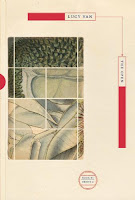
    Lucy Van - The Open
    A prose poetry collection, The Open explores the pressure of colonisation and capitalism, and the alienation and dislocation they engender. The judges report that 'Van starts with the familiar, then accelerates and expands on its implications, always taking the reader to a fresh space in which to turn these ideas over in the mind again and again and find new meaning in them.' Van's work has appeared in a variety of publications, but The Open is her first poetry collection.

    Chelsea Watego - Another Day in the Colony
    This is a collection of essays examining the ongoing and daily racism faced by First Nations people. Unapologetically written for her community, Watego stands her ground against colonialism. The judges report ' Watego's descriptions of the institutional and physical violence Aboriginal people are forced to endure in contemporary Australia are clear, urgent, and white hot with rage. At the same time, her portraits of moments with family, community, and ancestors are tender, vulnerable and joyous.' 


    For more information and the complete judges comments, see the Stella Prize website

    I am not sure how I feel about the longlist. It is pleasing to see such diverse authors recognised for their work and the exposure to wider audiences that an award like this brings. It is also lovely that poetry is now included, however this list seems to be have too many poetry collections and not enough novels and non-fiction for my liking. However as a reader, I am not really excited by the list. Normally there are a handful of titles that I am keen to read, but there is nothing here that I would rush out to find. Of the titles I would be most interested in are those by Anita Heiss, Lee Lai and SJ Norman.

    The Shortlist will be announced on 31 March 2022.  Happy reading!

    Sunday, 6 March 2022

    Fire Moves Faster

    Author Maxine Beneba Clarke's fourth volume of poetry, How Decent Folk Behave (2021) is a captivating and thought-provoking collection of verse. She channels the anger and despair of the events of the past two years - bush fires, pandemic, Black Lives Matter, Me Too, refugees, climate change, deaths in custody, domestic violence - into accessible, meaningful poems that provide both a fresh approach and a reminder to maintain the rage. 

    Beneba Clarke's poetry is political, addressing race, class and gender and the compounding impacts of privilege and power. In 'Something Sure' a mother talks to her son about growing up to be the sort of man who will stand up against domestic violence. 'Proximity' is about the victims of violence who never make the headlines. 'Wolf Pack' is about lone gunmen and the commonalities they share. 'The Monsters are Out' reminds us of the dangers on the streets and in our homes. 

    Many of her poems are heartbreaking. 'Trouble Walking' speaks of health care for people of colour. 'Muscle Memory' reminds readers of the impact of the pandemic on people of colour and the racism experienced. 'Home to Biloela' about the Muragappan family and their brutal treatment by the Australian government. 

    Beneba Clarke provokes readers, forcing them to stare into the ugly corners of our world, She is so direct and concise in her language, there is no ambiguity in her verse.  Her poem 'Capital' is a damning indictment on Australia's Parliament concluding with 'this place/is where women/get raped'.

    The final verse in this collection is 'Fire Moves Faster' - a searing 20-page reflection on 2020 starting with the bushfires and continuing through lockdowns, home-schooling, the death of George Floyd, the US election and more. Despite the challenging subject matter, and the way in which Beneba Clarke holds up a mirror to us all, there is something deeply hopeful in her verse.  

    I loved this collection of poetry and will return to it time and again to make sense of this period in our lives. The collection is prefaced with a quote for Nina Simone - 'An artist's duty, as far as I'm concerned, is to reflect the times.' Beneba Clarke has done this, capturing a time, a mood, and a moment in history. Absolutely brilliant. 

    Saturday, 19 February 2022

    Hollywood Romance

    Taylor Jenkins Reid's The Seven Husbands of Evelyn Hugo (2017) tells the story of a reclusive movie star and the young writer engaged to tell her story. 

    Evelyn Hugo became a film icon, rising through the 1950s Hollywood studio system, often cast as the sexy siren, who then established herself as a major talent in her later years by taking on more gritty, off-type parts. Along the way she married seven times - to Hollywood heartthrobs, directors, producers, and unknowns - and had a daughter she adores. Evelyn retired in the 1980s and disappeared from public view. Now at age 79, Evelyn decides to sell her collection of iconic designer gowns and donate the proceeds to charity. She agrees to give an interview to Vivant magazine to coincide with the auction. But there's a catch - Evelyn will only be interviewed by reporter Monique Grant. 
    Monique is a relatively unknown journalist and she has no idea why she was chosen for this story. But it has come at the right time. Monique has just separated from her husband and her writing career has stalled so she needs a distraction. She makes her way to Hugo's Upper West Side apartment and meets the star. Nearing 80 years of age, Evelyn is still glamorous, quick-witted, and determined to live life on her own terms.  As the interview begins, Monique learns that Evelyn has plans for a wholly different story. 

    To say more about the plot would spoil the story, but suffice it to say that we learn about the many marriages and true love of our heroine as she seeks to finally reveal her truth. Evelyn's story is remarkable, marrying to escape difficult situations, to shape her career, and to create a public persona. But the real Evelyn lies beneath, overcoming hardship and adversity, having to fight to achieve all that she has. The Golden Age of Hollywood was not a welcoming place for people who were different, and so often they, like Evelyn, had to hide parts of themselves to succeed. Evelyn Hugo is easily recognisable - I think of her as a mix of Rita Hayworth, Grace Kelly, Marilyn Monroe and Elizabeth Taylor - women admired primarily for their beauty and sex appeal when they should be recognised for their many talents. 

    I loved this book and found myself engrossed in the storytelling. Jenkins Reid intersperses the interview narrative with news articles from old Hollywood gossip rags, and switches between Evelyn and Monique's perspectives. Every so often Evelyn throws a curve ball that twists the plot in another direction, keeping the reader invested in the story. As she reveals her secrets to Monique, Evelyn shows she is so much more complex than she has ever been given credit for and reveals why Monique was chosen to write Evelyn's story.  This is a great book for readers seeking to escape or to reignite one's reading mojo.

    The Seven Husbands of Evelyn Hugo is being adapted for the screen and I look forward to revisiting Evelyn's story when it is released.

    Sunday, 13 February 2022

    Portrait of a Marriage: The Mister

    Ten years after publishing his debut novel Mrs Bridge (1959), Evan S Connell revisited the story with a companion novel Mr Bridge (1969). Covering the same time period - 1920s through 1940s - in this novel the story of the Bridge family is told from the perspective of the husband and father. 

    Walter Bridge is a busy lawyer with a devoted wife, India, and three children. The novel starts with a chapter on 'Love' in which he reflects on his deep devotion to his wife. 'My life did not begin until I knew her. She would like to hear this, he was sure, but he did not know how to tell her' (p1). 

    He expresses his love for his family through tirelessly working to secure their futures. He pays for their lifestyle, their country club membership, and gives them stock options as Christmas gifts. He tries to instil his conservative values in his children, which often leads to conflict. He is rigid in his thinking, and his children are often exasperated with his out-dated views. He bemoans his children's willingness to quit summer jobs, to hang out with friends who are beneath them in social status, and their frivolity with money. When his eldest daughter Ruth moves to New York she befriends artists. Mr Bridge considers himself 'reasonably broad-minded' (p180) but cannot understand how Ruth would become acquainted with homosexuals. 

    Mr Bridge is instantly recognisable as an archetype of a conservative, white, straight, family man. He is casually racist and antisemitic, but doesn't see himself as such because he can name a black or Jewish person that he likes. He doesn't understand why someone would invest in and admire art, cannot comprehend men dancing in a ballet, and won't give money to beggars as he believes that if they want money they should get a job. 

    We learn that Mr Bridge is just as confined by gender stereotypes as his wife is. There is a remarkable scene at a Chinese restaurant in the chapter 'Good Luck' where his wife swallows the paper fortune inside a fortune cookies. Mr Bridge realises his naive wife has been so sheltered and that since their marriage he had taken the role of her father and 'she knew nothing she had not been permitted to know' (p 210). He blames himself, but also judges her for not being more worldly. 

    Written in the same format as Mrs Bridge, this unconventional novel is told in 141 short, chronological chapters with titles like 'Boxtops', 'Tijuana' and 'Bleh!'. Interestingly each chapter is almost double the length of those in Mrs Bridge, as if Mr Bridge had more perspective to offer on this family despite spending so much time away from them.  He was a mysterious void in the first novel, but here we see a complicated, conflicted man determined to fulfil his role as provider, yet with numerous vulnerabilities he hides from others.

    I adored Mrs Bridge and enjoyed Mr Bridge almost (but not quite) as much. While I preferred the first book,  I am so pleased to have read both, as they are remarkable character studies written in such concise prose by a gifted writer. The Bridge family will stay in my memory for a long time.

    Saturday, 5 February 2022

    Portrait of a Marriage: The Missus

    I am not sure where I got the notion to read Evan S Connell's novels Mr Bridge (1959) and Mrs Bridge (1969) but it became an obsession. Getting my hands on a copy of Mrs Bridge was easy enough, but everywhere I looked was out of stock of Mr Bridge. Although I have had Mrs Bridge for several months, I did not want to start reading in case I never found her companion novel. Fortunately, late last year my set became complete and I have now had the absolute joy of reading these novels.

    Mrs Bridge is the story of an upper middle-class family in Kansas City, spanning the period between the First and Second World Wars. It is told from the perspective of Mrs Bridge, a housewife with three children. Her husband is a lawyer who spends most of his time, including evenings and weekends, at work. With live-in help and a largely-absent partner, Mrs Bridge has plenty of time on her hands so she spends her days visiting other society women, attending her country club and shopping.  But beneath this simple tale of a seemingly hum-drum middle-class domestic life lies something profoundly engaging.

    Told in 117 short, chronological chapters, we observe Mrs Bridge and her family through the social change and upheaval of the 1920s, 30s and 40s. Each chapter has a title - 'Tea Leaves', 'Chaperone', 'The Hat' - and then a vignette written in the most concise, arresting language that perfectly paints a moment in time for this family. The cumulative effect of reading these scenes is an empathy for these characters and a desire for their happiness.

    Mrs Bridge is a fantastic, complex character. She values manners above all and is acutely aware of the expectations of society. She wants things to be just right - the right kind of guest towels, the right amount of Christmas decorations, her children socialising with the right sort of people - and the fear of being judged weighs heavily on her. Relying on adages of her own upbringing, Mrs Bridge knows how things should be, but at every turn her world view is challenged. 

    The Bridges are a conservative, traditional family. Mrs Bridge defers to her husband with an unwavering faith that he knows best. At the same time, her hesitation to take action causes her discomfort. Even when she has a different view, she does not voice her opinion as she had 'for nearly a century had done as he told her' (p 112). She limits herself to conform to the image of a dutiful wife and mother which she feels she needs to present.

    Her children are a mystery to her. The eldest Ruth is distant. She is most fond of her daughter Carolyn, who is very much like her father. Her son Douglas is an oddity to whom she cannot relate. Indeed Douglas provides much of the novel's humour as Mrs Bridge is routinely shocked and perplexed by his actions like building a tower of junk in a vacant lot, concealing a pornographic magazine, or getting into a rock fight with another boy. 

    Yet there is something within Mrs Bridge that longs for a different life. From the outset we learn that her first name is India, which seems to her 'that her parents must have been thinking of someone else when they named her' (p1). After all, she could never live up to the excitement of her name. She is eager to learn and over the course of the novel she takes up various hobbies only to drop them unmastered - learning Spanish, painting, reading. Mrs Bridge briefly sees a therapist to address an unnamed sadness, a lack of meaningful connection.

    Underneath all of this is Mrs Bridge's concern about her husband's affection. He works hard to provide the life they need, and the family wants for nothing. He expresses his love through buying her things. But Mrs Bridge is lonely and longs to spend more time with him, which she gets when he takes her on a grand tour of Europe. 

    I absolutely adored Mrs Bridge although I cannot exactly pinpoint why. Connell's writing is brilliant as he infuses each scene with wit and irony. He uses such concise prose that the reader immediately understands the scene. The novel works because Connell makes the reader care for this family and even though modern life is so different from the setting of this book, the human experience is instantly relatable.

    Immediately upon finishing this novel I commenced reading Mr Bridge. A separate review will follow.