Saturday, 23 February 2019

Me, Us, We

Michelle Robinson Obama's best selling memoir, Becoming (2018) was at the top of my wish list. I have delighted in reading it and come away utterly inspired by its author.

As a young girl, Michelle grew up in Chicago's South Side with her beloved older brother Craig and their devoted parents. Dad Fraser worked maintaining boilers at a water filtration plant who endured his increasingly debilitating multiple sclerosis with quiet grace. Mum Marian was a homemaker who taught her children to be independent thinkers.

Michelle excelled at school, went on to earn a Bachelor degree at Princeton before heading to Harvard Law School. Upon graduation she worked as a IP lawyer for several years before realising she wanted to use her talents in a different way and sought out work in the non-profit sector. She has spent her life as an advocate for those marginalised by race, class, gender and ability.

Meeting Barack Obama was a changing point in her life. His life story was so different to hers. They yinged-and-yanged, balancing each other out. His unrelenting optimism and her self doubt, his leaning in to chaos and her desire for order, his need for solitude and her need for closeness. Their 25 year partnership allowed them to weather the highs and lows of politics and the long absences his job imposed, but also the personal challenges of family illnesses, deaths, miscarriage and infertility.

In 2008 the Obamas arrived in the White House. The first African-American President and First Lady were always trailblazers. Michelle sought to use her platform as a means to promote causes she cared for - healthy eating and exercise, supporting military families, educating girls. Her memoir details her efforts on the campaign trail, the criticisms she faced, and meeting with the Queen, Mandela and other world leaders. She also describes the efforts the Obamas took to raise their two young daughters in the most 'normal' way possible despite the extraordinary requirements of their eight years in the White House.

Oftentimes memoirs can feel unauthentic, as if poorly ghostwritten. Becoming is refreshingly candid and reading it felt as though Michelle were sitting down and casually sharing her story with me. I laughed and cried with her, felt her insecurities and doubts, and was uplifted by her optimism and hope. I didn't know too much about Michelle Obama before reading this memoir, but I came away in awe of her impact, her quiet leadership, her intellect and eloquence. I don't know what she will do next, but I know she will continue to inspire.

Sunday, 10 February 2019

The Stella Prize Longlist 2019

The Stella Prize longlist has been announced! The annual literary award celebrating women writers of both fiction and non-fiction is named after Australian author Stella Miles Franklin. Past winners include:


  • Alexis Wright for Tracker (2018)
  • Heather Rose for The Museum of Modern Love (2017)
  • Charlotte Wood for The Natural Way of Things (2016)
  • Emily Bitto for The Strays (2015)
  • Claire Wright for The Forgotten Rebels of Eureka (2014)
  • Carrie Tiffany for Mateship with Birds (2013)

  • I genuinely love the Stella Prize. The longlisted books become my reading list and the winner often ends up as my favourite read of the year.

    On 7 February 2019, the longlist for this year's Stella Prize was announced with 12 nominees. I have already read two of the books and loved them, but many of the other books and authors are unknown to me so I look forward to exploring these titles.

    The 2019 longlist is as follows:


    Jenny Ackland - Little Gods
    This novel is set in the 1980s in rural Victoria. Twelve year old Olive is a smart and brave child who discovers a secret about her family and is determined to learn more about what may have happened many years ago. But her curiosity could lead to repercussions she cannot yet imagine. The judges write that 'Ackland perfectly evokes a childhood both sublime and anguished, and the uncertainty of youth is exquisitely depicted throughout'. I have heard great things about Little Gods and so I will add this book to my list.


    Stephanie Bishop - Man Out of Time
    The judges described Bishop's book as 'an audacious, splendidly accomplished novel, lit by shimmering prose'. Man Out Of Time focuses on the damaged relationship of Stella and her father Leon. In September 2001 Leon disappears, having suffered from debilitating mental illness. Searching for clues on where he might have gone, his wife Frances and daughter Stella reflect on his deterioration over time.

    Belinda Castles - Bluebottle
    Set on Sydney's northern beaches, the Bright family live in a clifftop beach shack amid the gorgeous, leafy scenery.  Louisa, Jack and Phoebe know their father Charlie can be volatile and moody. A local schoolgirl disappears which has a huge impact on the family as Charlie becomes fixated on the mystery. I am ashamed to say I had not heard of Belinda Castles who won the Vogel Award for her 2006 novel The River Baptists. This is another title to add to my list.


    Enza Gandolfo - The Bridge
    This novel draws on the true story of the 1970 West Gate Bridge collapse, Australia's worst industrial accident in which 35 construction workers died. Protagonist Antonello was there that day when his colleagues perished and he has to deal with the guilt and grief. Four decades later Jo is finishing high school when a mistake ends in tragedy.  The judges describe The Bridge as 'a sharp and moving portrayal of the strength and resilience that lives in people, and a fascinating look at the effects of gentrification'.  I love books with a strong sense of place and I reckon this novel would bring Melbourne to life.


    Chloe Hooper - The Arsonist
    I am thrilled that Hooper's book about the Churchill bushfire has made the longlist. This is the story of the arsonist who deliberately lit fire that destroyed homes, burnt over 80,000 hectares of land and killed eleven people. It follows the fire and its aftermath, as well as the investigation, arrest and trial of the perpetrator.  When I read The Arsonist in November 2018 I marvelled at Hooper's investigative skills and her talents as a writer. The judges described this as a 'masterful work of non-fiction'  and I would agree. My review can be found on this blog.


    Gail Jones - The Death of Noah Glass
    Art historian Noah Glass dies suddenly shortly after returning from a trip to Sicily. His adult children, Martin and Evie, are in shock from his death, but then get another surprise when they learn Noah was being investigated by police because a statue has gone missing from a Palermo museum. Was Noah's death an accident? Was he involved in the disappearance of the statue? Who was their father really? The judges described this novel as 'a well-crafted, detail-rich narrative from a multi-award winning literary novelist who is at the peak of her game'. Sounds intriguing!

    Jamie Marina Lau - Pink Mountain on Locust Island
    This is the debut novel of a 20 year old writer - so an auspicious start to Lau's literary career. Set in Chinatown, teenage Monk lives with her father in a tiny apartment. A new potential artist boyfriend enters the scene complicating relationships and leading Monk to explore her own sense of self. The judges claim 'this book is like nothing you have ever read before - a kaleidoscope of colours, smells and fragments of life observed by a teenager in Chinatown somewhere in an unknown city.'


    Vicki Laveau-Harvie - The Erratics
    In this memoir, Vicki returns home to Alberta, Canada to help her elderly father when her mother becomes hospitalised. Having been estranged from her parents, she is shocked to learn that her father has essentially been held captive by her mother. With wit and insight, the judges describe the author's narrative voice as 'detached, slightly numb and darkly humorous'. The subject matter sounds bleak, but as a fellow Canadian expat living in Australia I am intrigued.


    Bri Lee - Eggshell Skull
    I squealed with delight when I saw Bri Lee's name on this list! Her memoir Eggshell Skull is an incredible book that was one of my top reads of 2018. Lee writes about her experience as an associate for a Queensland District Court Judge and then her own battle as she sought justice against a man who had indecently assaulted her. My review can be found on this blog.


    Melissa Lucashenko - Too Much Lip
    I was first introduced to Melissa Lucashenko's work in 1999 when I read her debut novel Steam Pigs as part of my Masters degree in Gender Studies. I enjoyed her writing and followed her career.  Too Much Lip tells the story of Kerry Salter, a woman prone to speaking her mind. Her opinions often get her into trouble, and now she might be in the kind of trouble she can't talk her way out of. The judges describe this novel as 'a fearless, searing and unvarnished portrait of generational trauma cut through with acerbic humour'.


    Maria Tumarkin - Axiomatic
    Tumarkin's collection of essays traverse a wide range of subjects including child abduction, teen suicide, and the experiences of refugees. The judges describe Axiomatic as 'an unwieldy expansive beast that combines lyrical essay with psychological reportage'. I really love essay collections, but I am not sure that I could endure the subject matter of this collection.


    Fiona Wright - The World Was Whole
    Fiona Wright won great acclaim for her previous collection of essays, Small Acts of Disappearance. In this follow up Wright explores themes of illness, home, travel and more. The judges describe this as 'a taut and expansive mix of everyday observations, cultural theory, social commentary and memoir'. I am keen to read this volume particularly as she writes about life in Newtown and travel.


    In compiling this longlist, the judges claim that they 'chose books that strove for something big and fulfilled their own ambitions'. The two I have read certainly attest to this claim, so I can't wait to explore some of the others. For more information and the complete judges comments, see the Stella Prize website.

    The Shortlist will be announced on 8 March - International Women's Day - with the winner revealed on 9 April 2019. Happy reading!

    Saturday, 26 January 2019

    Unenviable Decisions

    Ian McEwan's novel The Children Act (2014) is a slender volume which packs a punch.  The author wonderfully depicts the streets of north London, the drama of social services, the complexities of religion, and the challenges of family relationships. 

    Now in her early sixties, Fiona Maye is a high ranking judge in Britain's High Court. Specialising in family law, each day she has to make difficult judgements on custody, spousal support, the division of family assets. While some of her cases are mundane or routine, there are others that are heartbreaking for which there is no good decision. Fiona battles between her heart and her mind, balancing up diverse interests and legal precedent to make decisions which she believes to be in the interests of those concerned.

    Lately Fiona has had back to back cases which have truly tested her. She has had to decide between divorcing parents conflicting views on religion and child-rearing. She also had to rule on whether to seperate conjoined twins knowing that together they would both die but apart one might live. Now she is faced with a new case in which young Adam Henry is not quite of legal age where he may make his own decisions about his health, and Fiona must decide between his parents' wishes and those of the hospital. 

    While she faces intense stress and drama at work, her home life is also on the verge of unravelling. Her husband of three decades has decided he wants to have an affair with a younger woman - one last fling before he gets too old - and essentially seeks Fiona's permission. She refuses and is now in a state of flux, not knowing whether her marriage has ended.    

    Reading this book brought back floods of memories for me. I studied family law as part of my law degree and spent countless hours in courtrooms, so I had flashbacks when McEwan described some of the legal principles in Fiona's judgements.  Plus, whenever I travel to the UK I stay in London near where Fiona does, and I am well acquainted with the streets McEwan describes. 

    Last year The Children Act was adapted into a film, with McEwan as screenwriter. It stars Emma Thompson as Judge Maye and while I haven't seen anything more than the trailer (below), I reckon the casting is spot on!


    I have a lot of Ian McEwan novels on my bookshelves, many unread. My first McEwan was Enduring Love (1997), given to me by a friend who moved to Britain when I moved to Australia and we used to send each other fiction from our new homelands. I really enjoyed The Child in Time (1987), Amsterdam (2001) and Atonement (2001) but then for some reason stopped reading his books even though I continued to collect them. The Children Act has encouraged me to pull some of his other books off my shelves and get reading.

    Saturday, 19 January 2019

    Under the Surface

    As soon as I cracked the spine on Patricia Highsmith's 1957 thriller Deep Water, I was hooked. For the next few hours I savoured every word of this suspenseful tale of a failing marriage.

    Set in a small town, Vic Van Allen is well regarded by locals. He runs a boutique publishing house, keeps snails, and dotes on his young daughter Trixie. His wife Melinda is unhappy in her marriage and spends every afternoon in the bar at the Lord Chesterfield Inn in an effort to meet good looking, available men.  Vic knows about Melinda's indiscretions, in fact the whole town does. She brings the men home, and invites them as her guest to neighbourhood parties, creating much awkwardness with hosts who suspect her unfaithfulness but don't want to upset Vic.

    The Van Allens have an arrangement wherein Melinda can do as she pleases as long as she doesn't abandon Vic and their daughter.  In fact, Vic's only objection is that she chooses 'such idiotic, spineless characters'. His friends express concern at his being cuckolded and he is seen as having the patience of a saint while the frivolous Melinda drinks excessively and fawns over a seemingly endless parade of lovers.

    When one of Melinda's former lovers is murdered, Vic scares off her current flame by joking that he killed the last one. But when another lover drowns, Melinda becomes suspicious that Vic has a hidden dark side.

    Highsmith is an incredible writer and has a gift for creating complex characters who are not what they seem. She manages to make readers feel contempt for victims and empathy for a perpetrators. Suspense builds with each chapter and you never know what is going to happen next.

    My review of Highsmith's The Talented Mr Ripley (1955) is also available on this blog. I am looking forward to exploring more of her novels this year.

    Sunday, 13 January 2019

    Out of the Wilderness

    One of the books that was highly recommended by many 'best of' lists last year was Tara Westover's memoir Educated (2018). It is the tale of a girl from Idaho who never attended school but went on to earn a doctorate from Cambridge. Her journey is made all the more remarkable by needing to break free from her family in order to do so.

    Westover's father was a Mormon survivalist who was obsessed with living off the grid, preparing for the end of days. He didn't believe in modern medicine - forbidding doctors, hospitals and pharmaceuticals. He thought government schools would brainwash his seven children, so insisted they be homeschooled without any concern whether they learned or not. His denunciation of the government went so far as not even registering his four youngest children, who didn't have birth certificates until someone wanted to get a driver's licence and had to prove their date of birth.

    Her dad ran a junkyard. All of the Westover children were raised to scrap metal, jar peaches, and mix herbal remedies. Westover's mum was a reluctant midwife with a knack for inventing concoctions that would cure all ailments. Her services were regularly used, especially by her own children who were routinely broken and burned assisting dad in his scrapping. Further, Tara was injured, physically and psychologically, by an older brother.

    While the kids were supposed to be homeschooled, any learning was done by sheer will and determination. Some of the siblings were keen to get an education and would acquire old text books with which to learn. Tara eventually studied for her college entrance exam and was accepted into Brigham Young University. She struggled when she arrived on campus, realising the gaps in her knowledge and the untruths she had been taught through her father's conspiracy theories. She was also confronted by a more modern Mormonism than she had been exposed to and began to question her upbringing. But she was also given opportunities, which lead her to her postgraduate studies in the UK, and widened the gulf between Tara and her family.

    Tara attempts to reinvent herself and find a place in the world, but she is routinely lured back home by the family even though she knows it is not healthy for her. It was difficult to read these 'coming home' episodes because as much as she loves her parents and siblings, she is in danger there and could easily become stuck and forced to give up on her dreams.

    I enjoyed this memoir and found it a fascinating read. I liked that Westover never sought to denigrate her family or faith, I appreciated how she questioned her memory of events, and I was moved by small acts of familial love like her brother Tyler leaving her some music once he left home. But I was frustrated and angered by her parents and the recklessness with which they repeatedly put their children in grave danger.

    Educated reminded me in many ways of JD Vance's Hillbilly Elegy (2016) which is a similar tale of someone escaping their inevitable future and charting their own course. Of the two, I preferred Vance's account but Westover's book was well worth reading.

    Tuesday, 1 January 2019

    Planning for 2019

    At the start of each year I like to set aside some time to reflect on my reading habits and prioritise my reading for the coming year. Today I spent some time perusing my bookshelves and sorting out my books. In doing so I found a range of titles I had forgotten about that I am still keen to read.

    I have cleaned up my bedside cabinet of all unread or half-read books that will not be prioritised for 2019 and set up a new 'to-be-read' stack of physical and ebooks. This teetering tower currently consists of:

    • Becoming by Michelle Obama
    • The Jungle by Upton Sinclair
    • Stoner by John Williams
    • Warlight by Michael Ondaatje
    • Elizabeth Costello by JM Coetzee
    • The Iliad by Homer
    • It Can't Happen Here by Sinclair Lewis
    • Our Man in Havana by Graham Greene
    • Goodbye, Columbus by Philip Roth
    • Cosmo Cosmolino by Helen Garner
    • Outline by Rachel Cusk
    • The Journalist and the Murder by Janet Malcolm
    • Slouching Towards Bethlehem by Joan Didion
    • The Long Prospect by Elizabeth Harrower
    • Hold Your Own by Kate Tempest
    • The Years by Virginia Woolf
    • Educated by Tara Westover
    • The Secret Agent by Joseph Conrad
    • The Murder of Roger Ackroyd by Agatha Christie
    • The Power by Naomi Alderman
    • The Price of Salt by Patricia Highsmith
    • Conversations with Friends by Sally Rooney
    • Sing Unburied Sing by Jesmyn Ward

    All books will be blogged about here and you can check my progress on My Challenge page. Of course I should note that I always go off course with my reading, and undoubtedly half the titles above will be shelved and replaced with other more urgent books. But it is a plan nonetheless. 

    This year my main focus is on fiction and I am aiming for a target of 30 books in 2019 - which I didn't reach last year but I am still determined. To help me achieve this goal, and ensure my reading remains diverse, I have created a new Bingo board to stretch myself into new areas.
    BNGO
    19th Century
    Classic
    First Novel
    in a Series
    Adapted into a
    Film/TV Show
    Australian Literary
     Prize Longlister
    Short Story
    Collection
    Essay
    Collection
    Set in Space
    or at Sea
    Pre-19th Century
    Classic
    Fiction Based
    on a True Story
    Current Affairs
    / Politics
    Book on the
    1001 List  
    Banned Book
    Features Strong 
    Female Protagonist
    Set in the
    Future
    New York Times
    Bestseller
     Spin-off on from 
    a Classic
    Mystery or
    Crime Novel
    Booker Prize
     Longlister
    Published
    in 2019
    20th Century
    Classic
    Legal Thriller
    Biography 
    or Memoir
    Set during
    Wartime
    Poetry 
    Collection
    Book with a 
    colour in title
    There are some books coming in 2019 that I am excited about too, like Ian McEwan's Machines Like Me, Margaret Atwood's The Testaments, Elizabeth Gilbert's City of Girls, Jane Caro's Accidental Feminists, Gerald Murnane's Green Shadows and Other Poems, and plenty more.

    So, let the adventures in reading begin...

    Monday, 31 December 2018

    My Reading Year - 2018

    Another year of reading has come to an end, and what a great year it has been. My reading goal for 2018, as documented in my challenge was 30 books, which I didn't quite reach having read only 24 titles this year.

    My list included a number of books which I wrote about in my first of January planning for 2018 post. I managed to get through a many of these books, including:
    In an attempt to diversify my reading I created my own reading bingo card with various categories (achievements highlighted below).  This was fairly successful, although I missed out on a lot of categories I had intended to pursue.

    BNGO
    Adapted into a
    Film/TV Show
    Biography 
    or Memoir
    New York Times
    Bestseller
    Booker Prize
    Shortlister
    Poetry
    Collection
    Current Affairs
    / Politics
    Set in Space
    or at Sea
    Pre-20th Century
    Classic
    Fiction Based
    on a True Story
    New-To-Me
    Author
    Short Story
    Collection
    Published
    in 2018
    Free Choice
    Set in the
    Future
    First Novel
    in a Series
    Written by a
    Nobel Laureate
    Mystery or
    Crime Novel
    Stella Prize
    Shortlister
    Banned Book
    20th Century
    Classic
    Set during
    Wartime
    New-To-Me
    Genre
    Lesser-known Book
    by a Famous Author
    Essay Collection
    Book on the
    1001 List

    So here's what I read in 2018:

    Fiction
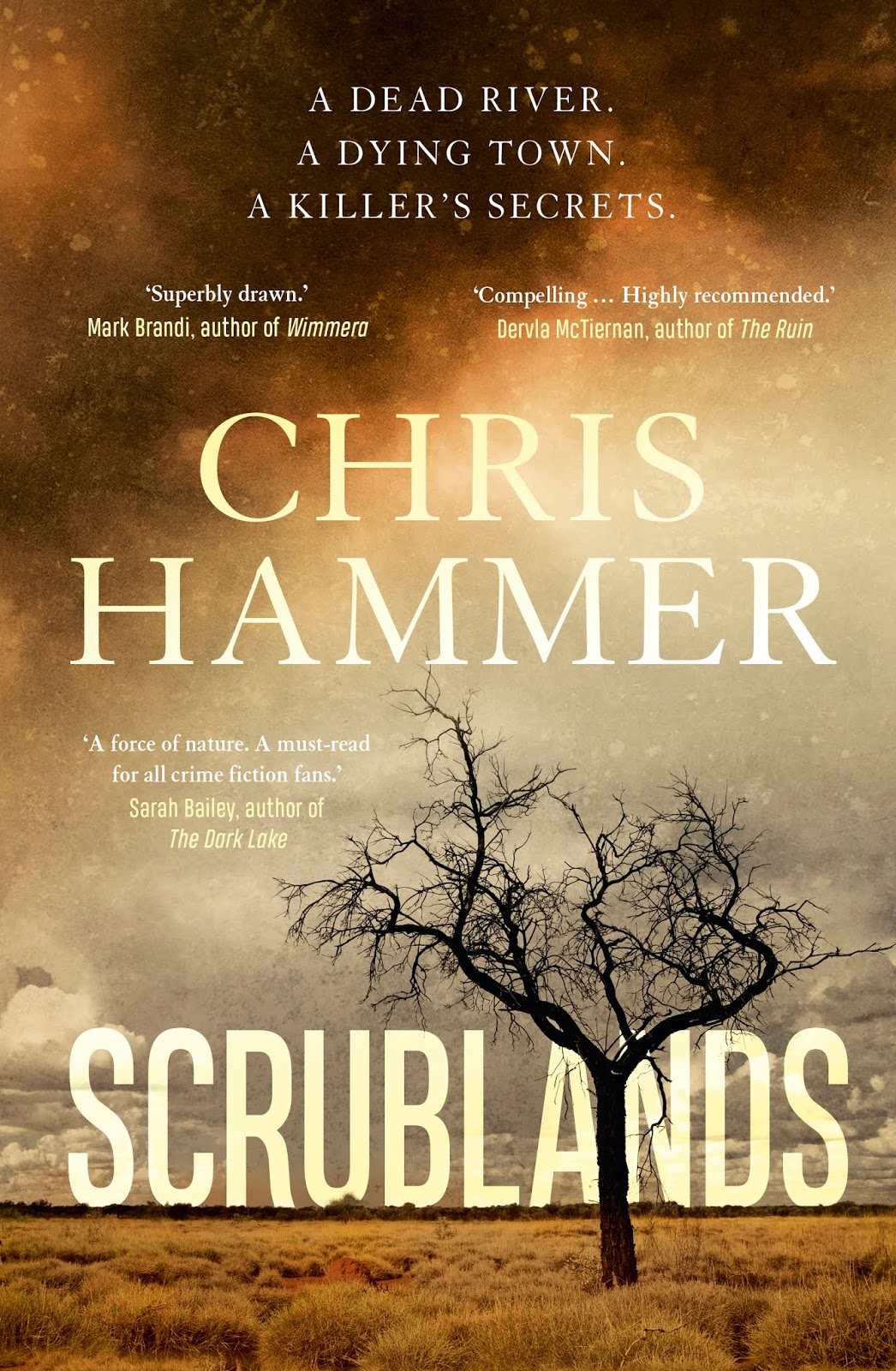
    When looking back over the novels I read in 2018, there were quite a lot of crime/mystery books. Highlights were JK Rowling/Robert Galbraith's latest Coromoran Strike novel, Lethal White, and Australian author Chris Hammer's debut novel Scrublands. I enjoyed Jane Harper's latest outing,  The Lost Man, but it wasn't a patch on her previous novels with Detective Aaron Falk.

    Wondering what all the fuss was about, I read Lee Child's first Jack Reacher novel, Killing Floor, which left me perplexed by its popularity. Another dud was Agatha Christie's The Murder on the Links, which I read as part of my 'Poirot in order' pursuit. Even though I didn't particularly enjoy either of these books, I don't feel my time was wasted - sometimes you have to read the bad to recognise the good.

    I read two Helen Garner's this year: her delightful The Spare Room and the newly released collection Stories. I much preferred the former with its crisp prose and hidden complexities.

    Strangely, two novels I read in 2018 were set in a graveyard! Neil Gaiman's The Graveyard Book was an enchanting, award winning children's book. But my greater feat was finally reading George Saunders' Booker Prize winning Lincoln in the Bardo. I had wanted to read it for some time but had found it hard to get in the rhythm. This year I succeeded and am pleased to have read it.

    One of the novels I greatly enjoyed this year was Mohsin Hamid's Exit West, a magical realism book focussing on the lives of refugees. It is a novel for our times, as is graphic novel Sabrina by Nick Drnaso, which explores loneliness, isolation and despair when a loved one goes missing.

    Of the dozen novels I read this year the one I would most recommend to others as a gripping, page-turning read is Chris Hammer's Scrublands. I really enjoyed this multi-layered suspense novel and have already shared it with many family and friends. Part of a current wave of Australian bush-noir, Scrublands has plenty of twists and turns to keep readers engaged.


    Non-Fiction
    I read a lot of biographies and memoirs this year. Top on my list was historian and journalist Julia Baird's monster bio Victoria: The Queen. At 700+ pages, Victoria took up a lot of my reading space but it was well worth it as this is a fascinating look at the long-reigning monarch.

    One of my heroes is US Supreme Court Justice Ruth Bader Ginsburg. So I was keen to read Irin Carmon and Shana Knizhnik's Notorious RBG: The Life and Times of Ruth Bader Ginsburg. Unlike traditional biographies, this book blends pop culture, music lyrics, fan art, and more into an interesting portrait of an incredible judge.

    Two memoirs tugged at my heart-strings. Journalist Rick Morton's One Hundred Years of Dirt tells of his upbringing on a remote Queensland station, the violence and poverty his family endured and the sacrifices his mother made for her children. Bri Lee's astonishing memoir Eggshell Skull centred on her year as an associate for a Queensland District Court Judge and her subsequent experience as a complainant in a case against her assailant.

    I was absolutely engrossed by Sarah Krasnostein's  The Trauma Cleaner. This biography about the incredible life of Sandra Pankhurst was absolutely compelling, forcing readers to set aside their assumptions about how other people live.  Another fascinating book was Chloe Hooper 's  The Arsonist, which looked at the devastating Black Saturday bushfires and the trial of one of those who caused them.

    I really enjoy reading well crafted essays. As Samantha Irby's We Are Never Meeting in Real Life topped many 2017 best book lists, I began this year with her funny, snarky and cynical collection.  At the other end of the spectrum, Rebecca Solnit writes with great intellect and thought on issues affecting women in her Men Explain Things To Me. Tackling gang rape, sexual harassment, genealogy, isolation and more, I really admired Solnit's feminist approach. I also read two Quarterly Essays, by Richard Dennis (QE70) and Laura Tingle (QE71).

    As part of my commitment to Working Out Loud (WOL), I read Julian Stodd's The Social Leadership Handbook and attempted to complete the accompanying workbook.

    I only read one book on American politics this year, Bob Woodward's Fear: Trump in the White House, and that was enough! I need to declare a Trump free zone and limit his influence on my reading life.

    The best non-fiction book I read this year was, without doubt, Sarah Krasnostein's The Trauma Cleaner. The story of Sandra Pankhurst and her remarkable life is incredible, but Krasnostein also inserts the heartbreaking stories of Pankhurst's hoarder clients. This is a story of empathy and belonging, and one which I have recommended, gifted and shared with so many people this year. 

    Poetry
    I had a pretty bad year with poetry in 2018. Normally I try and seek out fresh new voices but this year I only read one collection - Rupi Kaur's The Sun and Her Flowers. The fact that I read Kaur is strange since after reading her disappointing Milk and Honey I swore I would read any more of her work.... Oh well.

    Best of 2018
    Of all the books I read this year the two works I regard most highly are Sarah Krasnostein's  The Trauma Cleaner and Chris Hammer's Scrublands. Honourable mentions go to Bri Lee's Eggshell Skull, Julia Baird's Victoria: The QueenHelen Garner's  The Spare Room and Robert Galbraith's Lethal White.

    Saturday, 29 December 2018

    A Confederacy of Dunces

    US Secretary of Defence General Jim Mattis resigned his position in the Trump government on 20 December 2018.  In his very public resignation letter he stated unequivocally that
    "... our strength as a nation is inextricably linked to the strength of our unique and comprehensive systems of alliances and partnerships. While the US remains the indispensable nation in the free world, we cannot protect our interests or serve that role effectively without maintaining strong alliances and showing respect to those allies."
    Mattis' resignation came shortly after President Trump unilaterally decided to withdraw American troops from Syria, against the advice of the military - leaving civilians and allies in great danger.

    The departure of Mattis did not surprise me, as that exact same day I had just finished reading Bob Woodward's 'fly-on-the-wall' expose, Fear: Trump in the White House (2018). An extreme nationalist, Trump is a protectionist and has increasingly isolated himself from his allies. He has torn up trade deals and the Iran Nuclear Agreement, backed out of the Paris Climate Accord, imprisoned immigrant children, aligned himself with dictators, threatened NATO, and attempted to build a literal wall. Trump believes power equates to fear, and he has set about disrupting all norms to keep the world on edge.

    Award winning journalist Woodward has managed to gain access deep within the White House and spoken with many named and unnamed sources including Gary Cohn, Rob Porter, Reince Priebus and Steve Bannon. Through these contacts Woodward paints a terrifying picture of the President as an illiterate, ill-informed, hate-filled, vengeful bully.

    As a keen follower of global politics, much of Fear was already known to me. But what I found astounding was the lengths some of the President's men would go to in an effort to tame or circumvent Trump. Documents requiring signing were removed from the President's desk, aides slowed down his agenda by delaying his orders, secret meetings were held, memoranda was written to appeal to Trump's ego, and the gatekeepers tried to limit his access to people who would fuel his worst instincts. Trump's contempt for those around him, the way he belittles and publicly humiliates those he relies on, is appalling. With the departure of Mattis, Kelly, Tillerson and more, I am worried that there will be no one left to temper his idiocy; Trump is now surrounded by yes-men who cannot constrain him.

    Ultimately, I believe it is Trump who is afraid. The Mueller investigation is tightening around him. His family is under the spotlight and his corrupt Foundation has just been disbanded. He is fighting countless lawsuits and many of his former partners in crime are now corroborating with authorities. With all of these personal attacks, he rages on Twitter to distract and debase. I wonder how far Trump's narcissism goes and whether deep down he knows he is temperamentally unfit for the office he holds.

    Fear is just one of dozens of books about Trump's Presidency, and undoubtedly dozens more will be written before his tenure is out. I found Fear to be well written and interesting, but in reading it I couldn't help but feeling great fear for the downfall of the office of the President, the decline of America, and the danger of our world.

    Friday, 28 December 2018

    Tales from the Crypt

    Each year I give my two nieces, currently aged 8 and 11, books as Christmas gifts. I enjoy trying to track down books that I think they may enjoy - from graphic novels like Phoebe and her Unicorn, to classics like Anne of Green Gables. I try to do my homework to make sure they are age appropriate and, wherever possible, I try to read the book in advance. This year I gave them:

    • The Mulberry Tree by Allison Rushby
    • Friday Barnes, Girl Detective by RA Spratt
    • Ruby Redfort Look Into My Eyes by Lauren Child
    • The Graveyard Book by Neil Gaiman
    I managed to read Gaiman's book before the holidays and think it will be greatly enjoyed by the recipients.

    The Graveyard Book (2008) begins with a scary, dark scene in which a knife-weilding man enters a family home and kills all inside except an infant boy who has escaped from the home and wandered into a local graveyard. The dead shelter the boy and two of the ghosts adopt him and name him Nobody Owens, Bod for short. Silas, a groundskeeper of sorts, becomes his guardian and teaches him ghostly behaviour like fading, haunting and dream walking. Bod is told never to leave the graveyard and as such gets about exploring the crypts and tombs, meeting all sorts of undead. 


    As the years go by, Bod grows older and he longs to move beyond the cemetery gates. He befriends a young girl named Scarlett who visits the graveyard, journeys out to the centre of town, and later he attends a local school. But the best lessons are the ones he learns from the ancient inhabitants of the graveyard.

    What I particularly liked was that each chapter is a self-contained story, which makes for perfect bedtime reading. I also enjoyed the way each new ghostly character was introduced via what was written on their headstones ('Traveler Lay Down Thy Staff'). This is an enchanting book, with a fine balance of darkness and light. 

    The Graveyard Book won a stack of awards including the Carnegie Medal (UK) and  Newberry Medal (US) for the best children's book.

    Thursday, 27 December 2018

    Preparations for the Social Age

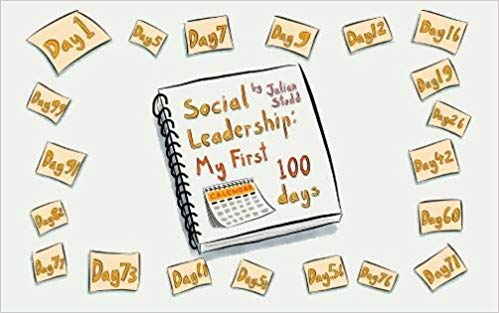
    Earlier this year I picked up Julian Stodd's The Social Leadership Handbook (2nd ed, 2016) and the accompanying workbook Social Leadership - My First 100 Days (2017). I am a regular reader Stodd's articles and blog posts and always found him to be a refreshing thinker with practical ideas.

    At work, I am currently working with a couple of staff on building their social capital within our organisation and beyond. So I read Stodd's Handbook with a view to seeing whether it would help me to help them in this endeavour, and whether the Workbook would be something that they would benefit from exploring.

    Having read a fair few leadership and management books in my time, Stodd's approach is delightfully different. He argues that social businesses will build trust, encourage innovation, and be more adaptive. Likewise, social leaders are able to navigate this new ecosystem by being able to operate in both formal and social spaces.

    Stodd has created a model of social leadership he calls NET - Narrative, Engagement and Technology. The Narrative section is all about storytelling, curation and sharing. Engagement is about agility, community building and reputation. The Technology section focuses on social capital, collaboration and co-creation.

    The Handbook is extremely easy to read and can be consumed in little morsels at a time for those who cannot commit to long stretches of reading and reflection.  At times I found the book a bit repetitive, but then I have read much of Stodd's work, and see this as a positive reinforcement.

    Admittedly, I did struggle with the Workbook. Initially I tried to set aside time at the end of each day to undertake the daily task. Some were straight forward like pondering where knowledge lives in your organisation (day 4), while others required discussion with colleagues like considering where stories are used in your organisation (day 20). The ones on my own were easy, but by leaving it to the end of the day, I would often find I had missed opportunities to engage with a colleague where required. As a consequence my 100 days has taken me significantly longer and remains unfinished.  But what I did find was that I enjoyed dipping in and out of this workbook, rather than working from cover to cover.

    I also want to comment on the physical books. The Handbook is a sturdy hardcover with pastel colour scheme, filled with 'hand-drawn' illustrations. Just the right size for commute reading, with helpful chapter summaries. The spiral bound workbook is petite, able to lie flat for easy use and beautifully crafted. The two go together well. Stodd also has a podcast and a MOOC to accompany this series.

    As someone who practices working out loud and critical reflection, I found this Handbook and Workbook wonderful tools to further my practice. I have used the ideas in my workplace, particularly in how I curate and share, and encouraged colleagues to engage with many of Stodd's ideas. I would recommend these tools to anyone looking to change their leadership practice or those working with new managers to build their social leadership abilities.

    Sunday, 25 November 2018

    Black Saturday

    On 7 February 2009 a series of bushfires blazed across Victoria killing 180 people and destroying over 2000 homes and a million acres of land.  An extreme heatwave of mid-40c temperatures and dry high winds created the right conditions for a rapid and extensive blaze. While some of the 400 fires were caused by accident - such as lightening or felled power lines - others were caused by arson. A Royal Commission investigated the fires, the response by authorities and the controversial 'stay or go' evacuation policy.

    Australian author Chloe Hooper's latest book is The Arsonist (2018), subtitled 'a mind on fire', attempts to discover why someone would deliberately light such a debilitating fire. Hooper follows the detectives, the lawyers and the trial of the accused arsonist.

    The Churchill fire in Central Gippsland began in a pine forest with two seperate ignition points 100 metres or so apart. Within days of the fire investigators knew it was arson and quickly honed in on suspects. By 12 February a local man, Brendan Sokaluk, was arrested and charged with arson causing death, intentionally lighting a bushfire and various other offences.

    Sokaluk claims he was disposing of a cigarette and accidentally started the blaze - a scenario which is disputed and disproven. Instead, it is claimed that he deliberately lit the blazes and then went home and sat on his roof to watch the inferno which killed eleven people.

    Sokaluk is not a cunning criminal mastermind - rather he had a terribly hard life growing up with undiagnosed autism. He was consistently bullied and found it hard to make and maintain friendships. His personality quirks and child-like behaviour caused problems at his maintenance job. His only friend is his beloved pet dog Brockie. Sokaluk's Legal Aid team find it hard to get him to understand what was happening to him and are continually wondering if he knows the magnitude of what he has done.

    Hooper is a gifted writer, describing the fire as an incredible, devastating beast.  With the same investigative skills she employed in The Tall Man (2008), Hooper conducts extensive research to understand bushfires, and interviews people impacted by the fire - police, victims, emergency services and more. Reminiscent of Helen Garner's investigative work (like This House of Grief), Hooper is a keen observer and attempts to understand the 'why' of what has transpired by sifting through the ashes. While its writing, pacing and gripping story made The Arsonist and easy read, the subject matter is not easy at all. The stories of the survivors and those who were lost are devastating. Hooper tells these heartbreaking tales with dignity.

    Saturday, 24 November 2018

    The Brothers Bright

    For months I have had the release date of Jane Harper's latest novel, The Lost Man (2018), in my calendar and I actually schedule time in my diary to acquire and read it. My excitement over this new release was based on my admiration for Harper's two previous novels, The Dry (2016) and Force of Nature (2017).  I inhaled her latest page-turner with the same eagerness and delight.

    Set in outback Queensland, the three Bright brothers - Nathan, Cameron and Bub - live on isolated, neighbouring properties. Somewhat estranged, Nathan and Bub come together when their brother Cameron is found dead at the landmark Stockman's Grave. What was Cameron doing there, in the middle of the desert, in 40-degree heat, almost ten kilometres away from his vehicle? The car had not broken down, was fully loaded with water and other provisions. With all of his survival skills, why would Cameron venture out on his own?

    In trying to determine what happened to Cameron, we are introduced to his wife and daughters, his mother, backpackers and workers on the land. Each one has secrets and as the mystery unravels we learn that there is much more going on here than first appeared. It is a place of hard living in an unforgiving and brutal land.

    Much of the story is told through the eldest brother Nathan. Since childhood, he and Cameron never quite got along and their estrangement only grew. Nathan spends most of has days fixing fences and his only interactions are every six weeks or so when his online delivery of provisions arrive. His teenage son Xander has come home from Brisbane for the Christmas holidays and Nathan finds it hard to connect when they have such different lives.

    While reading this I often thought about Rick Morton's memoir One Hundred Years of Dirt  about growing up on a large station in outback Queensland. He described a similar childhood of School of the Air, social isolation and a complex, brutal upbringing.  Harper channelled this completely in her novel. She has the ability to lure readers into the environment and make you feel as though you are there among the heat and dust. Her evocative descriptions of the harsh landscape and the weather allow you to immerse yourself in the story. She has also created vivid characters - particularly Nathan, Cameron's daughters, and Xander - and doles out clues to the mystery in such a way that keeps readers guessing.

    Harper's previous novels featured Detective Aaron Falk, a character I have grown to love and hope to hear more from. I knew that he would not appear in this book and I was admittedly a bit apprehensive. While I greatly enjoyed The Lost Man, Falk was definitely missed and I long for his return! Will have to wait for the her next novel, which judging by her annual release pattern, is only a year away.

    Sunday, 18 November 2018

    My WOLWeek 2018

    The week of 12-18 November 2018 is International Working Out Loud Week. Held twice annually in June and November, the week is designed to promote the practice of working out loud - sharing work in progress.

    John Stepper, author of the book Working Out Loud (2015), describes working out loud (WOL) as follows:
    'Working out loud is an approach to work and life. It helps you achieve your goals and feel better about your work while you discover more possibilities.'
    I got interested in working out loud while being immersed in the learning and development profession in a previous role. I had the good fortune of coming in contact with brilliant WOL advocates and practitioners like Simon Terry, Helen Blunden, Michelle Ockers, Dr Jane Bozarth and many more. In previous WOLWeeks I tinkered around the edges, working out loud in a very limited, quiet, safe way. This year I took a leap forward, well out of my comfort zone, with a week of sharing my critical reflections on my work in progress within my organisation.

    When not reading and blogging about books, I am the CEO of a children's charity. Over the past 18 months I have been gradually working to shift our organisational culture to bring about a renewed focus on learning, collaboration and performance. Even though I am in a position to make changes, I know I cannot bring people on a journey without leading by example, walking the walk.

    Since joining the organisation last year, I have been sending out fortnightly email communiques to over one hundred employees in which I share what is happening across our organisation and what I have been working on and learning. Once our Intranet was created in early 2018 (yes, 2018!) I began blogging and starting conversations about our work on Sharepoint. The take up has been slow, as our organisation has been late in adopting technology and is still a bit Sharepoint-shy, but I am starting to make headway. Although I would often post things without any engagement, I persevered and found that people were lurking and listening. They may not comment publicly, but they would tell me privately how much they valued my sharing and what they got out of it. I knew I had crossed over in September when I attend a major industry conference and I tweeted and blogged about what I learned there. I was pleasantly surprised by the feedback from diverse staff who would stop me to discuss my learnings as I travelled through our organisation. People were listening and eager to engage and share.

    In the weeks leading up to this WOLWeek I started telling colleagues about it; planting a seed. Then on 12 November I began to blog daily following the 'Seven Days of Working Out Loud' without really knowing what to expect or how far I would go.

    On day one I shared my purpose, talking about why I have chosen to spend my career in the non-profit sector, what I am passionate about and why I chose to work at my organisation. The next day I talked about how I built a network, connecting to diverse people despite being an introvert. For day three I wrote about my contributions and those who have contributed to my work with shoutouts to those who have helped me in different ways.  On the fourth day I took an even bigger leap sharing my imperfect work in progress on a Strategic Plan project I am developing, inviting feedback and involvement. For day five I talked about how it is okay to ask others for assistance and how I have overcome my own reluctance to seek help. On day six I talked about gratitude and finding different ways to show appreciation. On the final day I summarised my WOLWeek experiences and invited my colleagues to continue on the journey with me through joining a WOL Circle.

    Each post I wrote ended with a handful of reflective questions, an invitation to provide feedback and a genuine offer of any help I could give. A couple of colleagues responded to my posts on Sharepoint and others commented in person - each one contributing ideas and paying it forward. While it wasn't exactly a tsunami of a response, it was enough to make me feel that what I am doing is worthwhile. I am happy with the tiny ripple in our little pond and have confidence that one day a wave will begin to form.

    In writing this WOL blog I opened myself up to my whole staff team, sharing my work and how I approach it. I shared stories of my successes and failures, exposed my fears and vulnerabilities, and spoke of my aspirations for myself and my organisation. In doing so I may disappoint some colleagues who think leaders should be infallible and know all the answers - I'm not and I don't - but I am okay with that. I have put myself out there and even surprised myself by how much I was prepared to share. My whole organisation can now hold me to account - which is, admittedly, a bit scary. WOLWeek has reminded of the necessity of critical reflection in my professional life and given me momentum to keep moving forward.  I can't wait to be part of what happens next...